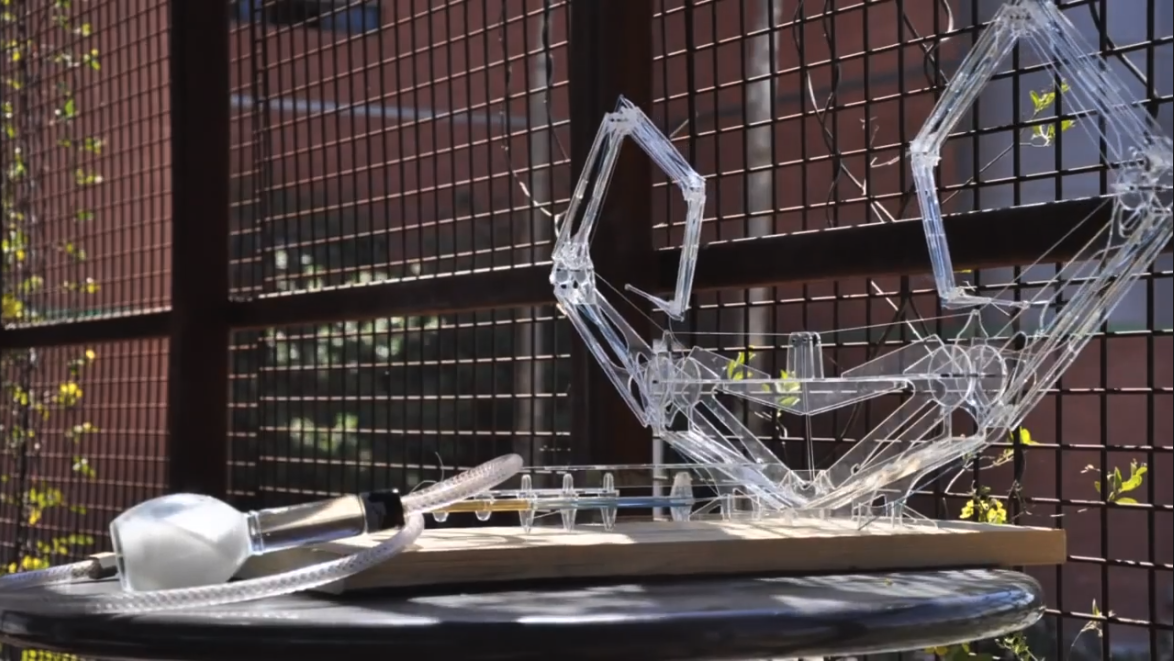
Most motors are picky eaters. Electric motors want current, combustion engines want fuel, pneumatic tools want compressed air, and hydraulic motors want pressurized fluid. Thermal actuators are the odd little machines standing at the buffet with a plate full of temperature changes. Give them heat, cooling, expansion, contraction, or a phase change, and they turn that invisible thermal shift into mechanical motion.
That is the fascinating idea behind thermal actuators: devices that respond to temperature and convert it into movement, force, valve control, or even hydraulic displacement. Some use wax that expands when it melts. Some use shape memory alloys that “remember” a trained form when heated. Others rely on sealed fluids, metal bellows, bimetal strips, or phase change materials that swell and shrink as they move between solid and liquid states.
When people describe thermal actuators as hydraulic motors that feed on temperature changes, they are pointing to a clever engineering truth. These devices can use thermal expansion to create fluid pressure, push a piston, open a valve, move a vent, or transfer force through a hydraulic circuit. They are not magic, and they definitely do not violate thermodynamics. Sorry, garage inventors hunting for free energy. But they can harvest useful mechanical work from temperature swings that would otherwise be ignored.
What Is a Thermal Actuator?
A thermal actuator is a device that produces movement because something inside it changes size, pressure, shape, or state when temperature changes. It is part sensor, part muscle, and part tiny drama queen. When the environment gets hot or cold enough, the actuator reacts automatically.
In the simplest version, a material expands as it heats. That expansion pushes against a piston, diaphragm, rod, valve stem, or bellows. When the temperature drops, a spring, load, or contracting material returns the actuator to its original position. The result may be linear motion, rotary motion, pressure generation, or controlled opening and closing.
Thermal actuators are common in places where engineers want simple, reliable, temperature-responsive motion without a computer constantly bossing things around. You can find them in automotive thermostats, radiator valves, greenhouse window openers, underfloor heating manifolds, steam traps, thermal bypass valves, aerospace mechanisms, and experimental energy-harvesting systems.
How Thermal Actuators Work
The working principle depends on the material, but the basic plot is always the same: temperature changes first, mechanical motion follows. Think of it as a very polite machine that waits for heat to give it permission.
1. Thermal Expansion
Most materials expand when heated and contract when cooled. In everyday life, this is why bridge joints have expansion gaps and why a tight metal jar lid may loosen under warm water. In an actuator, that expansion is captured and directed. Instead of letting the material simply grow in all directions, the device channels the movement into a useful stroke.
2. Phase Change
Some thermal actuators use phase change materials, often called PCMs. These materials absorb or release heat as they melt, freeze, or change crystalline structure. Wax is the classic example. When certain waxes melt, they expand significantly. If the wax is sealed inside a chamber, that expansion creates pressure and pushes a piston outward.
This is the famous wax motor principle used in many automotive thermostats. As coolant warms, the wax pellet melts, expands, and pushes a valve open. Coolant then flows through the radiator. As the system cools, the wax solidifies and contracts, and the valve closes. It is simple, rugged, and surprisingly elegant for something that sounds like it belongs in a candle shop.
3. Shape Memory Effect
Shape memory alloys, especially nickel-titanium alloys such as Nitinol, behave differently. They can be deformed at one temperature and return to a trained shape when heated above a transformation temperature. Instead of merely expanding, the material changes its internal crystal structure. This allows it to generate force and motion in a compact package.
NASA and aerospace engineers have explored shape memory alloy actuators for movable aircraft structures, wing components, thermal control devices, and compact deployment systems. The appeal is obvious: fewer heavy motors, fewer gears, and a material that can act as both structure and actuator.
4. Bellows and Fluid-Filled Elements
Another style uses sealed liquid or gas inside a metal bellows. When the fluid expands with heat, the bellows extends. When the fluid cools, it contracts. These designs are useful in thermostatic valves, steam traps, and harsh industrial systems because welded metal bellows can avoid some problems associated with sliding seals or elastomer membranes.
Why Call Them Hydraulic Motors?
Strictly speaking, not every thermal actuator is a hydraulic motor. A traditional hydraulic motor converts pressurized liquid flow into rotary motion. A thermal actuator usually produces a stroke, pressure pulse, or controlled displacement. But the phrase hydraulic motor that feeds on temperature changes captures a very real idea: temperature can generate fluid pressure, and that pressure can be used to do work.
Imagine a sealed chamber filled with a phase change material. When heat arrives, the material expands. Because the chamber is sealed, the expansion has nowhere to go except into a piston or hydraulic line. That moving piston can push fluid into another chamber, lift a load, shift a valve, or drive a ratchet mechanism. When the system cools, the material contracts, and the actuator resets. Repeat the cycle, and you have a temperature-powered mechanical pump or motor-like system.
This is especially interesting in environments where temperature swings are already present: solar-heated surfaces, engines, industrial pipes, geothermal systems, building envelopes, or outdoor equipment that warms in the day and cools at night. The machine does not create energy from nothing. It harvests a small portion of thermal energy moving through the system.
Key Types of Thermal Actuators
Wax Thermal Actuators
Wax actuators are among the most widely used thermal actuators. They are compact, inexpensive, and capable of generating strong linear force. A wax-filled chamber, piston, guide, and return spring form the basic package. When the wax reaches its designed melting range, it expands and drives the piston.
Common applications include engine thermostats, mixing valves, heating controls, appliance locks, and greenhouse vent openers. Their movement is not lightning-fast, but that is often a feature rather than a flaw. In hydronic heating systems, for example, slow opening and closing helps reduce water hammer, which is plumbing’s way of angrily banging on the pipes.
Phase Change Material Hydraulic Actuators
PCM-based hydraulic actuators take the wax motor idea further. Instead of only opening a valve, they may be designed to displace fluid, generate hydraulic pressure, or operate as part of an energy-harvesting cycle. Paraffins, salt hydrates, fatty acids, metallic PCMs, and specialty engineered materials can be selected according to melting temperature, expansion ratio, cycle life, corrosion behavior, and heat transfer performance.
The main advantage is that PCMs can absorb and release substantial heat near a relatively constant temperature. That makes them useful not only for thermal storage, but also for temperature-triggered mechanical motion.
Shape Memory Alloy Actuators
Shape memory alloy actuators are compact and powerful for their size. A wire, spring, tube, or strip can contract, twist, bend, or recover shape when heated. They are attractive in aerospace, robotics, medical devices, and smart structures because they can reduce part count and fit into tight spaces.
The downside is that cooling time often limits response speed. Heating an SMA wire is easy. Cooling it quickly without bulky fans, liquids, or heat sinks is the engineering equivalent of trying to cool soup by staring at it sternly.
Bimetallic Actuators
Bimetallic strips are made from two metals bonded together. Because each metal expands at a different rate, the strip bends when temperature changes. They are simple, cheap, and reliable. Traditional thermostats, circuit breakers, and thermal switches have used this principle for decades.
Bimetal devices do not usually generate as much force as wax or hydraulic thermal actuators, but they excel where small, repeatable movement is enough.
Bellows Thermal Actuators
Bellows actuators use flexible metal chambers filled with a temperature-sensitive medium. As the medium expands, the bellows extends. These can be built for tough environments and high cycle life. They are often used in thermal valves, steam traps, and systems where maintenance access is limited.
Real-World Applications
Automotive Cooling Systems
The engine thermostat is the classic everyday example. A wax element senses coolant temperature and opens the cooling path when the engine gets warm enough. No microprocessor is required for the basic function. The wax is the sensor and the actuator at the same time.
Hydronic Heating and HVAC
Thermal wax actuators are widely used in hot water heating systems, underfloor heating manifolds, zone valves, and radiator controls. Their slow, controlled motion is useful in systems where abrupt valve movement could cause noise, pressure spikes, or uneven heating.
Greenhouse Ventilation
Automatic greenhouse vent openers often use wax-filled cylinders. When the greenhouse heats up, the wax expands and pushes the vent open. When the air cools, the vent closes. Plants get airflow without electrical wiring, sensors, or a gardener sprinting across the yard in slippers.
Industrial Thermal Valves
Thermal actuators can control bypass valves, oil coolers, steam traps, and mixing systems. In these applications, temperature is the control signal. The actuator responds directly to the fluid or surface temperature, creating a rugged feedback loop.
Aerospace and Smart Structures
Shape memory alloy actuators have been tested for wing-folding mechanisms, movable aerodynamic surfaces, turbine clearance control, and compact deployment devices. Aerospace engineers like them because they can reduce mechanical complexity, but they must be carefully designed for fatigue life, temperature range, and precise control.
Why Engineers Like Thermal Actuators
Thermal actuators have several advantages that make them useful in the right job. First, they can be passive. A greenhouse vent opener does not need electricity because the heat itself triggers the motion. Second, they are compact. A small wax actuator can produce enough force to move a valve stem. Third, they can be reliable because they often contain fewer moving parts than motorized assemblies.
They also combine sensing and actuation. A thermostat with a wax element does not need a separate temperature sensor, controller, and motor. The temperature-sensitive material performs all three jobs in one modest little package. That simplicity is extremely valuable in systems where cost, space, and reliability matter.
The Engineering Challenges
Thermal actuators are not perfect. Their biggest limitation is response time. Heat transfer is slower than electrical signaling, so thermal actuators often react over seconds or minutes rather than milliseconds. That is fine for a radiator valve, but terrible for a robotic arm expected to juggle oranges.
Control precision can also be challenging. Wax, PCMs, and SMAs often have hysteresis, meaning they activate and deactivate at different temperatures. This can be useful for stability, but it complicates precise positioning. Engineers must also consider leakage, seal wear, fatigue, cycling life, ambient temperature, corrosion, and the risk of overheating.
In hydraulic-style thermal actuators, fluid selection is especially important. The working medium must be compatible with seals and chamber materials. It must expand enough to produce useful force, remain stable over repeated cycles, and avoid dangerous pressure buildup. A relief path or safety mechanism may be necessary because sealed fluids and heat can become overenthusiastic roommates.
Can Thermal Actuators Harvest Energy?
Yes, but with realistic expectations. Thermal actuators can harvest mechanical work from temperature differences or temperature cycling. For example, a phase change material could expand during daytime heating, push hydraulic fluid through a small circuit, and reset at night as it cools. That movement could operate a latch, pump a tiny volume of fluid, adjust a valve, or charge a spring.
However, the available energy depends on the temperature swing, material volume, heat transfer rate, mechanical losses, and cycle frequency. A thermal actuator exposed to a slow day-night cycle may be wonderfully reliable but not exactly a power plant. It is more likely to shine in low-power, autonomous, maintenance-free tasks than in applications requiring continuous high-speed output.
Design Considerations for Thermal Hydraulic Actuators
Choose the Right Temperature Range
The actuator material must activate at the temperature where the system actually operates. A wax that melts at 185°F may be perfect for an engine thermostat but useless for a greenhouse vent that needs to open near 75°F. Similarly, a shape memory alloy must be tuned for the target transformation temperature.
Match Force and Stroke
Some actuators generate high force over short travel. Others provide longer movement with less force. The mechanical linkage, piston area, spring preload, and hydraulic ratio must be designed around the job, not around wishful thinking and a shiny CAD model.
Control Heat Transfer
The actuator only responds when heat reaches the active material. Fins, conductive housings, insulation, fluid contact, and mounting position all affect performance. In thermal actuator design, heat transfer is not background scenery. It is the main character.
Plan for Cycling and Fatigue
Repeated expansion, contraction, melting, freezing, and structural transformation can wear out materials. Engineers need to test cycle life, seal durability, and performance drift over time. A prototype that works five times on a workbench is charming. A product that works 50,000 times in a hot, dirty machine room is engineering.
Experiences and Practical Lessons From Working With Thermal Actuator Concepts
One of the first lessons learned from thermal actuator projects is that they feel simple until you try to control them. On paper, the concept is almost childishly elegant: heat the material, get motion; cool the material, reset. In practice, the device behaves like a small mechanical animal with moods. Ambient temperature, mounting position, airflow, thermal mass, and even sunlight can change how quickly it moves.
For example, a wax actuator tested on a bench may extend smoothly when warmed in a controlled water bath. Install it near a metal bracket that conducts heat away, and suddenly the same actuator opens later than expected. Put it in direct sun, and it may start moving before the actual system temperature reaches the intended trigger point. The lesson is clear: a thermal actuator does not sense “the system” in a philosophical way. It responds to the temperature of its own active material.
Another practical experience involves reset behavior. Many designers focus on the hot stroke because it is exciting to watch the piston extend. But the cooling stroke matters just as much. If the actuator cannot release heat quickly, it may stay extended long after the condition has passed. In a greenhouse vent, that may be acceptable. In a precision valve, it may be a problem. Springs, return loads, thermal pathways, and airflow all become part of the design.
Hydraulic-style thermal actuators add another layer of adventure. The fluid circuit must be sealed, but not so rigid that pressure spikes become dangerous. Small bubbles can compress and soften the output. Seal friction can steal motion. A piston that moves beautifully in a clean test rig may stick when the assembly is exposed to dust, corrosion, or side loading. The unglamorous detailssurface finish, guide alignment, seal choice, and venting during assemblyoften decide whether the actuator becomes a reliable device or an expensive desk ornament.
Shape memory alloy actuators teach a different lesson: heating is easy, cooling is design. Running current through an SMA wire can make it contract quickly, but unless the heat leaves quickly, the actuator cannot reset at the desired rate. Engineers often add heat sinks, airflow, thin wire geometry, or pulsed control strategies. The material is clever, but it still obeys thermal physics. It remembers its shape, not your project deadline.
The best applications are those where the actuator’s natural behavior matches the system’s natural rhythm. Slow temperature changes, automatic valve adjustment, passive safety release, ventilation, thermal bypass, and low-power autonomous motion are excellent fits. High-speed robotics, rapid proportional control, and high-frequency cycling are usually poor fits unless significant supporting systems are added.
In real design work, thermal actuators reward patience. They should be tested through the full expected temperature range, with real mounting hardware, real loads, and repeated cycles. Data should include activation temperature, full-stroke temperature, reset temperature, stroke length, force, response time, and cycle-to-cycle variation. Without that data, a thermal actuator is less a component and more a hopeful science fair contestant wearing safety glasses.
The most satisfying part is that these devices can solve problems with almost poetic simplicity. A greenhouse vent opens because the day becomes warm. A valve shifts because oil reaches a threshold. A cooling passage opens because the engine needs it. No screen, no app, no firmware update, no cheerful error message saying, “Actuator not found.” Just heat becoming motion.
Conclusion
Thermal actuators prove that temperature changes can be more than a nuisance. With the right material and mechanical design, heat can become force, expansion can become hydraulic pressure, and a simple phase change can open valves, move vents, adjust flow, or power small autonomous mechanisms.
The phrase thermal actuators: hydraulic motors that feed on temperature changes is not just a catchy description. It points to a real engineering frontier where passive control, phase change materials, wax motors, shape memory alloys, and fluid displacement systems overlap. These devices are not replacements for every electric motor or hydraulic pump, but in the right environment, they offer something rare: motion that happens because the temperature itself says, “Now.”
As engineers search for simpler, smarter, lower-power systems, thermal actuators will keep earning attention. They are quiet, compact, efficient in niche roles, and delightfully stubborn in their obedience to physics. They may not roar like engines or spin like turbines, but give them a temperature swing, and they will get to work.