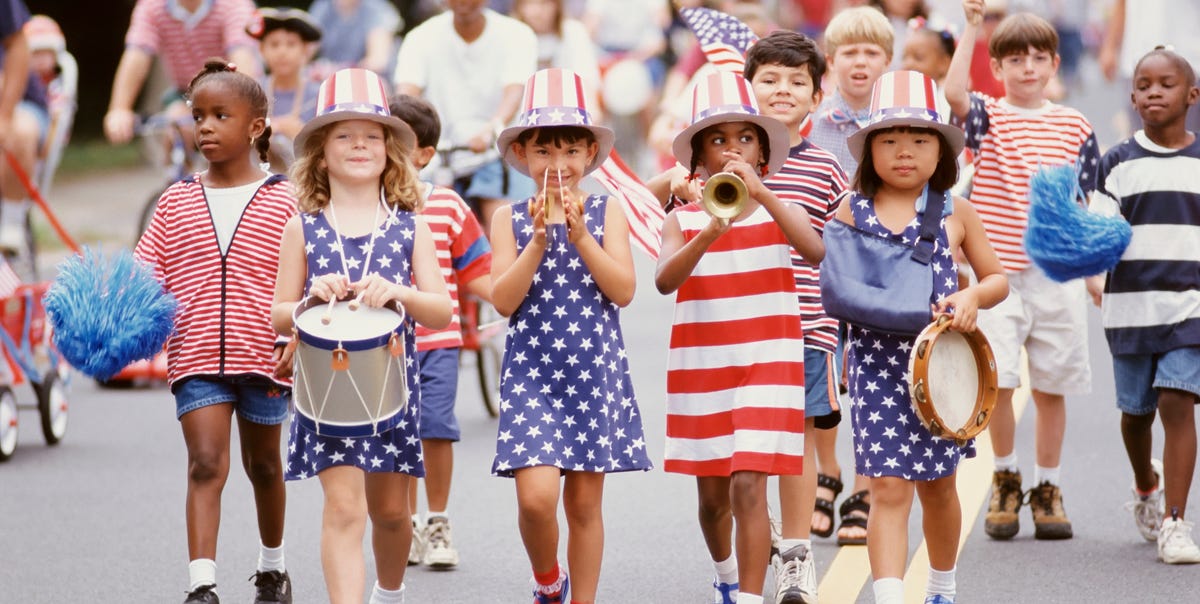
The Fourth of July arrives with fireworks, neighborhood parades, backyard barbecues, and at least one person wearing enough stars and stripes to qualify as a walking flag. Behind all that red, white, and blue, however, is a fascinating collection of American history, surprising coincidences, presidential milestones, and wonderfully odd traditions.
These 50 Fourth of July facts and trivia questions are suitable for adults, kids, classrooms, family gatherings, and Independence Day parties. Some are easy enough for young patriots, while others may stump the relative who confidently announces, “I know American history.” Hand that person Fact No. 1 and watch the fireworks begin early.
Fourth of July History Facts
The Declaration and America’s Independence
- The colonies voted for independence on July 2. The Continental Congress approved the resolution declaring the colonies independent from Great Britain on July 2, 1776not July 4.
- John Adams expected July 2 to become the national celebration. He imagined future generations marking that date with parades, games, bells, bonfires, and “illuminations.” He predicted the party correctly but missed the date by two days.
- Congress adopted the Declaration on July 4, 1776. That is why Independence Day is celebrated on July 4. The date marks approval of the document explaining the decision to separate from Britain.
- Thomas Jefferson was the Declaration’s principal author. Jefferson prepared the initial draft before Congress debated, edited, and approved the final language.
- Jefferson drafted the document in about 17 days. Apparently, history-changing assignments existed long before students began writing papers the night before they were due.
- A Committee of Five handled the drafting process. Its members were Thomas Jefferson, John Adams, Benjamin Franklin, Roger Sherman, and Robert Livingston.
- The Declaration represented 13 colonies. Those colonies eventually became the first 13 states, which are still represented by the 13 stripes on the American flag.
- There are 56 signatures on the Declaration. The signers represented all 13 newly declared states, although they did not all sign on the same day.
- Most delegates did not sign on July 4. The formal parchment copy was prepared later, and most delegates began signing it on August 2, 1776.
- Benjamin Franklin was the oldest signer. The famous inventor, diplomat, and publisher was 70 years old in 1776.
- Edward Rutledge was the youngest signer. The South Carolina delegate was only 26an age when many modern adults are still trying to understand their health insurance.
- John Hancock’s signature became an expression. As president of the Continental Congress, Hancock placed a large, unmistakable signature on the parchment. Today, asking for someone’s “John Hancock” means asking for a signature.
- The original parchment is displayed in Washington, D.C. Visitors can see it in the Rotunda for the Charters of Freedom at the National Archives.
- Printer John Dunlap worked through the night. After Congress adopted the Declaration, Dunlap printed an estimated 200 broadside copies so the news could be distributed quickly.
- Only 26 Dunlap broadsides are known to survive. These rare single-sheet printings were the breaking-news alerts of 1776, minus the notifications and arguments in the comments section.
- The first formal public readings occurred on July 8. Crowds in Philadelphia and other communities heard the Declaration read aloud several days after its adoption.
- George Washington had it read to his troops. The Declaration was publicly read to the Continental Army in New York on July 9, 1776.
- Mary Katharine Goddard printed a historic edition. Her January 1777 broadside was the first printed version to publicly list most of the signers’ names. Her own full name appeared at the bottom.
- The Declaration is powerful but not legally binding. It announced independence and articulated national ideals; the Constitution later established the federal government’s legal framework.
- Its promise was far from fulfilled in 1776. The statement that people are created equal existed alongside slavery and the exclusion of women, Indigenous people, and many others from political rights. Later generations used those stated ideals to demand broader freedom.
Presidents, Holidays, and Patriotic Traditions
Surprising Independence Day Connections
- The first anniversary celebration took place in 1777. Philadelphia marked the occasion with bells, music, cannon salutes, ships decorated in patriotic colors, and fireworks.
- The 1777 salute honored the 13 states. Cannons fired 13 times, and the evening celebration included 13 rockets.
- Massachusetts recognized the holiday early. In 1781, it became the first state to make July 4 an official state celebration.
- The White House first hosted an Independence Day celebration in 1801. President Thomas Jefferson welcomed guests for music, food, and festivities.
- July 4 became a federal holiday in 1870. Congress included it in legislation recognizing several national holidays for federal workers in Washington, D.C.
- Bristol, Rhode Island, has America’s oldest continuous Independence Day celebration. Its patriotic exercises began in 1785 and developed into a nationally famous annual celebration.
- John Adams and Thomas Jefferson died on the same Fourth of July. Both former presidents died on July 4, 1826the 50th anniversary of the Declaration’s adoption.
- James Monroe also died on July 4. The fifth president died in 1831, making him the third former president to die on Independence Day.
- Calvin Coolidge was born on July 4. Born in Vermont in 1872, the 30th president remains the only U.S. president born on Independence Day.
- The Declaration once took a trip to Fort Knox. During World War II, it and other founding documents were secretly moved to the U.S. Bullion Depository in Kentucky for protection.
American Flag and Patriotic Music Trivia
Stars, Stripes, Bells, and Songs
- The flag has 13 stripes. Its seven red and six white stripes represent the 13 original colonies.
- The 50 stars represent the states. Each state has one star on the blue field, officially called the union.
- The current flag debuted on July 4, 1960. Its 50th star was added after Hawaii became a state in 1959.
- New stars officially appear on the Fourth of July. Under federal law, a star for a newly admitted state is added on the Independence Day following admission.
- Red, white, and blue carry traditional meanings. They are commonly associated with valor and bravery, purity and innocence, and vigilance, perseverance, and justice.
- Flag Day is a different observance. Celebrated on June 14, it commemorates the Continental Congress’s adoption of the Stars and Stripes design in 1777.
- The flag that inspired the national anthem had 15 stars and 15 stripes. It flew over Fort McHenry during the War of 1812 and inspired Francis Scott Key’s lyrics.
- “The Star-Spangled Banner” became the national anthem in 1931. Americans sang it for generations before Congress officially gave it that status.
- The Liberty Bell weighs more than a ton. The National Park Service lists its original weight at approximately 2,080 pounds.
- There is no reliable evidence that the Liberty Bell rang on July 4, 1776. The famous story is patriotic folklore. Because of its crack, the bell is ceremonially tapped rather than rung today.
Fireworks, Food, and Celebration Facts
The Science and Snacks Behind the Holiday
- Fireworks are much older than the United States. Their development is generally traced to ancient China, where bamboo and early explosive mixtures were used to create loud bangs.
- Fireworks were part of American celebrations from the beginning. Philadelphia’s 1777 festivities established a tradition that matched John Adams’s vision of nighttime “illuminations.”
- Firework colors come from chemical compounds. Strontium compounds help produce red, copper creates blue, barium produces green, and sodium contributes bright yellow.
- Blue is a particularly difficult firework color to create. Copper compounds need carefully controlled temperatures, making a vivid blue burst trickier than many warmer colors.
- Sparklers are not harmless toys. They burn at extremely high temperatures and caused an estimated 1,700 emergency-room-treated injuries in the United States in 2024.
- Fireworks laws vary by location. A product sold legally in one state, county, or city may be restricted in another. Local rules should always be checked before lighting anything.
- Professional displays are the safest way to enjoy fireworks. They provide larger effects, trained operators, controlled launch areas, and no awkward moment involving a garden hose and someone’s smoking lawn chair.
- Hot dogs are an unofficial symbol of the holiday. Industry estimates frequently suggest Americans eat around 150 million hot dogs on Independence Day.
- July is National Hot Dog Month. The calendar has excellent timing: peak grilling season arrives just as millions of Americans begin planning holiday cookouts.
- Cookout food has its own “danger zone.” Bacteria grow rapidly between 40°F and 140°F. Perishable food should generally be refrigerated within two hoursor one hour when outdoor temperatures exceed 90°F.
How to Turn These Fourth of July Facts Into a Memorable Experience
The best Independence Day trivia does more than fill silence while everyone waits for the burgers. It creates conversations across generations. A child may be fascinated by the chemistry that turns fireworks green, while an adult may be genuinely surprised that Congress voted for independence on July 2. Suddenly, the picnic table becomes a miniature history classroomonly with more potato salad.
Create a Family Trivia Challenge
Divide guests into mixed-age teams so that children, teenagers, parents, and grandparents can contribute different kinds of knowledge. Read selected facts as questions before revealing the answers. For example, ask, “How many people signed the Declaration of Independence?” or “Which three presidents died on July 4?” Award one point for a correct answer and a bonus point for an accurate explanation.
Keep the game friendly and reasonably short. Fifteen to 20 questions usually work better than an interrogation lasting until the fireworks begin. Small prizes can include patriotic stickers, frozen treats, or the highly respected privilege of choosing the next song.
Add History to a Neighborhood Celebration
A community gathering becomes more meaningful when the celebration connects local traditions with national history. Print several surprising Fourth of July facts on cards and place them near food tables, lawn games, or seating areas. Guests can discover a new fact while refilling lemonade or waiting for a turn at cornhole.
Children can create a timeline beginning with the vote on July 2, followed by adoption on July 4, the public readings, and the August signing. This activity corrects the familiar image of every founder gathering around one table on one dramatic afternoon. Real history is often messierand therefore more interestingthan the painting.
Build an Experience Around the Senses
Independence Day is remembered through sights, sounds, smells, and tastes. A parade offers drums and decorated bicycles. A cookout brings smoky barbecue and cold watermelon. After sunset, a professional fireworks show adds booming sound and vivid color. Connecting trivia to these experiences helps facts stick.
Before a fireworks display, ask children to predict which chemical creates each color. When red, blue, green, and yellow bursts appear, they can match the display to strontium, copper, barium, and sodium. Protective ear coverings are helpful for young children and anyone sensitive to loud noise.
Make the Celebration Inclusive
Not everyone enjoys crowds, heat, fireworks, or long parades. A successful celebration can include a quiet indoor trivia game, a historical documentary, a craft table, or a livestream of a professional display. Pets often find fireworks frightening, so they should have a secure indoor space away from sudden noise.
It is also worth discussing the difference between America’s founding promises and the realities of 1776. The Declaration’s language inspired movements for abolition, voting rights, civil rights, and equality precisely because many people had originally been excluded. This fuller story allows adults and children to celebrate progress while understanding that liberty is an ongoing responsibility.
Finish With a New Family Tradition
Invite each guest to share one freedom, opportunity, community helper, or American place they appreciate. Write the answers in an annual Independence Day notebook. Over time, that modest ritual can become more memorable than the loudest firework because it records how a family’s experiences and perspectives change from year to year.
Conclusion
The best 4th of July facts reveal that Independence Day is more than a summer cookout with an enthusiastic fireworks budget. It commemorates a complex historical turning point, a powerful statement of ideals, and generations of Americans who have worked to expand the meaning of freedom.
Use these fun trivia facts to entertain children, challenge adults, start thoughtful conversations, or rescue a party from another debate about the correct way to grill a hot dog. Celebrate safely, keep cold food cold, leave major fireworks to trained professionals, and remember that even John Adams occasionally got a date wrong.
Note: Historical accounts can contain popular legends that differ from surviving evidence. The facts above distinguish documented history from familiar Fourth of July folklore wherever appropriate.