Note: This article is based on public information from U.S. Navy materials, NAVSEA announcements, RTX/Raytheon product information, DSCA notices, defense testing summaries, and reputable defense reporting. No source links are included so the HTML can be copied cleanly for web publishing.
Introduction: The Last Line of Defense Just Got Sharper Teeth
Modern naval warfare is not a slow-motion chess match anymore. It is closer to speed chess played in a thunderstorm, while someone throws hypersonic darts at the board. Anti-ship cruise missiles can skim low over the waves, drones can attack in swarms, and fast boats can rush a warship before anyone onboard has finished their coffee. In that kind of environment, a Navy ship needs more than armor and confidence. It needs a defensive weapon that reacts fast, tracks smart, and hits hard.
That is where the RIM-116 Rolling Airframe Missile, better known as RAM, earns its reputation. This compact ship defense missile is designed to protect vessels against anti-ship cruise missiles, aircraft, helicopters, drones, and certain surface threats. It is not the biggest missile in the fleet, nor the one most likely to appear in a blockbuster movie trailer. But when a threat gets close, RAM becomes the ship’s “not today” button.
The headline-grabbing part is that the Navy’s ship defense missile has become deadlier through major improvements in the RAM Block 2 family, followed by newer Block 2A and Block 2B developments. These upgrades focus on better maneuverability, improved guidance, stronger seeker performance, and smarter performance against complex raids. In plain English: the missile is better at chasing down dangerous targets that twist, dive, hide, or arrive in ugly numbers.
What Is the RIM-116 Rolling Airframe Missile?
The RIM-116 Rolling Airframe Missile is a short-range naval surface-to-air missile built for point defense. “Point defense” means it protects the ship itself and nearby assets from threats that have broken through outer defensive layers. Think of it as the bouncer at the final door of a very expensive floating nightclub.
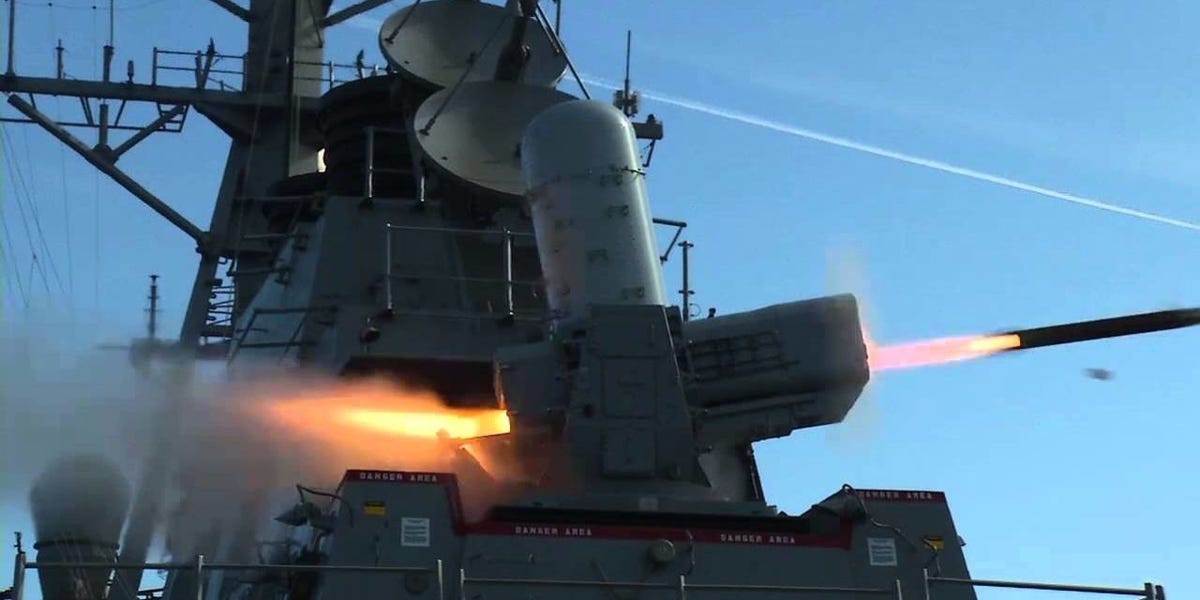
RAM was developed as a U.S.-German cooperative program and has become a key part of ship self-defense for the U.S. Navy and allied fleets. It is used with launch systems such as the Mk 49 Guided Missile Launching System and the SeaRAM system. The Mk 49 launcher carries 21 missiles, while SeaRAM combines sensors derived from the Phalanx Close-In Weapon System with an 11-round RAM missile launcher. That combination gives some ships an autonomous, fast-reacting defense system that can detect, track, and engage threats with reduced dependence on the ship’s broader combat system.
The missile is called “Rolling Airframe” because it rolls in flight. That spinning motion helps simplify control and stabilization while the missile races toward its target. It is a clever piece of engineering: compact, fast, and built to operate in the messy, low-altitude world where sea-skimming missiles try to hide in radar clutter.
Why Ship Defense Missiles Matter More Than Ever
For decades, naval planners worried about anti-ship missiles launched from aircraft, submarines, surface ships, and coastal batteries. Today, the threat list has grown longer. Warships must also account for cheap drones, one-way attack systems, loitering munitions, electronic warfare, and coordinated attacks where several weapons arrive from different directions at nearly the same time.
This is the nightmare scenario for ship defense: not one incoming missile, but a raid. A raid can include multiple missiles, decoys, drones, and electronic tricks designed to overwhelm sensors and defensive weapons. In that environment, reaction time shrinks. A ship’s crew may have seconds to detect, classify, assign weapons, and fire. No pressure, right?
That is why the Navy does not rely on a single shield. A modern warship uses layered defense. Long-range interceptors may engage threats far away. Medium-range missiles add another barrier. Electronic warfare systems can confuse or seduce incoming weapons. Guns and close-in weapon systems wait near the ship. RAM fits into this layered structure as a high-speed close-defense missile, especially valuable when the fight gets close and personal.
What Made RAM Block 2 More Dangerous?
The big leap came with RAM Block 2. Earlier RAM versions were already serious weapons, but Block 2 was designed for more demanding targets, especially faster and more maneuverable anti-ship missiles. The upgrade included a more powerful rocket motor, improved control surfaces, an advanced control actuator system, updated guidance components, and a more capable passive radio-frequency seeker.
Those changes matter because intercepting an incoming missile is not like hitting a stationary target at a shooting range. The target may be moving at high speed, flying only a few feet above the water, and maneuvering hard to avoid interception. A defensive missile must not only be fast; it must preserve enough energy to keep turning aggressively near the end of flight. That is where better kinematics come in.
“Kinematics” is defense-engineer language for how well the missile moves: speed, range, acceleration, turning ability, and energy management. A missile that can turn harder and maintain speed through high-G maneuvers has a better chance of catching a target that refuses to fly politely in a straight line.
More Speed and Maneuverability
The Block 2 missile’s stronger motor and improved control design give it more reach and agility than earlier versions. Public descriptions of the upgrade have emphasized significant gains in maneuverability and effective intercept range. That means the defending ship gets a larger protective bubble and a better chance to engage threats before they reach the danger zone.
This is not just about making the missile “faster” in a simple drag-race sense. The key is usable speed. If a missile burns energy while making sharp turns, it can run out of performance right when it needs it most. Block 2’s improvements help keep the missile dangerous during the most important phase of the intercept: the final chase.
A Smarter Seeker for Harder Targets
RAM uses passive guidance methods, including radio-frequency and infrared sensing depending on the variant and engagement mode. A passive seeker is valuable because it does not need to broadcast energy like a radar, making it harder for the target to detect or exploit. The missile can home in on emissions from an incoming missile or use infrared signatures to guide itself in the terminal phase.
Block 2’s upgraded passive radio-frequency seeker improves the missile’s ability to detect and track modern threats, including those that may use low-probability-of-intercept radar behavior. In simple terms, some incoming missiles try to whisper instead of shout. A better seeker helps RAM hear the whisper.
RAM Block 2A: Software Makes the Missile Meaner
Not every missile improvement requires a dramatic new airframe. Sometimes the most important upgrade is software. RAM Block 2A is a good example. The upgrade has been described as improving guidance and threat-defeat capability, allowing the missile to better handle evolving targets.
Software upgrades are especially important in modern missile defense because threats change quickly. A new anti-ship missile may use different flight profiles, electronic behavior, or terminal maneuvers. Updating the missile’s logic can improve how it interprets sensor data, chooses an intercept path, and responds during the final seconds of engagement.
That may sound less exciting than a bigger rocket motor, but in practice it can be just as important. A missile that thinks faster and chooses better is often more valuable than one that simply sprints harder. In naval defense, brains and muscle work best as a team.
RAM Block 2B: Built for Complex Missile Raids
The next major step is RAM Block 2B, a development aimed at improving performance against complex raid scenarios. Public reporting has described Block 2B as incorporating a new infrared seeker, improved radio-frequency receiver software, and missile-to-missile link capability. That last feature is especially interesting.
A missile-to-missile link can help missiles coordinate during salvo engagements. When multiple incoming threats are in the air, defensive missiles need to avoid wasting two interceptors on one target while another threat slips through. Better coordination can improve raid handling, target assignment, and overall defensive efficiency.
This is where “deadlier” becomes more than a catchy headline. The upgrade is not just about destroying one target more dramatically. It is about surviving a messy, multi-threat attack where timing, coordination, and target discrimination are everything. A missile that can fight smarter in a crowd is far more valuable than one that only shines in a one-on-one duel.
SeaRAM: The Missile Launcher With Its Own Eyes
SeaRAM is one of the most important ways RAM reaches the fleet. It blends the sensor package and combat-management features associated with the Phalanx Close-In Weapon System with an 11-cell RAM launcher. Instead of firing a 20mm Gatling gun, SeaRAM fires guided missiles.
This gives ships a compact defensive system with its own sensors and engagement capability. For vessels that may not have large, complex air-defense suites, SeaRAM offers a powerful self-defense option. For larger ships, it adds another layer of protection. It is especially relevant for threats that appear suddenly, fly low, or approach inside the time window where larger systems may already be fully tasked.
SeaRAM has been used on selected U.S. Navy ships and has gained international attention. Australia’s selection of SeaRAM for future upgraded Mogami-class frigates shows how attractive the system has become for allied navies that want compact, modern, missile-based self-defense.
How RAM Fits Into the Navy’s Layered Defense
It is tempting to imagine one miracle weapon swatting every threat out of the sky. Real naval defense is more complicated. A warship may use Standard Missiles for long-range defense, Evolved Sea Sparrow Missiles for medium-range protection, electronic warfare for soft-kill defense, decoys to lure threats away, guns for close engagements, and RAM for high-speed point defense.
RAM does not replace those systems. It complements them. Its value comes from being compact, responsive, and optimized for the close-in fight. When an incoming missile gets through the outer layers, RAM gives the ship another chance to survive. In naval combat, another chance can be the difference between mission success and a very bad day at sea.
The missile’s fire-and-forget nature is also important. After launch, RAM does not require continuous shipboard illumination. That frees the ship’s combat system to manage other threats and reduces the burden during high-stress engagements. When several threats are inbound, every saved second and every freed sensor channel matters.
Why Drones Make RAM Even More Relevant
The rise of drones has changed the economics of air defense. A million-dollar missile is not always the ideal answer to a low-cost drone. However, not every drone is harmless or cheap, and not every engagement gives a ship the luxury of choosing the perfect weapon. Some unmanned systems can carry explosives, scout for missile attacks, jam sensors, or coordinate with larger strike packages.
RAM and SeaRAM give commanders another tool for close-range air defense against certain unmanned threats, especially when speed and certainty matter. The Navy is also exploring lower-cost counter-drone interceptors and other defenses, but missile-based point defense remains essential when the incoming object is fast, dangerous, and close.
The future will likely involve a mix of weapons: missiles, guns, electronic attack, directed energy, decoys, and automated battle-management systems. RAM’s upgrades keep it relevant in that mix by improving the missile’s ability to defeat modern targets rather than yesterday’s easier problems.
The Strategic Message Behind a Better Ship Defense Missile
A deadlier RAM is not only a technical story. It is a strategic message. The U.S. Navy operates in regions where adversaries have invested heavily in anti-access and area-denial weapons. These include coastal missile batteries, aircraft-launched anti-ship missiles, submarine threats, and long-range surveillance networks designed to find and target surface ships.
Improving close-in defense helps preserve naval freedom of maneuver. Aircraft carriers, destroyers, amphibious ships, littoral combat ships, and allied frigates all need credible self-defense. A ship that can better survive missile attacks is a ship that can stay in the fight, protect sea lanes, support allies, and deter aggression.
There is also an alliance angle. RAM is used or sought by multiple partner navies, including countries operating in strategically sensitive waters. When allies share compatible defensive systems, they improve logistics, training, interoperability, and collective deterrence. In other words, RAM is not just a missile; it is part of a shared defensive ecosystem.
Specific Examples: From Carriers to Smaller Combatants
One reason RAM has remained important is its flexibility. It can protect large ships such as aircraft carriers and amphibious assault ships, but it can also be fitted to smaller combatants. That matters because not every vessel has the space, power, or budget for a full-scale Aegis-style defense suite.
On a large ship, RAM acts as one of several defensive layers. On a smaller ship, SeaRAM can be a major part of the ship’s self-defense architecture. The system’s relatively compact footprint makes it useful across different hull types. That adaptability is one reason RAM has appeared on fleets around the world.
Another example is the growing interest in protecting ships against saturation attacks. A single incoming missile is dangerous; a coordinated attack is worse. Block 2B’s focus on complex raid environments reflects the reality that future naval battles may involve multiple simultaneous inbound weapons. The missile’s evolution is therefore shaped by real-world threat trends, not laboratory imagination.
Limitations: No Defense System Is Magic
RAM is impressive, but no defense system is invincible. Close-in defense happens under brutal time pressure. Weather, clutter, electronic warfare, target behavior, and engagement geometry can all affect performance. A ship’s survival depends on the entire combat system: sensors, crew training, doctrine, maintenance, command decisions, and layered weapons working together.
That is why the Navy continues testing, upgrading, and integrating defensive systems. The missile is only one piece of the puzzle. A great interceptor still needs accurate detection, smart threat evaluation, and proper fire-control decisions. The best defensive architecture is not one shiny weapon; it is a coordinated network that can adapt faster than the attacker.
Experience Section: What This Missile Teaches About Modern Naval Defense
Looking at RAM’s evolution offers a practical lesson for anyone trying to understand modern military technology: small systems can have enormous strategic value. The RIM-116 is not as famous as the Tomahawk cruise missile or the SM-6, but in a close-range defensive fight, fame does not matter. Performance does.
The first experience-based takeaway is that naval defense is a game of seconds. A sea-skimming missile may appear late because it hides below radar horizons. By the time it is detected, classified, and assigned to a weapon, the defending ship may have very little time left. In that environment, automation, training, and missile responsiveness are not luxuries. They are survival tools.
The second lesson is that upgrades often matter more than brand-new weapons. RAM Block 2 did not throw away the entire concept and start from scratch. Instead, it improved the missile’s motor, control system, seeker, and guidance. Block 2A and Block 2B continued that pattern by refining software, seeker capability, and raid-defense behavior. This is how mature defense systems stay relevant: they evolve as threats evolve.
The third lesson is that the cheapest threat can still force an expensive response. Drones and low-cost missiles create a cost problem for navies. A ship cannot ignore a cheap incoming weapon just because it was inexpensive. If it can damage a radar, start a fire, or distract the crew during a larger attack, it must be handled. RAM is part of the answer, but the broader solution will include cheaper interceptors, electronic warfare, directed energy, and better decision systems.
The fourth lesson is that allied adoption matters. When countries such as Japan, Germany, Australia, and others invest in RAM or SeaRAM-related systems, they are not simply buying hardware. They are aligning with a defensive approach built around fast reaction, layered protection, and interoperability. In contested waters, allied ships that can defend themselves and operate together complicate an adversary’s planning.
The fifth lesson is that close-in defense is emotionally uncomfortable but operationally necessary. Nobody wants the final defensive layer to be tested. If RAM is firing, something dangerous has already gotten close. But that is exactly why the system must be reliable, upgraded, and ready. The last line of defense is not where a navy can afford “good enough.” It needs “hit the target right now, please and thank you.”
For readers following naval technology, RAM is a reminder that the future of warfare is not only about giant platforms and headline weapons. It is also about the compact systems that keep those platforms alive. A carrier strike group may project power across oceans, but its survival depends on dozens of defensive details working correctly under pressure. A sharper RAM missile is one of those details, and it is a deadly important one.
Conclusion: A Smaller Missile With a Bigger Role
The Navy’s ship defense missile got deadlier because the threat environment demanded it. RAM Block 2 brought better speed, maneuverability, seeker performance, and intercept capability. Block 2A refined guidance through software improvements. Block 2B pushes the system further toward handling complex raids, improved sensing, and missile-to-missile coordination.
In a world where anti-ship missiles, drones, and saturation attacks are becoming more common, ship self-defense can no longer be treated as a backup feature. It is central to naval survival. RAM may be compact, but its mission is enormous: stop the weapon that got too close.
That is why the Rolling Airframe Missile remains one of the most important defensive tools in the Navy’s arsenal. It is fast, smart, adaptable, and increasingly capable against modern threats. The missile may not be the loudest star in the fleet, but when danger comes skimming over the waves, RAM is the kind of quiet professional every ship wants on watch.