The economy in 2026 is doing that thing it loves to do: sending mixed signals with complete confidence. One report says consumers are still spending. Another says inflation just got a fresh jolt from energy prices. Stocks are acting like they’ve already read the happy ending, while homebuyers are still staring at mortgage rates like they’re horror movie villains. In other words, the economy is not collapsing, not booming, and definitely not making life simple.
That is what makes the current state of the economy and markets so fascinating. The United States is still growing, but more slowly than investors would prefer. The labor market is still producing jobs, but not with the same swagger it had a year or two ago. Inflation has cooled from its worst period, yet it keeps finding sneaky ways to stay annoying. Meanwhile, Wall Street has shown real resilience, helped by earnings optimism, technology enthusiasm, and a market talent for shrugging off bad news until it absolutely cannot.
If you are trying to understand where the U.S. economy stands right now, the big picture is this: growth is softer, inflation is still above target, consumers are cautious but not frozen, the Federal Reserve is waiting for clearer evidence, and markets are balancing optimism with a very real fear that another surprise could show up and flip the mood by lunchtime.
A Quick Snapshot of the Economic Backdrop
The current economic environment is best described as a late-cycle balancing act. The economy is still moving forward, but it is no longer cruising on easy momentum. Real GDP growth slowed sharply in late 2025, showing that strong bursts of demand earlier in the year were not enough to keep the pace elevated forever. Consumer spending remains the main engine, but households are dealing with higher fuel costs, still-elevated borrowing costs, and a labor market that feels less generous than it did when job openings seemed to multiply like rabbits.
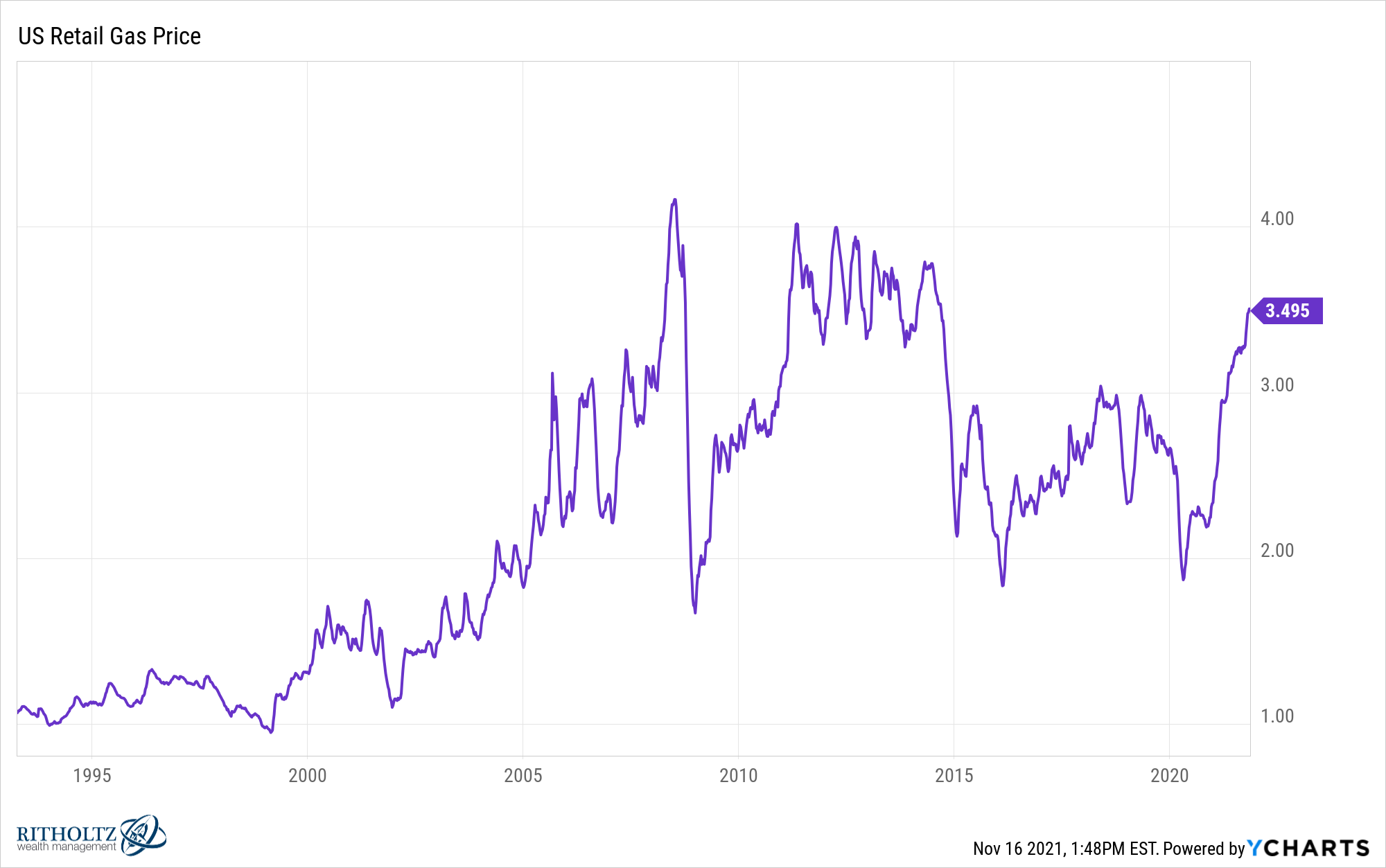
At the same time, inflation is not behaving like a problem that has politely agreed to leave. Underlying price pressures have improved compared with the worst inflation surge, but energy prices injected fresh drama into the story. That matters because households do not experience inflation in the abstract. They experience it at the pump, at the grocery store, and on the credit-card statement they avoid opening until after coffee.
Financial markets, meanwhile, have proven more upbeat than many expected. Large-cap U.S. stocks have remained strong, especially in technology-related areas, while Treasury yields suggest investors still expect inflation and Federal Reserve policy to matter for a while. Put simply, markets are not pricing in a disaster. They are pricing in a messy but survivable economy.
Inflation: Better Than the Bad Old Days, Still Too High for Comfort
Inflation is no longer the five-alarm fire it was at its peak, but it is still warm enough to keep the Federal Reserve from relaxing. Recent consumer and producer price data show that price growth remains uneven. Core inflation trends are more moderate than the headline numbers suggest, but the return of energy-driven price pressure has reminded everyone that inflation can cool for months and then suddenly show up wearing steel-toe boots.
For households, this means the cost of living conversation has changed, but it has not disappeared. Consumers are no longer dealing with the same universal price spikes that made every errand feel like a hostile negotiation. Instead, they are facing a narrower but still painful set of pressures: shelter, insurance, transportation, and energy-related costs that can quickly ripple through budgets.
The Fed’s preferred inflation measure has also been moving in the right direction only gradually. That is important because the central bank is trying to distinguish between temporary price shocks and more persistent inflation. If gasoline spikes and then fades, policymakers can squint through it. If higher costs spread through services, wages, and corporate pricing behavior, that is harder to ignore. Right now, inflation does not look out of control, but it also does not look defeated.
Why Inflation Still Matters to Markets
Inflation affects far more than grocery receipts. It influences bond yields, stock valuations, corporate margins, and consumer psychology. When inflation stays sticky, the Fed has less room to cut rates. When the Fed stays on hold, borrowing costs remain higher for longer. When money is more expensive, housing stays strained, companies become pickier about expansion, and investors have to work harder to justify rich valuations in the stock market.
That is why markets reacted so strongly to signs that wholesale inflation was not as bad as feared, even as annual price pressures remained elevated. Investors are desperate for proof that inflation is cooling enough to keep the economic expansion intact. Think of it as Wall Street rooting for a “not too hot, not too cold” economy. Goldilocks has never been this heavily quoted on trading desks.
The Labor Market: Still Standing, Just Less Cocky
The labor market remains one of the strongest pillars supporting the economy, but it no longer looks unstoppable. Employers are still hiring, and the unemployment rate remains relatively low by historical standards. That is the good news. The less cheerful news is that hiring has become more selective, job openings have come down from hotter levels, and workers no longer have the same leverage they enjoyed when employers were tossing signing bonuses around like parade candy.
This shift matters because the labor market drives everything from household confidence to spending patterns. When people feel secure in their jobs, they are more likely to travel, renovate, dine out, and keep the economy moving. When they start hearing about fewer openings, smaller raises, or slower hours, they become more cautious. That does not instantly cause a recession, but it does change behavior in ways that can cool growth.
So far, the labor market looks more normal than weak. Payroll growth continues, unemployment remains manageable, and layoffs have not spiraled into something ugly. But the red-hot labor environment that once helped power strong consumer demand has cooled into something more ordinary. Ordinary is fine. Ordinary is healthy. Ordinary just happens to feel disappointing after several years of extraordinary.
Wages, Confidence, and the Consumer Mood
Consumers are still spending, but they are not exactly humming show tunes while doing it. Confidence readings suggest households feel the weight of higher costs and uncertainty. Even when the job market is holding up, people can become more nervous if inflation flares, gas prices rise, or headlines start sounding like a stress test. That tension is visible in today’s economy: spending is still there, but the emotional vibe is less “let’s splurge” and more “do we really need the extra guacamole?”
Businesses are noticing the same thing. Companies tied to essentials and value-conscious spending still have a solid argument. Firms that depend on carefree discretionary purchases may have to fight harder. Consumers have not disappeared; they have simply become more choosy. That is a very different challenge.
Growth: Positive, Uneven, and Doing Most of the Heavy Lifting Through Consumers
Economic growth has slowed, but the economy is still growing. That distinction matters. A slowdown is not the same thing as a contraction. Real GDP weakened significantly in the latest full-quarter reading, and that tells us the U.S. economy entered 2026 with less momentum than many investors hoped. Still, consumer spending has continued to provide support, and that has prevented a softer patch from turning into something more severe.
Recent spending data suggest households are still active, even if their budgets are under pressure. Online shopping remains firm, restaurants continue to pull in customers, and service spending has not rolled over. But stronger spending has been paired with softer personal income growth, which is not the world’s most comforting combination. When people spend faster than income grows, it raises questions about savings, borrowing, and how long that pattern can last.
This is why the current state of the economy feels so split-screen. On one side, demand is still alive. On the other, the support beams underneath that demand do not look indestructible. The economy is moving forward, but it is doing so with a slightly dramatic limp.
The Federal Reserve: Patient, Cautious, and in No Mood for Victory Laps
The Federal Reserve has made it clear that it is not ready to declare mission accomplished. Interest rates remain restrictive by recent historical standards, and the central bank is still trying to judge whether inflation will settle down on its own or prove stubborn enough to require more patience. That has left monetary policy in an awkward but understandable place: the Fed is waiting, watching, and refusing to be rushed by either markets or politicians.
This stance makes sense. Cut rates too soon, and inflation could reaccelerate. Keep policy tight for too long, and the economy could weaken more than necessary. It is the kind of choice that guarantees someone will be angry no matter what happens. That, in fairness, is basically the Fed job description.
For investors, the message is simple: do not assume easy money is right around the corner. The central bank still needs evidence. Markets may flirt with rate-cut hopes every time inflation data cools for five minutes, but the bigger trend suggests policymakers want sustained proof, not one lucky report and a dramatic group text.
Housing: Still a Tough Neighborhood
If you want a real-world picture of how the economy feels, look at housing. Mortgage rates have eased from their worst levels but remain high enough to damage affordability. Existing-home sales are still sluggish, and many buyers are stuck between expensive financing and high prices. Sellers are not exactly having a carefree time either, because the market is still constrained by affordability, rate lock-in, and uneven regional demand.
Housing is one of the clearest examples of why the economy feels fine on paper and frustrating in practice. A labor market that is still decent should support housing demand. Lower inflation should help eventually. And yet, when financing a home still feels like adopting a small dragon, buyers remain cautious. That is why housing continues to underperform relative to what a healthy labor market might otherwise suggest.
For the broader economy, this matters because housing spills into everything: construction, furniture, renovations, lending, moving services, appliances, and local confidence. A housing market that is merely stuck, rather than collapsing, is still a drag on momentum.
Markets: Resilient, Selective, and Very Aware of Earnings
U.S. financial markets have been more resilient than the macro headlines alone might suggest. Broad equity benchmarks have traded near recent highs, and technology-heavy indexes have shown particular strength. Investors have leaned into the idea that large companies with pricing power, healthy balance sheets, and exposure to long-term growth themes can keep performing even if the overall economy cools.
This has created a market that is both optimistic and selective. Not everything is working. Smaller companies remain more sensitive to financing costs and economic softness. Interest-rate-sensitive sectors still react sharply to every move in Treasury yields. And cyclical businesses have to prove they can protect margins if input costs rise. But overall, the market has found enough reasons to stay afloat: earnings expectations, artificial intelligence investment, big-tech profitability, and the belief that the economy is bending rather than breaking.
Bond markets tell a slightly more cautious story. Treasury yields remain elevated, which reflects persistent inflation concerns and uncertainty about Fed policy. Investors are not behaving as though a recession has already arrived. They are behaving as though inflation is still annoying and the path to lower rates may take longer than hoped.
What the Market Is Really Betting On
The stock market is effectively betting on a soft landing with occasional turbulence. That means slower growth, no major recession, manageable inflation, and enough earnings growth to justify current valuations. It is a reasonable scenario, but it is not a guaranteed one. Markets look calmest right before they decide to become extremely emotional. This is one of their more charming habits.
Early earnings reports have reinforced the idea that large parts of corporate America remain in decent shape. Financial firms have shown resilience, market activity has supported fee income, and investors still believe technology and infrastructure spending can carry a lot of weight. If earnings keep holding up, stocks can stay supported even with higher rates. If margins crack or guidance weakens, that story could change quickly.
The Biggest Risks to Watch Next
The first risk is inflation persistence. If energy shocks spill into broader prices, the Fed will stay cautious and households will feel squeezed. The second is labor-market deterioration. A gentle cooling is fine; a sharper hiring pullback would be less fun for everyone except people who enjoy reading recession think pieces for sport.
The third risk is consumer fatigue. So much of the economy depends on households continuing to spend. If income growth softens while borrowing costs stay high, consumers may start defending their wallets with greater seriousness. The fourth risk is geopolitical uncertainty, because markets can handle a lot right up until oil prices or supply chains start acting like they are auditioning for a disaster documentary.
Finally, valuations themselves are a risk. When markets are priced for resilience, bad surprises matter more. A strong market can remain strong for a long time, but it also leaves less room for disappointment.
What This Means for Households, Businesses, and Investors
For households, the takeaway is not panic. It is discipline. This is still an economy where jobs exist, wages are growing in nominal terms, and spending is possible. But it is also an economy where budgeting matters, refinancing is not easy, and higher everyday costs can still ambush you. Households that keep flexibility in their budgets will be better prepared for whatever comes next.
For businesses, this is a time to focus on pricing power, demand visibility, and balance-sheet durability. Companies do not need perfect conditions to perform well, but they do need a clear understanding of which customers are still spending freely and which are trading down. The era of assuming demand will forgive everything is over.
For investors, the lesson is balance. Chasing the hottest part of the market can still work, but concentration risk is real. Quality matters. Cash flow matters. Sensitivity to interest rates matters. The current state of the economy and markets is not a reason to hide under the bed. It is a reason to stop pretending that one narrative explains everything.
Experiences From Living Through This Economy & Markets
Living through this economy feels a little like riding in a car with three people giving directions and none of them agree on where you are going. The stock market says things are fine. The gas station says absolutely not. Your employer says the business is stable, but hiring is frozen. The grocery receipt says you should maybe rethink your relationship with berries. It is not chaos exactly. It is just a strange combination of confidence and caution that follows people through ordinary life.
For many households, the experience is not “the economy is bad” or “the economy is good.” It is more personal than that. It is getting a decent raise and still feeling as though it vanished into rent, insurance, and utilities before it had the chance to become exciting. It is watching your retirement account recover while also realizing your monthly budget still has all the elasticity of a brick. It is reading that unemployment is relatively low and thinking, “Great, but why does everything still feel so expensive?”
Young workers often experience this economy as a weird blend of opportunity and delay. There are jobs, yes, but not always the kind that make long-term goals feel easy. Buying a first home still seems distant for many people. Saving for a down payment while paying elevated rent can feel like trying to fill a bathtub with the drain open. Even solid earners may feel financially respectable on paper and financially cramped in real life.
Older workers and families experience it differently, but not always more comfortably. Parents are making trade-offs in real time, comparing grocery brands, pausing big-ticket purchases, and rethinking vacations that looked affordable six months ago. People with mortgages locked in at lower rates feel lucky, while anyone shopping for a new loan feels as though they showed up late to a sale that ended years ago. Retirees and near-retirees may appreciate higher yields on savings, but they also keep one eye on healthcare costs and market volatility.
Investors are having their own emotional adventure. Watching markets rise while the news sounds anxious can create a special kind of whiplash. One day it feels like the economy is sturdier than feared. The next day inflation data or oil prices remind everyone that risk did not take a vacation. The experience is not just financial; it is psychological. People are learning, again, that markets are not the economy, and the economy is not your household budget, and your household budget definitely does not care what the Nasdaq did before lunch.
What makes this period memorable is how normal it can look from a distance and how tense it can feel up close. No giant crash. No obvious boom. Just a long series of small negotiations with reality. Can I absorb this bill? Should I make this purchase? Is now a smart time to invest more, or am I buying at the wrong moment? The answer, maddeningly, is often “it depends.”
That is the real experience of the current state of the economy and markets: not drama every day, but pressure almost every day. And yet people adapt. They budget more carefully, comparison-shop harder, save when they can, and keep moving forward. It is not glamorous, but it is real. And in many ways, that quiet adaptability may be the most important economic story of all.
Conclusion
The current state of the economy and markets is not a clean story, which is exactly why it deserves careful attention. The U.S. economy is still expanding, but growth has cooled. Inflation has improved from its peak, but it is still stubborn enough to keep the Fed alert. The labor market remains supportive, though less overheated. Housing is still strained. Markets have shown impressive resilience, but much of that strength depends on earnings holding up and inflation not getting another nasty surprise.
So where does that leave us? In a world of cautious optimism. That is not as exciting as a boom and not as terrifying as a bust, but it may be the most accurate description. This is an economy still capable of growing, still capable of supporting markets, and still capable of frustrating nearly everyone at least once a week. In other words, very much alive.