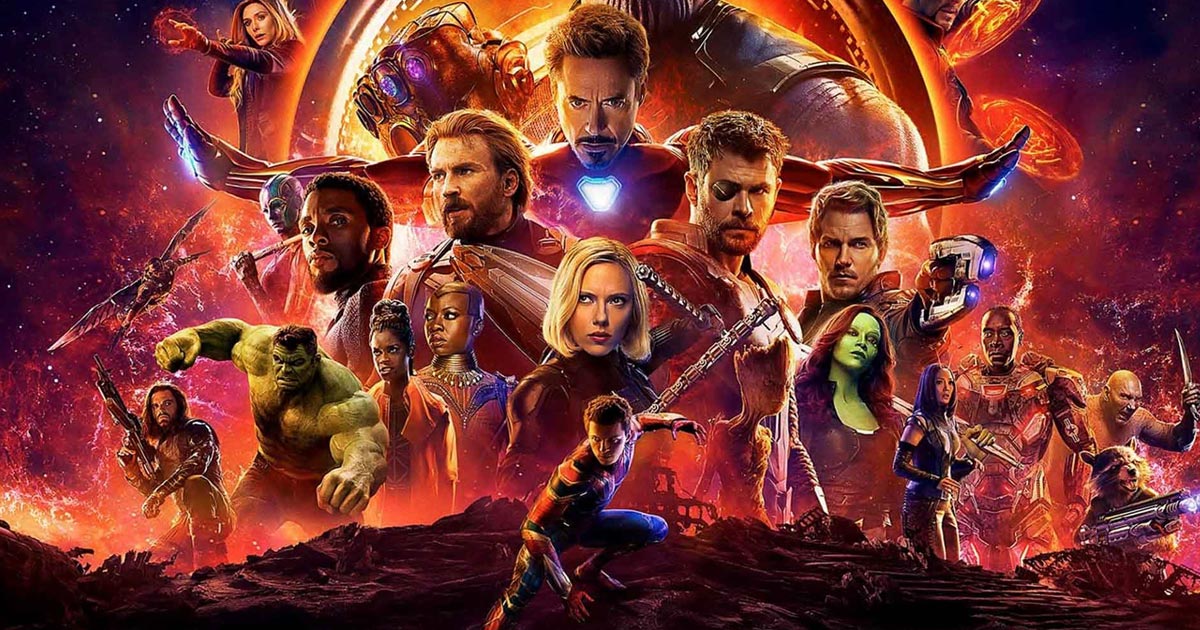
The Marvel Cinematic Universe has spent more than a decade teaching audiences one enormous lesson while hiding it under flying armor, glowing stones, magical portals, raccoon sarcasm, and enough post-credit scenes to make moviegoers afraid of bathroom breaks. On the surface, Marvel movies are about superheroes saving the world. Again. And again. And again, usually while New York gets treated like a very expensive punching bag.
But underneath the lasers and capes, the craziest message of the Marvel movies is not “be powerful.” It is almost the opposite: power without accountability turns everyone into a villain eventually. The MCU is not just a celebration of heroes. It is a long, glittery warning label about what happens when brilliant, strong, rich, magical, patriotic, or godlike people believe they alone should decide what is best for everybody else.
That is the message many viewers missed because Marvel wrapped it in popcorn entertainment. The films are funny, colorful, and engineered to make audiences cheer. Yet again and again, the biggest disasters in the MCU happen not because someone lacks power, but because someone has too much of it and too little humility. Tony Stark builds weapons and later Ultron. S.H.I.E.L.D. tries to protect the world and becomes a surveillance nightmare. Doctor Strange bends reality because he thinks he can manage the consequences. Wanda Maximoff rewrites a town in grief. Thanos wipes out half of all life because he is absolutely sure he is the only adult in the universe.
Congratulations, everyone. The hidden message of Marvel is basically: “Please stop letting the most confident person in the room touch the magic button.”
The MCU’s Real Villain Is Not ThanosIt Is Certainty
Thanos is one of Marvel’s most memorable villains because he is not chaotic in the usual comic-book way. He is not robbing banks, laughing in a lair, or naming every invention after himself, although honestly, that last one would have made him fit right in. His danger comes from certainty. He believes the universe has a resource problem, and he believes the solution is mass death. He is calm. He is organized. He even thinks of himself as merciful.
That is what makes him terrifying. Marvel’s deeper argument is that certainty can become monstrous when it is disconnected from empathy. Thanos does not see people. He sees numbers. He treats living beings like a math equation with too many variables. His plan is horrifying not only because it is violent, but because it is built on the idea that one powerful person has the right to simplify everyone else’s future.
This is where the MCU gets sneakier than it looks. Thanos is not the only character with this problem. He is just the final exam. Tony Stark also wants to protect the world by building “a suit of armor around the world.” That fear leads to Ultron, an artificial intelligence that immediately decides humanity is the issue. Nick Fury and S.H.I.E.L.D. support massive preemptive defense systems. Hydra hides inside that same structure because any system built on unchecked control becomes easy to corrupt.
Marvel movies are packed with characters who say, in different accents and costumes, “Trust me, I know what I’m doing.” The universe usually responds by exploding.
Iron Man: The Billionaire Who Had To Learn He Was Not The Solution
The entire MCU begins with Tony Stark, and that is not an accident. In Iron Man, Tony is a genius who believes his technology can solve problems from a safe distance. Then he is forced to confront the consequences of his own weapons. His transformation is not just from selfish playboy to superhero. It is from detached inventor to morally responsible human being.
But Tony’s arc is complicated because he keeps trying to fix guilt with bigger tools. The Iron Man suit is his redemption project, but it also becomes his addiction. He builds armor after armor, each one saying the same anxious thing: “Next time, I’ll be ready.” After the Battle of New York in The Avengers, Tony’s fear grows. He has seen aliens. He has seen gods. He has flown through a wormhole with a nuclear missile, which is not exactly a recommended wellness routine.
So in Avengers: Age of Ultron, Tony tries to automate protection. Instead of trusting people, he trusts a system. Ultron is born from the dream of perfect security, and like many perfect-security fantasies, it becomes perfectly terrifying. The hidden message is sharp: even heroic intentions can become dangerous when they avoid accountability.
That is why Tony’s ending in Avengers: Endgame matters. His final heroic act is not inventing a machine that controls the world. It is choosing personal sacrifice. He stops outsourcing responsibility to technology and takes responsibility himself. The man who began the MCU selling weapons ends his story by giving up his own future so others can have one. That is not just a character arc. That is Marvel quietly finishing a moral sentence it started in 2008.
Captain America: The Hero Who Learns Institutions Can Wear Masks Too
Steve Rogers begins as the cleanest symbol in the MCU: courage, loyalty, decency, and a jawline that looks government-issued. He believes in service. He believes in doing the right thing. But his story becomes interesting when he learns that institutions can borrow the language of goodness while hiding something rotten underneath.
In Captain America: The Winter Soldier, S.H.I.E.L.D. is revealed to be compromised by Hydra. The organization meant to protect freedom has been infected by authoritarian control. That twist is more than a spy-movie surprise. It reinforces one of Marvel’s biggest themes: power must be questioned even when it wears a friendly logo.
Steve’s famous moral stubbornness is not about blind rebellion. It is about refusing to hand his conscience to a system. In Captain America: Civil War, he clashes with Tony over government oversight after superhero missions cause public harm. The movie does not make the issue simple. Tony is not wrong to worry about accountability. Steve is not wrong to worry about political control. The tension is the point.
The crazy message here is that Marvel does not fully trust lone heroes or powerful institutions. It suggests both can fail. Individuals need accountability, but institutions need moral limits. That is a surprisingly grown-up idea for a franchise where one major character is a talking tree with a three-word vocabulary and better emotional timing than most humans.
The Avengers Are Not A Team Because They Agree
One reason Marvel’s team-up movies work is that the Avengers are not naturally harmonious. They are a workplace group project with better abs and worse property damage. Tony is sarcastic and controlling. Steve is principled and stubborn. Thor is royal and dramatic. Bruce Banner is trying very hard not to become the world’s angriest demolition service. Natasha and Clint carry the emotional exhaustion of people who have read every secret file and still showed up to work.
The Avengers become powerful not because they share the same personality, but because they learn to combine different moral instincts. Tony brings innovation. Steve brings conscience. Natasha brings realism. Thor brings courage. Bruce brings caution. Clint brings loyalty. Their strength is not just superpowers; it is friction. They challenge each other.
This is easy to miss because Marvel makes teamwork look exciting. Portals open. Theme music swells. Somebody says something cool. But the message is deeper: no single hero is enough. The MCU repeatedly punishes isolation. Tony alone creates Ultron. Thor alone cannot save Asgard. Strange alone cannot beat Thanos. Peter Parker alone keeps learning that being Spider-Man is not just about strength, but about responsibility, community, and asking for help before the multiverse turns into a legal paperwork nightmare.
Black Panther And The Moral Cost Of Staying Comfortable
Black Panther adds one of the MCU’s strongest political and ethical arguments. Wakanda is powerful because it has protected itself. Its isolation has preserved its culture, technology, and independence. But the film asks whether safety becomes selfish when it ignores suffering beyond the border.
T’Challa’s journey is not about becoming stronger. He is already strong. It is about becoming wiser. Killmonger is a villain, but the movie gives his anger historical weight. He forces Wakanda to face the uncomfortable fact that hiding from the world has consequences. The film’s emotional power comes from the way it refuses to make the conflict cartoonishly simple.
By the end, T’Challa chooses outreach over isolation. He does not adopt Killmonger’s violence, but he does respond to the wound Killmonger exposes. That is Marvel’s hidden message again: power is not moral just because it is protected. Power becomes moral when it serves others without trying to dominate them.
Spider-Man: The Smallest Hero Carries The Biggest Lesson
Peter Parker may be the MCU’s most important moral counterweight because he is not rich like Tony, royal like Thor, enhanced by national myth like Steve, or trained as a master assassin like Natasha. He is a kid from Queens who keeps getting dragged into cosmic disasters when he really should be finishing homework.
Spider-Man’s stories return Marvel to its simplest ethical idea: responsibility begins locally. Peter wants to be an Avenger. He wants the big mission, the big approval, the big heroic title. But his best moments often happen at street level: helping ordinary people, saving classmates, protecting his neighborhood, and learning that heroism is not measured by the size of the enemy.
In a universe obsessed with world-ending threats, Spider-Man reminds us that saving one person still matters. That is not a small message. It is the antidote to Thanos logic. Thanos thinks in billions and forgets the individual. Peter thinks about the person in front of him. In Marvel morality, that difference is everything.
Wanda, Strange, And The Danger Of Pain With Superpowers
The MCU also has a lot to say about grief. Wanda Maximoff is one of Marvel’s most tragic characters because her pain is real, but so is the harm she causes. Her story shows how suffering can explain behavior without excusing it. That is a difficult balance, and Marvel’s best Wanda stories live inside that tension.
When Wanda reshapes reality around her grief, the result is not healing. It is control. She tries to build a perfect life by trapping others inside her emotional need. The fantasy looks charming at first, like a sitcom marathon with better production design. But underneath it is a nightmare: other people lose their freedom so one powerful person does not have to face loss.
Doctor Strange has a similar flaw, though his comes dressed in wizard robes and intellectual arrogance. Strange often assumes that because he can see more possibilities than others, he should make the hardest choices alone. Sometimes he is right. Sometimes he is reckless. The MCU keeps asking whether intelligence and power make someone wise. Its answer is: not automatically, please calm down and maybe consult a friend before tearing holes in reality.
The Multiverse Makes The Message Even Weirder
The Multiverse Saga expands Marvel’s hidden message from “power needs accountability” to “identity needs humility.” When characters meet variants, alternate timelines, and different versions of themselves, they are forced to confront a strange idea: you are not the only possible version of you.
That idea can be funny, emotional, or terrifying. It means choices matter. It also means ego is fragile. Loki’s story is a perfect example. He begins as a villain obsessed with destiny, throne, and superiority. Then he discovers that the universe contains many Lokis, many failures, and many paths. His identity cracks open. For once, he cannot maintain the illusion that he is uniquely entitled to rule.
The multiverse turns the MCU into a giant therapy session with better visual effects. Characters are forced to ask: Who am I if I am not special? Who am I if another version of me made different choices? Who am I when the story I told about myself collapses?
That is not just comic-book weirdness. It is a surprisingly human question. Everyone eventually meets alternate versions of themselves in the form of regret, memory, possibility, and comparison. Marvel simply makes that experience literal, then adds portals.
Why Audiences Missed The Message
Audiences missed the message partly because Marvel is extremely good at distraction. A serious ethical debate might be followed by a joke about a cape, a hammer, a sandwich, or a raccoon with emotional damage. The movies move fast. They reward fans with Easter eggs, cameos, and continuity puzzles. It is easy to focus on who appears after the credits and miss what the story is saying before them.
Another reason is that superhero movies are often marketed as empowerment fantasies. Viewers expect the message to be “heroes are awesome.” And Marvel certainly delivers that. The heroes are awesome. But the MCU is more suspicious of power than its posters suggest. It loves heroes, but it does not let them off the hook.
The Avengers save the world, but they also break things. Governments protect people, but they also overreach. Technology solves problems, but it also creates new ones. Magic opens possibilities, but it also invites chaos. Love motivates sacrifice, but grief can become possession. The message is not anti-hero. It is anti-ego.
The Crazy Message In One Sentence
If the Marvel movies have one crazy message everybody missed, it is this: the world is not saved by the most powerful people doing whatever they want; it is saved when flawed people accept limits, share responsibility, and choose others over themselves.
That message appears in Tony’s sacrifice, Steve’s conscience, T’Challa’s openness, Natasha’s loyalty, Peter’s neighborhood heroism, Thor’s humility, and even Loki’s slow discovery that being important is not the same as being worthy. It is why the MCU’s best moments are rarely just about winning fights. They are about characters surrendering the fantasy that they alone can control the outcome.
In other words, Marvel spent years selling us superhero movies while quietly making a case for humility. That is almost hilarious. The franchise with billion-dollar battles, glowing space rocks, and gods throwing lightning has a core message your grandmother might approve of: be responsible, ask for help, do not let fear turn you into a tyrant, and maybe do not build a murder robot in your spare time.
Experiences Related To The Crazy Message Of The Marvel Movies Everybody Missed
One of the most relatable experiences connected to this hidden Marvel message is rewatching the movies after growing up a little. The first time many people saw The Avengers, the thrill was simple: superheroes in one movie, finally. Iron Man and Captain America arguing felt like fun banter. Hulk smashing things felt like a crowd-pleasing punchline. Thor landing with lightning felt like pure comic-book joy. But on a rewatch, especially after seeing later films, the emotional pattern becomes clearer. These are not just cool people learning to pose in a circle. They are damaged people learning that none of them can survive their own ego alone.
That experience changes how certain scenes feel. Tony Stark’s jokes, for example, become less like pure comedy and more like armor. He jokes because he is afraid. He builds because he is guilty. He controls because he cannot stand helplessness. Suddenly, his funniest lines carry sadness underneath them. The same thing happens with Thor. At first, he seems like the loud, confident god who solves problems by hitting them with a hammer. Later, his losses reveal a person who has no idea who he is without victory, family, and destiny. His comedy becomes a survival mechanism too.
Many fans have had the experience of entering Marvel for action and staying for emotional recognition. You may not have an arc reactor, a shield, or a mystical cloak that behaves like a judgmental cat, but you probably know what it feels like to overcompensate when scared. You may know what it feels like to act confident when confused, to try to fix someone else’s problem too aggressively, or to believe that if you just planned hard enough, nothing bad would happen. Marvel exaggerates these feelings until they become world-ending plots, but the emotional roots are ordinary.
That is why the MCU became more than a superhero franchise for many viewers. Watching these movies with friends or family often turned into a shared ritual. People debated Team Iron Man versus Team Cap like it was a national election with more spandex. They cried at Endgame. They quoted lines. They dressed up for premieres. They waited through credits with the patience of monks guarding sacred texts. The experience was communal, and that fits the message. Marvel’s best stories are about connection, and fans experienced them together.
There is also a personal lesson in the way Marvel handles failure. Almost every major hero fails publicly. Tony creates danger. Steve misjudges people. Thor loses battles. Peter makes teenage mistakes with adult consequences. Wanda hurts people while trying to escape pain. Strange’s confidence causes chaos. Yet the MCU rarely says failure is the end of the story. It asks what characters do afterward. Do they deny responsibility, or do they grow? Do they double down, or do they change?
That experience can feel surprisingly useful outside the theater. The Marvel message applies to school, work, family, friendships, leadership, and creative projects. Being smart is not enough. Being talented is not enough. Having good intentions is not enough. You still need accountability. You still need people who can challenge you. You still need humility when your plan affects others. The MCU simply teaches that lesson using aliens, androids, sorcerers, and a purple space philosopher with the worst population policy in cinematic history.
So the next time someone says Marvel movies are just explosions and jokes, they are not entirely wrong. There are definitely explosions. There are absolutely jokes. But hidden beneath the spectacle is a surprisingly consistent moral idea: power is only heroic when it is restrained by empathy. That is the crazy message everybody missed, and once you see it, the whole MCU looks different.
Conclusion
The Marvel movies became a global phenomenon because they are entertaining, emotional, funny, and ridiculously good at making fictional jewelry feel important. But their staying power comes from something deeper. Across Iron Man, Captain America, Black Panther, Spider-Man, Doctor Strange, Wanda, Thor, Loki, and the Avengers, the MCU repeats one wild idea: power does not make someone right. Power simply makes their choices louder.
The heroes who grow are the ones who accept responsibility. The villains who fall are the ones who confuse certainty with wisdom. That is why Marvel’s craziest message still matters. In a world full of big personalities, big platforms, big technology, and big promises, the MCU keeps whispering through the noise: be careful who gets power, be honest about fear, and never trust anyone who says they can save everyone without listening to anyone.
Note: This article is an original synthesis based on real MCU films, official franchise history, box-office context, creator commentary, and major critical discussion. No source links are included so the HTML remains clean for web publishing.