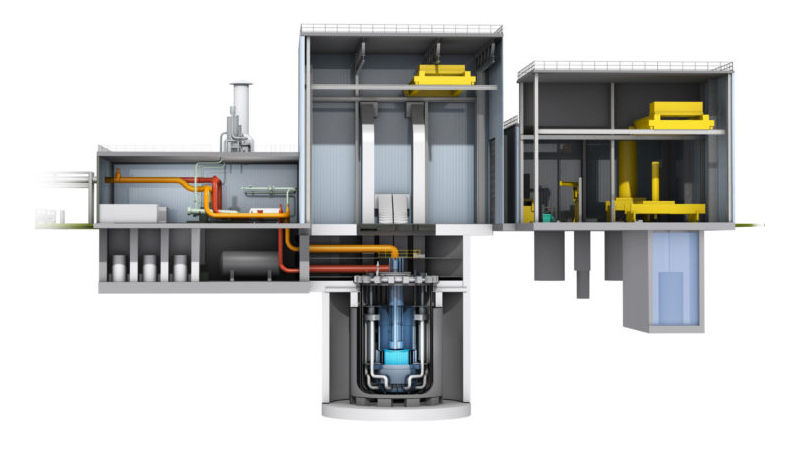
For decades, nuclear power plants have had one famous personality trait: they like to run steadily. They are the dependable friend who shows up on time, wears sensible shoes, and does not appreciate being asked to dance every time solar generation dips behind a cloud. TerraPower’s Natrium reactor is designed to change that image. It is still nuclear power, still built around fission, still intended to produce large amounts of carbon-free electricity. But it adds a clever twist: built-in grid-level thermal storage that lets the plant behave less like an old-school baseload machine and more like a flexible power station for a renewable-heavy grid.
That is the big idea behind TerraPower’s Natrium technology, now being developed at the Kemmerer Power Station Unit 1 site in Wyoming. The project pairs a 345-megawatt electric sodium-cooled fast neutron reactor with a molten salt-based energy storage system that can temporarily boost output to 500 megawatts when electricity demand rises. In plain English: the reactor makes steady heat, the storage system banks some of that heat, and the turbine can deliver extra electricity when the grid needs help. It is nuclear power with a pantry.
The Natrium project matters because America’s power grid is changing quickly. Wind and solar are growing, coal plants are retiring, data centers are multiplying like caffeinated rabbits, and utilities need clean electricity that can show up at dinner time, not just when the weather is feeling cooperative. Natrium is one answer to that challenge: a fast reactor designed not only to generate power, but to support grid flexibility.
What Is TerraPower’s Natrium Reactor?
TerraPower’s Natrium is an advanced nuclear energy system developed by TerraPower and GE Vernova Hitachi Nuclear Energy. Unlike conventional U.S. nuclear power plants, which are mostly light-water reactors, Natrium uses liquid sodium as its reactor coolant. That single design choice changes a lot.
Water-cooled reactors operate under high pressure because water must stay liquid at high temperatures. Sodium, by contrast, can carry heat efficiently at much lower pressure. That allows engineers to design a reactor system that avoids some of the massive high-pressure components found in traditional nuclear plants. Less pressure does not magically make nuclear engineering easynothing about splitting atoms belongs in the “quick weekend DIY” categorybut it can simplify parts of the plant and potentially reduce construction complexity.
Natrium is also a fast neutron reactor. In a fast reactor, neutrons are not slowed down as much as they are in conventional thermal reactors. This type of reactor can use fuel differently and opens the door to future fuel-cycle innovations. The first Natrium plant is expected to use high-assay low-enriched uranium, commonly called HALEU, in metallic fuel. HALEU is enriched more than the uranium used in most existing reactors but remains below weapons-grade levels.
Why Sodium Cooling Is a Big Deal
The name “Natrium” comes from the Latin word for sodium, which is why sodium’s chemical symbol is Na. That little chemistry-class flashback is more than trivia. Sodium is central to the reactor’s design.
Liquid sodium transfers heat very effectively. It can operate at high temperatures without the very high pressures required by water-cooled reactors. Higher temperatures can improve thermal efficiency, meaning more useful electricity can be produced from the same amount of reactor heat. In a power industry where every percentage point matters, thermal efficiency is not a footnote; it is the difference between a good idea and a bankable project.
However, sodium is not a magical silver soup. It reacts with air and water, which means sodium-cooled reactors require careful engineering, leak detection, isolation systems, and operational discipline. Critics of sodium-cooled fast reactors often point to sodium fire risk, fuel behavior, and the limited commercial operating history of such designs in the United States. Supporters counter that sodium fast reactor experience exists globally, that modern modeling and materials science have improved, and that Natrium’s design separates the nuclear island from much of the steam and power conversion equipment.
In other words, sodium gives engineers exciting advantages and a few headaches. Nuclear engineers, being nuclear engineers, have chosen to solve the headaches with diagrams, safety cases, redundant systems, and enough documentation to stun a moose.
The Built-In Storage: Natrium’s Grid Superpower
The most distinctive feature of TerraPower’s Natrium reactor is not only that it uses sodium coolant. It is that the reactor is coupled to a molten salt-based thermal energy storage system. This is where the design becomes especially interesting for the 21st-century grid.
A conventional nuclear plant usually sends reactor heat directly into a steam cycle to produce electricity. Natrium takes a different approach. The reactor can operate steadily at 345 megawatts electric, while heat can be routed into storage. When the grid needs more electricity, the stored heat can be used to increase turbine output to about 500 megawatts for several hours.
That flexibility matters because electricity demand is not flat. It rises in the morning, changes through the day, spikes in the evening, and behaves badly during heat waves, cold snaps, and championship games when everyone opens the fridge at halftime. At the same time, renewable power varies. Solar falls off in the evening. Wind may surge at night or disappear when the weather goes quiet. A clean grid needs resources that can fill those gaps without burning fossil fuels every time a cloud gets dramatic.
How Thermal Storage Helps the Grid
Thermal storage is not the same as a lithium-ion battery. It stores heat, not electricity. In Natrium’s case, molten salt acts as the storage medium. The reactor can keep producing heat steadily, and the power conversion system can adjust how much electricity it sends to the grid. This allows the plant to behave more flexibly without constantly changing reactor power.
That is important because reactors are happiest when they operate predictably. The storage system gives grid operators a flexible tool while allowing the nuclear island to remain comparatively steady. Think of it as cruise control for the reactor and a gas pedal for the grid. The driver still needs training, but the vehicle becomes much easier to operate in traffic.
Why Kemmerer, Wyoming?
The first Natrium plant is being built near Kemmerer, Wyoming, close to the retiring Naughton coal plant. This location is not accidental. Coal plant sites often have transmission lines, industrial land, water access, and skilled energy workers. Those are valuable ingredients for a new power project. You do not need to invent a grid connection from scratch when the old energy system already left useful infrastructure behind.
The coal-to-nuclear transition is one of the most practical parts of the Natrium story. Many communities built around coal are facing job losses as coal plants retire. Advanced nuclear projects offer a possible path to preserve high-quality energy jobs while reducing carbon emissions. The work is not identicalcoal boilers and nuclear reactors are not cousins who meet at Thanksgivingbut many skills transfer: operations, maintenance, electrical work, instrumentation, safety culture, heavy construction, and plant management.
For Wyoming, a state with a long fossil energy history, Natrium represents both an economic development project and a symbolic pivot. It suggests that energy communities do not have to be abandoned when the fuel mix changes. They can become home to the next generation of power infrastructure.
Regulatory Milestones and Construction Progress
TerraPower submitted its construction permit application for Kemmerer Power Station Unit 1 to the U.S. Nuclear Regulatory Commission in March 2024. The NRC accepted the application for review in 2024 and later approved the construction permit in March 2026. TerraPower then announced the official start of construction on the utility-scale advanced nuclear plant in April 2026.
That approval was historically significant because it marked the first NRC construction permit for a commercial non-light-water power reactor. It also made Natrium one of the most closely watched advanced reactor projects in the United States. Nuclear licensing is not a casual paperwork exercise; it is more like asking the government, “May we build a machine that controls a star-like process in a box?” The answer requires extensive safety analysis, environmental review, engineering documentation, hearings, and public participation.
The project still needs additional steps before operation, including operating license approval, completion of construction, fuel availability, testing, and commissioning. A construction permit is a major milestone, but it is not the finish line. It is more like finally getting the keys to begin the serious part of the marathon.
The HALEU Fuel Challenge
One of Natrium’s biggest practical challenges is fuel. The reactor is expected to use HALEU, which is enriched to a higher level of uranium-235 than the fuel used in today’s conventional U.S. reactors. HALEU can support advanced reactor designs, longer fuel cycles, and compact cores, but commercial supply remains limited.
For years, Russia was one of the only commercial sources of HALEU. After Russia’s invasion of Ukraine, relying on Russian supply became a major strategic problem. The United States has since moved to support domestic HALEU production, but building an enrichment, deconversion, fabrication, transportation, and regulatory supply chain is not instant. It is not like ordering printer paper. It is closer to rebuilding a specialized industrial ecosystem while everyone asks when the package will arrive.
Fuel availability could influence the Natrium timeline. TerraPower has discussed a target around the early 2030s for commercial operation, but advanced reactor schedules depend on licensing, construction performance, fuel supply, component manufacturing, and first-of-a-kind testing. The concept is promising, but the delivery path is demanding.
Why Natrium Matters for Renewable Energy
Some people frame nuclear and renewables as rivals, like two bands fighting over the same festival stage. Natrium’s design suggests a different relationship. A grid with lots of wind and solar needs firm, clean resources that can operate when renewable output falls. It also needs flexible resources that can ramp when demand rises. Natrium attempts to provide both.
The reactor supplies steady carbon-free heat. The storage system provides dispatchable electricity. Together, they can help smooth out renewable variability without relying as heavily on natural gas peaker plants. That does not mean Natrium replaces batteries, transmission expansion, geothermal energy, demand response, or long-duration storage. A modern grid will need many tools. But Natrium could become one of the tools utilities use when they need clean power that is both firm and flexible.
A Simple Example
Imagine a summer day in a region with lots of solar power. At noon, solar panels are producing strongly, and electricity prices may be low. A Natrium plant could continue operating its reactor steadily while storing heat. Later, around 6 p.m., solar generation drops but air conditioners are still running. The plant can use stored heat to boost output toward 500 megawatts. The result is a smoother evening ramp and less need for fossil backup. The reactor does not have to chase every wiggle in demand; the storage system does the grid gymnastics.
Economic Promise and First-of-a-Kind Risk
TerraPower and its partners argue that Natrium can reduce costs by simplifying parts of the nuclear island, using lower-pressure systems, separating nuclear and non-nuclear equipment, and applying advanced construction methods. If successful, future Natrium plants could be cheaper and faster to build than the first demonstration project.
The phrase “if successful” is doing honest work here. First-of-a-kind nuclear projects are difficult. They involve new supply chains, new licensing pathways, specialized components, quality assurance requirements, and complex project management. Even conventional nuclear projects have struggled with cost overruns and delays. Advanced nuclear must prove not just that the physics works, but that the business model works.
That is why the Kemmerer project is so important. It is not merely a power plant; it is a test of whether advanced nuclear can move from attractive renderings to real concrete, steel, fuel, operations, maintenance, and competitive electricity.
Safety, Waste, and Public Trust
No serious discussion of Natrium should skip safety and waste. Advanced nuclear advocates often emphasize passive safety features, lower-pressure operation, and modern design tools. Critics raise concerns about sodium coolant behavior, fast reactor dynamics, HALEU security, nuclear waste management, and whether regulators are moving too quickly.
Both sides matter. Nuclear power has one of the strongest records for low-carbon, high-capacity electricity, but public trust must be earned through transparency, conservative engineering, emergency planning, independent review, and long-term waste policy. A new reactor design cannot simply declare itself “advanced” and expect everyone to clap. It must demonstrate safety in documents, hardware, construction quality, operations, and decades of performance.
The waste issue is especially important. Natrium may use fuel differently than today’s light-water reactors, but it will still produce radioactive waste requiring secure management. The United States still lacks a permanent geologic repository for spent nuclear fuel. Until that larger policy problem is solved, every new nuclear project must operate within an imperfect national waste framework.
Experience-Based Perspective: What Natrium Feels Like From the Grid Side
To understand Natrium in a practical way, it helps to think less like a reactor designer and more like a grid operator staring at a control room screen during a messy weather day. Demand is climbing. Solar output is falling. Wind forecasts are changing. A gas plant is available, but running it means more emissions and fuel cost. Batteries can help, but their duration may be limited. The grid does not care about slogans. It wants megawatts, voltage support, reliability, and timing.
In that situation, a plant like Natrium is appealing because it separates steady heat production from flexible electricity delivery. That may sound subtle, but operationally it is a big shift. A traditional baseload nuclear plant is valuable because it runs reliably. A storage-backed nuclear plant could be valuable because it runs reliably and responds to market needs. It becomes less of a fixed block of power and more of a clean energy asset with a flexible output profile.
The experience is also different for a community like Kemmerer. A retiring coal plant is not just an old industrial facility; it is a payroll, a tax base, a source of identity, and a place where generations learned skilled work. When a new nuclear project arrives, excitement and anxiety show up together. People want jobs, stability, and economic continuity. They also want safety, honesty, and proof that the community is not being used as a national science experiment with cowboy boots.
For workers, the transition from coal to nuclear could feel both familiar and unfamiliar. The familiar parts include shift work, heavy equipment, safety procedures, electrical systems, turbines, valves, pumps, and the pride of keeping the lights on. The unfamiliar parts include radiation protection, nuclear-grade quality assurance, reactor physics, fuel handling, and a regulatory culture where documentation is not paperwork clutter but part of the safety system. In nuclear, “close enough” is not a maintenance philosophy. It is how you get invited to a very serious meeting with people carrying clipboards.
For utilities, the lesson from Natrium is that flexibility has become a premium feature. In the old grid, power plants were judged mostly by whether they could produce electricity cheaply and reliably. In the new grid, timing matters more. A megawatt at 2 p.m. on a sunny spring day is not the same as a megawatt at 8 p.m. during a heat wave. Natrium’s storage system is designed for that reality. It gives the plant a way to deliver more power when power is more valuable.
For energy planners, the Natrium experience should encourage humility. The technology is promising, but first projects are hard. The fuel supply chain must mature. Costs must be controlled. Regulators must remain rigorous. Public communication must be clear. And construction must prove that advanced nuclear can avoid the delays that have haunted parts of the industry. The storage concept is elegant, but the real test will be concrete, steel, sodium, salt, fuel, people, procedures, and years of operation.
Still, the overall experience of studying Natrium is energizing because it reframes nuclear power. It is not just “big plant runs all the time.” It is “clean heat plus flexible storage plus grid services.” That is a much more modern story. If TerraPower can deliver it safely and economically, Natrium could help define a new category of power plant: one that behaves like a reliable generator, a thermal battery, and a grid partner all at once. Not bad for something named after sodiumthe same element that makes table salt possible and chemistry teachers suspiciously cheerful.
Conclusion
TerraPower’s Natrium reactor is one of the most important advanced nuclear projects in the United States because it tackles two problems at once: the need for reliable carbon-free generation and the need for flexible grid support. By combining a sodium-cooled fast neutron reactor with molten salt-based thermal energy storage, Natrium is designed to produce steady clean heat while delivering electricity when demand peaks.
The project in Kemmerer, Wyoming, carries enormous promise. It could demonstrate a coal-to-nuclear transition, preserve skilled energy jobs, support renewable-heavy grids, and help revive U.S. leadership in advanced nuclear technology. But it also faces serious challenges, including HALEU fuel supply, first-of-a-kind construction risk, sodium safety debates, nuclear waste policy, and the need to earn public trust.
If Natrium succeeds, it will not simply be another nuclear plant. It will be a new kind of clean energy machine: part reactor, part thermal storage system, part grid-balancing tool. That combination is exactly why utilities, policymakers, engineers, critics, and energy nerds with very strong opinions about turbines are watching it closely.
Note: This article is based on current public information from U.S. government agencies, nuclear regulators, TerraPower project materials, industry reports, engineering partners, and reputable energy news sources. It is written for web publishing in original language and does not include source links in the body text.