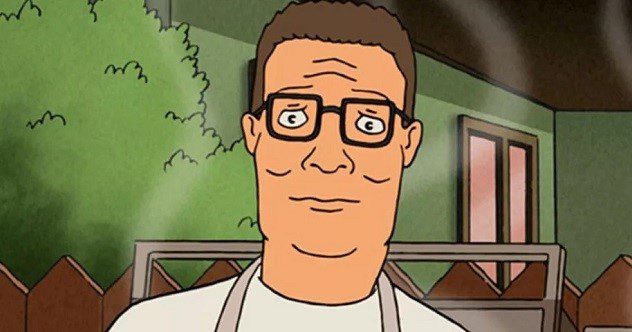
King of the Hill has always looked simple on purpose. A Texas family. A propane salesman. Four guys standing in an alley, drinking beer, saying almost nothing, and somehow explaining the entire American condition. But beneath that relaxed pace is one of television’s smartest animated sitcoms: carefully observed, emotionally generous, quietly political without shouting about politics, and much stranger than its khaki pants suggest.
Created by Mike Judge and Greg Daniels, King of the Hill first aired in 1997 and became a long-running Fox classic before returning years later with a Hulu revival. The show’s genius is that it never needed giant robots, talking dogs, or cutaway gags to be funny. It found comedy in lawn care, school board meetings, propane ethics, family embarrassment, neighborly loyalty, and the kind of small-town drama that begins with “I heard something down at Mega Lo Mart.”
So, pull up a folding chair, crack open an imaginary Alamo, and let’s look at ten things you may never have known about King of the Hillthe animated comedy that made boredom hilarious, dignity awkward, and propane weirdly noble.
1. Hank Hill Was Built From Real Texas Observation
Hank Hill feels authentic because he was not designed as a cartoon exaggeration first. Mike Judge drew from people he had known in Texas and the Southwest: practical, restrained, suspicious of nonsense, and deeply committed to ordinary competence. Hank’s world is not fantasy Texas; it is the Texas of hardware stores, neighborhood garages, barbecue smoke, church potlucks, and men who can discuss mower blades with the seriousness of diplomats negotiating peace.
That grounded realism helped separate King of the Hill from louder adult animated shows. Hank is funny not because he is outrageous, but because he is emotionally allergic to chaos. Put him in front of a modern social trend, an incompetent boss, or Bobby doing prop comedy, and Hank reacts like someone just put ketchup on a steak. His discomfort is the joke, but the show rarely mocks him cruelly. Instead, it respects his values while gently testing them.
2. Greg Daniels Helped Turn a Regional Idea Into a Full Sitcom World
Mike Judge had the original concept, but Greg Daniels helped transform it into an ensemble sitcom with long-term storytelling power. Daniels had worked on The Simpsons, and his experience in character-driven animated comedy mattered. He helped shape Arlen into more than a backdrop. It became a fully functioning ecosystem: Strickland Propane, Tom Landry Middle School, Mega Lo Mart, the alley, the Souphanousinphone household, the VFW hall, and every weird little civic disagreement in between.
The difference is important. A show about “a Texas dad who loves propane” could have burned out quickly. A show about Hank, Peggy, Bobby, Dale, Bill, Boomhauer, Luanne, Kahn, Minh, Connie, Nancy, John Redcorn, Buck Strickland, and half of Heimlich County could run for years because every character had a distinct comic engine. Dale had paranoia. Bill had loneliness. Peggy had confidence so large it needed its own parking space. Bobby had total comfort being himself, which made him both Hank’s greatest mystery and the show’s secret emotional hero.
3. Bobby Hill Was Inspired by a Real Kid Judge Saw in a Store
One of the best behind-the-scenes details about King of the Hill is that Bobby’s look came from everyday observation. Judge has described noticing a kid while shopping and later drawing a version of him. That is pure King of the Hill: even the character design feels like it came from standing in line at a retail store under fluorescent lighting.
Bobby’s genius is that he is not a mini-Hank. He is round, theatrical, sensitive, odd, brave, and often immune to embarrassment. Hank wants a son who throws perfect spirals and enjoys tools. Bobby wants to dance, cook, tell jokes, model, meditate, and occasionally shout “That’s my purse!” with award-worthy conviction. Their father-son mismatch became one of the show’s strongest emotional engines because both characters are usually trying. Hank does not always understand Bobby, but he loves him. Bobby does not always obey Hank, but he wants his respect. That tension gave the series heart beneath the dry humor.
4. Pamela Adlon’s Bobby Voice Became Emmy-Winning Television History
Many casual viewers are surprised to learn that Bobby Hill was voiced by Pamela Adlon, whose performance gave Bobby his strange mix of innocence, stubbornness, sweetness, and comedy-club timing. Adlon’s work as Bobby won a Primetime Emmy for Outstanding Voice-Over Performance in 2002, especially notable because Bobby is not a flashy character in the usual cartoon sense. He does not scream every line or bounce off walls. He just says things with devastating sincerity.
That sincerity is why Bobby remains memorable. When Bobby is confident, he is not performing confidence for attention; he really believes in whatever bizarre thing he is doing. Rodeo clowning? Sure. Competitive rose-growing? Why not. Cooking? Absolutely. The role needed a voice that could make odd choices feel human rather than random, and Adlon delivered that for years.
5. The Show’s Humor Is Quiet Because Its World Is Loud Enough
King of the Hill rarely chased absurdity. Instead, it trusted the natural absurdity of real life. A homeowners’ dispute, a school policy, a corporate promotion, or a family dinner could provide enough comic fuel for an entire episode. The show understood that ordinary life is already ridiculous if you look at it closely enough.
That approach made the comedy age unusually well. Some animated sitcoms date themselves through references, shock value, or celebrity jokes. King of the Hill often feels timeless because it focuses on behavior: pride, insecurity, denial, loyalty, ambition, embarrassment, and the sacred American ritual of pretending you know how to fix something. The jokes come from character, not noise. Hank reacting to a poorly installed water heater can be funnier than a giant chase sequence because the stakes are spiritual. To Hank, bad workmanship is not just inconvenient. It is a moral wound.
6. Arlen, Texas Is Fictional but Carefully Familiar
Arlen is not a real Texas city, but it feels like one because it blends recognizable features from Texas suburbs and small cities. The show never locks Arlen into one precise map location, which gives writers flexibility. Sometimes it feels near Dallas-Fort Worth. Sometimes it feels closer to Central or East Texas. This geographic slipperiness is not a flaw; it lets Arlen become an all-purpose Texas stage.
What matters is not whether you can find Arlen on a map. What matters is that you can feel its temperature. Arlen has strip malls, school sports, barbecue joints, church events, chain stores, local pride, and neighbors who know far too much about one another. It is specific enough to feel real and flexible enough to hold almost any story. That balance helped King of the Hill become more than a Texas joke. It became a portrait of suburban America with a Texas accent.
7. Dale Gribble Was More Than a Conspiracy Joke
Dale Gribble could have been a one-note conspiracy theorist. Instead, he became one of the show’s most layered comic creations. Yes, Dale believes in government plots, shadowy forces, and suspicious explanations for nearly everything. But he is also a loyal friend, a loving father to Joseph, and a man whose confidence is somehow both indestructible and completely unsupported by evidence.
Johnny Hardwick’s voice performance made Dale unforgettable: nasal, intense, paranoid, and weirdly musical. Hardwick also contributed behind the scenes as a writer, story editor, and producer, helping shape the tone of the series. That matters because Dale’s comedy was not random nonsense. His paranoia reflected a real American personality type, but the show treated him as a neighbor, not a punching bag. Dale might be wrong about the global conspiracy, but he will still help you move a couch. He may think the government is watching, but he will watch your back.
8. The Revival Did Not Reset the Clock
When King of the Hill returned on Hulu, it made a smart creative choice: it did not pretend time had stopped. Hank and Peggy came back to Arlen after years away, and Bobby had grown into adulthood. Instead of trapping everyone forever in the late 1990s or early 2000s, the revival let the characters meet a changed world.
This is especially fitting for Hank Hill. He was always a man trying to keep his balance while culture shifted around him. In the revival, that contrast becomes even sharper. Modern Arlen has new technology, new food trends, new social language, and new expectations. Hank’s confusion is funny, but the better joke is that Hank is not automatically wrong. Sometimes the world is silly. Sometimes Hank is too rigid. The series works best when both things are true at the same time.
Adult Bobby also opens new storytelling doors. Bobby becoming a chef makes emotional sense. He was always creative, sensory, expressive, and far less embarrassed by pleasure than his father. Food gives him a grown-up identity that still connects to the boy who loved performance and surprise.
9. The Cast Changes Carry Real Emotional Weight
The revival arrived with joy, but also with loss. Brittany Murphy, who voiced Luanne Platter, died in 2009. Johnny Hardwick, the original voice of Dale Gribble, died in 2023 after recording some revival episodes. Jonathan Joss, associated with John Redcorn, also died before the revived era could fully unfold. These absences are not small footnotes for longtime fans. The voices of King of the Hill are part of its architecture.
The production handled some of that transition by bringing in returning performers and new actors where needed. Toby Huss, already a major part of the show’s voice history, stepped into Dale after Hardwick’s recorded material. The result is a reminder that animation can feel deeply personal. Viewers may not always think about the actor behind a drawing, but when that voice changes, they feel it immediately. A great animated character is not just design and dialogue. It is breath, rhythm, timing, and personality.
10. The Show’s Biggest Secret Is Its Kindness
The most important thing people miss about King of the Hill is that it is kinder than it first appears. It has sharp jokes, strange people, and plenty of satire, but its worldview is unusually humane. It laughs at Hank, but it also admires his decency. It mocks Peggy’s ego, but it respects her ambition. It makes Bill pathetic, then lets him be tender. It makes Dale ridiculous, then reminds us that friendship can survive even spectacular foolishness.
That kindness is why the show still matters. King of the Hill does not argue that people are perfect. It argues that people are knowable. Your neighbor may be annoying, wrong, insecure, loud, or convinced that aliens are manipulating zoning laws, but he is still your neighbor. In a media world full of shouting, King of the Hill found comedy in staying put and listening to people who disagree over a fence.
Why ‘King of the Hill’ Still Works Today
The lasting appeal of King of the Hill comes from its refusal to chase trendiness. Ironically, that made it more durable. The show’s pace is slower than many animated comedies, but that pace allows jokes to breathe. A pause from Hank can be funnier than a punchline. A look from Peggy can explain an entire marriage. Boomhauer can turn six seconds of nearly incomprehensible speech into a complete emotional weather report.
It also remains relevant because it understands cultural change from the ground level. The show is not about national politics in the cable-news sense. It is about how large social changes land in kitchens, schools, break rooms, grocery aisles, and backyards. Hank does not experience “modernity” as an abstract concept. He experiences it as a confusing menu, a new workplace rule, a parenting dilemma, or a neighbor doing something unspeakable to a lawn.
That is why King of the Hill can appeal to different generations. Older viewers may relate to Hank’s frustration with change. Younger viewers may relate to Bobby’s desire to be accepted as himself. People who grew up in small towns recognize the social ecosystem. People who did not still recognize the family dynamics. Everyone knows a Dale. Everyone has met a Peggy. Many of us, in our darkest moments, have been Bill.
Fan Experience: Watching ‘King of the Hill’ Feels Like Visiting a Neighborhood
One of the most enjoyable experiences related to King of the Hill is how quickly watching it begins to feel less like consuming a show and more like returning to a neighborhood. Some sitcoms reset at the end of every episode so aggressively that the characters feel trapped in amber. King of the Hill has that familiar sitcom comfort, but Arlen feels lived in. The alley is not just a setting. It is a community center with worse seating and better gossip.
For many viewers, the show becomes background comfort without ever becoming empty. You can put on an episode while cooking, folding laundry, or pretending you are going to organize your garage. But if you actually listen, there is always a sharp observation waiting. Hank’s anxiety about doing things correctly, Peggy’s Olympic-level self-belief, Bobby’s emotional courage, Dale’s commitment to nonsense, and Bill’s tragic optimism all reveal something recognizable.
Rewatching the series as an adult is a different experience from watching it casually as a kid or teenager. Younger viewers often remember Bobby’s weirdness, Dale’s conspiracies, or Hank saying “I tell you what.” Adult viewers start noticing the marriage writing, the class commentary, the workplace satire, and the way the show treats embarrassment as a basic human condition. Hank and Peggy are not a perfect couple, but they are a believable one. They misunderstand each other, irritate each other, and still function as a team when it counts. That is more romantic than half the candlelit speeches on television.
The show also has a special appeal for anyone who grew up around practical adults. Hank represents the kind of person who shows love by checking tire pressure, comparing insurance deductibles, or silently fixing a loose cabinet handle. He may not always say the emotionally perfect thing, but he will drive across town to help you. In King of the Hill, affection often arrives disguised as responsibility. That is funny, but it is also true.
There is also pleasure in the show’s food, objects, and rituals. Propane is practically a religion. Lawns are moral statements. A clean garage is inner peace. Meat must be respected. A school event can become a battlefield. A neighborhood conversation can escalate into a philosophical crisis while nobody moves more than six inches. The smallness is the point. King of the Hill knows that everyday life is where most people actually experience drama.
Watching the revival adds another layer to that experience. Seeing older versions of familiar characters forces viewers to think about time. Bobby growing up is not just a plot update; it is a reminder that the audience grew up too. Hank confronting a changed Arlen mirrors the feeling many people have when returning to a hometown and discovering that the old restaurant is gone, the traffic is worse, and someone opened a boutique fitness studio where a hardware store used to be. The joke lands because the feeling is real.
Ultimately, the best experience of King of the Hill is comfort with texture. It is cozy, but not sugary. Funny, but not frantic. Sentimental, but rarely mushy. It gives viewers a place where people are flawed, stubborn, and often deeply weird, yet still worth knowing. That may be the most underrated reason fans keep coming back to Arlen: the show makes ordinary people interesting without pretending they are anything other than ordinary.
Conclusion
King of the Hill endures because it understands that comedy does not have to be loud to be sharp. Its best moments often come from silence, discomfort, pride, and small acts of loyalty. The show turned propane, parenting, school politics, neighborhood gossip, and suburban Texas routines into a surprisingly deep portrait of American life.
From Mike Judge’s real-world observations to Greg Daniels’ sitcom structure, from Pamela Adlon’s Emmy-winning Bobby to the bittersweet cast changes of the revival, King of the Hill is richer than its modest surface suggests. It is not just a show about a man who sells propane and propane accessories. It is a show about how people survive change, protect dignity, misunderstand each other, forgive each other, and gather in the alley anyway.