Psoriatic arthritis, often shortened to PsA, is a sneaky overachiever. It can show up in the skin, joints, nails, tendons, spine, eyes, and energy levelssometimes all at once, sometimes one clue at a time, and sometimes with the subtlety of a cat knocking a glass off the counter. That is why learning the telltale markers to diagnose PsA matters. The earlier a person recognizes the pattern, the sooner they can seek proper medical evaluation and reduce the risk of long-term joint damage.
PsA is an inflammatory arthritis associated with psoriasis, but it is not always as simple as “rash first, joint pain later.” Many people develop psoriasis years before joint symptoms, while others notice joint pain before any obvious skin plaques. Some have psoriasis hidden in places they rarely inspect, such as the scalp, behind the ears, inside the belly button, or between the buttocks. In other words, PsA does not always arrive wearing a name tag.
This guide breaks down the most important diagnostic markers of psoriatic arthritis in plain American English: what clinicians look for, why certain symptoms matter, which tests help, and how PsA can be distinguished from rheumatoid arthritis, osteoarthritis, gout, and everyday “I slept wrong” aches.
What Is PsA?
Psoriatic arthritis is a chronic immune-mediated disease that causes inflammation in joints and entheses, the places where tendons and ligaments attach to bone. It belongs to the broader family of spondyloarthritis conditions, which can affect the spine, pelvis, peripheral joints, skin, nails, and eyes.
The hallmark problem is inflammation. In PsA, the immune system becomes overactive and starts creating irritation where it is not needed. That inflammation can produce swollen fingers, stiff knees, tender heels, lower back pain, nail changes, and fatigue that feels less like “I need coffee” and more like “my battery has filed for bankruptcy.”
Why PsA Can Be Hard to Diagnose
There is no single blood test, swab, scan, or magic medical wand that confirms PsA by itself. Diagnosis usually depends on a combination of medical history, physical examination, skin and nail findings, blood tests, imaging, and exclusion of other conditions. This is one reason many people wait months or years before getting a clear answer.
The symptoms also overlap with other common diseases. Joint stiffness can resemble rheumatoid arthritis. Toe pain can look like gout. Hand discomfort can be blamed on repetitive work. Back pain can be dismissed as “desk life.” Meanwhile, psoriasis may be mild, hidden, or mistaken for eczema, dandruff, or a stubborn patch of dry skin that refuses to respect moisturizer.
Marker 1: A Personal or Family History of Psoriasis
The biggest clue is psoriasiscurrent, past, or in the family. Many people with PsA already have psoriasis before arthritis symptoms begin. Psoriasis often appears as scaly, inflamed plaques on the elbows, knees, scalp, lower back, or other areas. On lighter skin, plaques may look red or pink with silvery scale. On darker skin, psoriasis may appear purple, brown, grayish, or darker than surrounding skin, which can lead to missed or delayed recognition.
A family history of psoriasis also matters. Someone may not have obvious plaques but may have a parent, sibling, or close relative with psoriasis or psoriatic arthritis. That family connection can strengthen suspicion when inflammatory joint symptoms appear.
Hidden psoriasis: the clue people miss
Doctors often check areas patients may not think to mention: the scalp, behind the ears, inside the ears, belly button, groin, gluteal fold, and under the breasts. A tiny patch in a hidden area can be an important puzzle piece. PsA is not impressed by how small the patch is; even limited psoriasis can be associated with active joint disease.
Marker 2: Inflammatory Joint Pain and Morning Stiffness
One of the classic markers of PsA is inflammatory joint pain. This pain usually behaves differently from ordinary wear-and-tear discomfort. Instead of worsening only after heavy activity, inflammatory pain often feels worse after rest and improves somewhat with gentle movement.
Morning stiffness is especially important. If a person wakes up feeling as if their joints have been replaced overnight with rusty door hinges, and that stiffness lasts 30 minutes or longer, clinicians pay attention. PsA can affect small joints in the fingers and toes, wrists, knees, ankles, elbows, hips, and shoulders. It may affect a few joints or many joints.
Asymmetry is a clue
PsA often affects the body asymmetrically. For example, the right knee and left ankle may hurt, while the opposite joints are fine. This pattern can help distinguish PsA from rheumatoid arthritis, which more often causes a symmetrical pattern in the same joints on both sides of the body.
Marker 3: Dactylitis, or “Sausage Digits”
Dactylitis is one of the most recognizable signs of psoriatic arthritis. It means an entire finger or toe becomes swollen, puffy, and tendernot just one joint. The digit can look sausage-like, which is medically useful but admittedly not the most flattering comparison.
Dactylitis happens because inflammation affects multiple tissues in the digit, including joints, tendons, and soft tissue. It can appear in one toe, several toes, one finger, or multiple digits. Sometimes it is the first obvious sign that something inflammatory is happening.
For diagnosis, dactylitis is a high-value marker because it is strongly associated with PsA and other spondyloarthritis conditions. If someone has psoriasis or a family history of psoriasis and develops a swollen whole toe or finger, that is a “call the doctor, not the group chat” moment.
Marker 4: Enthesitis, Especially Heel or Foot Pain
Enthesitis means inflammation where tendons or ligaments attach to bone. In PsA, this is not a small side note; it is one of the disease’s signature moves. Common sites include the Achilles tendon at the back of the heel, the plantar fascia along the bottom of the foot, the kneecap area, elbows, hips, and ribs.
People often describe enthesitis as a deep tenderness or soreness, especially when pressure is applied. Heel pain from Achilles enthesitis or plantar fasciitis can make the first steps in the morning feel like walking across a floor made of tiny dramatic opinions.
Because heel pain is common in runners, retail workers, teachers, nurses, and anyone with feet, it is often dismissed as overuse. But when heel pain appears with psoriasis, nail pitting, swollen joints, or morning stiffness, PsA becomes a stronger possibility.
Marker 5: Nail Changes That Tell a Bigger Story
Nail symptoms are among the most important markers to diagnose PsA. The nails and nearby joints are anatomically connected, which helps explain why nail psoriasis and joint inflammation often travel together.
Common psoriatic nail changes include:
- Pitting, or tiny dents in the nail surface
- Peeling or crumbling nails
- Thickened nails
- Separation of the nail from the nail bed
- Yellow, brown, or “oil drop” discoloration
- Ridging or rough nail texture
These changes can be mistaken for fungal infection, trauma, or cosmetic nail damage. A clinician may order tests to rule out fungus, especially if the nails are thick or discolored. But when nail changes appear alongside inflammatory joint symptoms, they become a major clue pointing toward psoriatic arthritis.
Marker 6: Distal Finger and Toe Joint Involvement
PsA often affects the distal interphalangeal joints, also called DIP joints. These are the joints closest to the fingernails and toenails. Pain, swelling, or stiffness in these jointsespecially with nail pitting or psoriasiscan support a PsA diagnosis.
Osteoarthritis can also affect DIP joints, so this marker must be interpreted carefully. The difference is that PsA usually brings inflammatory features, such as warmth, swelling, prolonged morning stiffness, dactylitis, nail disease, or other psoriasis-related clues.
Marker 7: Lower Back, Hip, or Buttock Pain That Improves With Movement
PsA can affect the spine and sacroiliac joints, where the lower spine meets the pelvis. This form is sometimes called axial PsA or psoriatic spondylitis. The pain may show up in the lower back, buttocks, hips, or neck.
Inflammatory back pain often begins gradually, feels worse after rest, improves with movement, and may wake a person in the second half of the night. This pattern differs from many mechanical back problems, which often worsen after lifting, twisting, or prolonged activity.
Because back pain is extremely common, axial PsA is easy to overlook. But back pain plus psoriasis, nail changes, heel pain, or swollen digits deserves a more serious look.
Marker 8: Fatigue That Does Not Match the Schedule
Fatigue is not specific to PsA, but it is common and clinically meaningful. Inflammatory diseases can drain energy because the immune system is working overtime. People may describe feeling exhausted even after sleeping, struggling through workdays, or needing recovery time after basic tasks.
Fatigue alone does not diagnose psoriatic arthritis. However, fatigue combined with joint swelling, morning stiffness, psoriasis, nail changes, or enthesitis helps complete the picture.
Marker 9: Eye Inflammation and Other Related Conditions
Some people with PsA develop uveitis, an inflammatory eye condition that may cause redness, pain, light sensitivity, blurry vision, or floaters. Eye symptoms should be treated urgently because untreated uveitis can threaten vision.
PsA may also overlap with other inflammatory conditions, including inflammatory bowel disease in some patients. These associated conditions can help clinicians recognize a broader immune pattern rather than treating each symptom as a separate mystery novel.
How Doctors Diagnose PsA
A PsA diagnosis usually begins with a detailed conversation. A clinician may ask when symptoms started, how long morning stiffness lasts, which joints are affected, whether symptoms improve with movement, whether psoriasis is present, and whether there is a family history of psoriasis or arthritis.
The physical exam may include checking swollen and tender joints, pressing on entheses around the heels and feet, examining nails, inspecting the skin and scalp, testing range of motion, and looking for dactylitis. This hands-on assessment is essential because PsA is often diagnosed clinically.
CASPAR criteria
Clinicians and researchers often use the CASPAR criteria, short for Classification Criteria for Psoriatic Arthritis. These criteria are not a do-it-yourself diagnosis tool, but they help organize the major clues. They begin with inflammatory joint, spine, or entheseal disease, then add points for features such as current psoriasis, personal or family history of psoriasis, nail dystrophy, negative rheumatoid factor, dactylitis, and certain X-ray findings.
In plain English, CASPAR asks: “Is this inflammatory arthritis, and are there enough psoriasis-family clues to classify it as PsA?” It is one of the most widely recognized frameworks for identifying psoriatic arthritis.
Blood Tests: Helpful, But Not the Star of the Show
Blood tests cannot confirm PsA by themselves, but they can support the diagnosis and rule out other conditions. Common tests may include:
- ESR and CRP: markers of inflammation, though they may be normal in some people with active PsA.
- Rheumatoid factor and anti-CCP antibodies: often used to help distinguish rheumatoid arthritis from PsA.
- Uric acid: sometimes checked when gout is in the differential diagnosis.
- Complete blood count and metabolic panels: used to assess general health and prepare for treatment decisions.
- HLA-B27: sometimes considered when inflammatory back pain or axial disease is suspected.
A negative rheumatoid factor can support PsA classification, but it does not prove PsA. Likewise, a normal CRP does not rule it out. PsA enjoys keeping medicine humble.
Imaging Tests: X-Ray, Ultrasound, and MRI
Imaging can reveal inflammation, joint damage, tendon involvement, and changes that help distinguish PsA from other forms of arthritis.
X-rays
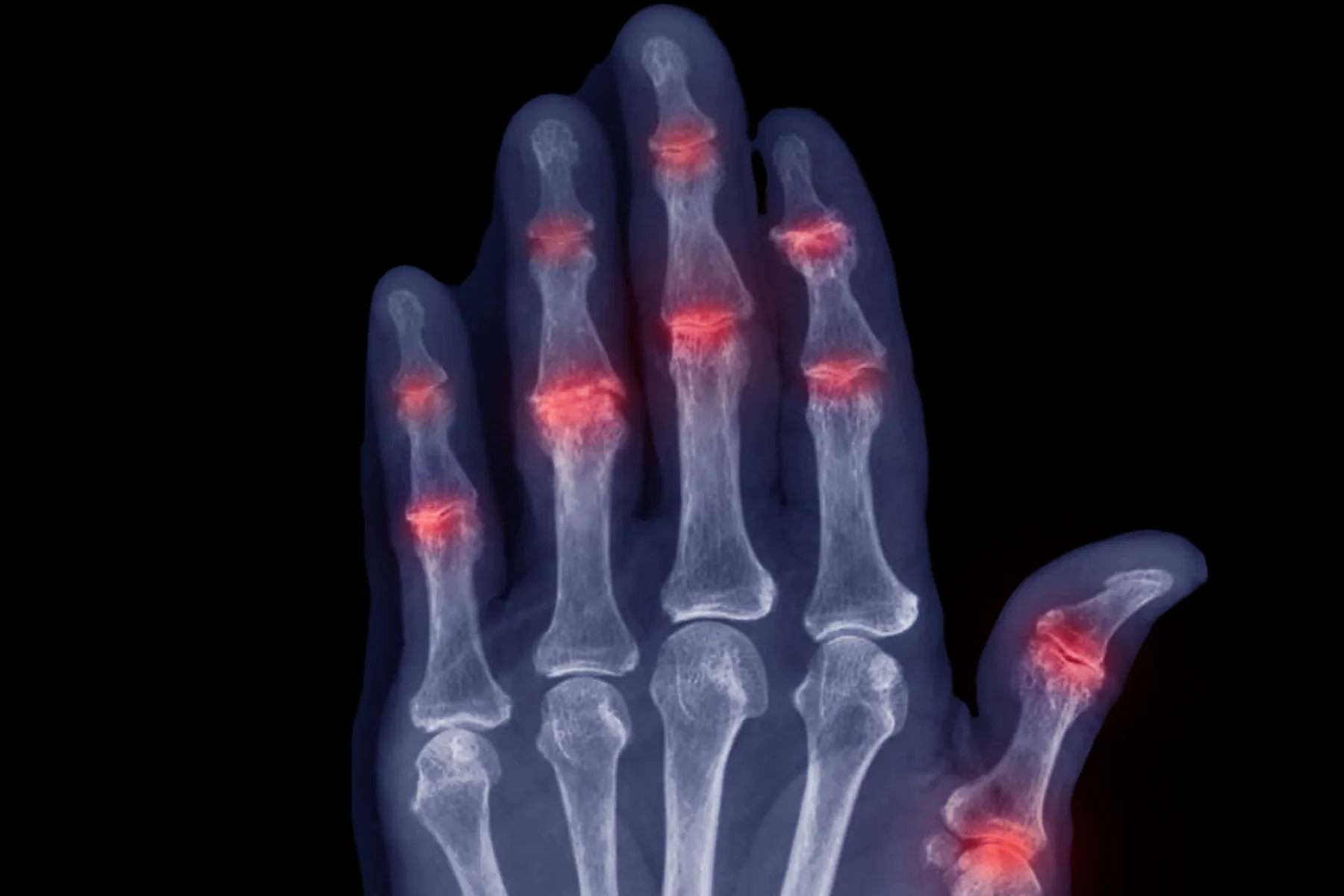
X-rays can show joint damage, new bone formation, erosions, and changes in the hands, feet, spine, or pelvis. In early disease, X-rays may look normal, so a normal X-ray does not automatically end the investigation.
Ultrasound
Musculoskeletal ultrasound can detect synovitis, enthesitis, tendon inflammation, and increased blood flow in inflamed tissue. It is especially useful when symptoms are present but swelling is subtle.
MRI
MRI can show inflammation in soft tissue, bone marrow, entheses, spine, and sacroiliac joints. It is often helpful when axial PsA is suspected or when symptoms are significant but X-rays are unrevealing.
PsA vs. Rheumatoid Arthritis
PsA and rheumatoid arthritis can both cause swollen, painful, stiff joints. However, PsA is more likely to involve psoriasis, nail changes, dactylitis, enthesitis, DIP joints, and asymmetric joint patterns. Rheumatoid arthritis more often produces symmetrical inflammation of small hand and wrist joints and is more commonly associated with rheumatoid factor or anti-CCP antibodies.
Still, real life is messy. Some people with PsA can have symmetrical joint involvement, and some tests can overlap. That is why a rheumatologist’s evaluation is so valuable.
PsA vs. Osteoarthritis
Osteoarthritis is usually related to cartilage wear and mechanical joint stress. It often worsens with activity and improves with rest. PsA is inflammatory, so stiffness may be worse after rest and improve with movement. PsA also brings clues such as psoriasis, nail changes, swollen digits, enthesitis, and inflammatory back pain.
Someone can have both conditions, which is deeply unfair but medically possible. A person may have osteoarthritis in one joint and PsA in another. Diagnosis depends on pattern recognition, examination, and testing.
PsA vs. Gout
Gout can cause sudden, severe swelling and pain, often in the big toe. PsA can also affect toes and cause swelling, so confusion happens. Gout attacks often come on rapidly and may be linked with high uric acid, though uric acid alone is not definitive. PsA tends to cause a broader pattern involving skin, nails, tendons, morning stiffness, and sometimes multiple joints or digits.
When to Seek Medical Evaluation
Anyone with psoriasis should talk to a healthcare professional if they develop joint pain, swelling, prolonged morning stiffness, heel pain, swollen fingers or toes, nail changes, or unexplained fatigue. Early evaluation is especially important because untreated PsA can lead to joint damage and reduced mobility.
Urgent care is needed for eye pain, sudden vision changes, severe redness, or light sensitivity because these may signal uveitis. Severe joint swelling, fever, or inability to bear weight should also be evaluated promptly.
Practical Experience: What PsA Clues Look Like in Real Life
In real life, PsA rarely announces itself with a neat checklist. It usually arrives as a collection of odd complaints that seem unrelated at first. A person may say, “My heel hurts every morning,” then mention that one fingernail keeps lifting, then casually add that their scalp has been flaky for years. Separately, those details sound ordinary. Together, they may point toward psoriatic arthritis.
One common experience is the “shoe problem.” A person develops pain at the back of the heel or bottom of the foot and blames new shoes, old shoes, work shoes, running shoes, or the entire shoe industry. They stretch, ice, change inserts, and complain politely. But if the pain is caused by enthesitis, it may keep returning because the issue is inflammation where tissue attaches to bone, not simply poor footwear.
Another real-world clue is the “one weird toe.” A toe becomes swollen from base to tip, making it difficult to bend. It may look like an allergic reaction, injury, or dramatic toe rebellion. If no injury occurred and the whole digit is swollen, dactylitis should be considered, especially in someone with psoriasis or nail symptoms.
Nail changes are also easy to minimize. People often assume pitting comes from manicures, nail biting, aging, or an imaginary vitamin deficiency they saw mentioned online at 1:00 a.m. While those explanations can be relevant, persistent pitting, crumbling, thickening, or nail separation deserves attention. Nails can function like tiny billboards advertising inflammation nearby.
Many people with PsA also describe “startup stiffness.” After sitting through a movie, meeting, car ride, or long dinner, standing up feels unexpectedly difficult. The first steps are stiff and awkward, then movement gradually helps. This pattern is different from simple soreness after a tough workout. It is the body saying, “We have been still too long, and the inflammatory committee has convened.”
Fatigue can be one of the most frustrating experiences because it is invisible. Friends may suggest more sleep, more water, less stress, or a vacation, all of which may be nice but not curative. Inflammatory fatigue can feel disproportionate to the day’s effort. A person may complete normal errands and feel as if they have run a small, joyless marathon.
The diagnostic journey often improves when patients bring organized notes. A symptom diary can help: which joints hurt, how long stiffness lasts, whether movement helps, whether swelling is visible, whether skin or nail flares happen at the same time, and whether symptoms wake them at night. Photos of swollen digits, rashes, or nail changes can be especially helpful because PsA has a mischievous habit of calming down right before appointments.
The best practical lesson is this: patterns matter. PsA is not diagnosed from one sore knee after yard work. It is suspected when inflammatory joint pain, psoriasis history, nail changes, dactylitis, enthesitis, back stiffness, fatigue, or family history begin forming a recognizable pattern. When that pattern appears, the next step is not panic. It is a thoughtful evaluation with a clinician, ideally a rheumatologist working with a dermatologist when skin or nail disease is part of the story.
Conclusion
The telltale markers to diagnose PsA include psoriasis, family history, inflammatory joint pain, prolonged morning stiffness, dactylitis, enthesitis, nail changes, DIP joint involvement, inflammatory back pain, fatigue, and sometimes eye inflammation. No single sign proves the diagnosis, and no single test rules it out. Instead, doctors look for a pattern that connects the skin, nails, joints, tendons, and spine.
The good news is that PsA is more recognizable when people know what to watch for. If symptoms suggest psoriatic arthritis, early medical evaluation can make a meaningful difference. Joints are much easier to protect before damage occursrather like fixing a leak before the living room becomes an indoor pond.