Every Olympic Games has its predictable moments: someone breaks a record, someone cries on the podium, and the internet suddenly becomes an expert in fencing, handball, or synchronized diving for approximately twelve days. But at the Paris 2024 Olympics, one of the biggest surprises did not come from a scoreboard. It came from a runway moment disguised as an opening ceremony uniform.
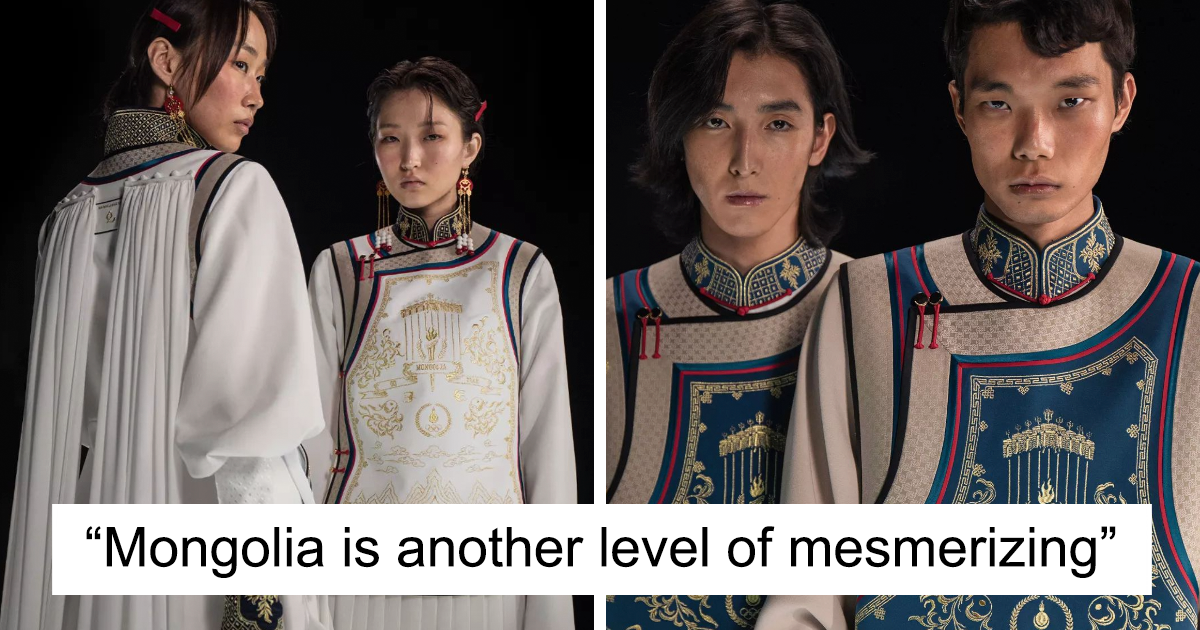
Team Mongolia’s Olympic uniform at the Paris Games left people in awe because it did what great ceremonial fashion is supposed to do: it told a story before anyone said a word. Designed by the Ulaanbaatar-based fashion label Michel & Amazonka, the outfits blended traditional Mongolian clothing, Olympic symbolism, detailed embroidery, and a level of craftsmanship that made social media collectively stop scrolling. For once, the phrase “they understood the assignment” felt too weak. Mongolia did not just understand the assignment; it embroidered it in gold thread and sent it floating down the Seine.
The result was a global fashion moment. Before many casual viewers even knew which athletes would carry the flag, they knew the uniforms. The looks were praised as elegant, cultural, cinematic, and refreshingly different from the standard blazer-and-trouser formula that often dominates Olympic ceremonies. In a Games hosted by Paris, one of the fashion capitals of the world, Mongolia arrived dressed like it had every intention of competing for style gold.
Why Team Mongolia’s Paris Olympic Uniform Went Viral
The viral reaction to Team Mongolia’s Paris 2024 Olympic uniform was not accidental. The outfits had that rare visual power that works instantly on a phone screen and becomes even richer the longer you look. At first glance, the silhouettes were dramatic and regal. Look closer, and the details began to unfold: embroidered vests, flowing white garments, traditional shapes, symbolic accessories, and a carefully balanced palette of blue, red, white, and gold.
Unlike some Olympic uniforms that focus mainly on modern sportswear branding, Mongolia’s ceremonial look leaned into identity. It did not try to look like everyone else. It looked unmistakably Mongolian. That confidence is a major reason people responded so strongly. Viewers could see that the uniform was not merely “pretty.” It carried history, geography, national pride, and craftsmanship.
The internet loves a good surprise, and this was a beautiful one. Many people expected major fashion headlines to go to larger delegations with famous global sponsors. Instead, a Mongolian design house captured the conversation with an outfit that felt both ancient and modern. It had the elegance of couture, the symbolism of a national ceremony, and the drama of a movie costumeexcept it was real, wearable, and made for athletes representing their country on the world stage.
The Designers Behind the Look: Michel & Amazonka
Michel & Amazonka is a Mongolian fashion label known for blending contemporary design with traditional Mongolian influences. For Paris 2024, the brand created opening and closing ceremony uniforms that quickly became one of the most discussed Olympic fashion stories of the year.
The label’s work stood out because it did not treat tradition as decoration. Instead, it treated tradition as the foundation. The garments drew from the deel, a traditional Mongolian robe or tunic with a distinctive silhouette. The deel has long been associated with Mongolian daily life, celebrations, and national identity. By reinterpreting it for the Olympic stage, Michel & Amazonka created a uniform that felt ceremonial without feeling frozen in the past.
This is where the design becomes especially smart. The uniforms were not museum pieces. They were modern, polished, and carefully styled for a global event. The result was not “traditional clothing plus Olympic logo.” It was a full visual language: national dress translated through contemporary fashion.
A Closer Look at the Uniform Details
The uniforms included multiple looks for male and female athletes and flag bearers. The most recognizable elements were the embroidered vests, pleated robes, flowing capes, structured collars, sash belts, pouch bags, traditional-inspired hats, boots, and jewelry. Each piece worked together to create a complete ceremonial image.
Gold Embroidery With Meaning
One of the strongest visual features was the gold embroidery. It gave the uniforms a luxurious glow, but it was not just there to sparkle politely under the Paris lights. The embroidery incorporated Mongolian and Olympic symbols, including references to the Soyombo symbol from Mongolia’s flag, the Olympic flame, the Olympic rings, and motifs connected with strength, endurance, and national heritage.
Gold can easily become too loud in fashion. Here, it was controlled. The embroidery added richness without making the outfits look like costumes from a fantasy banquet where someone is definitely about to announce a prophecy. The details felt refined, meaningful, and deeply intentional.
The Deel Inspiration
The deel-inspired shape was central to the entire look. The traditional deel is practical, elegant, and instantly recognizable in Mongolian culture. Its high collar, wrap structure, and long lines gave the Olympic uniform a strong silhouette. It also helped the athletes look unified without making them look generic.
This matters because Olympic ceremony uniforms are difficult to design. They need to photograph well. They need to represent a whole nation. They need to suit different body types. They need to be comfortable enough for athletes who may spend hours standing, walking, waving, waiting, and pretending not to be overwhelmed by the scale of the event. Mongolia’s uniforms managed to feel formal and wearable at the same time.
Accessories That Completed the Story
The accessories were not afterthoughts. Embroidered bags, belts, earrings, hats, and boots helped turn the uniform into a complete cultural statement. Many Olympic outfits rely on a jacket as the main event. Mongolia’s look was more layered. Every element had a role.
That completeness is one reason fashion fans loved it. The styling did not look like a rush job. It looked like a finished world. The athletes were not just wearing uniforms; they were carrying a visual story from Ulaanbaatar to Paris.
Why This Olympic Fashion Moment Felt Different
Olympic uniforms often fall into three categories: sporty, patriotic, or corporate. There is nothing wrong with a crisp blazer, a tracksuit, or a national-color polo shirt. Those pieces can look sharp. But they rarely cause strangers on the internet to gasp, zoom in, and suddenly learn the word “deel.”
Team Mongolia’s uniform felt different because it refused to flatten culture into a logo. It showed that national fashion can be specific and still be globally admired. In fact, the specificity was the point. The more Mongolian the design felt, the more universal the admiration became.
There is a lesson here for Olympic fashion and for branding in general: authenticity travels. When a design is rooted in a real place, real traditions, and real craftsmanship, people can feel iteven if they are encountering that culture for the first time. The uniform did not need to explain every symbol in a footnote. It invited curiosity.
The Power of Smaller Nations on the Olympic Style Stage
The Paris Games reminded viewers that Olympic style does not belong only to countries with massive teams or giant sponsorship deals. Smaller delegations can dominate the fashion conversation when their designs are thoughtful, distinctive, and emotionally resonant.
Mongolia’s viral success also challenged the assumption that Olympic uniforms must always look like luxury sportswear. The country’s look belonged to a different category: ceremonial storytelling. It honored the athletes not just as competitors, but as cultural ambassadors.
That is especially powerful at the Olympics, where athletes march not only as individuals but as representatives of their nations. A great uniform can communicate pride before the competition begins. It can make viewers ask questions: What does that symbol mean? Who designed this? What is the history behind that silhouette? Suddenly, fashion becomes a doorway into culture.
How the Uniform Balanced Tradition and Modernity
The best part of Team Mongolia’s Olympic uniform was its balance. It did not look old-fashioned, even though it drew deeply from tradition. It did not look overly modernized, either, as if the designers had stripped away the cultural soul to make it more “international.” Instead, it stood comfortably between past and present.
The white flowing fabric gave the look softness and movement. The structured vests added strength. The gold embroidery brought ceremony. The national colors tied everything back to Mongolia. The Olympic symbols connected the design to Paris 2024. Nothing felt random. Nothing felt pasted on at the last minute.
That balance is hard to achieve. Go too traditional, and a uniform may look like a historical reenactment. Go too modern, and it may lose the identity that made it special. Mongolia found the middle path: proud, polished, and unmistakably contemporary.
Social Media’s Reaction: “Fashion Gold” Before the Medals
Online reactions to the uniform were immediate and enthusiastic. Fashion commentators, Olympic fans, and casual viewers praised the outfits as among the most beautiful of the Paris Games. Some joked that Mongolia had already won the Olympics before the opening ceremony began. Honestly, that joke did a lot of cardio that week.
What made the reaction so strong was the sense of discovery. Many viewers were not expecting Mongolia to become the breakout fashion story of Paris 2024. That surprise made the moment more exciting. It felt like finding the best-dressed guest at a party and realizing they also have the most interesting story in the room.
The uniforms also performed well visually on platforms like TikTok, Instagram, and X because they had layers. A quick video could show the silhouette. A still photo could highlight the embroidery. A close-up could reveal symbols and accessories. The design rewarded attention, which is exactly what social media loves.
What the Uniform Says About Mongolia
Beyond the viral praise, the uniform offered a compact introduction to Mongolia’s cultural depth. Mongolia is often associated globally with vast landscapes, nomadic heritage, horses, wrestling, archery, and the legacy of the Mongol Empire. But the Olympic uniform showed another side: refined textile artistry, contemporary fashion ambition, and a confident creative industry.
That matters. International events often reduce countries to quick stereotypes. A strong ceremonial uniform can push back against that. Team Mongolia’s Paris look showed a nation with a living design language, not just a historical image. It presented tradition as something active, adaptable, and stylish enough to stop the internet in its tracks.
In this sense, the uniform was more than clothing. It was soft power. It made people talk about Mongolia with admiration. It gave global audiences a reason to search, learn, and remember. For a few shining days, Mongolian fashion was not a niche topic. It was one of the main characters of Olympic style.
Why Olympic Uniforms Matter More Than People Think
Some viewers may ask: why does this matter? Aren’t the Olympics about sports? Yes, of course. But the Olympics have always been about more than competition. They are also about ceremony, identity, diplomacy, performance, and storytelling. Uniforms sit at the intersection of all those things.
An Olympic ceremony uniform has a strange job. It must be formal but not stiff, patriotic but not cheesy, memorable but not ridiculous, stylish but not impractical. That is a narrow target. Many designs miss it by a mile and land somewhere between “corporate retreat” and “airport lounge staff.” Mongolia’s uniform hit the target with impressive precision.
When athletes enter the opening ceremony, most viewers do not yet know their names or events. The uniform becomes the first impression. It says: this is who we are, this is where we come from, and this is how we want to be seen. Team Mongolia’s message was clear: elegant, rooted, proud, and ready for the world stage.
Specific Examples That Made the Look Stand Out
Several design choices helped Team Mongolia’s uniform become unforgettable. First, the silhouette was dramatic without being unmanageable. The long lines and layered garments created movement, especially in ceremony photos and videos. Second, the embroidery gave the uniform a handcrafted quality that felt rare in a world of mass-produced sports apparel.
Third, the color palette worked beautifully. The blues and reds connected to national identity, while white and gold gave the outfits a ceremonial glow. Fourth, the accessories added completeness. The hats, bags, belts, earrings, and boots made the look feel considered from head to toe.
Finally, the symbolism gave the design staying power. A uniform can go viral because it looks good. It becomes memorable when people discover meaning inside it. Mongolia’s uniform offered both: instant beauty and deeper cultural storytelling.
The Broader Fashion Lesson From Team Mongolia
The success of Team Mongolia’s Olympic uniform offers a useful lesson for designers, brands, and even content creators: originality wins when it is backed by substance. The design did not chase a generic global trend. It started from a specific cultural foundation and elevated it for an international stage.
That is why the uniform did not feel like a gimmick. It felt earned. Every embroidered line, every accessory, and every silhouette choice seemed connected to a larger idea. The outfit was not saying, “Look at us because we are loud.” It was saying, “Look closer because there is meaning here.”
In an era when many designs blur together, that kind of clarity is powerful. Team Mongolia’s uniform reminded the world that fashion can be both beautiful and educational. It can celebrate heritage without becoming outdated. It can travel globally without losing its local accent.
Experiences and Reflections: Why This Uniform Moment Stuck With People
Part of the magic of Team Mongolia’s Olympic uniform is that it gave viewers a shared experience. You did not need to be a fashion critic to feel the impact. You could be someone casually watching Olympic content during lunch, scrolling through social media before bed, or pretending to work while “just checking one more update.” Then suddenly, there it was: a uniform so striking that the usual scroll-scroll-scroll rhythm stopped.
Many people experienced the look first as surprise. Olympic ceremony fashion is often pleasant, but rarely breathtaking. Mongolia’s uniform felt like opening a door into a different visual world. The embroidery, the flowing layers, and the proud traditional structure made viewers feel that they were seeing something with depth. It was the kind of outfit that made people want context, not because they were confused, but because they were intrigued.
For people who love travel, the uniform created a sense of curiosity about Mongolia itself. It evoked images of wide open landscapes, festivals, horses, mountains, and ceremonial dress. For people who love fashion, it showed how powerful clothing can be when it respects heritage. For people from smaller countries or underrepresented cultures, it likely felt even more meaningful: proof that global attention does not always belong to the biggest nations in the room.
There is also something emotionally satisfying about seeing craftsmanship go viral. In a digital world where trends can feel disposable, the idea that each uniform required careful handwork and many hours of production made the praise feel deserved. People were not just admiring a photo. They were admiring labor, research, patience, and pride. That is why the reaction felt warmer than a typical viral fashion moment.
Another reason the uniform stayed with people is that it looked ceremonial in the best sense of the word. It respected the Olympic stage. It understood that the opening ceremony is not merely a parade; it is a symbolic entrance. Athletes are carrying flags, histories, families, languages, and dreams. Mongolia’s outfit seemed to honor that weight. It gave the athletes presence.
For anyone watching from home, the uniform also delivered a reminder that beauty can be a form of storytelling. You might not know every symbol stitched into the fabric, but you could sense intention. That sense of intention is rare and memorable. It made the uniform feel alive, not manufactured for quick applause.
In the end, the experience of seeing Team Mongolia’s Paris Olympic uniform was less like spotting a nice outfit and more like witnessing a cultural introduction. It made viewers pause, admire, and learn. That is a remarkable achievement for ceremonial clothing. Medals are won in competition, but moments like this win a different kind of victory: attention, respect, and lasting memory.
Conclusion
Team Mongolia’s Olympic uniform at the Paris Games left people in awe because it combined beauty with meaning. Designed by Michel & Amazonka, the look transformed traditional Mongolian dress into a global fashion statement without losing its roots. The deel-inspired silhouettes, gold embroidery, symbolic motifs, and carefully styled accessories created one of the most memorable visual moments of Paris 2024.
More importantly, the uniform proved that Olympic fashion can be more than branding. It can be cultural storytelling. It can introduce a nation to millions of viewers. It can make people cheer before the first whistle blows. And yes, it can make the internet collectively decide that a country has already won style gold.
In a Games hosted by Paris, Mongolia reminded everyone that fashion capitals are not only places. Sometimes, they are moments. And for Team Mongolia, that moment arrived wearing gold embroidery, a proud silhouette, and enough elegance to make the whole world look twice.