Note: This article is written for educational publishing purposes and synthesizes real market information from reputable U.S. financial media, investment research, index providers, fund materials, and regulatory sources. It is not personalized investment advice.
Introduction: When Everyone Owns the Same Future
Every market era has a favorite story. In the 1960s, investors loved the Nifty Fifty. In the late 1990s, the internet was going to rewrite every business model by next Tuesday. Today, artificial intelligence is the main character, the supporting cast, the soundtrack, and possibly the popcorn machine. AI is no longer just a technology theme; it has become a portfolio theme, an earnings theme, an infrastructure theme, and a dinner-table theme for people who previously thought “GPU” was a typo.
That is why the phrase “Talk Your Book: The Anti-AI Portfolio” lands so well. In finance, to “talk your book” means to explain the investment case for what you already own or believe in. It can be useful, biased, entertaining, or all three before the coffee gets cold. An “anti-AI portfolio,” however, does not mean betting against progress, smashing laptops, or hiding in a cabin with a rotary phone. It means asking a smarter question: What should investors own if the AI trade becomes too crowded, too expensive, or too dependent on perfect expectations?
The answer is not simple, because AI is touching almost everything. Large technology companies dominate major indexes. Semiconductor firms influence market sentiment. Data centers are affecting power demand, utilities, real estate, bonds, and even local permitting debates. Still, the anti-AI portfolio idea is useful because it forces investors to think about diversification, valuation, durability, and the underrated beauty of businesses that do not need a science-fiction trailer to make money.
What Is an Anti-AI Portfolio?
An anti-AI portfolio is not a portfolio that hates artificial intelligence. It is a portfolio designed to avoid becoming accidentally overexposed to one dominant market narrative. Many investors believe they are diversified because they own an S&P 500 index fund, a growth fund, a target-date fund, and a technology ETF. Then they peek under the hood and discover the same mega-cap technology names sitting in all four vehicles, wearing different hats like a suspiciously productive stage actor.
The anti-AI portfolio starts with a practical observation: when a small group of companies drives a large share of market returns, passive investors can become concentrated without making an active decision. That concentration can work beautifully while the leaders keep beating expectations. It can also feel unpleasant if expectations cool, capital spending rises faster than profits, or investors start asking when the enormous AI buildout will generate equally enormous cash returns.
So the anti-AI approach looks for balance. It may include quality compounders, value stocks, dividend payers, real assets, international equities, equal-weight strategies, essential-service businesses, and companies with durable cash flows that are not priced as if they will personally invent the future by Thursday afternoon.
Why the AI Trade Became So Powerful
The AI boom did not appear out of nowhere. Cloud computing, advanced chips, massive datasets, and machine learning progress created a credible foundation. Then generative AI turned that foundation into a global investment story. Companies began spending heavily on data centers, networking equipment, chips, power systems, and software tools. Investors followed the money, and the biggest beneficiaries became even bigger.
This is not irrational by default. Some AI leaders have extraordinary revenues, deep competitive advantages, strong balance sheets, and real customer demand. The problem is that great companies can become risky investments when expectations climb too high. A business can be excellent while its stock is merely expensive, or worse, priced for a world in which no one ever says, “Maybe we bought too many servers.”
The AI trade also expanded beyond obvious technology stocks. Utilities are discussed because data centers need power. Industrial companies are discussed because data centers need cooling, backup systems, and electrical equipment. Real estate is discussed because facilities need land. Credit markets are involved because the infrastructure bill is huge. At some point, AI becomes less like a sector and more like glitter after a school craft project: somehow it is on everything.
The Core Idea: Don’t Fight the Future, Fight Concentration Risk
The smartest version of the anti-AI portfolio is not a dramatic short bet. Shorting transformational technology is a stressful hobby, like juggling steak knives while checking your brokerage app. A better framework is to manage concentration risk. If AI keeps winning, a broad portfolio may still participate through index exposure, industrial suppliers, power infrastructure, and productivity gains across the economy. If AI disappoints, the investor has ballast elsewhere.
That distinction matters. Anti-AI does not mean “AI will fail.” It means “my financial life should not depend on one theme working perfectly.” This is especially important because market leadership often changes before the popular story changes. By the time everyone agrees a trade is crowded, the easy money may already have packed a suitcase and left without saying goodbye.
The Akre-Style Lesson: Own Compounding Machines
The original conversation around “The Anti-AI Portfolio” connects naturally with Akre Capital’s well-known investing philosophy. Akre’s “three-legged stool” framework looks for three things: an extraordinary business, talented management, and attractive reinvestment opportunities. When all three legs are strong, the company may become a “compounding machine.”
This framework is useful because it avoids the lazy split between “growth” and “value.” A true compounder can grow without needing constant hype. It earns attractive returns on capital, reinvests intelligently, and widens its advantage over time. Some of these businesses may use AI internally, but they do not require investors to underwrite a heroic AI forecast to justify their existence.
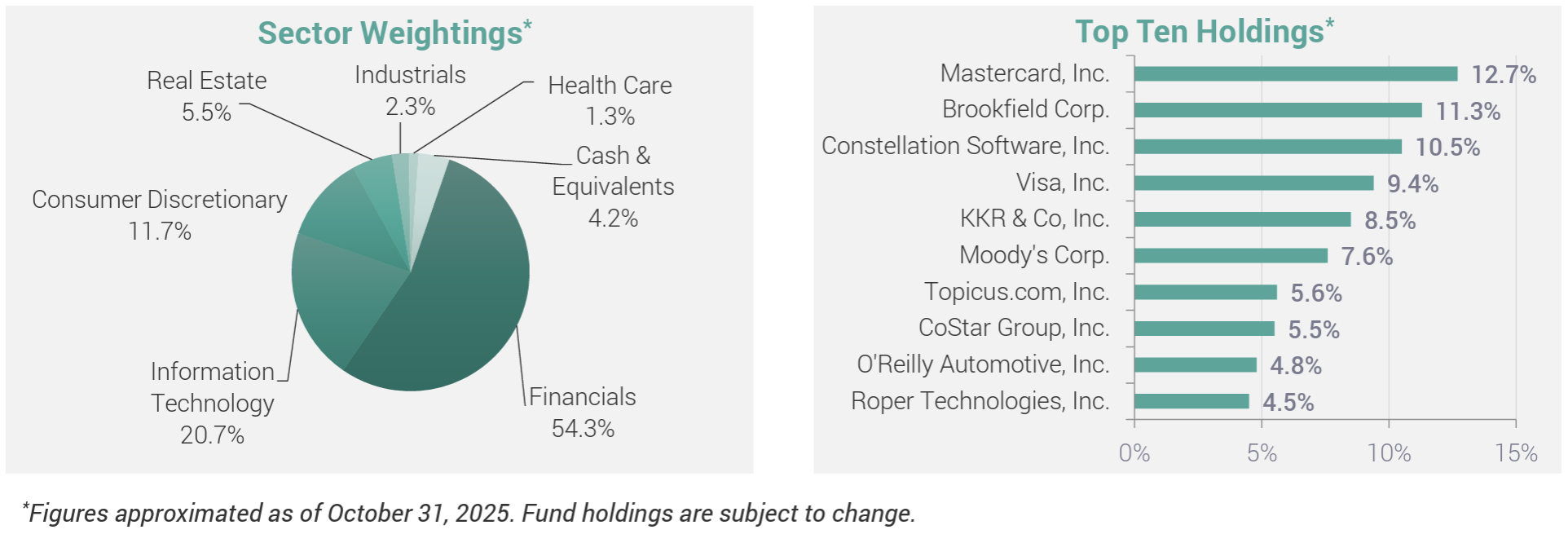
Think of payment networks, rating agencies, specialized software companies, insurance brokers, niche industrial firms, auto-parts retailers, waste management businesses, exchanges, and data providers. These companies are not all cheap, and they are certainly not risk-free. But many have something the market often rediscovers during speculative periods: repeatable demand, pricing power, strong margins, and business models that do not need to be reinvented every product cycle.
Building Blocks of an Anti-AI Portfolio
1. Quality Businesses That Do Boring Things Extremely Well
Boring is underrated. Boring collects tolls. Boring renews contracts. Boring raises prices by a little, keeps customers, and quietly compounds for years while flashy companies hold press events with lasers. Quality businesses often have high returns on capital, strong free cash flow, manageable debt, and management teams that understand capital allocation.
In an anti-AI portfolio, these businesses provide durability. They may not double because a CEO says “agentic workflow” on an earnings call, but they can create wealth through consistency. Examples include companies involved in payments, credit ratings, tax and accounting software, essential distribution, and mission-critical services. The common thread is not glamour; it is economic usefulness.
2. Dividend and Value Stocks as Shock Absorbers
Dividend stocks are not magical. A dividend does not prevent a share price from falling, and a high yield can sometimes be a warning sign wearing a fake mustache. Still, dividend-oriented and value-oriented strategies can play a useful role when growth stocks dominate market attention. They tend to emphasize current cash flow, shareholder returns, and valuation discipline.
High-quality dividend companies can be especially helpful when the market starts questioning long-duration growth assumptions. If AI winners trade on profits many years in the future, dividend payers often force the conversation back to cash today. That may sound old-fashioned, but so are seat belts, and people keep using those for a reason.
3. Real Assets and Essential Infrastructure
Real assets can include utilities, pipelines, railroads, cell towers, energy infrastructure, and certain real estate categories. These areas are not automatically “anti-AI,” because AI data centers may actually increase demand for electricity, land, and infrastructure. But that is the point: some real-asset businesses can benefit from the physical consequences of AI without depending on the valuation of mega-cap software or semiconductor stocks.
The key is selectivity. A utility with disciplined regulation, reasonable capital spending, and growing demand may be attractive. A utility forced into expensive buildouts without fair returns may be less attractive. Infrastructure investing is not just “buy the thing with wires.” It requires understanding regulation, leverage, capital intensity, and whether shareholders actually capture the benefit of growth.
4. Equal-Weight and Smaller-Cap Exposure
Market-cap-weighted indexes naturally give more weight to the largest companies. That is not a flaw; it is the design. But when the largest companies become unusually dominant, investors may consider equal-weight exposure or smaller-cap exposure to reduce mega-cap dependency.
An equal-weight S&P 500 strategy gives the 500th company a louder voice than it receives in the traditional index. Sometimes that helps; sometimes it hurts. Smaller and mid-sized companies also come with their own risks, including weaker balance sheets and greater sensitivity to interest rates. But they can provide exposure to parts of the economy that are not entirely driven by the AI arms race.
5. International Diversification
Non-U.S. markets often have lower technology concentration than the U.S. market. They may include more exposure to financials, industrials, energy, materials, healthcare, and consumer staples. That can make international equities a useful counterweight to an AI-heavy U.S. portfolio.
Of course, international investing brings currency risk, political risk, accounting differences, and slower growth in some regions. The goal is not to declare foreign markets superior. The goal is to avoid owning only one country’s most expensive story at the exact moment everyone else has decided it is the only story worth owning.
What the Anti-AI Portfolio Is Not
The anti-AI portfolio is not a bunker. It is not a pile of canned beans, gold bars, and angry blog posts about robots. It is not a recommendation to sell every technology stock. It is not a prediction that AI is fake. The best anti-AI strategy may still own some AI winners, because great companies can remain great for a long time.
What it rejects is blind enthusiasm. It refuses to treat every AI capital expenditure announcement as guaranteed shareholder value. It asks whether customers will pay enough, whether competition will compress margins, whether depreciation will matter, and whether today’s winners can remain tomorrow’s winners when technology changes quickly.
Valuation Still Matters, Even When the Story Is Amazing
Investors often learn the valuation lesson the expensive way. A company can grow revenue quickly and still disappoint shareholders if the stock price already assumed perfection. During powerful theme-driven markets, valuation discipline feels unnecessary right up until it becomes the only thing anyone wants to talk about.
For AI leaders, the core valuation questions are direct. How much capital must be spent to stay competitive? How long will chips and data centers remain economically productive? What margins are sustainable? Who captures the value: chipmakers, cloud platforms, application developers, enterprise customers, or consumers? How much of today’s demand is durable, and how much is experimental spending with a very large invoice?
For anti-AI holdings, valuation matters too. Boring companies can become overpriced when investors flee excitement and crowd into safety. A wonderful business bought at a silly price can produce disappointing returns. The anti-AI portfolio should be disciplined, not smug.
A Practical Portfolio Framework
A practical anti-AI framework begins with a portfolio X-ray. Investors can review their funds and identify overlapping exposure to the same mega-cap technology stocks. The goal is not to panic; it is to know what is actually owned. Many portfolios are more concentrated than they look.
Next, investors can decide what role each holding plays. Some assets are engines of growth. Some are stabilizers. Some provide income. Some hedge inflation. Some diversify geography. If every holding has the same job“go up when AI enthusiasm rises”the portfolio is not diversified; it is a choir singing one note very loudly.
Finally, investors can rebalance with humility. Rebalancing does not require predicting the top. It simply means trimming what has grown too large and adding to areas that still fit the long-term plan. This is less exciting than market timing, but it also requires fewer dramatic facial expressions.
Specific Examples of Anti-AI Thinking
Consider a payment network. It may benefit from global consumer spending, digital transactions, and network effects. AI might improve fraud detection or customer service, but the investment case does not require a massive AI adoption curve. The business earns money because commerce happens.
Consider an auto-parts retailer. Cars age, parts break, and people repair vehicles. AI may help inventory management, but the basic demand is wonderfully human: something made a weird noise, and now someone needs a replacement part. That is not glamorous, but it is real.
Consider a waste management company. Trash is not a trend. Nobody wakes up and says, “I have pivoted to a zero-garbage lifestyle because a chatbot inspired me.” Essential services can offer pricing power and recurring demand, although they still require careful analysis of debt, regulation, labor costs, and capital needs.
Consider a rating agency or financial data provider. These businesses can have strong brands, embedded workflows, and high switching costs. They may adopt AI tools internally, but they are not simply AI hype vehicles. Their value comes from trust, data, standards, and customer dependency.
The Biggest Risk: Being Too Clever
The anti-AI portfolio can become dangerous if it turns into a personality. Investors sometimes define themselves by what they refuse to own. That can feel intellectually satisfying and financially painful. The goal is not to be the person at the party explaining why everyone else is wrong while standing alone next to the hummus.
AI may continue to produce enormous winners. Some companies currently viewed as expensive may grow into their valuations. Some data-center spending may create durable cash flows. Some productivity gains may spread across the entire economy. A rigid anti-AI stance could miss that upside.
The better approach is flexible skepticism. Own quality. Respect valuation. Diversify exposure. Avoid accidental concentration. And never confuse a good story with a good price.
Investor Experience: What It Feels Like to Build an Anti-AI Portfolio
The experience of building an anti-AI portfolio often begins with discomfort. At first, it can feel like voluntarily leaving the loudest party in town. AI stocks are on financial television, in earnings calls, in analyst reports, and in casual conversations with relatives who recently discovered the phrase “large language model” and now say it like they work in venture capital. Choosing to add boring businesses, dividend strategies, or international exposure can feel like ordering oatmeal at a dessert buffet.
But after the first awkward stage, something interesting happens. The investor starts looking at businesses differently. Instead of asking, “How much AI exposure does this company have?” the question becomes, “What makes this business hard to kill?” That shift is powerful. It directs attention toward customer loyalty, pricing power, balance-sheet strength, management discipline, and reinvestment opportunity. These are not fashionable concepts, but they have survived many market cycles, which is more than can be said for most buzzwords.
Another common experience is discovering hidden concentration. A portfolio may look diversified by fund count but not by underlying exposure. The same large technology companies can appear in an index fund, a growth fund, a blue-chip fund, and a retirement account. Seeing that overlap can be surprising, like opening four different lunch boxes and finding the same sandwich in each one. The anti-AI process helps investors become more intentional. They may still own those companies, but at least they know how much of their future depends on them.
The emotional benefit is also real. A portfolio with multiple return drivers can make market volatility easier to tolerate. When AI leaders stumble, dividend stocks, value shares, infrastructure, or international holdings may not fully offset the decline, but they can reduce the feeling that the entire portfolio is attached to one rocket engine. Diversification is never perfect, yet it can prevent investors from making panicked decisions at exactly the wrong time.
There is also a humility lesson. Some anti-AI holdings will disappoint. Some will be cheap for a reason. Some “boring compounders” will turn out to be just boring, without the compounding. This is why the anti-AI portfolio should not be built on slogans. It requires research, patience, and position sizing. The aim is not to replace one form of overconfidence with another. The aim is to create a portfolio that can survive multiple futures: an AI boom, an AI pause, an AI shakeout, or a market where the next winning theme is something nobody is currently putting on conference badges.
In practice, the anti-AI portfolio feels less like rebellion and more like maturity. It says, “AI may change the world, but my portfolio does not need to depend on one perfect version of that change.” That sentence will never go viral. It will not look exciting on a hoodie. But as an investing principle, it has a quiet charm. Sometimes the most intelligent portfolio is the one that does not need to prove it is the smartest person in the room.
Conclusion: The Anti-AI Portfolio Is Really a Pro-Discipline Portfolio
The phrase “Talk Your Book: The Anti-AI Portfolio” works because it sounds provocative, but the deeper message is sensible. Investors do not need to reject artificial intelligence to worry about concentration, valuation, and crowd behavior. They simply need to remember that every powerful investment theme eventually faces a test. The test may come from earnings, interest rates, regulation, competition, capital spending, or plain old disappointment.
An anti-AI portfolio is best understood as a discipline portfolio. It favors businesses with durable economics, essential demand, strong management, and the ability to reinvest capital wisely. It respects dividends, value, real assets, international markets, and equal-weight exposure as possible counterweights. It does not bet the farm against AI; it refuses to bet the entire farm on AI. That is a big difference, especially if you like your farm.
The future may indeed belong to artificial intelligence. But successful investing has never been only about identifying the future. It is about paying a reasonable price, surviving the journey, and owning assets that can compound through excitement, boredom, and the occasional market tantrum. In that sense, the anti-AI portfolio is not anti-future at all. It is anti-fragile thinking dressed in a slightly sarcastic headline.