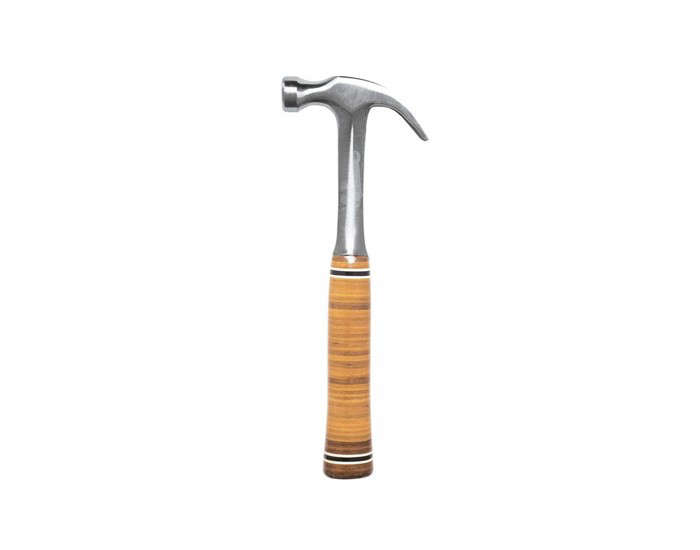
Some tools try to win you over with neon colors, tactical marketing, or enough “pro” branding to power a small city.
The Estwing leather handle claw hammer does the opposite. It shows up looking like it time-traveled from a
classic jobsite photo, shakes your hand with a stacked-leather grip, and quietly reminds you that “simple” can still mean
“seriously well-made.”
This is a deep dive into what the Estwing leather-handle claw hammer is, why people keep buying it, how to choose the right
size, and how to keep that leather looking good while it earns its keep. We’ll also talk through real-world use casesbecause
the best hammer isn’t the one with the loudest hype, it’s the one you reach for without thinking.
What the Estwing Leather Handle Claw Hammer Actually Is
At its core, the Estwing leather handle claw hammer is a one-piece forged steel hammer with a
smooth face and a curved clawwrapped in a classic, stacked genuine leather grip.
Estwing’s leather-grip claw lineup is typically offered in three head weights: 12 oz, 16 oz, and 20 oz.
The curved claw is the “general-purpose” claw shape most people picture: great for pulling nails, lifting light trim,
and correcting the occasional “oops, that nail went in at a creative angle.” It’s a friendly hammer designuseful for
DIY and home repair, plus plenty of professional carpentry tasks.
Common Models and Sizes
Estwing’s leather-handle curved claw models are commonly listed as:
E12C (12 oz), E16C (16 oz), and E20C (20 oz).
Overall lengths are typically around 11 in (12 oz), 12.5 in (16 oz), and 13.5 in (20 oz).
Translation: as the head gets heavier, the hammer generally gets a bit longer to match the swing and leverage.
Important note: Estwing also makes a leather-handle rip hammer (straight claw) in similar weights
(often labeled E12S / E16S / E20S). If you do more prying, demolition, or framing-style work, a rip claw
can be the better “nail removal and persuasion” option. If you do more general household and trim-related tasks, the curved
claw is usually the smoother daily driver.
Why the Leather Handle Is More Than Just “Looks Cool”
Yes, the leather grip looks iconic. But it’s not only a fashion statement for your toolbox. The stacked leather handle
changes how the hammer feelsespecially over long sessions.
Grip Feel: Warm, Secure, and “Broken-In” Over Time
Leather tends to feel warmer and less slick than bare steel, especially in cooler weather. Over time, it develops a
patinaa fancy way of saying it starts to look like it’s done real work instead of sitting in a display case.
Many users also notice that the grip gets more comfortable as it breaks in, almost like a good baseball glove.
Vibration and Comfort: The Honest Truth
Leather can help with comfort, but it’s not the same as a dedicated shock-absorbing rubber grip. If you’re driving nails
all day, every day, you may prefer Estwing’s Shock Reduction Grip models for vibration control. The leather handle shines
when you want a traditional feel, a secure grip, and a classic balancewithout turning your hammer into a squishy,
rubber-coated marshmallow.
Choosing the Right Head Weight: 12 oz vs 16 oz vs 20 oz
The “best” Estwing leather handle claw hammer is the one you can swing accurately, repeatedly, without your elbow writing
an angry letter to your brain. Head weight affects power, fatigue, and controlso pick for your real workload, not for
what looks most heroic on a store shelf.
Quick Decision Guide
-
12 oz (E12C): Great for light-duty tasks, small nails, quick household fixes, and anyone who prioritizes control.
If you mostly do picture-hanging, small trim work, and occasional repairs, this feels nimble. -
16 oz (E16C): The classic “one hammer for most people” size. Strong enough for general carpentry and repairs, still
controllable for neat work. If you’re buying your first quality hammer, this is the safest bet. -
20 oz (E20C): More driving power per swing, helpful when you’re sinking bigger nails or working with tougher lumber.
The tradeoff is fatigueespecially overhead or repetitive work.
Here’s the simple math-without-the-lecture version: a heavier head can do more work per strike, but only if you can swing it cleanly.
A lighter hammer you can control is often faster (and safer) than a heavier hammer you fight.
How It Performs in Real Jobs
1) Finish Work and Light Carpentry
The leather-handle claw hammer typically comes with a smooth face, which is a win for finish work because it’s less likely
to leave a waffle pattern on your material. If you’re tapping in finish nails, setting small brads (with a nail set), or doing light
trim adjustments, the smooth face helps keep things tidy.
2) Household Repairs and DIY Projects
Think: loose fence picket, squeaky stair tread, replacing a rotted board, building a simple shelf, assembling a workbench, or persuading
a stubborn shim to stop living its truth. This hammer is excellent for the everyday “I need a hammer right now” momentsespecially the
16 oz size that sits right in the control/power sweet spot.
3) Nail Pulling and Light Prying
The curved claw is built for nail pulling and general leverage. It’s not the most aggressive prying geometry (that’s where
a straight/rip claw shines), but it’s great for:
- Pulling common nails cleanly
- Lifting small trim or thin boards carefully
- Backing out a nail you placed “artistically” (diagonally through your soul)
Pro tip that saves wood: when you pull nails from finished surfaces, use a thin scrap of wood under the claw to spread the pressure. Your
trim will thank you by not exploding into a sad splinter bouquet.
The One-Piece Forged Steel Advantage
A big reason Estwing has a reputation for durability is the one-piece construction: the head and handle are forged as a
single piece of steel. That design reduces the classic failure mode of cheaper hammersloose heads, cracked handles, and the kind of wobble
that makes you wonder if your tool is secretly made of disappointment.
In practical terms, one-piece steel construction tends to deliver:
- Consistency: The hammer swings the same way every time.
- Durability: Fewer parts that can loosen, split, or shift.
- Balance: Estwing is known for dialing in weight distribution so the hammer feels predictable in hand.
Leather Handle Care: Keep the Classic Looking Classic
Leather is tough, but it’s still leather. Treat it like a work boot, not like a shovel you leave outside for six months and then blame for
“changing.” If you want that grip to age beautifully, basic care goes a long way.
Simple Maintenance Routine
- Keep it dry: If the handle gets wet, wipe it down and let it air-dry.
- Skip harsh solvents: Chemicals can dry leather out or damage finishes.
- Condition lightly (optional): A small amount of leather conditioner occasionally can help, especially in dry climates.
- Store it smart: A toolbox, tool bag, or dry shelf beats “the back of the truck in a thunderstorm.”
Also worth knowing: manufacturers commonly treat leather-grip damage from prolonged exposure to the elements as preventable wear, not a defect.
In other words, if you leave it in the rain long enough to become a science experiment, don’t be shocked if your warranty sympathy is limited.
Basic Safety (Because Hammers Don’t Come With Undo Buttons)
- Wear eye protection when striking nails or removing them (chips and fragments are fast and rude).
- Inspect the hammer periodically for damage, especially if it’s been abused as a “temporary pry bar.”
- Avoid striking hardened objects with hardened tools (it can lead to chipping).
- Use the right weight for the jobaccuracy beats brute force.
Pros and Cons: The Balanced Take
Pros
- Iconic leather grip feel: Comfortable, secure, and improves with use.
- One-piece forged steel construction: Durable and consistent.
- Smooth face: Great for finish work and neat results.
- Timeless aesthetics: Looks like a real tool, not a toy.
- Multiple sizes: 12/16/20 oz options for different users and tasks.
Cons
- Not maximum shock reduction: Rubber/anti-vibe grips can feel better for all-day framing.
- Leather needs basic care: Neglect it and it will show.
- Curved claw is less aggressive for prying: A straight/rip claw is better for demolition-heavy work.
- Break-in period: Leather often feels best after it’s earned a little grime and character.
Who This Hammer Is Perfect For
The Estwing leather handle claw hammer is a great fit if you:
- Want one hammer that handles most home and shop tasks
- Prefer a traditional feel and a firm, confident grip
- Do a mix of light carpentry, DIY repairs, and occasional building projects
- Appreciate durable tools that look better after they’ve worked
If you’re a full-time framer swinging a hammer for hours every day, you might still love Estwingbut you may lean toward a
shock-reducing grip model or a framing-specific hammer depending on your body and workflow. The leather handle version is often the “forever
hammer” people keep in their main toolbox for everything else.
Estwing Leather vs Estwing Shock Reduction Grip
Estwing’s modern Shock Reduction Grip models are often recommended for comfort during heavy use because they’re designed to reduce vibration.
The leather-handle series wins on classic feel, timeless look, and a grip that ages into your hand. If you want a hammer that’s comfortable
and doesn’t look like it belongs in a futuristic gym, leather is a solid choice.
A practical approach many tool folks take: keep a leather-handle claw hammer for general work and a shock-reducing or framing-focused hammer
for long, repetitive nail-driving days. Different tools for different battleslike having both sneakers and boots.
FAQs
Is the Estwing leather handle claw hammer good for beginners?
Yesespecially the 16 oz version. It’s easy to control, strong enough for most tasks, and helps you learn accuracy without
feeling like you’re swinging a medieval weapon.
Curved claw or rip claw: which should I buy?
Choose curved claw for general household use, finish work, and everyday nail pulling. Choose rip (straight) claw
if you do more framing, prying, and demolition where leverage and aggressive nail removal matter more.
Does the leather grip last?
With normal use and basic care, leather grips can last a long time and develop a durable patina. Like any leather, it does best when it’s not
constantly soaked, baked, or chemically attacked.
Will a smooth face slip on nails?
Smooth faces are ideal for finish work, but some people prefer a milled face for framing because it can bite into nail heads a bit more.
If you’re mostly doing framing, consider whether a framing hammer or milled face suits your needs better.
Real-World Experiences With the Estwing Leather Handle Claw Hammer (Extra 500+ Words)
If you ask people why they keep an Estwing leather handle claw hammer around, you’ll rarely hear a single feature as the answer. It’s usually
a collection of small experiences that add uplike how the grip feels on a humid day, how the balance makes the head land where your
eyes expect it to, and how the tool still looks respectable after it’s been tossed into a toolbox with three screwdrivers and a measuring tape
that’s emotionally exhausted.
One common experience is the “first week break-in.” Fresh leather can feel slightly slick or stiffespecially if it has a sealed
finishso early on, you might find yourself gripping a little tighter. Then something funny happens: the handle starts to settle. The leather
warms up in your hand, picks up a little texture, and suddenly it feels less like a museum piece and more like your hammer. After a few
projects, it becomes the tool you reach for without thinking, which is the highest compliment a hand tool can get.
Another real-life moment: the “small repair that turns into a bigger project.” You go out to reattach one loose fence picket.
Ten minutes later, you’ve decided to straighten the whole run, replace two rails, and re-level the gate because you noticed it once and now you
cannot unsee it. This is where the leather-handle claw hammer shines. A 16 oz model feels comfortable for repeated strikes without being
overbearing, and the curved claw is handy when you realize half the old nails are bent like they were installed during an earthquake.
People also talk about the sound and feedback. One-piece steel hammers can have a distinct “ring,” and the leather grip can make
the tool feel a touch more civilized in the hand than bare steel. It’s not magic; it’s just a different sensation: you get confident feedback
without the handle feeling icy or harsh. The hammer tells you what happenedgood hit, off-center hit, nail set cleanlywithout needing a dramatic
monologue.
For indoor work, there’s the “please don’t dent my trim” experience. Smooth face plus controlled weight is a big deal when you’re
setting nails, tightening a loose jamb, or nudging pieces into place. The hammer feels precise enough that you can tap gently, and it doesn’t
demand full power to do useful work. When a tool behaves well at low force, it tends to create fewer “why is there a mark there?” regrets.
And then there’s the emotional category: the “gift hammer.” A leather-handle Estwing is one of those tools that people give as a
graduation present, a first-apartment tool kit centerpiece, or a “welcome to the trades” milestone. It looks special without being precious.
It’s not fragile, it’s not gimmicky, and it doesn’t scream, “I will break the moment you actually use me.” Over time, the grip darkens, the
head shows honest wear, and it becomes a little timeline of projectsshelves built, repairs made, things fixed instead of thrown away.
The most consistent experience, though, is reliability. Not “I used it once and it was fine” reliabilitymore like “years later, it’s still the
hammer I keep closest.” You can buy a cheaper hammer and it will absolutely drive nails. But the Estwing leather handle claw hammer tends to
earn a different kind of loyalty: it feels like a tool that respects your time. It swings predictably, it holds up, and it ends up being the
hammer you’d choose even if nobody was watching. Which is convenient, because the only one watching you work is usually a dog judging your
technique from the doorway.
Conclusion
The Estwing leather handle claw hammer is a classic for good reasons: durable one-piece steel construction, a comfortable
traditional grip that ages well, and practical sizing that lets you choose control, power, or a balanced middle ground. If you want a hammer that
feels like it could survive a lifetime of projectsand look better doing itthis is one of the safest, most satisfying picks you can make.
If you’re unsure which to buy, start with the 16 oz curved claw leather model for all-around use. Add a rip claw or shock-reduction
model later if your projects get heavier, your swing gets longer, or your weekends get more ambitious than you originally promised yourself.