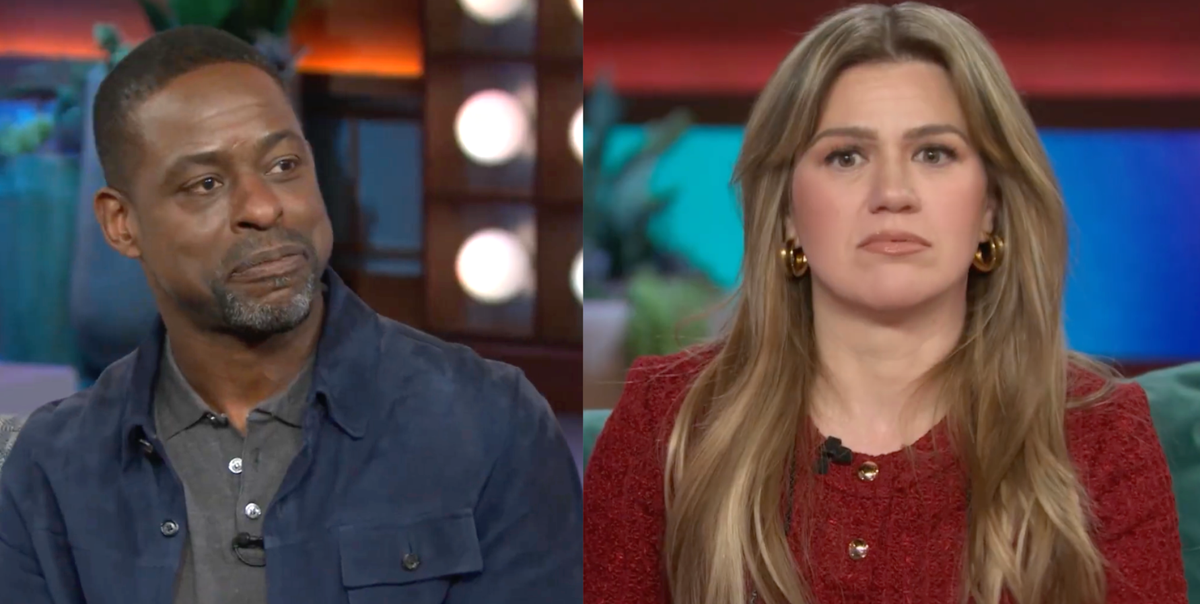
Some celebrity interviews are fluffy enough to float away with the studio lighting. Then there are moments like Sterling K. Brown’s appearance on The Kelly Clarkson Show, when a simple question about a name turned into a moving conversation about grief, identity, family, and the quiet power of being called by someone you love.
Brown, the Emmy-winning actor known for This Is Us, American Fiction, and Hulu’s Paradise, visited Kelly Clarkson’s daytime show in April 2025. The conversation began in familiar talk-show territory: career updates, family anecdotes, and a little laughter. But when Clarkson asked why Brown once went by his middle name, Kelby, the answer shifted the room. In just a few sentences, Brown explained that he returned to using “Sterling” as a teenager after losing his father, Sterling Brown Jr., when he was 10 years old.
By the time he finished, Clarkson had tears in her eyes. Viewers did too. And honestly, if your heart did not at least do a tiny emotional cartwheel, you may want to check whether it is still plugged in.
The Moment That Turned a Talk Show Interview Into Something Deeper
The key revelation was not dramatic in a scandalous Hollywood way. There was no secret feud, no shocking confession, no suspiciously timed “exclusive” designed to sell a memoir. Instead, Brown shared something beautifully human: as a child, he did not want to be called Sterling because that name already belonged to his father and grandfather. He wanted his own identity, so he used his middle name, Kelby.
That choice makes perfect sense. Children often want names, rooms, sneakers, hairstyles, and cereal bowls that feel completely their own. Brown was Sterling Kelby Brown, part of a family line that included Sterling Brown Sr. and Sterling Brown Jr. For a boy trying to figure out who he was, “Kelby” gave him some breathing room. It was shorter, distinct, and apparently less “old man” sounding to his young ears.
But after his father died, the name Sterling changed meaning. It was no longer just a formal family label. It became a sound he missed. Brown said that by the time he turned 16, he had gone years without hearing his father’s name in daily life. So he asked people to call him Sterling. Not because he had lost his individuality, but because he had found a way to carry his father with him.
Why Kelly Clarkson Got Emotional
Kelly Clarkson is no stranger to emotional moments on her show. Her daytime program has built much of its appeal on warmth, music, humor, and the kind of spontaneous vulnerability that rarely survives overproduced celebrity interviews. Clarkson has also spoken openly over the years about motherhood, life changes, and the importance of letting people be real instead of polished into plastic.
So when Brown explained that hearing the name “Sterling” again helped him feel connected to his father, Clarkson did not respond like a host chasing a viral clip. She reacted like a person who understood the emotional weight of the story. Her eyes filled, she paused, and she called the moment sweet and beautiful. Brown, visibly moved himself, gently reassured her.
The exchange worked because it felt unforced. No swelling movie score was needed. No dramatic lighting. No “coming up next” tease. Just two people sitting across from each other, realizing that a name can be much more than a name.
Sterling K. Brown’s Name Carries a Family Legacy
Names can act like tiny time capsules. They carry family histories, cultural roots, private jokes, painful memories, and sometimes the hopes of people who are no longer here to explain why they chose them. Brown’s decision to embrace “Sterling” at 16 turned his name into a living tribute.
That is part of why the story landed so strongly with viewers. Many people know what it feels like to keep a loved one alive through small rituals: cooking a parent’s recipe, wearing a grandparent’s watch, saving a voicemail, repeating a phrase someone used to say, or giving a child a family name. Brown’s story sits in that same emotional neighborhood.
It is also deeply consistent with the emotional honesty that has shaped his public persona. Brown has spoken before about his father’s death and about how much love his father gave him during their short time together. That background makes the Kelly Clarkson moment feel less like a random revelation and more like another chapter in a long, tender conversation Brown has had with audiences about fatherhood, memory, and love.
How the Revelation Connects to Sterling K. Brown’s Career
Sterling K. Brown has built a career on making big emotions feel specific. As Randall Pearson on NBC’s This Is Us, he portrayed a man wrestling with adoption, anxiety, perfectionism, fatherhood, grief, and identity. Randall was not simply “the emotional one.” He was a detailed character whose heart often ran several miles ahead of his brain, which is relatable to anyone who has ever overthought a text message for 45 minutes.
One of the most discussed This Is Us episodes, “Memphis,” centers on Randall’s relationship with his biological father, William. That storyline resonated with fans because it explored what happens when love arrives late but still matters deeply. Brown has said that viewers frequently approach him about that episode and about the emotional connection the series created.
His own story about choosing the name Sterling adds another layer to why those roles feel so authentic. Brown understands that grief is not a single event. It is something people revisit through birthdays, songs, smells, holidays, and yes, names. When he performs those emotions on screen, he is not simply pressing the “cry now” button in the actor control room. He is drawing from a lived understanding of how love and loss stay tangled together.
From This Is Us to Paradise: Why Brown Keeps Finding Emotional Truth
During the same talk-show appearance, Brown was promoting Paradise, the Hulu thriller in which he plays Xavier Collins, a Secret Service agent caught in a tense political mystery. The role is very different from Randall Pearson. Xavier is quieter, more guarded, and trained to scan rooms for danger instead of feelings. Basically, he is the kind of guy who notices the emergency exits before he notices the appetizer tray.
Yet even in a thriller, Brown brings emotional gravity. The Associated Press has described Paradise as a series with themes involving power, privilege, climate anxiety, and who gets protected in a crisis. Brown also serves as an executive producer, giving him a creative role beyond performance. That matters because his work increasingly shows interest in stories that mix entertainment with moral and emotional questions.
In that sense, the Kelly Clarkson interview was not separate from his career. It revealed the same quality that makes his best performances memorable: he can take something personal and make it feel universal without flattening it into a slogan.
Why Viewers Connected With the Story
1. It Was About Grief Without Being Hopeless
Brown’s story is sad, but it is not only sad. The emotional center is not simply that he lost his father young. It is that he found a way to keep hearing his father’s name. That is a hopeful form of remembrance. It suggests that grief can become part of identity without swallowing the whole person.
2. It Made a Celebrity Feel Familiar
Brown has major awards, prestige credits, and a résumé that could make most actors sigh dreamily into a headshot. Yet the story he told was not about fame. It was about a child missing his dad. That kind of honesty narrows the distance between celebrity and audience.
3. Kelly Clarkson’s Reaction Felt Genuine
Viewers often respond not just to what is said, but to how people listen. Clarkson did not rush past the moment. She let it breathe. Her reaction reminded audiences that empathy is sometimes as simple as pausing long enough to receive someone’s truth.
4. The Name Story Was Surprisingly Relatable
Almost everyone has a name story. Maybe you were named after someone. Maybe you changed your name. Maybe people mispronounce it constantly and you have developed the patient smile of a kindergarten teacher during glitter hour. Brown’s revelation reminded people that names are personal architecture. They help build the rooms we live in emotionally.
The Bigger Meaning Behind “Sterling”
The word “Sterling” itself suggests value, strength, and quality. In Brown’s case, it also carries lineage. It links him to his father and grandfather while still allowing him to define the name on his own terms. That is an important distinction. Honoring family does not mean becoming a copy of the people who came before you. It can mean receiving what they gave and then living it forward in your own voice.
Brown’s decision at 16 came at an age when many young people are trying to separate from family expectations. He did the opposite in a way that still affirmed his individuality. He did not choose Sterling because he had to. He chose it because he wanted to hear it again. That voluntary return makes the gesture powerful.
For fans, the revelation also casts his professional name in a new light. “Sterling K. Brown” is not just the name on award ballots or television credits. It is a public echo of a private bond. Every role, interview, red carpet, and acceptance speech carries that name forward.
Specific Examples of Why This Moment Resonates
Imagine a young person who loses a parent and later starts wearing that parent’s old jacket. The jacket is not valuable because of the fabric. It is valuable because of the presence it holds. Brown’s name works similarly. It is something ordinary transformed by memory.
Or think about families that pass down names across generations. A child may initially resist being “the third” or “the fourth” because it feels like wearing someone else’s shoes. But later, that same name can become a bridge. The person grows into it, reshapes it, and discovers that inheritance does not have to erase identity.
That is what Brown’s story captures so well. He began as Kelby because he wanted space. He returned to Sterling because he wanted connection. Both choices were honest. Both reflected where he was in life. The beauty is not that one name was right and the other was wrong. The beauty is that he allowed his identity to evolve.
What This Reveals About Celebrity Interviews Today
In an era when many celebrity interviews are optimized for short clips, the Brown-Clarkson exchange is a reminder that audiences still value sincerity. A headline may get the click, but emotional truth earns the share. The best talk-show moments are not always the loudest. Sometimes they are the ones where a guest says something quiet and the room suddenly changes temperature.
This is also why The Kelly Clarkson Show has developed a reputation for heartfelt conversations. Clarkson’s background as a singer may help. Musicians spend their careers translating feeling into sound, so she often listens like someone searching for the note beneath the words. Brown gave her a note full of love and loss, and she heard it immediately.
Experiences Related to Sterling K. Brown’s Revelation
What makes “Sterling K. Brown brings Kelly Clarkson to tears with revelation” such a compelling topic is not merely the celebrity factor. It is the everyday experience hiding inside it. Many people know what it is like to associate a name with a person they miss. A mother’s name may appear on a caller ID that no longer rings. A father’s signature may remain on an old birthday card. A grandparent’s nickname may survive in a family group chat, even years after that person is gone.
Some people keep loved ones close by naming children after them. Others avoid a name for years because it hurts too much to say out loud. Then one day, without warning, the pain softens. The name becomes less of a bruise and more of a candle. Brown’s story reflects that shift. As a boy, “Sterling” felt like someone else’s name. After loss, it became a way to keep his father present.
There is also an experience here for anyone who has ever changed how they present themselves to the world. A name, nickname, stage name, married name, chosen name, or professional name can mark a chapter. People outgrow versions of themselves. They return to old versions. They revise. They reclaim. Identity is not a one-time form you fill out at the DMV while wondering why the pen is attached to a chain. It is a living thing.
Brown’s revelation may especially resonate with people who lost a parent young. Childhood grief can be strange because a person may understand the facts before fully understanding the emotional consequences. Years later, a milestone arrivesa birthday, graduation, wedding, career achievementand the absence becomes newly visible. Brown’s decision at 16 suggests a teenager realizing, in his own way, that he wanted to keep hearing the name connected to his father.
The experience also speaks to parents watching their children define themselves. Clarkson related the story to her son Remington using his middle name in a public moment. It was a lighter anecdote, but it fit the theme. Children experiment with identity constantly. They try on names, outfits, opinions, hobbies, and occasionally extremely questionable snack combinations. Adults may laugh, but those experiments are part of becoming a person.
For viewers, the emotional takeaway is simple but powerful: small choices can hold enormous meaning. Asking people to call you by a different name may look minor from the outside. From the inside, it can be an act of remembrance, independence, healing, or love. Brown did not need a long speech to explain that. He only needed the truth. That is why Clarkson cried, why fans reacted, and why the clip traveled far beyond a routine daytime interview.
Conclusion: A Name, a Memory, and a Moment That Stayed With Viewers
Sterling K. Brown’s emotional revelation on The Kelly Clarkson Show became memorable because it touched something universal. He was not just explaining why he stopped going by Kelby. He was explaining how a name helped him reconnect with his late father. Kelly Clarkson’s tearful reaction gave the moment its emotional punctuation, but Brown’s honesty gave it its heart.
In a media world crowded with hot takes, dramatic headlines, and celebrity noise, this quiet story stood out. It reminded viewers that family legacy can live in the smallest details. It showed that grief can become a form of love that keeps speaking. And it proved, once again, that Sterling K. Brown has a rare gift: whether acting in a hit drama or sitting on a talk-show couch, he knows how to make people feel seen.