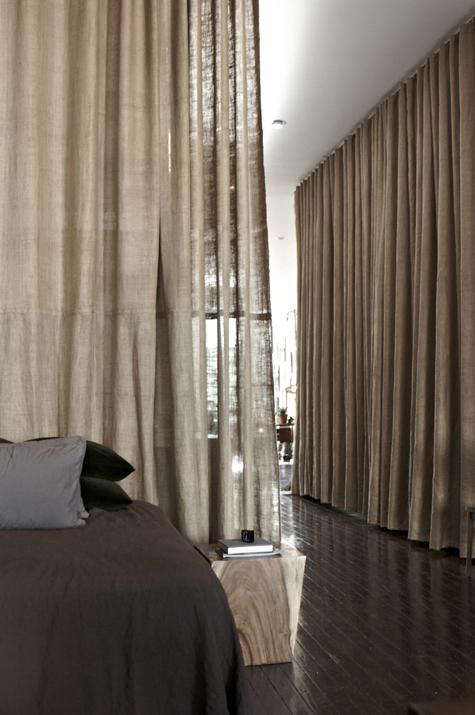
A wall is useful, but it is not always charmingand it certainly cannot sweep dramatically aside when company arrives. Scott Newkirk’s curtained bedroom shows how rough natural fabric, ceiling-mounted hardware, relaxed linen bedding, and a restrained earth-tone palette can turn an open loft into a private sleeping cocoon. Here is how to borrow the idea without turning your home into a hospital ward, a stage set, or a very ambitious potato sack.
Why Scott Newkirk’s Curtained Bedroom Still Looks Fresh
Scott Newkirk is known for applying a stylist’s eye to interiors: ordinary materials become expressive, useful objects are allowed to look useful, and polished pieces sit comfortably beside flea-market finds. In his former Fort Greene, Brooklyn, homea spacious loft inside a converted firehousehe separated the sleeping area from the living space with dramatic floor-to-ceiling curtains. The early version most closely associated with this look used burlap sourced in New York and suspended from the kind of ceiling track commonly used for hospital cubicle curtains.
That combination is the entire magic trick. Burlap is agricultural, inexpensive-looking, and imperfect. The track is unapologetically institutional. Yet the generous scale, full-length folds, muted color, and careful styling transform both into architecture. Closed, the curtains create a soft room within a room. Open, they stack away and restore the loft’s volume. No studs, drywall, or tiny door that makes moving a mattress feel like competitive gymnastics.
The bedroom behind the curtain is equally important. Newkirk paired the rugged divider with rumpled linen bedding in earthy shades and pillows made from collected African fabric. Instead of fighting the burlap’s texture, he continued the tactile story. The result feels relaxed, worldly, and personalnot a “rustic theme bedroom,” which is usually where galvanized buckets go to retire.
The Design Formula: Soft Architecture and Honest Materials
1. Treat the Curtain Like a Wall
A successful curtained bedroom begins with scale. The fabric should run from near the ceiling to the floor and extend across the full opening you want to define. A short panel floating several inches above the floor reads as a temporary divider. A continuous plane of fabric reads as architecture.
Use enough material to create substantial folds even when the curtain is closed. As a practical starting point, plan for roughly 1.5 to 2 times the width of the track. Less fabric can look stretched and flat; too much heavy fabric can become bulky and difficult to move. The goal is a relaxed vertical rhythm, not an accordion audition.
2. Choose Texture Before Pattern
The original Scott Newkirk curtained bedroom depends on surface character rather than print. Natural burlap has a visible weave, tonal variation, and a slightly unruly edge. It catches light differently across every fold, giving a neutral color more depth than smooth beige fabric could manage.
True burlap is woven from jute and can shed fibers, carry a natural earthy odor, and feel coarse. That is part of its charm, but it also means the material is not ideal for every household. For a cleaner interpretation, consider washed linen, heavyweight linen-cotton canvas, hemp cloth, wool felt, or textured upholstery fabric. These alternatives preserve the tactile effect while offering different levels of softness, opacity, movement, and maintenance.
3. Keep the Palette Warm and Layered
Newkirk’s room works within a family of flax, mushroom, tobacco, charcoal, clay, and softened brown. The colors do not match perfectly; they relate. That distinction matters. A perfectly coordinated beige room can feel like a furniture showroom waiting for a personality delivery. Slight tonal shifts make the space feel collected.
Start with the curtain divider as the largest color field. Add bedding one or two tones lighter or darker. Then introduce a small amount of blackened metal, aged brass, dark wood, or deep olive to give the eye a place to land. One patterned textilea vintage pillow, striped blanket, or handwoven throwis usually enough.
How to Recreate the Scott Newkirk Curtained Bedroom
Step 1: Map the Sleeping Zone
Before buying fabric, mark the proposed curtain line on the floor with painter’s tape. Check how the bed, nightstands, lamps, and walkway function when the divider is “closed.” A bedroom should have a comfortable path to the bed and a clear exit. Do not let the track cross a ceiling fan, sprinkler head, smoke detector, pendant light, HVAC register, or access panel.
In a studio apartment, the best curtain line often begins just beyond the foot or side of the bed, leaving enough clearance for the fabric to hang without brushing the bedding. In a large loft, the divider can enclose a larger sleeping suite. In a conventional bedroom, a shorter track can hide an open closet, form a dressing zone, or frame the bed like a loose canopy.
Step 2: Select the Right Ceiling Track
The original installation’s hospital-style track is clever because it is slim, strong, and visually discreet. Modern ceiling-mounted curtain tracks are available in straight, corner, and flexible configurations. Look for smooth carriers, replaceable gliders, compatible end stops, and a weight rating suitable for the selected fabric.
Mounting is not the glamorous part, but it is the part that keeps the curtain from arriving in bed before you do. Whenever possible, fasten the track into ceiling joists or solid blocking. If the ceiling construction is uncertain, consult a qualified installer. Heavy drapery plus repeated pulling creates more stress than a decorative window panel.
Renters should use a properly rated tension system only where the span, wall surfaces, and manufacturer’s instructions allow it. Adhesive hooks may work for very lightweight decorative fabric, but they are rarely appropriate for a large burlap or lined-linen room divider.
Step 3: Pick a Fabric That Matches Your Real Life
Choose authentic burlap for the closest visual match, especially in a loft, cabin, or low-traffic sleeping area. Inspect the weave against a window to judge transparency. Loosely woven burlap offers atmosphere, but it does not guarantee complete privacy. For a darker sleeping zone, add a separate cotton lining or use a denser fabric.
Washed linen is softer and more fluid. Canvas produces stronger, straighter folds. Wool felt offers visual privacy and better sound absorption than thin cloth, although it is heavier and usually more expensive. A linen-cotton blend is a sensible compromise for households that want natural texture without excessive wrinkling or shedding.
Order swatches before committing. View them in morning light, lamplight, and the gloomy hour when every taupe suddenly reveals its secret green undertone.
Step 4: Decide How the Curtain Meets the Floor
A panel that barely kisses the floor looks tailored and is easier to clean. A small break creates a relaxed, European-style drape. A deep puddle adds romance but collects dust and becomes an attractive nap location for pets. For a Newkirk-inspired loft bedroom, a slight break is usually the sweet spot: casual, weighty, and intentional.
If the fabric is very light, a concealed weighted hem can help it hang steadily. Avoid exposed weights where children or pets could reach them. Prewash washable fabric before final hemming because natural fibers may shrink.
Step 5: Use a Simple, Functional Header
Hospital-track carriers commonly connect to hooks, snaps, or sewn curtain tape. Keep the header visually quiet so attention stays on the fabric’s full height. Ripple-fold and simple pleated systems move neatly. Clips offer a more improvised appearance but may not support heavy material evenly.
Test the curtain several times before finishing every seam. It should glide without catching, close fully without straining, and stack in a location that does not block a doorway, window, artwork, or frequently used storage.
Build the Bedroom Behind the Curtain
Choose a Low, Unfussy Bed
The fabric enclosure already provides drama, so the bed can remain visually quiet. A low wood platform, simple upholstered base, or mattress on a restrained frame works better than a towering tufted headboard. Keep the silhouette horizontal to balance the curtain’s strong vertical lines.
Before choosing a floor-level mattress, consider ventilation, accessibility, and cleaning. A slim platform that lifts the mattress slightly above the floor creates nearly the same minimalist effect while making everyday maintenance easier.
Make Peace With Rumpled Linen
Relaxed linen bedding is central to the look. Choose a duvet cover, flat sheet, and pillowcases in related earth tones rather than a boxed matching set. Linen’s natural creases reinforce the room’s informal mood. The bed should look inviting and lived in, not as though a hotel inspector is hiding in the closet with a ruler.
Limit decorative pillows. Two sleeping pillows, two larger back pillows, and one distinctive textile cushion are plenty. A charcoal wool throw or lightweight quilt at the foot of the bed adds contrast and seasonal flexibility.
Add One Textile With a Story
Newkirk used African fabric for pillow covers, illustrating a broader principle: one personal textile can animate a neutral bedroom. Use a piece collected while traveling, a vintage grain sack, an inherited weaving, or a remnant from a local artisan.
Respect the textile’s origin and avoid presenting a culturally specific pattern as generic “tribal decor.” The point is biography, craftsmanship, and personal meaningnot costume.
Use Warm, Low-Level Lighting
A curtained sleeping zone can become dim even during the day, so plan multiple light sources. Combine a reading lamp or wall sconce near the bed with a soft ambient lamp outside the enclosure. Warm light emphasizes natural fibers and prevents brown and gray shades from feeling cold.
Keep hot bulbs, radiators, portable heaters, and other heat sources well away from fabric. Open flames and loose jute are not a charming vintage pairing; they are a call to the fire department.
What to Buy: A Flexible Shopping Checklist
- A ceiling-mounted straight or flexible curtain track rated for the fabric’s weight
- Enough curtain fabric for approximately 1.5 to 2 times the track width
- Compatible carriers, hooks, end stops, and mounting hardware
- Optional lining for darkness and visual privacy
- Hem tape, sewing supplies, or professional workroom services
- Earth-tone linen or linen-blend bedding
- One patterned or handwoven accent pillow
- A low-profile bed and compact bedside surface
- Warm reading and ambient lighting
- A soft-brush vacuum attachment for routine fabric care
Spend first on safe track installation and enough fabric. A beautiful divider with skimpy yardage looks apologetic, while a bargain track that jams every morning quickly becomes an expensive way to practice new vocabulary.
Three Ways to Adapt the Look
For a Small Studio Apartment
Use a linen blend or medium-weight canvas in a color close to the walls. Matching the surrounding surfaces reduces visual clutter when the curtain is closed. Run the track only as far as needed to screen the bed, and leave a generous stacking zone so daylight can travel through the apartment during the day.
For a Rustic Cabin Bedroom
Lean into coarse burlap, reclaimed wood, iron hardware, and mossy or tobacco-colored bedding. Keep accessories sparse. The combination should feel elemental, not themed. One branch on the wall is art; twelve branches may suggest the local beavers have opened a franchise.
For a Polished Modern Home
Replace burlap with wool, linen velvet, or a refined textured weave. Recess the ceiling track where construction allows, use precise hems, and choose a monochromatic palette. You will retain the flexible room-within-a-room concept while shifting the mood from bohemian loft to tailored retreat.
Common Mistakes That Weaken the Look
Using too little fabric: Flat panels resemble shower curtains. Generous folds create depth and authority.
Choosing a flimsy track: The system must carry the fabric smoothly and withstand daily use.
Ignoring airflow: A closed fabric enclosure should not obstruct heating, cooling, or safe ventilation.
Expecting soundproofing: Curtains soften echoes and provide visual privacy, but ordinary fabric will not block conversation like a constructed wall.
Overdecorating the bed: The divider is the statement. Let the bedding remain relaxed and simple.
Forgetting maintenance: Textured fabric catches dust. Vacuum gently, follow the manufacturer’s cleaning instructions, and address stains promptly.
Living With the Look: The Real Curtained-Bedroom Experience
The first surprise of a curtained bedroom is emotional rather than visual. Pulling the panels closed creates a small ritual between daytime and sleep. The living room, desk, kitchen, and half-finished to-do list disappear behind fabric. The physical space may be unchanged, but the brain receives a useful message: the public portion of the day is over.
In an open studio, that sense of separation can be unusually satisfying. During the morning, the curtains slide away and the apartment regains its full footprint. The bed stops dominating every view and video call. At night, closing the divider makes the sleeping area feel protected without the boxed-in quality of a tiny permanent room. Guests also appreciate not having to stare at the place where you lost a wrestling match with the fitted sheet.
The fabric can also change the room’s sound and light. Heavy folds reduce some of the sharp echo common in lofts, while a dense or lined curtain softens bright ambient light. The effect is not true acoustic isolation or blackout performance unless the materials are specifically designed for those purposes, but even modest softening can make the bed feel more sheltered.
There are practical habits to learn. The panels should be opened regularly for airflow and cleaning. A robot vacuum may regard the hem as its natural enemy. Cats may regard it as a climbing wall personally commissioned for them. When fabric puddles heavily, shoes, dust, and pet hair collect in the folds. A floor-kissing hem is much easier to live with, even if the romantic version looks marvelous in photographs.
Privacy also depends on lighting. A loosely woven natural fabric can appear opaque during the day yet reveal silhouettes when the sleeping area is illuminated at night. Testing a full-size sample with a lamp behind it prevents awkward surprises. Lining solves the issue, while a two-layer treatmentsuch as a translucent outer curtain and an opaque inner paneloffers more control over light and privacy.
Daily operation matters more than it seems. A smooth track makes closing the bedroom feel effortless. A sticky track turns the nightly ritual into a tug-of-war. Place the opening where it follows your natural walking path, and divide wide spans into manageable panels. Being able to open one section without exposing the entire sleeping area makes the system more flexible.
The most rewarding part is adaptability. A wall decides permanently; a curtain negotiates. It can close around overnight guests, screen clutter before dinner, turn a corner into a dressing room, or open completely for a party. That flexibility is especially valuable now that many homes must function as offices, studios, workout areas, and gathering places within the same few rooms.
The look improves as it becomes personal. Fresh burlap and new linen can initially feel like a concept board. Add a worn book, an old stool, a drawing from a friend, a textile collected on a meaningful trip, and lighting that flatters the evening. Over time, creases deepen, the fabric relaxes, and the room stops looking “inspired by Scott Newkirk.” It starts looking like yourswhich is the best possible theft in a Steal This Look story.
Conclusion
Scott Newkirk’s curtained bedroom succeeds because it turns humble materials into flexible architecture. The floor-to-ceiling divider creates intimacy without sacrificing openness, while earth-tone linen, low furniture, collected textiles, and warm lighting keep the space relaxed.
Recreate the idea by prioritizing scale, texture, safe installation, and daily function. Do not obsess over finding the exact vintage source or identical shade of burlap. The enduring lesson is simpler: use fabric boldly, let materials show their character, and give your bedroom the option to make a graceful exit.