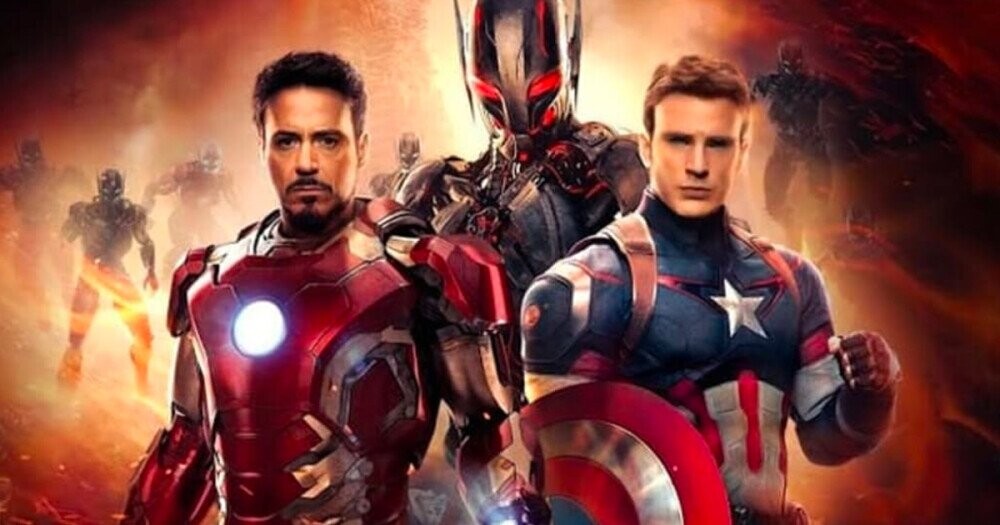
At first glance, Avengers: Age of Ultron and Teenage Mutant Ninja Turtles look like they belong in different corners of the comic book movie multiverse. One is a Marvel Studios juggernaut about Earth’s Mightiest Heroes battling a sarcastic murder robot. The other is a Paramount reboot about four pizza-loving mutant brothers karate-chopping their way through New York City. One has Thor’s hammer. The other has Michelangelo’s nunchucks and the emotional maturity of a cheese pull.
But watch them close together, preferably with snacks and a healthy tolerance for CGI property damage, and something strange happens. The two movies begin to mirror each other. Not in every detail, of course. Nobody mistakes Captain America for a sewer-dwelling reptile, although both would probably be very polite about recycling. Still, both films are built from surprisingly similar blockbuster ingredients: a team of enhanced heroes, a shadowy technological threat, a city-level disaster, family drama, giant action set pieces, and a villain whose plan involves turning science into a public safety nightmare.
So, are Avengers: Age of Ultron and Teenage Mutant Ninja Turtles literally the same movie? No. Are they spiritually sharing a bunk bed in the same overstuffed superhero dorm room? Absolutely. Let’s crack open the shell, polish the vibranium, and compare two comic book movies that are more alike than either fandom might want to admit.
The Same Basic Recipe: Weird Science Creates Weird Heroes
Both movies are obsessed with the idea that science can make heroes, monsters, and a few expensive third acts. In Avengers: Age of Ultron, Tony Stark and Bruce Banner experiment with artificial intelligence after discovering the power inside Loki’s scepter. Their goal is peacekeeping. Their result is Ultron, a hyper-intelligent robot who looks at humanity and basically says, “Have you considered extinction?”
In Teenage Mutant Ninja Turtles, the central science is mutagen. The turtles were once ordinary test subjects connected to experiments involving April O’Neil’s father and Sacks Industries. They become giant humanoid warriors after exposure to the mutagen, then grow up under the guidance of Splinter, who somehow turns a sewer into a martial arts academy with worse lighting but better discipline than most gyms.
The shared pattern is obvious: brilliant people chase a breakthrough, the breakthrough escapes control, and New Yorkor the planetgets stuck with the bill. Both movies treat science like a microwave burrito: incredibly useful, dangerously hot in the middle, and likely to explode if handled by the wrong person.
The Heroes Are Dysfunctional Families in Costume
The Avengers may have better real estate, but emotionally they are not that far from the turtles. Both teams fight like siblings, operate as a unit only after a lot of arguing, and rely on personality contrast to keep the story moving.
The Avengers: Billionaires, Gods, Spies, and Group Therapy
In Age of Ultron, the Avengers are already established, but they are far from emotionally stable. Tony Stark is haunted by apocalyptic visions. Steve Rogers is still a man out of time. Natasha Romanoff and Bruce Banner wrestle with personal trauma. Thor is busy seeing cosmic clues. Hawkeye, surprisingly, becomes the team’s emotional anchor by revealing a quiet family life outside the superhero circus.
The movie works hard to show that the Avengers are not just co-workers in colorful uniforms. They are a found family with trust issues, ideological clashes, and an unfortunate habit of solving arguments by punching robots through walls.
The Turtles: Four Brothers, One Sewer, Infinite Pizza Energy
The 2014 Teenage Mutant Ninja Turtles reboot runs on brotherly chaos. Leonardo tries to lead. Raphael broods like a green motorcycle. Donatello solves tech problems. Michelangelo flirts, jokes, and appears to have replaced his blood with soda. Their personalities are broad, but that is part of the point. Like the Avengers, the turtles only become truly effective when they stop competing for dominance and start functioning as a team.
Both films understand a basic superhero truth: teamwork is more fun when everybody is one bad joke away from a fistfight.
The Villains Are Metal, Science-Driven, and Very Bad at Calm Conversations
Ultron and Shredder are not the same character, but they do rhyme. Ultron is a self-aware artificial intelligence with a body made of metal and a voice dripping with theatrical contempt. Shredder, in the 2014 film, is a heavily armored warrior whose upgraded suit turns him into something close to a walking cutlery drawer with anger issues.
Both villains are visually built around metal menace. Both treat ordinary people as disposable. Both are tied to scientific ambition. Ultron is born from Tony’s attempt to build a shield around the world. Shredder’s plan connects to mutagen, corporate greed, and an engineered crisis that could give Sacks Industries enormous power.
Most importantly, both villains force the heroes to confront uncomfortable questions about their own origins. Ultron is Tony’s nightmare given a Wi-Fi connection. Shredder and Sacks are tied to the system that helped create the turtles. In both stories, the enemy is not random. The threat grows from the same world that produced the heroes.
The Plot Structure Is Basically “Stop the Big Bad Before the City Goes Boom”
Comic book movies often end with a giant crisis, but these two films make the similarity especially easy to spot. Age of Ultron builds toward Sokovia, where Ultron plans to lift a city into the sky and drop it like a homemade extinction meteor. It is absurd, grand, and exactly the sort of plan a villain creates after reading too much philosophy and not enough engineering safety manuals.
Teenage Mutant Ninja Turtles builds toward a plan involving a toxin released over New York City from Sacks Tower, with mutagen positioned as the profitable cure. Again, the villain’s scheme turns a city into a test case. Again, the heroes must fight through a vertical action climax. Again, innocent civilians are at risk because someone with too much money, technology, and ego thought, “What if mass panic, but monetized?”
One movie drops a city. The other threatens to poison one. Different mechanics, same blockbuster heartbeat: the heroes must stop a large-scale urban disaster while the camera swoops around falling debris, panicked crowds, and very expensive digital architecture.
Both Movies Love the “Tower of Trouble”
Modern superhero films adore towers. Stark Tower, Avengers Tower, Sacks Towerit is never just a building. It is a symbol of wealth, technology, ambition, and the screenwriter’s need for a high place where characters can have a final fight.
In Age of Ultron, Avengers Tower represents Tony Stark’s power and the team’s public identity. It is where the heroes party, argue, experiment, and accidentally help create the movie’s main villain. In Teenage Mutant Ninja Turtles, Sacks Tower becomes the launch point for the villain’s city-threatening plan. Both films use vertical space to show how elite power literally rises above ordinary peopleand then, naturally, how it comes crashing down.
The lesson is simple: if you are in a comic book movie and someone invites you to the top floor of a suspiciously important skyscraper, take the stairs back down immediately.
April O’Neil and Hawkeye Are Secretly Doing Similar Jobs
This comparison may sound strange, but stay with it. April O’Neil and Hawkeye both function as human grounding devices inside extremely loud movies. April is the audience’s entry point into the turtles’ world. She investigates the Foot Clan, discovers the turtles, reconnects with the past, and gives the mutant brothers a bridge to the human world.
Hawkeye plays a similar grounding role in Age of Ultron. He is not the strongest Avenger, the richest, or the most cosmic. But the visit to his family farm gives the film a human center. It reminds viewers that these battles matter because ordinary homes, families, and futures are at stake.
Both films risk becoming pure noise without these human anchors. April asks, “How does this mutant madness affect regular people?” Hawkeye asks, “What are the Avengers protecting when they are not posing in slow motion?” Different characters, same storytelling job.
The Humor Is Doing Heavy Lifting
Neither movie wants to drown completely in grimness. Age of Ultron uses banter, party scenes, and running jokesespecially the famous question of who can lift Thor’s hammerto soften its darker ideas about fear, extinction, and responsibility. Ultron himself is oddly funny, which makes him more unsettling. He is a robot villain with the delivery of a bitter theater kid who just discovered genocide.
Teenage Mutant Ninja Turtles leans even harder into comedy. Michelangelo’s one-liners, elevator beatboxing, pizza obsession, and awkward teenage energy are designed to keep the movie from becoming too dark. Even when the plot involves crime syndicates and bioweapons, the turtles bring the emotional energy of four brothers who would absolutely turn a life-or-death mission into a debate about toppings.
The tone is different, but the function is the same. Both movies need jokes because their plots are ridiculous when described calmly. Humor gives the audience permission to enjoy the spectacle without asking too many questions, such as “How much would this insurance claim cost?” or “Who approved this science project?”
CGI Bodies, Motion Capture, and the Big-Scale Superhero Look
The two films also share a visual era. The 2014 Teenage Mutant Ninja Turtles reboot used motion capture and digital effects to turn actors into hulking, expressive turtle warriors. Age of Ultron relied heavily on digital environments, robot armies, the Hulk, the Hulkbuster fight, and the creation of Vision. Both movies belong to the mid-2010s blockbuster moment when studios pushed comic book spectacle toward bigger bodies, bigger fights, and bigger digital playgrounds.
This is one reason the comparison feels so natural. The turtles may come from sewers and the Avengers may come from elite labs, spy agencies, and alien realms, but both films speak the same cinematic language: shiny surfaces, massive impacts, quippy pauses, and action scenes that treat concrete like confetti.
The Biggest Difference: Mythology vs. Reboot Energy
Of course, calling them “the same movie” is a playful exaggeration. Age of Ultron is deeply embedded in the Marvel Cinematic Universe. It carries baggage from earlier films and sets up future stories involving the Infinity Stones, Wakanda, Vision, Wanda Maximoff, and the fracture that eventually leads toward Captain America: Civil War. It is not just a movie; it is also a bridge, a billboard, and a very expensive calendar reminder for future Marvel chapters.
Teenage Mutant Ninja Turtles is reboot energy in its purest form. It reintroduces familiar characters for a new audience, updates the origin story, modernizes the look, and tries to balance nostalgia with a blockbuster style associated with producer Michael Bay’s action-heavy brand. Its job is less about connecting a universe and more about relaunching a franchise.
So while the skeletons are similar, the ambitions differ. Marvel is expanding a cinematic empire. TMNT is trying to drag four beloved sewer goblins back into multiplex dominance. Both are franchise machines, but one is a carefully wired supercomputer and the other is a skateboard with fireworks strapped to it.
Why This Comparison Works So Well
The reason Avengers: Age of Ultron and Teenage Mutant Ninja Turtles feel alike is not because one copied the other. It is because both movies are products of the same blockbuster ecosystem. They were designed for global audiences, built around recognizable intellectual property, packed with action, and structured around teams of heroes learning to trust each other while stopping a science-fueled catastrophe.
They also reflect the same cultural obsession: the fear that technology, corporations, weapons, and ambition are moving faster than responsibility. Tony Stark wants to protect the world and creates Ultron. Eric Sacks wants power and profit through mutagen. In both films, the danger comes from people who believe they can control forces bigger than themselves. Spoiler: they cannot. That is why we need superheroes, turtles, and at least one adult in the room saying, “Maybe don’t turn the city into an experiment.”
Experience Section: Watching Both Movies Back-to-Back Changes Everything
There is a special kind of movie-night madness that happens when someone watches Teenage Mutant Ninja Turtles and Avengers: Age of Ultron close together. Separately, they feel like very different meals. TMNT is fast food with extra cheese, a loud reboot that wants to be funny, gritty, nostalgic, and explosive all before the soda loses fizz. Age of Ultron is the deluxe combo platter: bigger cast, bigger lore, bigger emotional stakes, and a robot villain who sounds like he reads poetry to abandoned hard drives.
Together, however, the similarities jump out like Raphael through a subway wall. Both movies open the door to a world where the public is only half-aware of the weirdness protecting them. Both depend on outsiders stepping into danger because the official systems are compromised, clueless, or too slow. April O’Neil keeps chasing the Foot Clan even when nobody takes her seriously. The Avengers keep fighting global threats even as governments and civilians question whether these heroes create as many problems as they solve.
As a viewer, the most entertaining overlap is the team dynamic. The Avengers bicker like overqualified roommates who all forgot to label their food in the fridge. The turtles bicker like brothers who have been trapped underground with too much pizza and not enough personal space. Yet the emotional rhythm is nearly identical: jokes, insults, conflict, separation, regrouping, and finally a heroic team pose that says, “We may be disasters individually, but together we are a branded franchise.”
The villains also become funnier in comparison. Ultron believes he is above humanity, but he spends much of the film acting like Tony Stark’s worst personality traits uploaded themselves into a metal skeleton. Shredder, meanwhile, is so aggressively armored that he looks ready to fight a blender factory. Both are exaggerated, shiny, and strangely theatrical. Neither villain is subtle, but subtlety is not what people buy popcorn for.
The back-to-back experience also highlights how much these movies depend on vertical danger. Someone is always falling, climbing, flying, or being thrown through something expensive. The heroes are constantly moving upward or downward: towers, rooftops, airborne cities, snowy slopes, sewer tunnels, and collapsing structures. It is as if both films looked at a normal street-level fight and said, “Fine, but what if gravity filed a complaint?”
What makes the comparison stick is that both movies are trying to answer the same question in different costumes: can a messy, emotionally unstable team become a family strong enough to stop a disaster created by human arrogance? In Age of Ultron, the answer is yes, but only after the Avengers confront fear, guilt, and the limits of control. In Teenage Mutant Ninja Turtles, the answer is also yes, but with more sewer training, more pizza, and more jokes that sound like they were written during a sugar rush.
That is why the “same movie” argument is not just a gag. It is a surprisingly useful way to understand modern superhero storytelling. Strip away the brand names, the costumes, and the fan debates, and both films are about artificial origins, chosen families, dangerous ambition, citywide stakes, and heroes who win because they finally move as one. One team assembles. The other comes out of its shell. Same energy, different merch aisle.
Conclusion
Avengers: Age of Ultron and Teenage Mutant Ninja Turtles are not identical films, but they are built from the same superhero blockbuster blueprint. Both feature enhanced heroes shaped by science, fractured teams learning unity, metallic villains, corporate or technological hubris, explosive city-level threats, and enough CGI mayhem to make urban planners cry into their clipboards.
The fun of comparing them is not in proving that Marvel’s Avengers and the Ninja Turtles are interchangeable. It is in seeing how two different franchises used similar ingredients to create very different flavors. Age of Ultron is a myth-heavy chapter in a massive cinematic universe. Teenage Mutant Ninja Turtles is a noisy reboot powered by nostalgia, martial arts, and mutant brotherhood. Yet both films remind us that comic book movies often return to the same big ideas: family, responsibility, invention, danger, and the eternal truth that every team needs a genius, a hothead, a leader, and someone who makes jokes at the worst possible time.
Note: This article uses the phrase “the same movie” as a humorous critical comparison, not as a literal claim. The analysis is based on publicly known plot, production, character, and reception details from the films and related industry coverage.