A stroke does not usually knock politely. It does not send a calendar invite, warm up with dramatic background music, or wait until you have finished your coffee. It often arrives suddenly, and when it does, minutes matter. That is why knowing the signs of a stroke is one of the most practical health skills a person can learn.
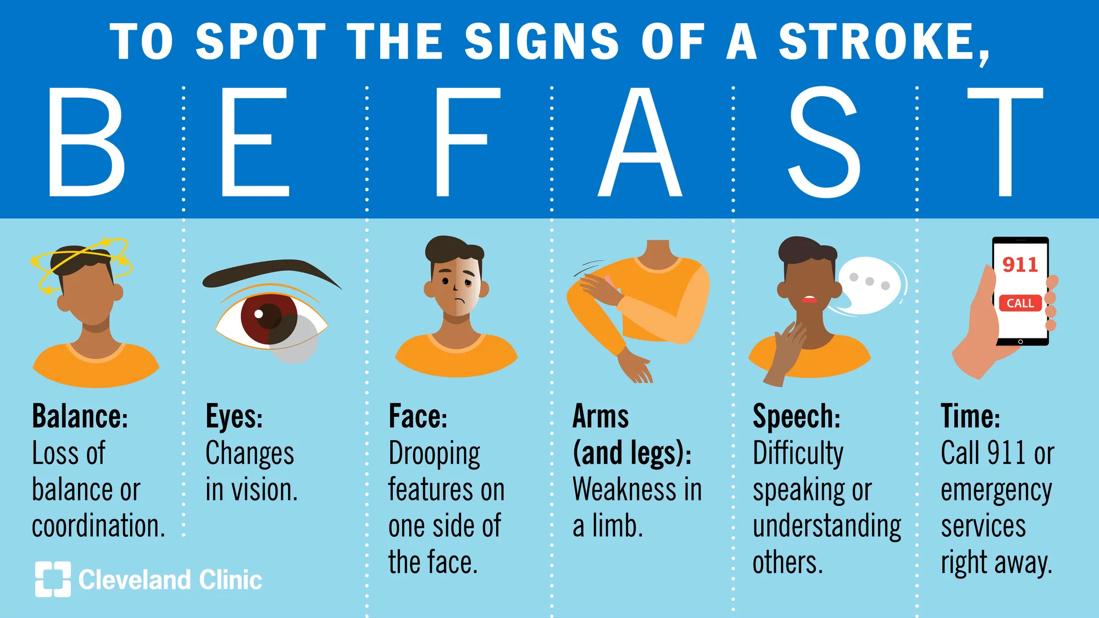
The easiest way to remember the major stroke warning signs is BE FAST: Balance, Eyes, Face, Arms, Speech, and Time. This simple acronym can help you recognize a possible stroke in yourself, a loved one, a coworker, or even a stranger in the grocery store who suddenly seems “not quite right.” And yes, that awkward moment when you wonder whether you are overreacting? In stroke care, overreacting by calling 911 is far better than underreacting and losing precious time.
A stroke is a medical emergency caused when blood flow to part of the brain is blocked or when a blood vessel in the brain bursts. Brain cells need oxygen-rich blood to survive, and when that supply is interrupted, damage can happen quickly. Fast treatment can reduce brain injury, improve the chance of recovery, and sometimes save a life.
What Is a Stroke?
A stroke is sometimes called a “brain attack,” and the comparison is useful. Just as a heart attack happens when blood flow to the heart is disrupted, a stroke happens when blood flow to the brain is interrupted or bleeding occurs in or around the brain.
Ischemic Stroke
An ischemic stroke happens when a clot blocks blood flow to the brain. This is the most common type of stroke. Emergency treatments may include clot-busting medication or procedures to remove the clot, depending on the patient, timing, imaging results, and hospital capability.
Hemorrhagic Stroke
A hemorrhagic stroke occurs when a blood vessel ruptures and causes bleeding in the brain. This type of stroke requires urgent evaluation because treatment is different from treatment for a clot-related stroke. That is why doctors need brain imaging before deciding what to do next.
Transient Ischemic Attack
A transient ischemic attack, often called a TIA or “mini-stroke,” happens when stroke-like symptoms appear temporarily and then go away. Do not let the word “mini” fool you. A TIA is not a tiny medical inconvenience; it is a serious warning sign that a larger stroke may occur later. If symptoms disappear after a few minutes, you should still seek emergency medical care.
Why BE FAST Matters
The original FAST test focused on Face, Arms, Speech, and Time. BE FAST adds Balance and Eyes because some strokes affect areas of the brain that control coordination and vision. In everyday terms, BE FAST gives you a wider safety net. It helps catch more warning signs instead of waiting for the “classic” symptoms to show up.
Stroke symptoms often appear suddenly. That word matters: suddenly. A person who was walking normally may become unsteady. Someone reading a menu may suddenly have blurred or double vision. A person telling a story may suddenly slur words, use the wrong words, or seem confused. The brain is the body’s command center; when part of it loses blood flow, the signs can show up fast and dramatically.
BE FAST: The Stroke Warning Signs Explained
B: Balance Loss
Balance problems can be an early sign of stroke. Watch for sudden dizziness, loss of coordination, trouble walking, stumbling, or a feeling that the room is spinning. Of course, people trip sometimes. Shoes exist, rugs attack, and cats are tiny chaos machines. But sudden balance trouble with no clear reason should be treated seriously, especially if it appears with other symptoms.
Example: A person stands up from the sofa and suddenly veers to one side, grabs the wall, or cannot walk in a straight line. They may say, “I just feel weird,” which is not medically specific but can be very important.
E: Eye or Vision Changes
Sudden vision changes can signal a stroke. This may include blurred vision, double vision, loss of vision in one eye, loss of part of the visual field, or trouble focusing. Vision symptoms are easy to dismiss as tired eyes, screen strain, or “I should probably stop doom-scrolling at midnight.” But when vision changes come on suddenly, especially with dizziness, weakness, or confusion, call 911.
Example: Someone suddenly cannot see clearly out of one eye, bumps into objects on one side, or says the room looks doubled. That is not a “walk it off” moment.
F: Face Drooping
Facial drooping is one of the most recognizable signs of stroke. Ask the person to smile. Does one side of the face sag? Does the smile look uneven? Is one side numb? A stroke may weaken muscles on one side of the face, creating a lopsided expression.
Not every uneven smile means stroke, and not every stroke causes facial drooping. Still, if facial drooping appears suddenly, treat it as an emergency.
A: Arm Weakness
Arm weakness often appears on one side of the body. Ask the person to raise both arms. Does one arm drift downward? Can they lift one arm but not the other? Is there sudden numbness or heaviness in the arm or leg?
Stroke-related weakness may affect the face, arm, leg, or entire side of the body. Some people describe it as numbness, clumsiness, heaviness, or “my arm won’t listen to me.” That is a very bad time for the arm to start freelancing.
S: Speech Difficulty
Speech problems are another major warning sign. A person having a stroke may slur words, speak nonsense, be unable to find words, have trouble understanding others, or suddenly become confused. Ask them to repeat a simple sentence such as, “The sky is blue.” If they cannot repeat it clearly, or if their words sound jumbled, call 911.
Speech difficulty can be frightening because the person may know what they want to say but cannot make the words come out correctly. Stay calm, keep them safe, and get emergency help.
T: Time to Call 911
The final letter is the action step: Time to call 911. Do not drive the person yourself unless emergency services are truly unavailable. Calling 911 starts medical care sooner, helps emergency responders assess the situation, and may get the patient to a hospital prepared to treat stroke quickly.
Write down or remember the time symptoms began, or the last time the person was known to be well. This information helps the medical team decide which treatments may be appropriate.
Other Stroke Symptoms You Should Not Ignore
BE FAST is powerful, but it does not list every possible stroke symptom. Other warning signs may include sudden confusion, sudden severe headache with no known cause, nausea or vomiting, fainting, trouble swallowing, numbness on one side of the body, or sudden changes in alertness.
A sudden, severe headache may be especially concerning for bleeding in the brain. People sometimes describe it as the worst headache of their life. That phrase should not be filed under “probably stress.” It belongs in the “call 911 now” folder.
What to Do If You Think Someone Is Having a Stroke
If someone shows signs of a stroke, act immediately. Call 911. Tell the dispatcher you suspect a stroke. Note the time symptoms started. Keep the person sitting or lying down safely. Do not give food, drinks, or medication unless emergency professionals tell you to do so. If the person becomes unconscious or has trouble breathing, follow dispatcher instructions.
Do not wait to see if symptoms improve. Do not let embarrassment delay action. Do not ask the person to sleep it off. Stroke is not a software glitch that improves after a reboot.
What Not to Do During a Possible Stroke
Do not give aspirin automatically. Aspirin may help in some clot-related events, but it can be dangerous if the stroke involves bleeding. Doctors need imaging to determine the type of stroke.
Do not drive around comparing hospitals like you are shopping for the best sandwich. Emergency medical services may know which nearby hospitals are equipped for stroke care. Do not delay by calling relatives first, searching symptoms online, or waiting for a primary care office to open.
Why Stroke Symptoms Can Be Confusing
Stroke symptoms can be mistaken for migraines, vertigo, low blood sugar, intoxication, anxiety, medication side effects, or fatigue. Sometimes those conditions really are the cause. But the danger is assuming “it is probably nothing” when the brain is actually in trouble.
Confusion is also part of the problem. A person having a stroke may not realize what is happening. They may argue, insist they are fine, or become embarrassed. If you notice sudden neurological changes, trust the signs more than the person’s reassurance. The brain under stress is not always the best spokesperson for itself.
Who Is at Higher Risk for Stroke?
Stroke can happen at any age, but risk increases with age. Major risk factors include high blood pressure, smoking, diabetes, high cholesterol, atrial fibrillation, heart disease, obesity, physical inactivity, heavy alcohol use, and a previous stroke or TIA. Family history can also play a role.
High blood pressure is especially important because it can damage blood vessels over time. Managing blood pressure, taking prescribed medications, not smoking, staying active, eating a heart-healthy diet, and controlling diabetes or cholesterol can all help reduce stroke risk.
Can Younger Adults Have Strokes?
Yes. Stroke is more common in older adults, but younger adults can have strokes too. Causes may include heart conditions, clotting disorders, high blood pressure, diabetes, smoking, certain drug use, pregnancy-related risks, and other medical conditions. A young person with sudden facial drooping, arm weakness, speech difficulty, severe dizziness, or vision loss still needs emergency care.
One dangerous myth is that “they are too young for a stroke.” The brain does not check birth certificates before having an emergency.
How Doctors Diagnose Stroke
In the emergency department, doctors usually perform a neurological exam and order brain imaging such as a CT scan or MRI. They may also check blood tests, heart rhythm, blood pressure, and blood vessel imaging. The goal is to determine whether symptoms are caused by a stroke, what type of stroke it is, where it is happening, and which treatment is safest.
Fast diagnosis matters because treatment options are time-sensitive. The sooner a stroke is identified, the sooner the care team can work to restore blood flow, stop bleeding, prevent complications, and begin recovery planning.
Recovery After a Stroke
Stroke recovery varies widely. Some people improve quickly, while others need weeks, months, or longer of rehabilitation. Recovery may involve physical therapy, occupational therapy, speech therapy, medication, lifestyle changes, and follow-up care with specialists.
The brain can be surprisingly adaptable, but it appreciates prompt rescue. Early treatment and rehabilitation can make a major difference in how much function a person regains.
How to Make BE FAST Part of Everyday Life
The best emergency plan is the one you remember before the emergency. Teach BE FAST to family members, coworkers, older relatives, babysitters, and anyone who spends time with people at higher risk. Put it on the fridge. Add it to workplace safety training. Mention it during family gatherings right after someone asks why there are seven kinds of potato salad.
You do not need to become a neurologist. You only need to recognize sudden balance problems, vision changes, facial drooping, arm weakness, speech difficulty, and the need to call 911.
Real-Life Experiences and Practical Lessons About BE FAST
Many stroke stories start with a small moment that feels easy to explain away. A grandmother drops a coffee mug and laughs that her hand “forgot its job.” A coworker begins speaking in a way that sounds slightly slurred, and everyone assumes he is tired after a long meeting. A dad watching television suddenly says the screen looks doubled, then tries to blink it away. A friend at lunch stands up and nearly falls, blaming the chair, the floor, the shoes, and possibly the moon.
These moments matter because stroke does not always look like a dramatic collapse. Sometimes it looks like clumsiness. Sometimes it sounds like strange word choices. Sometimes it appears as a blank stare, a crooked smile, or a person who suddenly cannot follow a simple conversation. The lesson from countless real-world experiences is simple: pay attention to sudden change.
One practical habit is to compare the person with their normal self. Is this how they usually speak? Is their smile usually even? Do they normally walk steadily? Did this confusion appear out of nowhere? In a possible stroke, “new and sudden” is a major clue.
Another lesson is that people often hesitate because they do not want to cause a fuss. They worry about calling an ambulance and being wrong. But emergency teams would rather evaluate a false alarm than arrive too late for a real stroke. Nobody gets a trophy for being calmly incorrect while brain cells are in distress.
Families who have been through stroke emergencies often say the same thing afterward: they wish they had called sooner. They wish they had known that symptoms can fade during a TIA. They wish they had written down the exact time symptoms began. They wish they had not waited for a second symptom, a third symptom, or a dramatic movie-style moment.
In workplaces, BE FAST can be especially useful because coworkers may notice changes before the person does. A receptionist may hear slurred speech. A manager may notice unusual confusion. A teammate may see one arm drifting during a presentation. In those situations, it helps to ask simple, direct questions: “Can you smile?” “Can you raise both arms?” “Can you repeat this sentence?” These are not perfect medical tests, but they can help identify an emergency quickly.
At home, stroke preparedness can be part of caring for aging parents or relatives with high blood pressure, diabetes, heart disease, or a history of TIA. Keep medication lists accessible. Know the nearest emergency number. Do not bury important health information in a drawer guarded by mystery batteries and expired coupons.
The most important experience-based advice is this: do not negotiate with stroke symptoms. If the signs point to stroke, call 911. Let trained professionals decide what is happening. Quick action does not guarantee a perfect outcome, but delay can take away options. BE FAST is not just a memory trick; it is a decision tool for a moment when clear thinking can save a life.
Conclusion
Knowing the signs of a stroke can turn an ordinary bystander into the person who makes the critical call. Remember BE FAST: Balance loss, Eye changes, Face drooping, Arm weakness, Speech difficulty, and Time to call 911. Stroke symptoms often appear suddenly, and even one warning sign is enough to act.
If symptoms go away, still seek emergency help. A TIA can be a serious warning. If you are unsure, call 911 anyway. In stroke care, time is brain, and fast action may protect someone’s speech, movement, independence, and life.