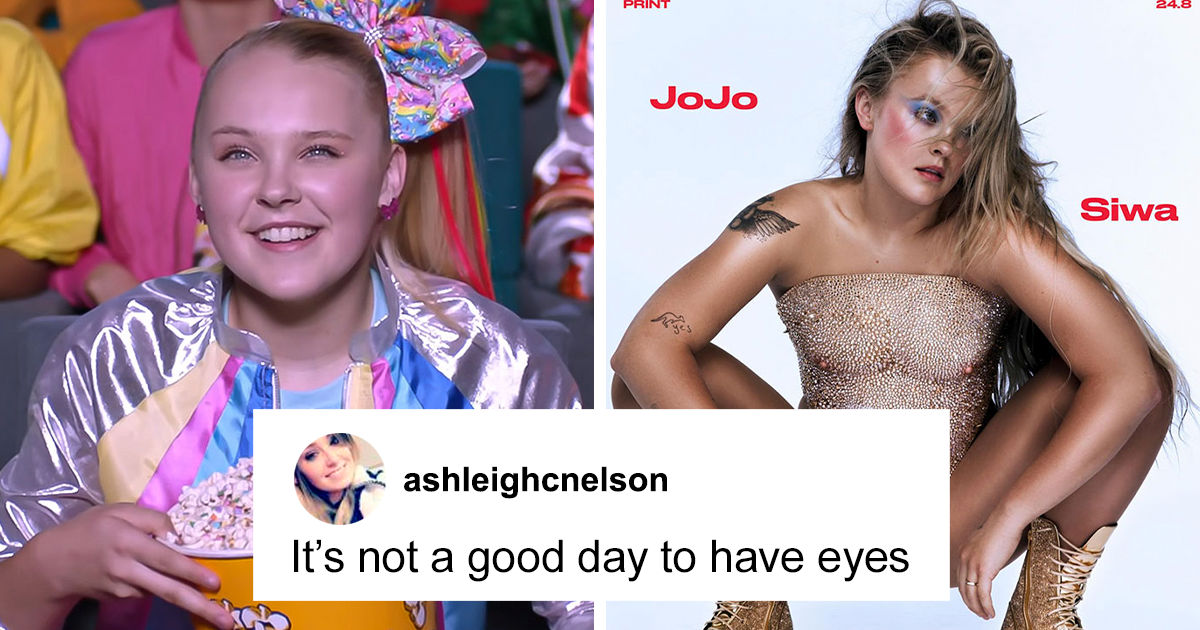
JoJo Siwa has never been a quiet celebrity. She built a glitter-powered empire on giant bows, rainbow outfits, high-energy dancing, and the kind of brand recognition most companies would sell their office espresso machine to achieve. So when she appeared in a bold LADYGUNN magazine cover shoot wearing a rhinestone-heavy look that included a noticeable bulge-style fashion piece, the internet did what the internet does best: stared, judged, joked, argued, defended, screenshot, and repeated the cycle before lunch.
The phrase “She has really lost her ways” became part of the wider online reaction, but the bigger story is not simply about one outfit. It is about what happens when a former child star tries to grow up in public, especially when millions of people still remember her as the kid with the oversized bow. JoJo Siwa’s new magazine cover became a cultural flashpoint because it mixed celebrity reinvention, gender-bending styling, fan expectations, and social media’s never-ending need to turn every outfit into a courtroom drama.
What Happened With JoJo Siwa’s New Magazine Cover?
In September 2024, JoJo Siwa appeared in a LADYGUNN magazine cover story photographed by Hope Glassel and styled by Phil Gomez. The shoot leaned into theatrical fashion: shiny textures, sculptural pieces, exaggerated silhouettes, dramatic makeup, and a full commitment to being seen. One look in particular, a sparkling stage-costume design with a bulge-like front detail, triggered intense discussion online.
Some viewers found the look confusing. Others called it artistic. Some criticized it as attention-seeking. A different group defended Siwa, arguing that pop culture has always used costumes to shock, challenge, and entertain. In other words, the internet split into its usual departments: the pearl-clutchers, the meme makers, the fashion defenders, the casual observers, and the people who clicked “like” while pretending they were above it all.
The cover shoot did not appear out of nowhere. It arrived during Siwa’s highly publicized adult-era rebrand, which included the release of “Karma,” a darker visual style, bolder stage costumes, and her repeated message that her new work was not designed for the same young audience that followed her Nickelodeon years.
Why The Cover Sparked Such A Strong Reaction
The biggest reason the JoJo Siwa magazine cover went viral is simple: contrast. People had a fixed image of her. For years, JoJo Siwa meant bows, glitter, positivity, bright colors, kid-friendly songs, and a brand so cheerful it looked like it had been assembled inside a candy store during a confetti storm. Her new look intentionally breaks from that image.
When a celebrity known for childhood entertainment presents a more adult, avant-garde, or provocative fashion statement, audiences often react as if the celebrity has violated an invisible contract. Fans may not say it out loud, but the contract sounds something like this: “Please remain exactly how I remember you, because my nostalgia has feelings.”
That is an impossible standard. People grow. Artists experiment. Some experiments work beautifully, some land awkwardly, and some become memes before the photographer has uploaded the final edit. JoJo Siwa’s cover sits somewhere in that messy middle: a calculated fashion moment that was designed to be discussed, and discussed it certainly was.
JoJo Siwa’s Rebrand: From Bows To Black Sparkles
JoJo Siwa has been famous since childhood. She appeared on dance-related reality television, became a standout personality on Dance Moms, launched music, built a huge YouTube following, signed major brand deals, and turned her signature bows into a merchandising phenomenon. For many fans, she was not just a performer; she was a childhood symbol.
That history makes her rebrand complicated. When JoJo moved into a more mature image, she was not simply changing clothes. She was challenging a business identity that had been built around her youth. Her “Karma” era introduced darker makeup, rhinestones with a harder edge, and a public insistence that this was a new chapter. It was not subtle. JoJo did not tiptoe into adulthood; she arrived like someone kicked open the dressing room door holding a fog machine.
This kind of shift is familiar in entertainment. Miley Cyrus, Demi Lovato, Christina Aguilera, and other former teen stars all faced intense reactions when they tried to separate their adult identities from child-friendly branding. The public often asks young performers to grow up, then acts shocked when they actually do.
Is The Outfit Really The Point?
The visible bulge-style detail grabbed attention, but the outfit itself is only part of the story. Fashion has long used exaggeration to create conversation. Designers use unusual shapes, gender-fluid styling, theatrical padding, armor-like pieces, and surreal silhouettes to question what clothing is supposed to communicate. Runway fashion, concert costumes, drag performance, glam rock, punk, and pop spectacle all share a love of visual disruption.
Seen through that lens, the JoJo Siwa cover was less about “ordinary clothes” and more about performance art. It was meant to look strange, shiny, and slightly chaotic. It was meant to make people stop scrolling. Whether someone liked it or not, the image succeeded as a visibility machine.
However, there is a difference between critiquing a fashion concept and mocking a person’s body. The healthiest conversation focuses on styling, celebrity branding, media strategy, and audience reaction. The least useful version becomes a pile-on about anatomy, identity, or personal worth. The first can be cultural criticism. The second is just digital cafeteria behavior with better Wi-Fi.
Why Some Fans Said She “Lost Her Ways”
The phrase “lost her ways” reflects a common reaction to dramatic celebrity reinvention. Fans who grew up with JoJo Siwa’s earlier image may feel disconnected from her new presentation. To them, the change can look forced, confusing, or too extreme. They may see the rhinestones, the darker makeup, the provocative styling, and the viral interviews as a hard left turn from the positivity-first brand they remember.
But that reaction says as much about the audience as it does about JoJo. People often confuse familiarity with authenticity. Because the bow-wearing version of JoJo felt familiar, some viewers assume that version was “real,” while the adult version must be fake. The truth is probably more complicated. Public figures are always performing some version of themselves. JoJo’s childhood image was also a brand, shaped by family, managers, networks, merchandise partners, and audience demand.
Her current image may be messy, loud, imperfect, and strategically designed to attract attention. But that does not automatically make it less real. Adulthood is often awkward. Most people are simply lucky enough not to have their awkward phases photographed for magazine covers and debated by strangers with profile pictures of cartoon frogs.
The Role Of Social Media In Turning Fashion Into A Frenzy
Years ago, a magazine cover might have sparked discussion for a week among fashion editors and pop culture columnists. Today, one image can become a global debate within minutes. Social media rewards strong reactions, not careful ones. “Interesting styling choice” rarely goes viral. “What is happening here?” does.
That incentive structure matters. JoJo Siwa understands attention. LADYGUNN understands attention. Entertainment media understands attention. Fans understand attention, too, even when they claim they are just “concerned.” A controversial image generates comments, comments generate reach, reach generates headlines, and headlines generate more comments. It is the celebrity ecosystem’s version of a washing machine, except everyone inside it is wearing rhinestones.
In this case, the cover shoot became content for multiple audiences. Fashion fans debated whether it was daring or overdesigned. Pop culture fans connected it to the “Karma” rebrand. Critics used it as evidence that JoJo was trying too hard. Supporters argued that she was experimenting and deserved room to evolve. Everyone, in some way, helped the image travel farther.
JoJo Siwa, “Karma,” And The Search For A New Identity
The cover also made more sense within the broader “Karma” rollout. In 2024, Siwa leaned into an adult-era transformation, warning fans that her new content was not made for children. She discussed wanting to make a statement, and she presented herself in ways that departed sharply from her earlier Nickelodeon-friendly persona.
That transition has not been universally praised. Some critics called the rebrand awkward. Others thought the “bad girl” image felt overly manufactured. The “gay pop” discussion also became a controversy after Siwa’s comments were interpreted by some as implying that she was starting a genre that already had a long history. Siwa later clarified that she wanted to bring more attention to that style of pop, not erase the artists who came before her.
Still, the rough edges are part of why the conversation continued. A perfectly polished rebrand might have passed quietly. JoJo’s rebrand, with all its sparkle, confusion, ambition, and meme-friendly boldness, became impossible to ignore.
Fashion, Gender Play, And Pop Star Shock Value
One reason the magazine cover became such a hot topic is that the styling played with gender presentation. Pop culture has a long history of artists using clothing to blur expectations. David Bowie, Prince, Grace Jones, Madonna, Lady Gaga, Lil Nas X, and many others have used fashion as a stage for identity, exaggeration, and reinvention.
JoJo Siwa’s version may not have the same artistic refinement as those icons, at least not yet, but it belongs to the same tradition of using appearance as a message. The message may be: “I am not your childhood memory anymore.” It may be: “I know you will talk about this.” It may also be: “I am figuring it out in real time.” All three can be true.
The public reaction shows how uncomfortable some audiences still are when women, queer performers, or former child stars use fashion to reject softness and predictability. When an artist who was once marketed as cheerful and harmless becomes visually aggressive, people often describe it as a crisis. Sometimes it is not a crisis. Sometimes it is just a costume with excellent lighting and a very determined PR cycle.
Was The Controversy Good For JoJo Siwa?
From a branding perspective, the cover probably did exactly what it was supposed to do. People talked. Entertainment outlets covered it. Social media debated it. Search interest rose around terms like “JoJo Siwa magazine cover,” “JoJo Siwa bulge,” “JoJo Siwa rebrand,” and “JoJo Siwa LADYGUNN.” For a celebrity trying to be seen as an adult performer, visibility matters.
But attention is not the same as approval. That is the tricky part. A viral moment can make someone more famous while also making their public image more polarizing. JoJo Siwa’s challenge is not getting people to look. She has mastered that part. The harder challenge is getting people to believe in the artistic direction after the shock wears off.
If future music, performances, interviews, and styling choices feel more cohesive, this magazine cover may be remembered as an early, chaotic step in a larger transformation. If not, it may remain a meme-heavy example of a rebrand that created more noise than meaning.
What The Public Should Remember Before Judging
It is fair to critique celebrity fashion. It is fair to say a look is confusing, over-the-top, or not visually successful. It is also fair to question whether a rebrand feels authentic or overly engineered. Celebrities make public art, and public art invites public reaction.
But it is worth remembering that JoJo Siwa is a young adult who grew up under constant observation. She had a commercial identity before most people have a driver’s license. She became a brand before she had the full freedom to decide what that brand meant. Now she is trying to renegotiate that identity in front of millions of people who all believe their opinion deserves a front-row seat.
That does not mean every choice deserves applause. It means the conversation can be sharper, kinder, and smarter. The question is not simply, “Why did she wear that?” The better question is, “Why are we so invested in keeping former child stars frozen in the version of themselves that made us comfortable?”
Experiences And Lessons Related To JoJo Siwa’s Viral Cover
Anyone who has ever changed their style knows a tiny version of what JoJo Siwa is experiencing. Maybe you cut your hair after years of wearing it the same way. Maybe you swapped bright clothes for darker ones. Maybe you stopped dressing for what your family expected and started dressing for who you felt like becoming. Suddenly, people who never complimented your old look become very passionate historians of your “real” self.
That is the strange thing about transformation. The people around us often treat change like a group project, even when they did none of the homework. They say, “This does not look like you,” when what they really mean is, “This does not match the version of you I stored in my head.” JoJo Siwa’s magazine cover is an extreme celebrity example, but the emotional pattern is familiar. Growth makes spectators uncomfortable because it reminds them that identity is not fixed.
In everyday life, style experiments are usually low-stakes. You wear a strange jacket, your friend raises an eyebrow, and everyone moves on. For celebrities, especially former child stars, the stakes are inflated. A single outfit becomes a referendum on maturity, authenticity, sexuality, talent, marketing, and mental stability. That is a lot to place on one magazine cover. Even the strongest rhinestones can only carry so much cultural baggage.
The useful lesson is not that every bold outfit is automatically brilliant. Some fashion risks miss. Some rebrands feel clumsy. Some public statements age like milk left in a sunny car. But experimentation is still necessary. Artists do not find stronger identities by repeating the safest version of themselves forever. They try things. They overcorrect. They get roasted. They adjust. That process is not always elegant, but it is human.
For readers, the better approach is to separate discomfort from harm. A weird outfit is not a scandal. A confusing photoshoot is not a moral emergency. A former child star becoming an adult is not a betrayal. If a look is not for you, that is fine. The internet even provides a magical tool called scrolling, which remains criminally underused.
For creators, JoJo Siwa’s situation is a reminder that attention can open doors but cannot build the entire house. Viral fashion can introduce a new era, but the era needs substance: stronger music, clearer storytelling, better interviews, thoughtful visuals, and a sense that the artist is leading the image rather than being dragged behind it by the algorithm. Shock is a spark. Identity is the fire that has to keep burning after everyone stops pointing.
For fans, the moment is also a chance to practice letting public figures grow without demanding that every step be graceful. JoJo Siwa may be experimenting loudly, but many people experiment quietly. The difference is scale. Most people get to reinvent themselves in bedrooms, thrift stores, college campuses, friend groups, and private camera rolls. JoJo does it under studio lights, with comment sections waiting like unpaid judges.
That does not make her immune from criticism. It does make the criticism more meaningful when it focuses on the work rather than personal attacks. Talk about the styling. Talk about the branding. Talk about the media strategy. Talk about whether the rebrand connects with the music. But reducing the conversation to body-focused jokes misses the larger story, which is much more interesting: a former child star trying to rewrite her image in an entertainment culture that profits from both innocence and rebellion.
Conclusion: A Viral Cover, A Messy Rebrand, And A Bigger Conversation
JoJo Siwa’s LADYGUNN magazine cover became viral because it was designed to be impossible to ignore. The bulge-style fashion detail, the rhinestones, the theatrical styling, and the timing within her adult-era rebrand all worked together to create a perfect pop culture storm. Some fans saw art. Some saw confusion. Some saw attention-seeking. Others saw a young performer fighting to escape the shadow of her childhood brand.
The truth is probably a little sparkly from every angle. JoJo Siwa is not the first former child star to shock people while growing up, and she will not be the last. Her challenge now is to turn viral reaction into lasting artistic credibility. The internet has already looked. The next question is whether it will keep listening.