Labor Day has a funny habit of turning sensible adults into backyard optimists. One minute you are casually sipping iced coffee. The next, you are staring at a mildew-streaked patio and thinking, “You know what this place needs? A machine that blasts grime into another time zone.” That is exactly why Labor Day pressure washer deals get so much attention. They land at the perfect moment: summer mess is still visible, fall cleanup is around the corner, and retailers are suddenly in a very generous mood.
If you have seen headlines promising pressure washers for as low as $79, that is not just marketing confetti. Recent Labor Day deal roundups showed entry-level electric models dipping into that budget-friendly territory, while midrange electrics and beefier gas machines also posted serious markdowns. In plain English, Labor Day can be one of the smartest times of year to buy a pressure washer without spending like you own a commercial cleaning crew.
But here is the catch: a cheap pressure washer is only a great deal if it actually fits your needs. Buying too little machine leaves you scrubbing your driveway with disappointment. Buying too much machine can damage siding, shred paint, and turn your deck into a cautionary tale. So before you sprint toward the nearest sale tag, here is how to shop Labor Day pressure washer deals like a savvy homeowner instead of a chaos-powered bargain hunter.
Why Labor Day Pressure Washer Deals Are Worth Watching
Labor Day sales tend to hit outdoor power equipment at just the right time. Retailers want to move seasonal inventory. Shoppers want to squeeze a few more wins out of warm weather. Pressure washers sit right in that sweet spot. They are useful for late-summer cleanups, pre-fall maintenance, and all those home projects that started with “This will take twenty minutes” and somehow ended with three trips to the hardware store.
Recent sale coverage showed just how wide the pricing spread can be. Budget electric pressure washers have appeared around the $79 mark. Stepping up a tier, some 2000- to 2400-PSI electric models landed in the roughly $89 to $229 range. Gas models built for driveways, siding, and heavier grime dropped into the upper $200s and $300s, while contractor-style machines still cost more but often saw notable discounts.
That range matters because it means Labor Day is not only for shoppers hunting the absolute cheapest machine. It is also a good time for people who want better value on a tool they will use for years. In other words, the holiday is not just about saving money. It is about getting more pressure washer for your money.
The Deals That Usually Get the Most Attention
Budget electric pressure washers
These are the stars of the “as low as $79” headline. Models in this category are usually compact, lighter-weight, and designed for light-duty jobs like patio furniture, grills, windows, bikes, small decks, and vehicles. They are not trying to be driveway-destroying monsters, and that is perfectly fine. For many households, this is the most sensible category because it is affordable, easier to store, quieter than gas, and simple to use.
If your dream scenario is washing pollen off patio chairs, cleaning muddy garden tools, or making your car look less like it survived a dust storm, a budget electric model may be all you need. This is the zone where Labor Day deals can feel especially satisfying: the price is low enough to be tempting, and the jobs are common enough to justify the purchase.
Midrange electric pressure washers
This is where things get interesting. Midrange electric models often offer stronger PSI, better GPM, more nozzle options, and more stability than the bargain-bin picks. They tend to be better for siding, fences, patios, and moderate driveway cleaning. If you want one machine that can handle the family car on Saturday and the patio on Sunday without wheezing in protest, this is probably your lane.
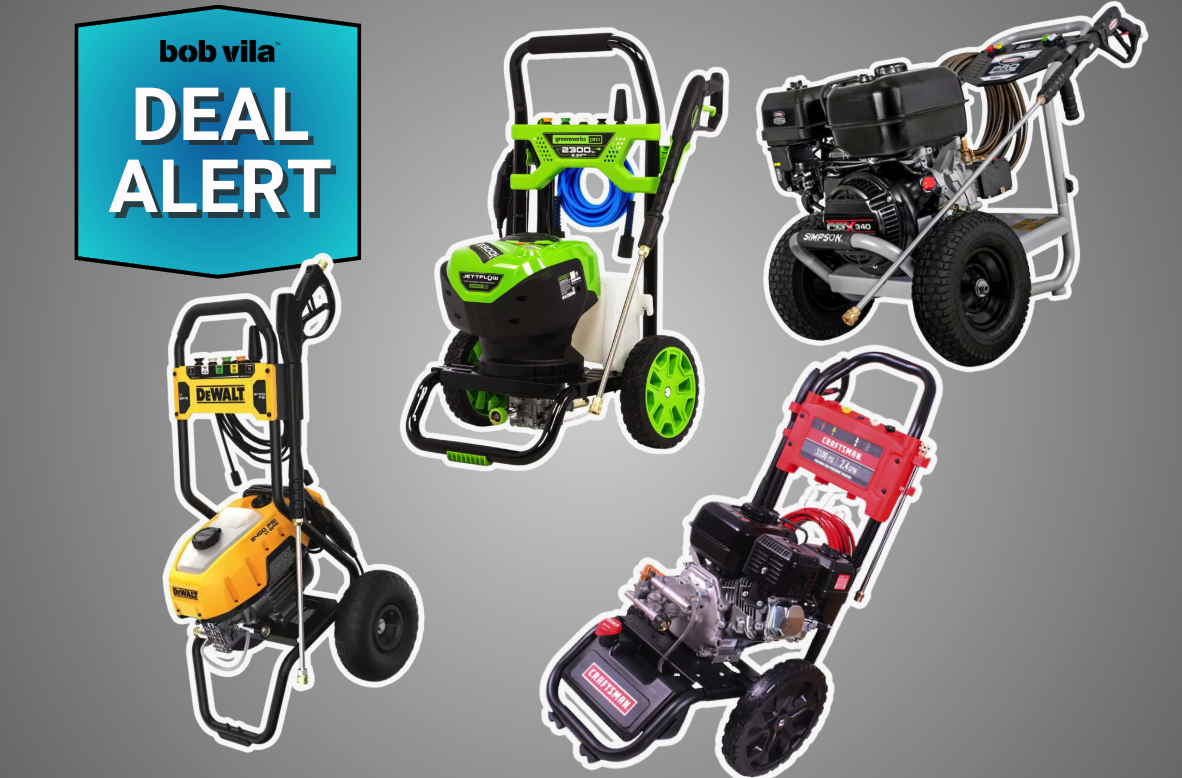
Recent examples from major U.S. retailers included discounted electric units from brands like DeWalt, Greenworks, Westinghouse, and Ryobi. These are the kinds of deals that make shoppers feel oddly powerful, as if buying a pressure washer on sale somehow also qualifies them to host a home-improvement podcast.
Gas pressure washers
Gas pressure washers are the heavyweight division. They usually deliver more power, more mobility, and more cleaning speed for large or stubborn jobs. Concrete, brick, long driveways, multi-surface exterior work, and thick grime are where these machines earn their keep. If you have ever looked at years of gunk on a driveway and thought, “This calls for consequences,” gas is probably what you are after.
The trade-off is that gas units cost more, weigh more, make more noise, and require more maintenance. They are not the right answer for every shopper. But during Labor Day sales, models that normally feel just out of reach can suddenly become a lot more reasonable, which is why they draw plenty of attention in deal coverage.
How to Choose the Right Pressure Washer Without Regret
Start with the jobs, not the price tag
This is the biggest shopping mistake people make. They see a flashy deal, fall in love with the discount, and only later ask whether the machine actually matches the chores they have in mind. Flip that process around. Make a short list of what you will clean most often: cars, patio furniture, deck boards, fencing, siding, walkways, or concrete. Your answer should drive the purchase.
For lighter jobs, lower-pressure electric models are usually enough. For typical household exterior cleaning, a stronger electric unit can be the sweet spot. For concrete, bigger surfaces, or deep buildup, gas often makes more sense. That is the boring advice nobody wants to hear when a sale banner is shouting at them, but it is the advice that saves money in the long run.
Understand PSI and GPM like a grown-up who reads labels
PSI, or pounds per square inch, measures pressure. GPM, or gallons per minute, measures water flow. Both matter. Higher PSI can hit harder, but GPM helps you clean faster. That means the “best” machine is not always the one with the most dramatic-looking number on the box. If a pressure washer has impressive PSI but weak flow, it may still feel slower than you expected.
For many homeowners, light-duty cleaning calls for the lower end of the pressure range. Medium-duty work often benefits from stepping up to stronger electric models. Heavier tasks like concrete cleaning tend to favor gas units with higher PSI and stronger flow. Translation: do not shop by hype alone. Shop by the surfaces you actually plan to clean.
Electric vs. gas: the real-life version
Electric pressure washers are easier for most homeowners. They are quieter, lighter, lower-maintenance, and typically cheaper. They start with a switch, not a pull cord and a motivational speech. They are great for routine household cleaning and especially appealing if you do not want to deal with fuel, oil, or engine upkeep.
Gas pressure washers bring more raw cleaning strength and better mobility for large outdoor areas. They are ideal for tougher jobs, but they also demand more care. If you buy gas for a once-a-year patio rinse, you may end up owning a tool that is more trouble than triumph. If you routinely clean concrete, fencing, siding, and large surfaces, gas can be absolutely worth it.
Features That Make a Deal Better Than It Looks
Not all discounts are created equal. Two pressure washers can have similar headline prices, but one can be a much better value thanks to the features packed into the box.
Quick-connect nozzles
These matter more than many shoppers realize. Different spray tips are designed for different tasks, and using the wrong one can be the fastest route to accidental damage. A wider spray is usually better for delicate surfaces and general cleaning, while narrower sprays are for tougher jobs. If a sale model comes with multiple nozzles, that adds real usability.
Foam cannons and detergent tanks
If cars, outdoor furniture, or siding are on your list, soap accessories can make cleaning much easier. They are not just there to make your driveway look like a bubble party. They help loosen grime so you can clean more effectively without relying on brute force.
Surface cleaners
For driveways, patios, and sidewalks, a surface cleaner attachment can be a game changer. Instead of waving a wand back and forth like you are conducting an orchestra of dirt, a surface cleaner covers more area evenly and often with less mess. If a Labor Day bundle includes one, pay attention.
Hose and cord length
Nothing ruins your pressure-washing confidence faster than realizing you are six feet short of finishing the patio. Hose length, power cord length, and onboard storage all affect how frustrating or smooth the experience will be. These do not make flashy ad copy, but they matter when you are actually using the machine.
Common Pressure Washer Buying Mistakes to Avoid
Mistake No. 1: Buying purely on price. A $79 pressure washer is exciting. A $79 pressure washer that cannot do the jobs you need is just an inexpensive lesson.
Mistake No. 2: Going too powerful. More pressure is not always better. Wood, painted surfaces, soft stone, and siding can all be damaged by the wrong machine or nozzle.
Mistake No. 3: Ignoring maintenance. Gas models require more upkeep, and even electric units need hose checks, nozzle care, and sensible storage.
Mistake No. 4: Forgetting safety. Pressure washers are useful, but they are not toys. A concentrated spray can injure skin, damage surfaces, and create problems fast if you are careless.
Mistake No. 5: Skipping recall checks. Before buying any clearance, open-box, or older-stock unit, it is smart to check for recalls. That quick search takes less time than dealing with a hazardous machine later.
How to Shop Smart During Labor Day Sales
First, decide on your ideal use case before you even open a retailer tab. Second, set a realistic budget range instead of chasing the single cheapest option. Third, compare what is included in the box. A slightly pricier bundle with extra nozzles, a foam cannon, or a surface cleaner may be the better deal overall.
Next, look at the certified specs and the intended use. Marketing language can get dramatic, but practical guidance is more helpful. A compact electric model for light-duty cleaning should be judged differently from a gas unit built for driveways and siding. Finally, do not panic-buy because a countdown timer is blinking at you. Labor Day sales move fast, but there is a difference between being decisive and letting a flashing banner make life choices for you.
Pressure Washer Safety and Maintenance Tips
Use the correct nozzle for the surface. Start with a gentler spray and test a small area first. Keep the spray away from people, pets, electrical components, and fragile materials. Wear eye protection and sensible footwear. Never treat a pressure washer like a glorified garden hose with a caffeine problem. It is more powerful than that.
For maintenance, inspect hoses and couplings regularly. If you see cuts, bulges, leaks, or damaged connections, stop using the machine until the parts are replaced. Keep inlet screens clean, store the washer properly, and follow the manufacturer’s instructions for fuel, cords, detergents, and winterizing. These small habits help a discounted Labor Day purchase stay useful long after the holiday hot dogs are gone.
The Bottom Line on Labor Day Pressure Washer Deals
Yes, Labor Day can absolutely be a smart time to save big on pressure washers, including entry-level electric models that dip as low as $79. But the real win is not just paying less. The real win is matching the right machine to your actual cleaning life. If you mostly wash cars, patio furniture, and small outdoor spaces, a budget electric model may be the hero of your story. If you tackle fences, siding, and larger surfaces, a midrange electric could be the best value. If your weekends involve concrete, caked-on grime, and serious square footage, gas may deserve a place in your garage.
In other words, the best Labor Day pressure washer deal is not the loudest one. It is the one that saves you money, saves you time, and does not make you regret your choices while standing ankle-deep in driveway runoff. That is a beautiful kind of savings.
Extra Experiences: What Shopping and Using a Labor Day Pressure Washer Really Feels Like
There is a very specific kind of joy that comes with buying a pressure washer on sale. It starts with suspicion. You see the price. You narrow your eyes. You wonder whether this machine is a hidden gem or a plastic disappointment with commitment issues. Then it arrives, or you haul it home from the store like you just adopted a very loud robot, and suddenly every dirty surface around your house becomes a candidate for judgment.
One common experience goes like this: someone buys a compact electric model because the price is low and the patio looks rough. They expect a modest improvement. What they get is a strangely addictive cleaning session where the concrete changes color in front of them, one strip at a time. It is deeply satisfying. A little alarming, honestly. You begin to wonder whether the patio was always that color or whether you have uncovered an archaeological layer of barbecue seasons past.
Another very real experience is learning that pressure washer numbers are not just decorative. Plenty of shoppers start with a budget model, use it on chairs, planters, bicycles, and the car, and feel like absolute geniuses. Then they turn to the driveway and realize they may have brought a butter knife to a lasagna problem. That is not a failure. It is simply the moment when many homeowners understand the difference between light-duty cleaning and heavier-duty work. The good news is that even that first smaller washer often still earns its keep for all the gentler jobs around the house.
Then there is the midrange buyer: the person who wants one machine that can handle several weekend chores without being a giant gas-powered beast. This shopper often has the most balanced experience. The machine feels powerful enough to be useful, manageable enough to store, and versatile enough to justify the cost. They wash the siding. They clean the fence. They blast years of mystery grime off the walkway. They spend the rest of the day finding “just one more thing” to clean, which is how a pressure washer turns into a lifestyle.
Gas pressure washer buyers usually tell a different story. Their experience is less “cute little cleaning upgrade” and more “all right, driveway, you and I need to talk.” These machines can feel like overkill until the first time they chew through a big, ugly job in a fraction of the time. Then the maintenance, noise, and extra size make more sense. For large properties or stubborn surfaces, the power is not just impressive. It is practical.
And nearly everyone who owns a pressure washer for more than a month has the same thought at least once: “Why did I wait so long to buy this?” That is the magic of a good Labor Day deal. You save money upfront, but the bigger reward is how much easier routine outdoor cleaning starts to feel. The right machine does not just clean surfaces. It lowers the mental barrier to doing the job in the first place. Suddenly washing the patio is not a dreaded chore. It is a quick Saturday project with oddly satisfying results and a very smug before-and-after moment.
If that sounds dramatic, fair enough. But once you have watched a grimy fence return to life under a well-aimed spray, you will understand. Pressure washers have a way of making ordinary homeowners feel like part maintenance expert, part magician, and part person who now stares critically at every dirty surface in the neighborhood.