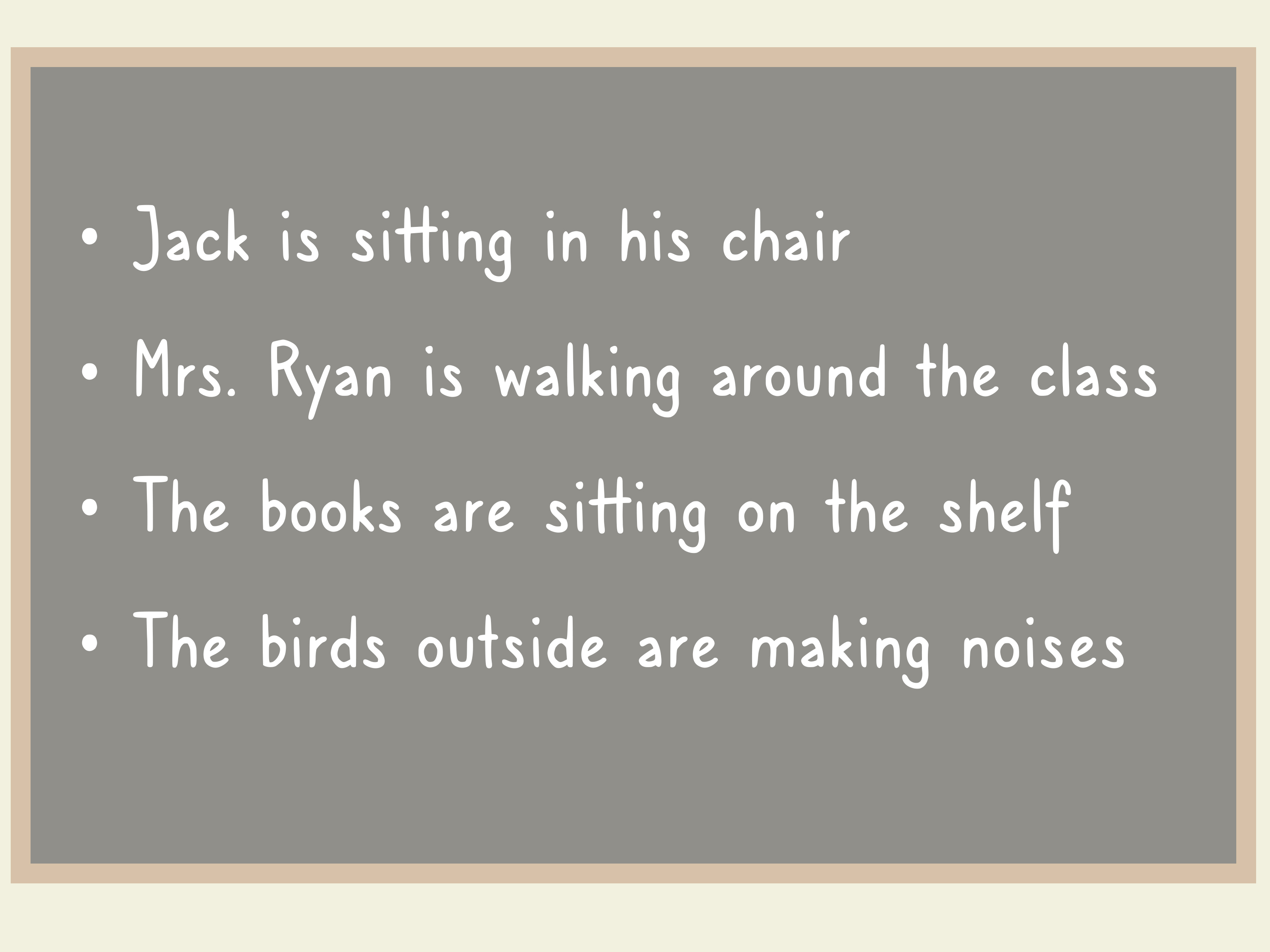
Teaching the present continuous sounds simple enough. You write I am eating on the board, circle am, underline eating, and congratulate yourself on another job well done. Then a student raises a hand and asks, “Teacher, why is it I am studying but not I am knowing?” Another says, “Can I say I am going tomorrow?” Suddenly, your five-minute grammar point turns into a full-contact sport.
The good news is that this tense is actually one of the most teachable parts of English grammar when you approach it the right way. The present continuous, also called the present progressive, is highly visual, easy to act out, and perfect for communicative activities. Students can see it, hear it, mime it, and use it almost immediately. That makes it a great confidence-building lesson for children, teens, and adults.
In this guide, you will find 13 practical steps to teach the present continuous in a way that feels natural, memorable, and a lot less dusty than a traditional worksheet marathon. You will also get examples, classroom tricks, and a longer reflection section at the end with real-world teaching experiences that can help you avoid common problems.
What Is the Present Continuous?
Before you teach it, define it clearly for yourself. The present continuous usually describes an action happening now or around now. It is formed with the verb to be plus the -ing form of the main verb.
Formula: subject + am/is/are + verb-ing
Examples:
- I am reading.
- She is talking on the phone.
- They are playing soccer.
It can also describe temporary situations and, in some cases, future arrangements.
- He is staying with his cousin this week.
- We are meeting the principal tomorrow morning.
That mix of “right now,” “around now,” and “planned soon” is exactly why students need a lesson that is clear, concrete, and full of context.
Step 1: Start With What Is Happening in the Room
The easiest way to introduce the present continuous is to become a sportscaster for your own classroom. Forget the grammar lecture at first. Just talk about what everyone is doing.
Try lines like these:
- I am standing.
- You are listening.
- Maria is writing.
- We are learning English.
This works because the meaning is obvious. Students do not have to imagine the action. They can see it with their own eyeballs. Grammar is much easier when reality is doing half the teaching.
Step 2: Model Before You Explain
One of the biggest mistakes teachers make is giving the rule too early. Students do not need a grammar speech in minute one. They need exposure, pattern recognition, and a reason to care.
Say several present continuous sentences first. Ask a few simple questions:
- What am I doing?
- What is he doing?
- Are they reading or writing?
Once students hear the structure several times, then reveal the pattern. At that point, the rule feels like a helpful map, not a random block of text dropped from the sky.
Step 3: Use Visuals Like Your Lesson Depends on It
Because honestly, it kind of does. Pictures, photos, short videos, and classroom objects are gold when teaching action-based grammar. A busy street scene, a family dinner photo, a playground image, or even a goofy cartoon can generate dozens of present continuous sentences.
Ask:
- What is the boy doing?
- Who is running?
- What are the children eating?
- Is the dog sleeping?
Visuals reduce the language load and help students focus on the target form. They also rescue you from the ancient teacher tradition of describing a picture no one can see.
Step 4: Teach the Time Markers Early
Students need signal words to know when this tense makes sense. Teach common time expressions alongside the form, not later as an afterthought.
Useful markers include:
- now
- right now
- at the moment
- today
- this week
- currently
Then compare:
- I read every night. (habit)
- I am reading right now. (action in progress)
These markers act like grammar traffic signs. Without them, students often drive straight into the wrong tense with full confidence.
Step 5: Contrast It With the Present Simple
If students learn the present continuous in isolation, they often overuse it. Suddenly everything is continuous. “I am liking pizza.” “She is knowing the answer.” “My father is working at a bank” when they actually mean a permanent job. Chaos.
That is why contrast matters. Show the difference between routine and current action:
- He plays basketball after school. (usual activity)
- He is playing basketball now. (happening at this moment)
- She lives in Boston. (general fact)
- She is living with her aunt this month. (temporary situation)
Simple comparison charts, mini-dialogues, and quick sorting games work well here. Ask students to decide whether each sentence describes a habit, a fact, or something happening now.
Step 6: Build Sentence Frames for Confidence
Sentence frames are not cheating. They are scaffolding. They help students produce correct language before they can build it fully on their own.
Use frames such as:
- I am ________.
- He is ________ing.
- They are ________ing at the moment.
- Is she ________ing?
- No, she isn’t. She is ________ing.
Sentence frames are especially useful for multilingual classrooms, shy learners, and students who freeze the minute grammar becomes public. A frame can turn silence into speech very quickly.
Step 7: Teach Positive, Negative, and Question Forms Together
Do not let students get stuck in “I am reading” forever. The present continuous becomes truly useful when students can switch among statements, negatives, and questions.
Write a clean set on the board:
- She is studying.
- She is not studying.
- Is she studying?
Then practice short answers:
- Yes, she is.
- No, she isn’t.
A substitution drill can help:
Teacher: “He is sleeping.”
Students: “He isn’t sleeping.”
Teacher: “Question?”
Students: “Is he sleeping?”
Keep it brisk. This should feel like a workout, not a tax form.
Step 8: Get Students Moving
The present continuous begs for action. Use mime, Total Physical Response, charades, or quick movement games. Have one student act while classmates guess.
Examples:
- You are brushing your teeth.
- You are opening a window.
- You are dancing.
- You are texting your best friend during math class. Bold choice.
Movement lowers stress, increases participation, and gives students a memorable connection between form and meaning. If your class has low energy, this step is your emergency button.
Step 9: Turn Pictures Into Pair Work
Pair work is where students stop performing for the teacher and start using the tense for themselves. Give partners different pictures and ask them to describe what they see. Or use the same image and make it competitive.
Try these tasks:
- Picture race: Students write five present continuous sentences in one minute.
- Spot the difference: Student A and Student B compare two similar pictures.
- Guess the image: One student describes a scene while the other chooses the correct picture.
This creates repeated, meaningful use of the target structure without sounding like a drill disguised as fun. Students can tell when a game is just a worksheet wearing a party hat.
Step 10: Teach Spelling Changes Clearly
Students often understand the tense but miss the spelling patterns. So give these changes direct attention:
- read → reading
- make → making
- run → running
- lie → lying
Focus on the most common patterns:
- Most verbs: add -ing
- Final silent e: drop it, then add -ing
- Short vowel + consonant: double the consonant in many cases
- ie often changes to y before -ing
Make a quick sorting activity where students group verbs by spelling rule. It saves time later when you do not have to correct writeing 43 times.
Step 11: Warn Students About Common Traps
Some verbs do not usually appear in the present continuous when they describe states rather than actions. This includes verbs like know, like, want, believe, and need.
Compare:
- I know the answer. ✅
- I am knowing the answer. ❌
- I like this song. ✅
- I am liking this song. ⚠️ only in special informal or stylistic uses
Students do not need a full lecture on stative verbs at beginner level, but they do need a simple warning. Think of this as putting a fence near the cliff instead of building an ambulance station at the bottom.
Step 12: Show the Near-Future Use
Once students are comfortable with “now,” introduce the present continuous for future arrangements. This is especially useful in real-life communication.
Examples:
- I am meeting my tutor after school.
- We are visiting grandma this weekend.
- They are flying to Chicago on Friday.
Students usually enjoy this use because it sounds practical and modern. It also helps them understand why English speakers sometimes choose present continuous instead of will or going to.
Step 13: End With a Real Communicative Task
The lesson should finish with students using the tense to say something meaningful, not just circling answers in silence. Give them a task with a clear purpose.
Good options include:
- Describe what your family is doing in a photo.
- Write a short paragraph about what is happening in your neighborhood right now.
- Interview a partner: “What are you doing after class?”
- Create a comic strip and write captions in the present continuous.
- Narrate a short silent video clip.
This is the moment when grammar becomes communication. That is the goal. Students are not collecting verb forms like trading cards. They are using English to express real meaning.
Common Mistakes Teachers Should Avoid
- Over-explaining: Students need examples and repetition more than a wall of grammar terms.
- Skipping contrast: If you do not compare present simple and present continuous, confusion will move in and unpack its bags.
- Ignoring pronunciation: Practice contractions like I’m, he’s, and they’re so students sound natural.
- Using only worksheets: Controlled practice helps, but communication is what makes the tense stick.
- Correcting every tiny error immediately: During speaking practice, focus first on whether students are communicating successfully.
Quick Sample Mini-Lesson
Here is a simple 20-minute outline:
- Teacher models actions in class.
- Students identify what people are doing.
- Teacher introduces the form: am/is/are + verb-ing.
- Class practices positive, negative, and question forms.
- Pairs describe a busy picture.
- Students write three sentences about what is happening now.
- Exit ticket: one true sentence and one question in the present continuous.
Simple, clean, effective. No fireworks required. Though if someone is juggling in the back row, congratulations, your lesson just got more interesting.
Classroom Experiences and Practical Lessons Learned
I have seen the present continuous lesson go beautifully and I have seen it go sideways in record time. In mixed-level classrooms, beginners often love it because it feels immediate and concrete, while stronger students enjoy using it to describe richer, more detailed scenes. One of the most effective lessons I ever taught started with no worksheet at all. I walked into class carrying a stack of books, dropped one on purpose, looked dramatically at the class, and said, “I am walking. I am carrying books. Now I am dropping a book.” The students laughed, and within minutes they were producing their own sentences. That small bit of theater worked better than a long grammar explanation because the tense had meaning before it had a name.
Another strong experience came from using picture prompts in pair work. I gave each pair a crowded park scene and asked them to write as many present continuous sentences as possible in two minutes. At first, students wrote short lines such as “A boy is running” and “A woman is eating.” After a quick round of feedback, I challenged them to add details: “A little boy is running near the lake” or “A woman is eating a sandwich on a bench.” The grammar stayed the same, but the language became richer. That taught me an important lesson: once students understand the form, the next step is not always a harder grammar point. Sometimes the next step is simply better vocabulary and more precise description.
I have also learned that pronunciation matters more than teachers sometimes expect. Students may write She is reading correctly but freeze when saying She’s reading aloud. Spending even three or four minutes on contractions can make speaking activities smoother and help students sound more natural. Finally, one mistake I made early on was correcting stative verb errors too aggressively in the middle of conversation practice. Now I handle them more strategically. If a student says, “I am knowing,” I usually note it, let the task continue, and fix the pattern afterward with the whole class. That keeps fluency alive while still protecting accuracy. In the end, the best present continuous lessons are the ones where students leave the room not just knowing the rule, but actually using it with confidence.
Conclusion
If you want students to truly learn the present continuous, teach it as living language, not a museum exhibit. Start with what is happening now, build the pattern through examples, support learners with visuals and frames, contrast it with the present simple, and move quickly into speaking and writing tasks that feel real. When students can see the action, say the structure, and use it for a purpose, the tense stops being a grammar topic and becomes a communication tool. That is when the lesson works.