Some celebrity stories arrive politely. This one kicked the door open, brought a snake, and somehow still managed to stay on brand.
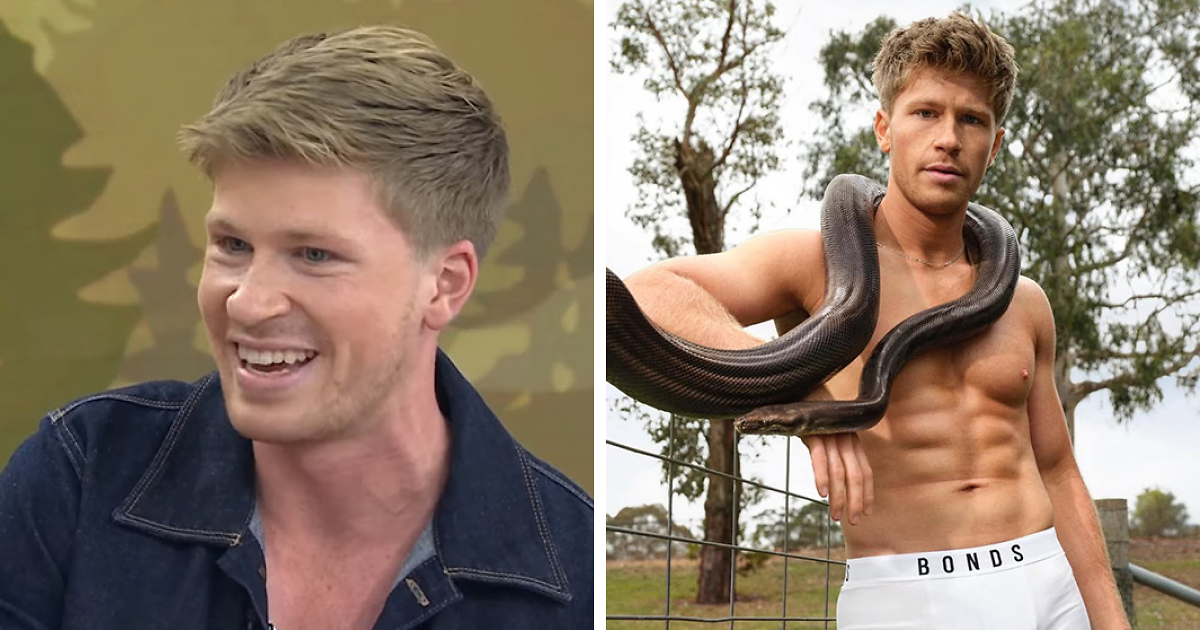
When Robert Irwin appeared in a splashy underwear campaign for Bonds, the internet reacted exactly the way the internet reacts when a familiar TV kid suddenly shows up looking very grown-up: with shock, jokes, headlines, and enough double takes to power a small city. But the real plot twist was not the photos themselves. It was the family reaction that followed.
Robert, who has spent most of his public life associated with khaki shirts, crocodiles, conservation work, and the towering legacy of his dad Steve Irwin, handled the media frenzy with a mix of humor and calm confidence. He explained that his relatives “had a lot of words” after seeing the campaign and joked that there were “some things we can’t unsee.” That one-liner instantly became headline bait, because it was funny, relatable, and very, very human.
And that is exactly why this story traveled so far. On the surface, it looked like a classic celebrity culture moment: a viral campaign, a famous last name, and a family reacting with equal parts love and disbelief. But underneath the laughs, the Robert Irwin photoshoot story says something bigger about fame, growing up in public, brand evolution, and the strange cultural whiplash that happens when someone the audience remembers as a child suddenly steps into a more adult spotlight.
Why Robert Irwin’s Underwear Campaign Became Instant News
Robert Irwin’s campaign for Bonds did not go viral by accident. It had all the ingredients of a modern entertainment story built for high-speed sharing. First, there was contrast. Robert has long been seen as the upbeat wildlife conservationist carrying on the Irwin family mission at Australia Zoo. The public image is practical, adventurous, wholesome, and deeply tied to animals and nature. Then came the campaign, which kept the wildlife angle but framed it in a fashion-forward, cheeky way that made people do a full “wait, that’s Robert Irwin?”
The campaign worked because it never felt like a random rebrand. It was surprising, yes, but not disconnected. Robert was still surrounded by reptiles and still talking about Australian wildlife. In other words, the ad did not toss away his identity. It remixed it. That is a huge difference in celebrity branding. People are usually more accepting of a surprising move when it still feels authentic to the person making it.
That authenticity came through in Robert’s own explanation. He did not present the project like a dramatic reinvention or a desperate headline grab. Instead, he framed it as a fun challenge, a little outside his comfort zone, and a chance to spotlight wildlife in an unusual way. That tone helped the campaign land as playful rather than forced.
It also helped that Robert clearly understood the absurdity of the whole moment. He seemed in on the joke, not trapped inside it. In celebrity media, self-awareness is often the difference between a story people laugh with and a story people laugh at.
The Family Reaction Was the Real Hook
Robert Turned Embarrassment Into Great PR
Robert’s now-famous comment about his family having “some things we can’t unsee” gave the story its second life. Plenty of celebrity campaigns go viral for a day. What makes them last is a follow-up angle people can relate to. Nearly everyone can imagine the family group chat after a bold photo release. Robert understood that, and instead of dodging the awkwardness, he leaned into it.
That move made him more likable, not less. He did not act above the conversation. He acknowledged that yes, this was a little weird for the people who know him best. By doing so, he transformed the story from “celebrity does unexpected ad” into “family reacts exactly how your family would react.” That shift broadened the audience dramatically.
Bindi Irwin Delivered the Most Sister Response Possible
If Robert supplied the headline, Bindi helped cement the tone. Her reaction, as reported by multiple outlets, was protective, amused, and slightly horrified in the most sibling way imaginable. She basically captured the universal sister experience of wanting to support your brother while also wishing your eyeballs had access to an erase button.
What made Bindi’s comments resonate was that they never sounded mean-spirited. She was not dismissing Robert. She was reacting like a real sibling caught between pride and “please, nobody make this weird at dinner.” That emotional mix kept the family image intact. The public got humor without cruelty, surprise without scandal, and teasing without tension.
She also reportedly made clear that she is proud of Robert and of how he has handled the attention. That matters. The family did not come across as alarmed by his choices. They came across as startled, supportive, and a little dazzled by how big the response became.
Terri Irwin Brought the Perspective Only a Mom Could Offer
Terri Irwin’s reported reaction added another layer. Her comments suggested that she sees both sides of the moment. On one hand, flattering public attention toward your son can be a lot. On the other hand, she seemed to recognize that Robert is finding his own way as an adult and learning how to navigate opportunities that come with fame.
That maternal perspective made the story richer. This was not just a celebrity family laughing at a viral campaign. It was a mother watching her son step into a broader spotlight, with all the pride and weirdness that comes with it. Terri’s response helped keep the story grounded in family rather than pure tabloid spectacle.
More Than a Viral Moment: Robert Irwin’s Public Image Is Evolving
One reason this story hit so hard in American entertainment media is that Robert Irwin occupies a rare lane. He is famous, but he is not famous in the usual influencer-manufactured way. His visibility is tied to legacy, environmental work, television, and genuine public affection for the Irwin family. That gives even a lighthearted campaign added meaning.
For many viewers, Robert is still mentally filed under “Steve Irwin’s son” or “the kid from the zoo.” That kind of audience memory is powerful. It freezes public figures in time. So when Robert showed up in a campaign that was clearly aimed at an adult market, the culture reacted less like, “A celebrity did a fashion ad,” and more like, “Hang on, when did this happen?”
That reaction is not really about underwear. It is about time. It is about the collective realization that someone many people watched grow up is now fully in charge of his own image. And to Robert’s credit, he seems determined to shape that image on his own terms.
He has repeatedly suggested that this phase of life is about trying new things, especially the kind that feel exciting, a little nerve-racking, and different from what he has done before. That mindset makes his recent trajectory make sense. The Bonds campaign, more TV visibility, and a willingness to embrace unexpected media moments all point to a young public figure broadening his lane without abandoning his roots.
Why the Story Worked So Well in the U.S. Media Cycle
American entertainment outlets love a story that combines celebrity nostalgia, family warmth, and a little harmless surprise. Robert Irwin’s photoshoot checked every box. It had the inherited fame factor. It had the internet-breaks-for-a-day factor. It had the family reaction factor. And most importantly, it had a genuinely likable central figure who did not seem bitter, arrogant, or desperate for attention.
There was also a built-in contrast with the Irwin family brand. For years, the family has represented conservation, kindness, public education, and emotional openness about Steve Irwin’s legacy. Because that image is so strong, any unexpected pivot becomes bigger news than it would be for a celebrity already known for edgy campaigns.
Yet the coverage stayed mostly playful because Robert never treated the campaign like a rebellion against his family’s values. He talked about wildlife. He joked about the reaction. He stayed cheerful. He remained, unmistakably, Robert Irwin. That is why the coverage tilted toward fascinated and amused rather than scandalized.
There is also the simple fact that Robert seems unusually media-savvy for someone whose persona is based on being outdoors and wrangling animals instead of chasing attention. He knows how to give a memorable quote. He knows how to laugh at himself. He knows how to redirect the conversation toward conservation. That combination is catnip for entertainment writers and good insurance against being reduced to a single viral image.
The Steve Irwin Legacy Still Hovers Over Every Big Robert Irwin Story
Any major Robert Irwin headline naturally invites reflection on Steve Irwin’s legacy. That is not fair in every context, but it is understandable. Steve Irwin remains one of the most beloved wildlife personalities in modern media history, and Robert has spent years honoring that legacy through conservation work, public appearances, and family projects.
What makes this moment interesting is that Robert is not running from that legacy. He is stretching beyond it. The Bonds campaign did not erase the family mission. If anything, he argued that it could draw even more eyes to wildlife and conservation. That may sound like polished celebrity messaging, but in his case it fits the larger pattern of his public life. He consistently returns to that purpose, even when the headlines are coming from somewhere unexpected.
In that sense, the family’s reaction matters even more. Their humor signaled approval without making the moment too heavy. Nobody turned it into a moral crisis. Nobody acted like Robert had betrayed the family image. The Irwins did what they often do best in public: they made the moment feel loving, resilient, and faintly ridiculous in a charming way.
What Fans and Casual Readers Took From the Story
For longtime fans, the story reinforced the idea that Robert is no longer simply the little brother in the Irwin family narrative. He is building his own public identity. For casual readers, it was a reminder that celebrity children do not stay frozen in our memory just because we would like them to. And for the entertainment press, it was a gold mine of easy-to-share quotes and relatable family comedy.
But perhaps the biggest takeaway is this: the public can handle a celebrity evolution much better when it feels natural, funny, and grounded. Robert Irwin did not announce a dramatic new era with a giant identity makeover. He did one unexpected campaign, explained why it appealed to him, laughed with his family, and moved on. That made the whole thing feel less like a manufactured shock and more like a very modern coming-of-age moment in public.
Experiences Related to This Story: Why So Many People Instantly Connected With It
Part of the reason this story traveled so quickly is that it tapped into a very ordinary human experience hidden inside a very unusual celebrity package. Most people will never star in an underwear campaign. Most people will never have the internet dissect their family reaction. But almost everyone has had that moment where someone close to them changes, grows up, or surprises them so completely that the only available response is nervous laughter.
That is what made Robert Irwin’s story feel bigger than celebrity gossip. It touched the strange emotional territory between pride and disbelief. Families know this feeling well. A younger sibling suddenly becomes taller than everyone else. A quiet kid becomes wildly confident. Someone who always seemed fixed in one role shows up one day with a new career move, a new style, or a whole new level of self-possession. And the people who love them are left scrambling to update their internal software.
There is also the very modern experience of watching people grow up online. Audiences do not just remember Robert from old clips and family TV appearances; they feel like they have watched him become himself in real time. That creates a one-sided familiarity that can make a normal adult milestone feel oddly personal to strangers. It is why celebrity transitions often produce such dramatic reactions. Viewers are not just responding to the new image. They are responding to the collapse of an old memory.
Another relatable part of the story is the way humor acted like social glue. Instead of creating awkward silence, the Irwins used jokes to absorb the weirdness. That is something many families do when confronted with change. Humor becomes the bridge between the old version of someone and the new one. It says, “Yes, this is different. Yes, we are startled. But we are still us.” In that sense, the family’s reaction was not only funny. It was reassuring.
For fans, there is also an experience of recalibration. Stories like this force audiences to stop treating public figures as permanent characters. Robert Irwin is not only the son of Steve Irwin, not only the kid at the zoo, not only the polite young wildlife host in khaki. He is now an adult making choices about career, image, media, and risk. Watching that shift can be mildly disorienting, but it is also a healthy reminder that people are allowed to outgrow the versions of them that the public finds most comfortable.
And finally, there is something refreshingly low-stakes about the whole saga. In a celebrity news cycle often dominated by feuds, scandals, and carefully engineered controversy, this was a story about surprise, family teasing, and a young public figure trying something new. No meltdown. No grand reinvention speech. Just a viral campaign, some excellent one-liners, and a family reaction that sounded like millions of families around the world. That mix of novelty and normalcy is rare, and it is probably the main reason so many people kept clicking.
Robert Irwin’s photoshoot may have sparked chatter because it was unexpected, but the reason it lasted is much simpler: beneath the celebrity angle, it felt familiar. People recognized the family dynamic. They recognized the awkward affection. They recognized the way growing up can surprise even the people who know you best. And in a media landscape overflowing with noise, familiarity with a funny twist still goes a very long way.
Conclusion
Robert Irwin’s racy underwear photoshoot was never just about a viral ad. It became a full-blown pop culture moment because it combined celebrity legacy, image evolution, family humor, and the universal weirdness of watching someone grow up right in front of you. Robert handled the attention with wit, Bindi and Terri helped keep the reaction warm and grounded, and the broader media cycle turned a cheeky campaign into a conversation about identity, public memory, and modern fame.
In the end, the Irwin family reaction was exactly what made the story work. It was honest, funny, affectionate, and just awkward enough to feel real. In a world of over-rehearsed celebrity narratives, that kind of authenticity is worth more than any glossy campaign shot could ever buy.