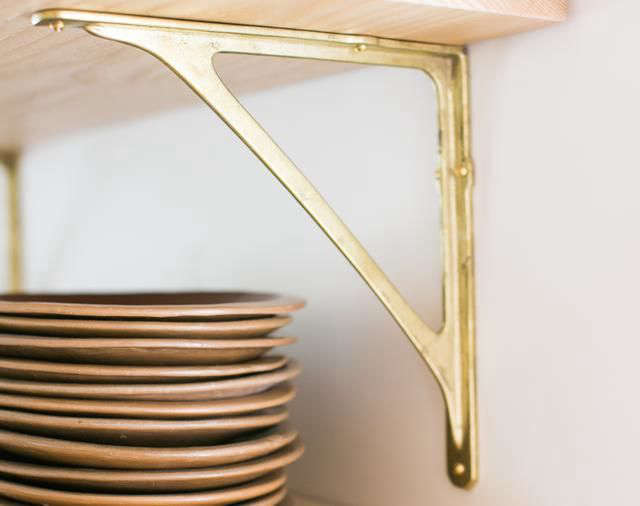
The Ramsey Conder Shelf Bracket is what happens when a practical piece of hardware decides it is tired of hiding beneath a shelf. Instead of behaving like a forgettable strip of stamped metal, this substantial cast bracket turns structural support into sculpture. It has weight, texture, warmth, and enough visual personality to make an ordinary plank of wood look as though it belongs in a carefully designed California home.
Designed by Los Angeles artisan Ramsey Conder, the bracket reflects a broader approach centered on solid materials, traditional casting methods, and finishes that become more interesting with age. It is not the least expensive way to hold up a shelf. That is rather like saying a handmade dining chair is not the cheapest way to avoid sitting on the floor. The point is craftsmanship, permanence, and character.
What Is the Ramsey Conder Shelf Bracket?
The Ramsey Conder Shelf Bracket is a decorative cast-metal support intended for exposed wall shelving. According to the current official product listing, it is made from solid bronze using a sand-casting process. The surface is polished but left uncoated, allowing the metal to darken and develop a natural patina rather than remaining permanently shiny.
Its dimensions are approximately 11 inches high, 11 inches deep, and 1 inch wide. That generous triangular profile makes it visually substantial enough to become part of the room’s architecture. It works especially well with natural wood shelves, where the warmth of bronze and the grain of the board can age together.
| Designer | Ramsey Conder |
|---|---|
| Current listed material | Solid bronze |
| Historical descriptions | Some older editorial listings identify the bracket as solid brass |
| Manufacturing process | Sand casting |
| Finish | Polished and uncoated |
| Dimensions | 11 x 11 x 1 inches |
| Current listed price | $240 |
| Published load rating | Not stated on the official product page |
The Design Story Behind the Bracket
The bracket’s origins help explain why it feels more like studio-made hardware than a mass-market accessory. In Conder’s own Los Angeles home, shelf supports were reportedly sculpted in his studio from wood and body filler before being sand-cast in metal. Those brackets were paired with birch shelves, demonstrating the design in an actual residential setting rather than merely on a white-background product page.
This process begins with a physical pattern that determines the final shape. A mold is formed in compacted sand, molten metal is poured into the cavity, and the casting is later cleaned and finished. Unlike a perfectly uniform factory stamping, sand casting can leave subtle surface evidence of the making process. Small variations are not necessarily flaws; they are part of the object’s handmade visual language.
Conder’s work commonly uses substantial materials such as bronze, brass, steel, wood, leather, and gold. The emphasis is on objects that can endure daily use while acquiring marks, color shifts, and surface depth. In other words, this is hardware that expects to grow older without having an identity crisis.
Bronze or Brass? Understanding the Material Descriptions
Anyone researching the Ramsey Conder Shelf Bracket may notice an apparent contradiction. The current designer website calls it solid bronze, while older design publications and retailer descriptions refer to solid brass. One historical description also notes that the bracket was made with polished sand casting and left uncoated so it could patina.
Brass and bronze are both copper-based alloys, but they are not identical. Brass primarily combines copper with zinc, while bronze is generally based on copper and tin, sometimes with additional elements. Their precise color and behavior vary by alloy, casting method, polishing, and exposure.
The difference matters to collectors and buyers who want an exact material specification. It may indicate that the product changed over time, that an earlier version used brass, or that older retailers used the terms loosely. Before ordering, confirm the current alloy, the number of brackets included, and the finish directly with the maker. That simple message can prevent an expensive game of “guess the metal.”
Why the Uncoated Finish Is Important
A protective lacquer keeps decorative metal brighter and more uniform, but it also separates the surface from its surroundings. An uncoated bracket responds to air, moisture, fingerprints, household products, and regular handling. Over time, bright areas may soften into deeper brown, amber, reddish, or muted golden tones.
This natural patina is a major part of the Ramsey Conder aesthetic. It gives the bracket a lived-in appearance and allows each installation to become slightly different. A bracket near a kitchen sink may age differently from one in a dry study. Frequently touched edges can remain brighter, while recessed areas darken.
Buyers should decide whether they welcome that evolution. If every color variation sends you racing for metal polish, an uncoated finish may become a demanding roommate. If you enjoy materials that record time and use, the changing surface is one of the bracket’s strongest features.
Where This Decorative Shelf Bracket Works Best
Kitchen Open Shelving
Pairing warm cast metal with white oak, walnut, birch, or painted wood can create a strong focal point above a countertop. Use the shelf for attractive everyday dishes, glassware, cookbooks, or small serving pieces. Open shelving looks most intentional when objects have breathing room, so resist the urge to display every mug collected since college.
Living Rooms and Home Libraries
The bracket can support a shelf that functions as a narrow display ledge for books, framed art, pottery, or collected objects. Its sculptural profile is especially effective when installed against plaster, limewash, dark paint, or simple white walls.
Home Offices
A walnut or birch shelf above a desk can provide storage without making the room feel like a supply closet. The bracket adds enough visual weight to balance a substantial desktop, vintage chair, or industrial task lamp.
Entryways and Mudrooms
A shelf above hooks or a console can hold baskets, hats, keys, and decorative pieces. Because entry areas receive frequent traffic, secure installation is essential, particularly if the shelf will carry heavy ceramics or stacks of books.
Bathrooms
Bronze can look excellent with stone, tile, plaster, and natural wood. However, humidity and splashing can accelerate surface changes. That is not automatically harmful, but the resulting patina may be less uniform. Wipe away standing moisture and avoid exposing the finish to harsh bathroom cleaners.
Choosing the Right Shelf Board
The bracket’s 11-inch projection naturally suits a relatively deep shelf, but the exact board dimensions should be selected according to the installation, intended load, and desired overhang. Confirm that the shelf sits securely on the support arm and that any front or side projection looks deliberate.
Solid walnut creates a dark, refined contrast with warm metal. White oak offers visible grain and a lighter architectural effect. Birch references the documented installation in Conder’s home and keeps the result clean and informal. Reclaimed wood can also work, although heavily distressed lumber may compete with the bracket rather than complement it.
Check the board for twisting, cupping, cracks, and weak knots. A beautiful bracket cannot persuade a warped shelf to become level through positive thinking. The board must be flat, structurally appropriate, and properly finished on all sides.
How to Install the Ramsey Conder Shelf Bracket
The official listing does not publish a load rating or detailed mounting instructions. Installation should therefore be planned around the wall construction, shelf dimensions, fasteners, bracket spacing, and objects being stored. For valuable or heavy displays, consult a qualified installer.
1. Inspect the Brackets and Wall
Check each casting for damage and identify the mounting holes. Determine whether your wall is drywall over wood studs, plaster, masonry, concrete, or another construction. Use a detector where appropriate to check for studs, wiring, and plumbing.
2. Confirm the Included Hardware
Do not assume that decorative screws or wall fasteners are included. The correct fastener depends on the wall material and expected load. For substantial shelving, fastening directly into framing or properly installed structural blocking is generally preferable to relying only on ordinary drywall anchors.
3. Create a Full-Size Layout
Use painter’s tape to mark the shelf’s height and width. Hold the brackets in position and check how their spacing relates to wall studs. This dry layout also reveals nearby switches, outlets, trim, doors, and other objects that may interfere with the shelf.
4. Mark and Level Carefully
Position the first bracket, mark its holes, and establish a horizontal reference with a long level or laser level. Transfer the height to the second bracket. Check the shelf itself before drilling. Old houses occasionally treat a right angle as a friendly suggestion.
5. Drill Pilot Holes
Use a bit suited to the fastener and wall construction. Pilot holes help guide screws accurately and reduce the likelihood of splitting framing or damaging the surrounding finish. Keep the drill perpendicular to the mounting surface.
6. Secure the Brackets
Fasten the brackets firmly without overtightening. Excessive force can damage screw heads, distort softer hardware, or mark the metal. Recheck that both supports are level and aligned before attaching the shelf board.
7. Attach the Shelf
If the bracket design permits attachment from below, use screws of an appropriate length that will not break through the top surface. Predrill the wood, particularly near edges or in dense hardwood. After installation, begin with a light load and inspect the assembly before adding heavier objects.
Care and Maintenance
For routine care, remove dust with a soft, dry cloth. A slightly damp cloth can be used for grime, but dry the metal immediately. Avoid abrasive pads, chlorine-based cleaners, strong acids, and aggressive household chemicals, which can scratch or alter the finish.
If you prefer the naturally aged look, frequent polishing is unnecessary. Let the patina develop and clean only when needed. If you want a brighter surface, use a product specifically suitable for the confirmed alloy and test it on a hidden area first. Polishing removes oxidation, so it also removes some of the history developing on the surface.
Clean spills promptly, especially around kitchens and bathrooms. When cleaning the wall or shelf, spray products onto a cloth rather than directly onto the bracket. This provides more control and reduces streaking.
Is the Ramsey Conder Shelf Bracket Worth the Price?
The answer depends on what you expect from a shelf support. A basic steel bracket can perform the same general structural job for far less money. The Ramsey Conder Shelf Bracket is better understood as functional art: a cast object whose material, scale, process, and changing finish contribute to the room.
It makes the most sense in a visible, carefully composed installation where the bracket will not be hidden behind storage bins. It may be worthwhile for a compact kitchen renovation, custom office, boutique retail display, or a single statement shelf. It is harder to justify for a utility closet where its main audience would be a vacuum cleaner.
Because the official listing does not clearly state a published load rating or whether the price covers one bracket or a set, confirm those details before purchasing. Also ask about mounting hardware, production time, shipping, returns, and the current material.
Frequently Asked Questions
Is the Ramsey Conder Shelf Bracket made of brass or bronze?
The current official listing describes it as solid bronze. Older editorial and retailer descriptions identify a solid-brass version. Confirm the material of the bracket currently being sold before ordering.
Will the finish change color?
Yes. The polished surface is uncoated and is intended to develop a natural patina. The speed and appearance of that change depend on humidity, handling, cleaning products, and environmental exposure.
How much weight can it hold?
No official load capacity is published on the current product page. Capacity depends on the casting, number and spacing of brackets, shelf material, fasteners, wall structure, and quality of installation. Do not assign a load limit based on appearance alone.
Can it be installed with drywall anchors?
Some wall anchors are designed for substantial loads, but mounting into studs, blocking, masonry, or another structural substrate is generally preferable for heavy shelving. Have the installation assessed professionally when the shelf will hold valuable or weighty objects.
Does it suit modern interiors?
Yes. Its simple triangular geometry works in contemporary, Craftsman, rustic, industrial, and eclectic rooms. The cast texture prevents it from feeling sterile, while the clean silhouette keeps it from becoming overly ornate.
Experience Notes: What Living With This Bracket May Be Like
The experience begins before installation because this is not a bracket you casually add to an online cart while buying paper towels. Its dimensions and price encourage deliberate planning. You start measuring the wall, considering the shelf material, and deciding whether the bracket should blend into the room or become its main attraction. Soon you are holding wood samples against the paint and behaving as though selecting a shelf board is a matter of national importance.
Once the bracket is in hand, the first impression is likely to be its physical presence. A solid cast-metal object feels different from thin folded steel. The edges, polishing, subtle casting texture, and variations in the surface invite inspection. Those details may initially seem minor, but they become important because the bracket remains completely visible after installation.
The installation experience rewards patience. Painter’s tape, a reliable level, accurate stud detection, and careful pilot holes matter more than speed. The bracket’s sculptural quality also makes misalignment easier to notice. Two supports that are slightly out of level may cause a shelf to rock or make the entire composition look uneasy. Taking extra time during layout is far less annoying than removing expensive hardware and patching a row of optimistic drill holes.
After the shelf is mounted, there is a temptation to fill every inch immediately. A better approach is to add objects gradually. A few books, one piece of pottery, and a small framed work allow the bracket to remain part of the display. When the shelf is overloaded with cables, receipts, mystery chargers, and a ceramic rooster inherited from an aunt, even remarkable hardware can disappear into visual noise.
During the first months, fingerprints and darker areas may appear on the uncoated metal. Owners who expect a permanently mirror-bright finish may find this frustrating. Owners who chose the piece specifically for its patina will probably enjoy watching the color become richer and less uniform. The most satisfying approach is usually consistent rather than complicated: either allow the metal to age naturally or maintain a polishing routine. Switching between the two every few weeks can create an uneven finish and considerable unnecessary cardio.
Daily use also changes how the bracket is perceived. At first, it is a special purchase that receives frequent inspection. Later, it becomes part of the room. Morning light catches the polished edges. Recessed areas gradually darken. The shelf board acquires small marks. These changes make the installation look less like a showroom display and more like something that belongs to the building.
The greatest practical lesson is that premium hardware does not compensate for weak installation. The bracket may be solid and beautifully cast, but the whole shelf system is only as dependable as the wall connection, fasteners, board, and layout. When those elements are handled correctly, the result can feel unusually permanenta useful shelf with the presence of a small architectural feature.
Conclusion
The Ramsey Conder Shelf Bracket offers an appealing combination of utility, traditional casting, and material character. Its bold 11-inch profile can transform a simple wood shelf into a focal point, while its uncoated surface develops a patina that makes each installation increasingly individual.
It is best suited to buyers who appreciate visible craftsmanship and are comfortable with natural aging. Confirm the current alloy, quantity, hardware, lead time, and installation requirements before ordering. Then mount it carefully, give it a shelf worthy of the support, and try not to cover the entire thing with unopened mail.