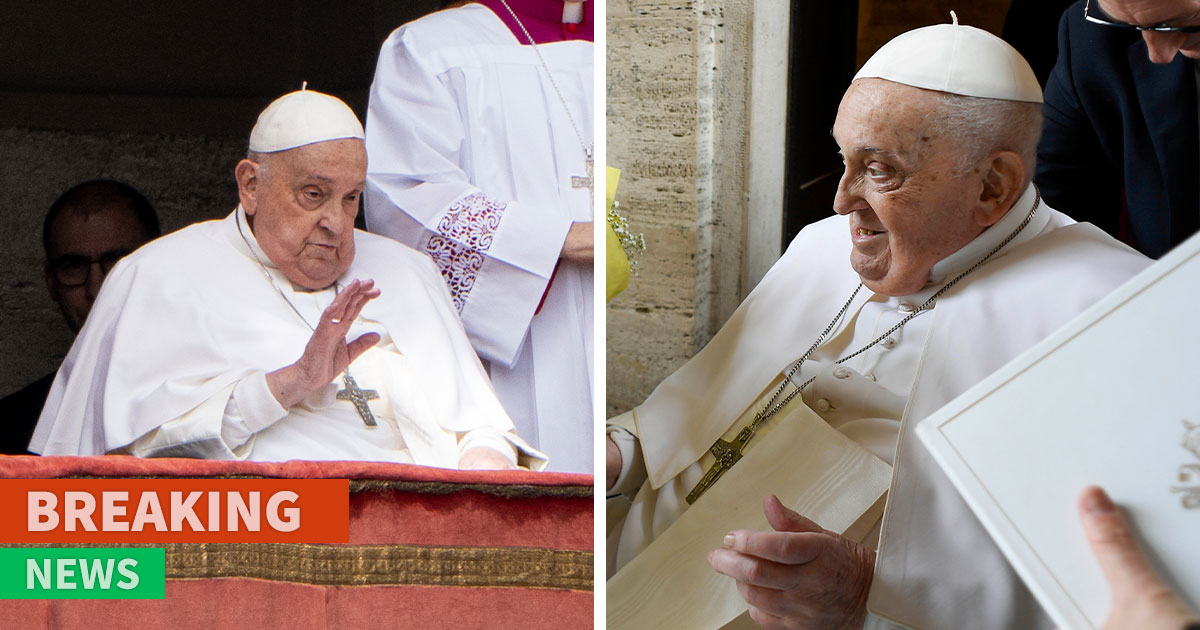
Pope Francis has passed away at age 88, leaving Catholics, interfaith leaders, admirers, critics, and even people who only occasionally glanced at Vatican news feeling the same quiet pause: the world has lost one of its most recognizable moral voices. Born Jorge Mario Bergoglio in Buenos Aires, Argentina, Francis became the first Latin American pope, the first Jesuit pope, and the first pontiff in modern memory who seemed just as comfortable speaking about mercy in a grand basilica as he did greeting crowds from a modest car.
His death on April 21, 2025, Easter Monday, at his residence in the Vatican’s Casa Santa Marta, closed a 12-year papacy defined by humility, reform, compassion, controversy, and a stubborn preference for simplicity. The Vatican reported that his death followed a stroke, coma, and irreversible cardiovascular collapse. The news traveled quickly across continents, from church bells in Rome to prayer gatherings in the Americas, Asia, Africa, and Europe. It felt, for many, less like the passing of a distant religious official and more like the departure of a grandfatherly figure who had spent years reminding the world not to step over the poor on the way to dinner.
A Pope Who Changed the Tone of the Papacy
When Cardinal Jorge Mario Bergoglio stepped onto the balcony of St. Peter’s Basilica in March 2013, he did not arrive with theatrical thunder. He greeted the crowd simply, bowed his head, and asked the people to pray for him before he blessed them. It was a small gesture, but it told the world something important: this pope was going to lead from the ground level, not from a golden pedestal.
Francis chose his papal name in honor of St. Francis of Assisi, the saint associated with poverty, peace, creation, and humility. The name was not decorative branding; it became a mission statement. He declined the traditional papal apartment, choosing instead to live in Casa Santa Marta. He favored simple clothing, modest transportation, and direct language. In an institution often associated with ceremony, Francis had the strange and refreshing habit of sounding like a pastor who had just stepped out of a parish office after fixing the copier.
His Final Days and the World’s Immediate Grief
Francis had experienced serious health challenges in the months before his death, including a hospitalization for respiratory complications and double pneumonia. Yet his final public appearance on Easter Sunday became a lasting image of endurance. Frail but present, he appeared before crowds in St. Peter’s Square and offered a blessing at the heart of Christianity’s most joyful feast. Less than a day later, the Vatican announced that Pope Francis had died.
The grief was immediate. World leaders praised his compassion and moral courage. Catholic communities gathered for Masses, rosaries, and prayers. Ordinary people lined up in Rome to pay respects, many remembering not a single doctrine or document first, but a gesture: Francis washing the feet of prisoners, embracing the sick, speaking tenderly about migrants, or urging the powerful to notice those living on the edges of society.
The First Latin American Pope
Francis’s background mattered. He came from Argentina, not from the traditional centers of European Catholic power. Before becoming pope, he served as Archbishop of Buenos Aires and was known for riding public transportation, visiting poor neighborhoods, and living with notable restraint. His life in Latin America shaped his papacy’s priorities: poverty, inequality, migration, social exclusion, and the dignity of people who rarely make polite society’s guest list.
For Catholics in the Global South, Francis represented a historic shift. The Church’s demographic center had been moving for decades toward Latin America, Africa, and Asia, and Francis brought that reality into the Vatican’s daily consciousness. He did not erase the Church’s European inheritance, but he widened the room. He made clear that the Church was not only Rome looking outward; it was also Buenos Aires, Manila, Kinshasa, São Paulo, Seoul, and countless small parishes where grand theology meets real rent payments.
A Legacy of Mercy, Especially for the Marginalized
One of Francis’s most repeated themes was mercy. He believed the Church should not behave like a customs office inspecting spiritual passports, but like a field hospital tending wounds. That image became one of the defining metaphors of his papacy. It was vivid, practical, and very Francis: less marble, more bandages.
He spoke often about migrants and refugees, urging nations to see them not as statistics or threats but as human beings. His 2013 visit to Lampedusa, where many migrants had died trying to reach Europe, became an early symbol of his leadership. He condemned what he called a “globalization of indifference,” a phrase that stuck because it sounded painfully accurate. The phrase also had the useful feature of making comfortable people shift in their chairs.
Francis also changed the tone of Catholic conversations around LGBTQ+ people. His famous “Who am I to judge?” comment did not rewrite doctrine, but it did reshape the atmosphere. For many LGBTQ+ Catholics and their families, his words opened a door that had long felt bolted shut. Critics argued he moved too slowly or not far enough, while conservatives worried he invited confusion. Still, his pastoral instinct was clear: begin with dignity, not dismissal.
Climate, Creation, and the Poor
Francis’s environmental legacy is inseparable from his 2015 encyclical Laudato Si’, a major teaching document that connected climate change, consumer culture, poverty, and spiritual responsibility. He argued that care for the planet could not be separated from care for the poor, because environmental damage often harms vulnerable communities first and hardest.
This made him one of the most influential religious voices in the global climate conversation. He did not speak like a scientist presenting a chart, though he respected science. He spoke like a pastor asking why the family home was on fire and why everyone was still arguing about who left the matches near the curtains. His message was simple enough to quote and challenging enough to annoy people across political lines: the Earth is not disposable, and neither are the people most affected by environmental neglect.
Reform Inside the Vatican
Francis inherited a Church facing major internal challenges: financial scandals, bureaucratic resistance, the clergy sexual abuse crisis, polarization, and declining trust in many parts of the world. He pushed reforms in Vatican finances, reorganized departments of the Roman Curia, and appointed cardinals from countries that had rarely been represented at the highest levels of Church leadership.
His approach was not universally celebrated. Some Catholics believed he disrupted too much. Others believed he did not disrupt nearly enough. That tension followed him throughout his papacy. Reformers sometimes grew impatient; traditionalists often grew alarmed. Francis seemed to accept the noise as the cost of trying to move a 2,000-year-old institution without breaking its bones.
The Painful Shadow of the Abuse Crisis
No honest assessment of Pope Francis’s legacy can ignore the clergy sexual abuse crisis. His record was mixed and deeply scrutinized. He took important steps, including stronger accountability procedures and actions against some high-ranking churchmen. Yet survivors and advocates often argued that reforms remained incomplete, inconsistent, or too dependent on Church-controlled processes.
Francis himself acknowledged mistakes, including his handling of abuse allegations in Chile, where he later apologized after initially defending a bishop accused of covering up abuse. That episode became a painful reminder that even a pope known for listening could fail to hear clearly when survivors most needed him to. His papacy advanced the Church’s response in certain ways, but it also left unfinished work that his successor and the wider Church cannot responsibly avoid.
A Pope of Contradictions, Courage, and Conversation
Francis was loved, criticized, quoted, misunderstood, and argued aboutsometimes all before breakfast. He was progressive in tone but not a revolutionary in doctrine. He welcomed debate but could be blunt with opponents. He preached tenderness yet governed with firmness when he believed reform required it. He delighted many ordinary Catholics while frustrating ideologues on both the left and the right.
That complexity is part of why his papacy mattered. Francis did not fit neatly into political categories. He criticized unchecked capitalism, defended migrants, opposed abortion, spoke against war, warned about climate change, called for pastoral care for divorced and remarried Catholics, and insisted that the Church must not become a museum for the pure. Anyone trying to squeeze him into a campaign slogan usually had to trim off several inconvenient corners.
The Funeral and the Symbolism of Simplicity
Even in death, Francis’s preference for simplicity remained visible. He requested burial at the Basilica of St. Mary Major in Rome, a place he loved and visited often. His funeral drew pilgrims, clergy, political leaders, and ordinary mourners from around the world. Yet the deeper symbolism was not only in the size of the crowd; it was in the contrast between global attention and the modest spirit of the man being remembered.
Francis wanted a Church close to the people, and his farewell reflected that desire. Mourners included not only dignitaries and cardinals, but also people from communities he had championed: migrants, the poor, prisoners, and those who often feel invisible. The message was unmistakable. If the papacy is a global office, Francis wanted it judged by how it treated the person at the edge of the room.
Why the World Feels Heartbroken
The heartbreak surrounding Pope Francis’s death is not limited to Catholic devotion. Many people admired him because he made moral language feel human again. He could speak about poverty without sounding like a policy memo. He could talk about mercy without turning it into a decorative slogan. He could challenge leaders while still sounding less like a scold and more like a concerned shepherd with very tired shoes.
His humor also helped. Francis had a way of lowering the temperature in solemn rooms. He once joked that Catholics did not need to reproduce “like rabbits,” a line that guaranteed headlines and probably several awkward parish coffee hours. His wit made him approachable, but it also served a purpose: it reminded people that holiness does not require stiffness. Sometimes grace arrives with a smile, a shrug, and a sentence that makes the Vatican press corps blink twice.
What Pope Francis Leaves Behind
Pope Francis leaves behind a Church still divided, still wounded, still searching, and still alive with possibility. He did not solve every crisis. No pope could. But he changed the conversation. He shifted attention toward the peripheries. He made mercy the center of his public witness. He forced Catholics and non-Catholics alike to ask whether faith without compassion is really faith at all.
His greatest legacy may be that he made the papacy feel less distant. He reminded the world that leadership can be powerful without being pompous, serious without being joyless, and traditional without being trapped in nostalgia. At age 88, Pope Francis has passed from history into memory. Yet his voice continues to echo: go to the margins, protect creation, welcome the stranger, do not forget the poor, and for heaven’s sake, try not to turn religion into a locked country club with incense.
Shared Experiences: How People Felt Pope Francis’s Passing
For many people, the news of Pope Francis’s death did not arrive like ordinary breaking news. It arrived more like a family phone call. Even those who had never met him could remember where they were when they heard it: in a kitchen with the morning coffee cooling, in a car with the radio on, at work between emails, or scrolling through a phone expecting the usual noise and finding, instead, a headline that made the day feel suddenly heavier.
In Catholic families, his passing stirred memories of sacraments, parish festivals, school Masses, and grandparents who kept rosaries in drawers, purses, or shirt pockets. Some people thought of the first time they heard Francis speak about mercy and felt, maybe cautiously, that there was room for them in the Church again. Others remembered his concern for migrants and thought of parents, neighbors, coworkers, or ancestors who had crossed borders with little more than courage and a plastic folder of documents.
Outside the Catholic Church, many experienced his death as the loss of a public conscience. In a world that often rewards the loudest voice in the room, Francis seemed to speak for people without microphones. Teachers discussed him with students as an example of moral leadership. Nurses and doctors remembered his tenderness toward the sick. Environmental advocates recalled his insistence that climate change was not only a technical issue but a human one. Volunteers at shelters, food banks, and refugee centers heard in his words a kind of blessing on work that is usually exhausting and rarely glamorous.
His passing also created complicated emotions. Some survivors of clerical abuse felt grief mixed with frustration, respecting his compassion while still demanding stronger accountability. Some women in the Church honored his pastoral warmth while wishing he had opened more doors. Some traditional Catholics mourned him sincerely while remaining uneasy about his reforms. That mix of love, critique, gratitude, and disappointment is not a weakness in remembering him; it is a sign that his papacy touched real wounds and real hopes.
Perhaps the most common experience was quiet reflection. People asked themselves whether they had grown numb to suffering. They wondered whether they had become too quick to judge, too busy to notice loneliness, too comfortable with indifference. Francis had a talent for making enormous moral questions feel personal. He did not simply ask governments to welcome migrants; he asked each person to examine the border in their own heart. He did not merely urge institutions to care for the poor; he asked whether we knew the names of people we passed every day.
That is why the heartbreak feels so widespread. Pope Francis’s death is not only the end of a papacy; it is a reminder of the kind of humanity many people still long for. In remembering him, people are also remembering the better versions of themselves they hoped to become: kinder, braver, less cynical, more willing to serve, and maybe just humble enough to admit that the world does not need more polished speeches as much as it needs more open hands.
Conclusion
Pope Francis has passed away at age 88, but his legacy remains powerfully alive. He was a pope of firsts, a pastor of the poor, a reformer who unsettled comfortable systems, and a global figure who made mercy feel urgent rather than sentimental. His life reminds the world that compassion is not weakness, humility is not irrelevance, and faith at its best walks toward suffering instead of around it.
As the world mourns, Pope Francis’s message continues to challenge believers and nonbelievers alike: care for the forgotten, protect the Earth, welcome the stranger, and choose mercy even when judgment would be easier. The Church he leaves behind still faces difficult questions, but it also inherits a clearer moral vocabularyone shaped by tenderness, justice, simplicity, and courage.