For a few shimmering decades, the future of air travel looked like it would arrive nose-first, wearing a needle-shaped fuselage, delta wings, and the confidence of a lounge singer in a velvet jacket. Supersonic transport initiatives promised a world where breakfast in New York and lunch in Paris would be routine, where crossing oceans would feel less like a long-haul flight and more like a very expensive magic trick.
Then reality rolled up with a clipboard. Sonic booms rattled windows. Fuel bills growled. Regulators frowned. Airlines discovered that “twice the speed of sound” also meant “many times the operating cost.” The dream did not die, exactly, but it did spend several decades in the aviation equivalent of a garage under a tarp.
Today, supersonic passenger flight is back in the conversation. NASA’s X-59, Boom Supersonic’s XB-1 and Overture, and renewed regulatory attention have made the old dream feel strangely current again. This is the story of supersonic transport initiatives: the retro glory, the engineering headaches, the political turbulence, and the modern attempt to make “boom” sound less like a complaint from your neighbor.
What Is Supersonic Transport?
Supersonic transport, often shortened to SST, refers to aircraft designed to carry passengers or cargo faster than the speed of sound. In aviation language, that means flying above Mach 1. A conventional jet airliner cruises well below that threshold, while famous supersonic aircraft like Concorde cruised at roughly twice the speed of sound.
The attraction is obvious: speed. A trip that once took seven or eight hours could potentially be cut to three or four. For business travelers, diplomats, celebrities, and anyone allergic to airport pretzels, that sounded wonderful. In the 1950s and 1960s, the jet age had already transformed travel. Engineers and policymakers naturally asked the next question: if faster jets changed the world once, why not do it again?
Supersonic transport initiatives were not simply about glamorous airplanes. They involved national prestige, Cold War competition, aerospace manufacturing jobs, airline economics, environmental concerns, and public tolerance for noise. In other words, the aircraft may have been sleek, but the policy debate was shaped like a filing cabinet.
The Golden Age Dream: Faster Than the Future
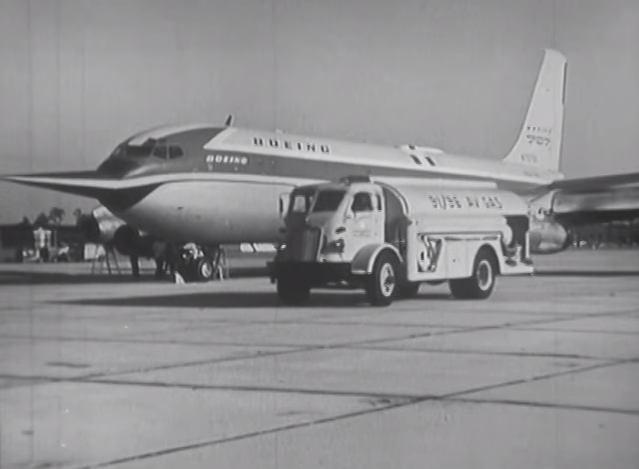
The early jet age created a belief that aviation progress moved in one direction: faster. The Boeing 707 and Douglas DC-8 had already made piston airliners look like antiques with wings. By the late 1950s, governments and aircraft manufacturers in the United States, Britain, France, and the Soviet Union were thinking about passenger aircraft that could break the sound barrier on scheduled routes.
For national governments, supersonic transport was a billboard in the sky. It said, “Our engineers can bend air into submission.” For airlines, it suggested premium fares and prestige routes. For passengers, it offered a seductive fantasy: beating the clock so thoroughly that time zones started to look embarrassed.
But supersonic flight is not just regular flight with the speed slider pushed to “dramatic.” At high speeds, air behaves differently. Shock waves form around the aircraft. Skin temperatures rise from aerodynamic heating. Engines must perform efficiently at speeds and altitudes that ordinary airliners do not encounter. The aircraft must be strong, light, slender, stable, and safe. The margin for sloppy design is tiny, which is a problem because aviation accountants prefer margins that are not tiny.
Concorde: The Beautiful Exception
No discussion of supersonic transport initiatives can avoid Concorde, the Anglo-French aircraft that became the most recognizable supersonic passenger jet in history. Developed by British and French aerospace firms with strong government backing, Concorde first flew in 1969 and entered commercial service in 1976 with British Airways and Air France.
Concorde was a technological masterpiece. Its long needle nose, elegant delta wing, afterburning turbojet engines, and high-altitude cruise profile made it look less like an airliner and more like something a science-fiction illustrator would draw after too much coffee. It carried around 100 passengers and crossed the Atlantic in less than four hours, often cruising between 55,000 and 60,000 feet. Passengers could see the curvature of Earth, which is a fancy way of saying the window seat came with bragging rights.
Yet Concorde also proved that speed alone does not guarantee a mass market. Tickets were expensive. Fuel consumption was high. The aircraft was loud around airports and could not fly supersonically over many populated land areas because of sonic boom restrictions. Instead of becoming the standard future of air travel, Concorde became a luxury niche: spectacular, iconic, and financially difficult.
The Concorde Lesson
Concorde showed that supersonic passenger flight could work technically. It also showed that technical success is not the same as commercial success. Airlines do not buy aircraft because they look fabulous on posters. They buy aircraft when the numbers make sense across maintenance, fuel, crew training, airport compatibility, route flexibility, fares, and passenger demand.
In that sense, Concorde was both triumph and warning. It proved the dream was possible, then handed future engineers a bill and said, “Good luck, kid.”
America’s Big Swing: The Boeing 2707
While Concorde moved toward production, the United States pursued its own supersonic transport program. The most famous result was the Boeing 2707, an ambitious design intended to be larger and faster than Concorde. Early versions featured a variable-sweep wing, allowing the aircraft to change wing geometry for different flight conditions. It was bold, complex, and exactly the kind of thing that makes aerospace engineers grin while accountants quietly leave the room.
The Boeing 2707 was designed to carry far more passengers than Concorde and cruise at roughly Mach 2.7 to Mach 3. In theory, it would have given the United States a dominant supersonic airliner. In practice, the project became a monument to the hard limits of ambition. The swing-wing mechanism added weight and complexity. Costs rose. Environmental concerns grew. Public opposition to sonic booms increased. Airlines became less certain about demand.
By 1971, federal funding was cut, and the Boeing 2707 was canceled before completed prototypes could fly. The cancellation was a major moment in aviation history. The United States, the country that had helped define the commercial jet age, stepped away from building a domestic supersonic passenger airliner.
Why the Boeing 2707 Failed
The Boeing 2707 failed for several connected reasons. First, the engineering challenge was enormous. A large Mach 3 passenger aircraft demanded advanced materials, powerful engines, sophisticated aerodynamics, and careful thermal management. Second, public concern over sonic booms made overland routes politically risky. Third, the economics looked increasingly fragile. A supersonic airliner needs premium passengers, high utilization, and route freedom. Remove overland routes and the market shrinks dramatically.
The project was not foolish. It was a serious attempt to leapfrog Concorde. But it arrived at a moment when environmental awareness, budget pressure, and changing airline economics were all gaining altitude.
The Sonic Boom Problem: The Noise That Would Not Go Away
The single biggest public-relations villain in supersonic transport history is the sonic boom. When an aircraft flies faster than sound, pressure waves merge into shock waves. People on the ground hear the result as a boom, thump, crack, or house-rattling aerial insult, depending on the aircraft and conditions.
In the United States, concern over sonic booms led to restrictions on civil supersonic flight over land. That mattered enormously. A supersonic airliner that can only go fast over oceans is like a sports car allowed to speed only in empty parking lots. It may still be impressive, but the business case becomes much narrower.
Public tolerance was not a minor detail. Sonic booms could startle people, disturb communities, and trigger damage complaints. Even when actual structural damage was limited, perception mattered. No airline wants its premium aircraft remembered as “that fancy jet that made Grandma’s china cabinet sound haunted.”
After Concorde: The Long Supersonic Silence
Concorde flew commercially for 27 years and retired in 2003. Its retirement marked the end of routine supersonic passenger service. For many travelers, the world actually got slower. Wide-body aircraft became more efficient and comfortable, but not dramatically faster. Airlines focused on fuel economy, capacity, reliability, and hub networks. The future belonged to aircraft like the Boeing 777, Airbus A330, Boeing 787, and Airbus A350 rather than needle-nosed speed machines.
This shift made sense. Fuel prices, emissions concerns, airport noise rules, and competitive fares favored efficient subsonic aircraft. Passengers wanted cheaper tickets and more route options. Airlines wanted aircraft that could serve many markets profitably. Supersonic aviation, meanwhile, looked like a dazzling but impractical tuxedo in a world increasingly dressed in business casual.
Still, the idea never disappeared. Aerospace researchers continued studying low-boom designs, advanced materials, computational fluid dynamics, and more efficient engines. The dream was stored, not erased.
NASA’s X-59 and the Quiet Supersonic Comeback
NASA’s Quesst mission represents one of the most important modern supersonic transport initiatives. At its center is the X-59, an experimental aircraft developed with Lockheed Martin Skunk Works. Unlike Concorde or the Boeing 2707, the X-59 is not a passenger aircraft prototype. It is a research aircraft built to test whether a carefully shaped supersonic airplane can reduce the traditional sonic boom to a softer “thump.”
The X-59’s unusual shape is central to its mission. Its long nose, slender fuselage, swept wings, and top-mounted engine are designed to manage shock waves so they do not combine into one large boom. The goal is not merely to fly fast; the goal is to collect data that regulators can use to create noise standards for future supersonic commercial flight over land.
This is a major change in strategy. Earlier supersonic projects often treated the boom as an unfortunate side effect. NASA’s modern approach treats the boom as the main design problem. That is like building a race car and admitting from the start that the neighbors matter.
Why the X-59 Matters
If the X-59 demonstrates that quiet supersonic flight is possible, it could help reopen the case for overland supersonic routes. That would dramatically improve the commercial potential of future aircraft. New York to Los Angeles, Chicago to San Francisco, Dallas to Seattle, and other long domestic routes become much more interesting if an aircraft can fly faster than sound without making everyone below it look up and mutter.
The X-59 also reflects how aviation development has changed. Modern engineers use advanced computer modeling, wind-tunnel testing, acoustic analysis, and digital flight systems in ways that earlier SST teams could only envy. The dream is old, but the toolkit is new.
Boom Supersonic and the Private-Sector Revival
Another major modern player is Boom Supersonic, the Colorado-based company developing the Overture airliner. Before building Overture, Boom created XB-1, a smaller demonstrator aircraft designed to validate technologies and flight-test experience relevant to future commercial supersonic travel.
XB-1 made its first flight in 2024 and later achieved supersonic flight, marking a major milestone for privately developed civil supersonic aviation in the United States. Boom’s planned Overture aircraft is intended to carry dozens of passengers at around Mach 1.7, with a focus on transoceanic routes where supersonic speed is already more practical because oceanic sonic booms do not disturb populated areas.
Boom’s strategy differs from Concorde’s era in several ways. It emphasizes modern composites, digital design tools, sustainable aviation fuel compatibility, and an airline market familiar with premium long-haul travel. The company has announced interest from major airlines, although interest and delivered aircraft are two very different species. Aviation history is full of beautiful renderings that never met a boarding gate.
The Business Case: Can Supersonic Travel Pay for Itself?
The central question for every supersonic transport initiative is not “Can it fly?” It is “Can it make money without requiring a heroic suspension of disbelief?”
Supersonic aircraft face several economic challenges. They typically carry fewer passengers than wide-body jets. They may burn more fuel per seat. They need specialized maintenance and pilot training. They may face airport noise limits. If they cannot fly supersonically over land, their route network is limited. If ticket prices are too high, the passenger base becomes small. If prices are too low, the airline loses money with impressive velocity.
However, there is a potential market. High-value travelers may pay for time savings on major international routes. Business-class and first-class passengers already support premium cabins on long-haul flights. Cargo operators may also value speed for urgent shipments, although cargo economics differ significantly from passenger travel. The real challenge is finding the sweet spot where speed, price, range, noise, emissions, and reliability all agree to sit at the same table.
Environmental Questions: The New Test
Modern supersonic transport initiatives face scrutiny that earlier programs did not fully confront. Aviation is under pressure to reduce emissions, improve fuel efficiency, and limit noise. A new supersonic aircraft cannot simply say, “Look how fast I am,” and expect applause. It must also answer questions about climate impact, fuel sources, airport noise, manufacturing sustainability, and total operating efficiency.
Sustainable aviation fuel is often mentioned as part of the solution. Better engines, lighter materials, optimized aerodynamics, and improved route planning may also help. But the environmental bar is high. A supersonic airliner that serves a premium market must show why its time savings justify its footprint. In the 1960s, speed was almost automatically interpreted as progress. Today, progress has to bring receipts.
Why Retrotechtacular Still Fits
The word “retrotechtacular” feels perfect for supersonic transport because SST history is full of yesterday’s tomorrow. The brochures, mockups, wind-tunnel models, and promotional films from the 1960s radiate confidence. Everyone seemed certain the future would be faster, shinier, and served with better glassware.
Looking back, it is easy to laugh at the optimism. But that optimism produced extraordinary engineering. Concorde was real. The Boeing 2707 pushed design thinking even though it never entered service. NASA’s research kept the science alive. Modern efforts are not starting from zero; they are standing on a runway built by decades of experiments, mistakes, and very expensive lessons.
Supersonic transport is retro because the dream is old. It is spectacular because the dream still works on the imagination. Few technologies combine elegance and stubborn difficulty so completely. The aircraft look fast even when parked. That is not a business model, but it is a powerful emotional advantage.
Experiences Related to Supersonic Transport Initiatives
To understand why supersonic transport still fascinates people, imagine standing inside an aviation museum in front of a preserved Concorde. The first surprise is usually its size. In photos, Concorde looks impossibly sleek, almost delicate. Up close, it is both graceful and muscular, a white arrow with landing gear. The cabin, however, can feel surprisingly narrow. This was not a flying hotel lobby. It was a speed machine with seats.
That contrast tells the whole story. Supersonic travel was never about sprawling comfort. It was about compression: compressing distance, compressing time, and, yes, compressing passengers into a tube that crossed the Atlantic before a regular wide-body finished its second movie. The experience must have felt surreal. You board in London or Paris, eat a polished meal, watch the Mach meter climb, and arrive in New York before your body has fully accepted that it is airborne.
For aviation enthusiasts, supersonic transport initiatives also create a special kind of nostalgia. It is not nostalgia for something simple. These aircraft were wildly complicated. The nostalgia is for a period when public technology projects dared to be dramatic. Concorde did not whisper, “incremental improvement.” It shouted, “Let us outrun sound,” preferably while wearing a tailored suit.
There is also an experience shared by people who never flew Concorde: the experience of hearing about it from someone who did. Former passengers often describe the flight less as transportation and more as an event. The altitude, the speed display, the smaller cabin, the premium service, and the knowledge that they were doing something rare all became part of the memory. The aircraft turned a route into a story.
Modern supersonic initiatives are trying to create a different experience. The next generation cannot rely only on glamour. Travelers now expect quieter cabins, lower environmental impact, reliable Wi-Fi, transparent pricing, and fewer excuses. The romance of speed remains, but it must be wrapped in practical value. A future passenger will still enjoy arriving earlier, but they may also ask what fuel was used, whether the aircraft meets noise standards, and why the fare costs more than a small sofa.
For communities under potential flight paths, the experience matters too. The success of quiet supersonic technology will not be decided only in engineering reports. It will be judged in kitchens, classrooms, backyards, offices, and bedrooms. If the sound is genuinely a mild thump, public acceptance may grow. If it feels like the sky dropping a bowling ball, the political runway gets short very quickly.
That is why the human side of supersonic transport initiatives is so important. The aircraft must satisfy pilots, passengers, airlines, regulators, airport operators, environmental reviewers, investors, and people on the ground who did not buy a ticket but still receive the soundtrack. Supersonic travel is not just a machine moving through air; it is a social contract moving through public space.
Conclusion: The Future Is Faster, If It Can Behave Itself
Supersonic transport initiatives have always lived between romance and reality. Concorde proved that passengers could fly faster than sound in scheduled service. The Boeing 2707 proved that ambition can outrun economics. The sonic boom proved that people on the ground get a vote. NASA’s X-59 and Boom Supersonic’s aircraft now suggest that the story is not finished.
The next successful supersonic transport will not simply be the fastest aircraft in the brochure. It will be the aircraft that solves the old problems with new discipline: quieter booms, better economics, cleaner fuel strategies, flexible routes, and genuine passenger value. Speed is still thrilling. But in modern aviation, speed must also be polite, profitable, and defensible.
Note: This article is a historically grounded editorial synthesis based on real public information about supersonic transport programs, including Concorde, Boeing 2707, NASA Quesst/X-59, sonic boom research, and modern private-sector supersonic aviation efforts.