If you heard a distant gasp from the internet, no, it was not another celebrity breakup, a surprise album drop, or a reboot nobody asked for but everybody will still watch. It was the sound of Pop Culture Jeopardy! fans learning that Season 2 is not simply coming back. It is coming back with a twist that feels very on-brand for a show built on curveballs, buzzer panic, and the kind of trivia that can start an argument at brunch. The big news is that the series is shifting from Prime Video to Netflix for Season 2, while Colin Jost returns to host the whole gloriously chaotic pop-culture spectacle.
That is the kind of update that makes fans do a double take. A renewal is one thing. A streamer switch is another. A streamer switch for a still-young game show in a beloved franchise? That is the entertainment-business equivalent of a Daily Double hidden under “Things You Didn’t See Coming for 800.” Add in a weekday rollout, a bigger platform, and a fan base that already treats categories about reality TV, Marvel, music icons, and internet culture like a sacred calling, and suddenly this Season 2 news stops feeling routine. It feels like an event.
And honestly, that is why this story matters. Pop Culture Jeopardy! was never supposed to be a sleepy little side project. From the moment it debuted, it was built to test whether the Jeopardy! brand could loosen its tie, swap the library-card energy for celebrity-chaos energy, and still keep its brainy backbone intact. The answer, as it turns out, was a very confident “What is… yes?”
The Real Shock: Season 2 Is Moving to Netflix
Let’s start with the headline-making part. The most surprising Season 2 development is not that the show survived. It is where it landed. Season 1 premiered on Prime Video, which gave the Jeopardy! franchise its first major streaming-only pop-culture spinoff. That alone felt like a milestone. But now Season 2 is headed to Netflix, a move that instantly changes the size of the stage and the shape of the conversation around the series.
Why is that such a big deal? Because streamer loyalty is real, and fans notice platform changes the way sports fans notice a star player changing teams. A lot of viewers get comfortable knowing exactly where a show lives. They build routines around it. They recommend it to friends. They tell people, “You need to watch this on that app.” Then suddenly the show picks up its clue board, grabs its buzzer, and relocates to a completely different digital neighborhood. That is not a small tweak. That is a whole new front door.
For fans, the reaction is naturally mixed at first. Some people hear “Netflix” and think, “Fantastic, this just got easier to recommend.” Others hear “leaving Prime Video” and immediately realize they now need to update their watchlist habits. Either way, the move creates attention, and attention is oxygen for a franchise that thrives on fan chatter, trivia-night bragging rights, and social-media debates over whether a clue was obvious or cruelly specific.
In entertainment terms, the switch also sends a bigger message: Pop Culture Jeopardy! is not being treated like a novelty anymore. It is being treated like a property worth repositioning for more visibility. That is the kind of vote of confidence fans should notice, even if they first noticed it while dramatically clutching the remote.
Colin Jost Is Back, and That Matters More Than It Might Seem
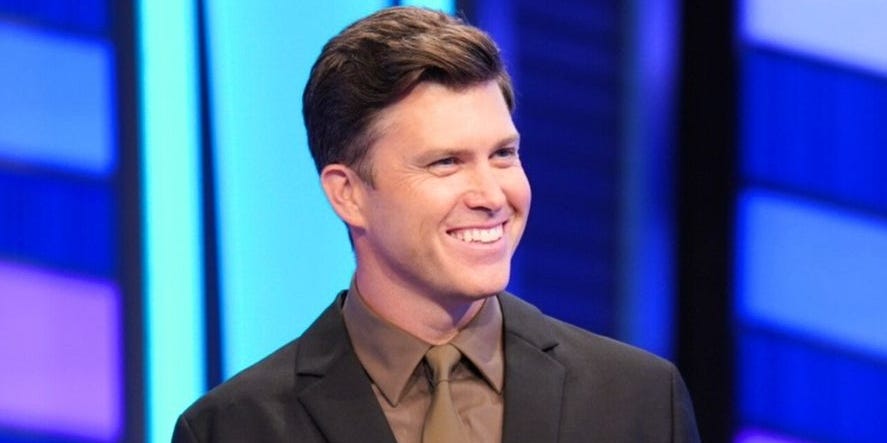
Season 2 is not reinventing itself from scratch, and that is a smart move. Colin Jost is returning as host, which gives the show continuity right when the platform shift could have made things feel unstable. If the streamer move is the headline, Jost’s return is the stabilizer. He keeps the show connected to the tone that made the first season work: polished but playful, fast-paced but not frantic, clever without trying too hard to wink at the audience every five seconds.
That balance is harder to pull off than it looks. A pop-culture game show can easily tip into one of two traps. It can become too self-serious and suck the fun out of the material, or it can become so goofy that the competition stops feeling real. Jost helped the series stay in the sweet spot between those extremes. He brought a dry, lightly amused energy that fit the format well. He did not try to overpower the game. He just gave it enough personality to feel fresh.
That matters because Pop Culture Jeopardy! is already a delicate balancing act. The clues have to feel current enough for pop-culture lovers, broad enough for casual viewers, and challenging enough for trivia die-hards who live to yell answers at televisions. The host has to guide all of that without making the show feel either too precious or too chaotic. Jost has already proved he can do that job, and his return tells fans that Season 2 is aiming to build on what worked rather than tossing everything into a trendy blender.
What Fans Can Expect From Season 2
The upcoming season is scheduled to roll out on weekdays, which is a sneaky-smart decision. Game shows thrive on rhythm. They are built for habit. A weekly prestige-drama drop says, “Set aside an evening and emotionally prepare yourself.” A weekday trivia rollout says, “Come on in, test your brain, and enjoy a little competitive chaos with your dinner.” For a show like this, that cadence makes perfect sense.
Season 2 will keep the team-based format that sets Pop Culture Jeopardy! apart from the mainline version of Jeopardy!. That team structure is part of the show’s secret sauce. Traditional Jeopardy! can feel like a solo sprint run by geniuses who casually know 14th-century opera and obscure rivers in Central Asia before breakfast. Pop Culture Jeopardy!, by contrast, feels more like assembling the Avengers of niche knowledge. One friend knows boy-band history, one knows prestige TV, and one somehow remembers every reality-show scandal since 2009. Together, they become unstoppable. Or at least delightfully loud.
The grand prize remains a major part of the appeal, but so does the format itself. The game invites viewers to imagine themselves on the show in a way that many quiz shows do not. You do not have to be a solo encyclopedia in human form. You just need your people. Your pop-culture crew. Your group chat legends. That makes the show more social, more relatable, and arguably more bingeable.
Why the Team Format Keeps Winning
The team-of-three setup makes Pop Culture Jeopardy! feel less like a formal academic duel and more like the world’s smartest watch party. It turns the show into something communal. You are not just evaluating who is the smartest person in the room. You are watching chemistry, strategy, confidence, timing, and category specialization collide in real time.
That is also why fans connect to it. Most viewers do not watch pop culture alone in real life. They discuss it with friends, siblings, partners, coworkers, and people who absolutely should not be texting during movies but do anyway. This spinoff taps into that real-world behavior. It makes trivia feel like an extension of modern fandom.
Why Season 1 Proved the Concept Was More Than a Gimmick
Whenever a classic franchise launches a spinoff, the first question is always the same: Is this a meaningful expansion, or is it just intellectual property wearing a new jacket? Season 1 answered that question fairly quickly. Pop Culture Jeopardy! worked because it respected the Jeopardy! DNA while changing the flavor.
The show did not ditch the pressure, precision, or competitive spirit that make Jeopardy! feel satisfying. It just redirected that energy toward categories that live closer to how many people actually consume culture today. Music, movies, social media, celebrity news, television, fandom, nostalgia, and viral moments all became fair game. That shift opened the door for a younger, more online, and more entertainment-fluent audience without completely alienating traditional quiz-show fans.
Just as important, the series built credibility. This was not some flimsy “remember this meme?” fluff factory. The clues could be tricky, the gameplay could be intense, and the contestants clearly came to play. Even host Colin Jost admitted the competition felt tougher than many viewers might assume. That helped the show avoid becoming a joke about pop culture and instead made it a serious game about a subject people often underestimate.
And yes, that distinction matters. Pop culture is frequently treated like the junk drawer of knowledge, as if remembering filmographies, chart history, television arcs, and celebrity-adjacent facts is somehow less impressive than knowing presidents or planets. Pop Culture Jeopardy! quietly pushes back on that idea. It says, “Actually, this stuff requires memory, pattern recognition, context, speed, and a frightening level of attention to detail.” Which is true. Ask anyone who has ever confidently shouted the wrong Real Housewives city and then needed a full minute to recover.
Why the Netflix Move Could Make the Show Bigger Than Ever
Netflix is not just another outlet. It is a cultural amplifier. When a show lands there, it has a stronger chance of becoming part of the daily recommendation loop: the “have you seen this?” texts, the algorithm nudges, the social posts, the next-day clips, the accidental binge that turns into a weekend plan. That matters for a show that already thrives on immediacy and discussion.
There is also something unusually fitting about a pop-culture quiz show landing on a platform that has spent years shaping pop culture itself. Netflix has become a factory for fandom, discourse, memes, and obsessive viewing habits. A series devoted to testing cultural fluency sitting on a service that generates so much of that culture? That is synergy with a capital S, even if the word “synergy” usually sounds like it was invented in a corporate meeting room with bad coffee.
Practically speaking, the move may also broaden the audience. People who never bothered to sample the show on Prime Video may give it a shot on Netflix simply because the friction is lower. They are already there. They are already scrolling. They already finished the crime doc, the rom-com, and the cooking competition. Now here comes a fast, funny trivia show asking whether they know enough about Taylor Swift Easter eggs, superhero lore, or TV history to survive a buzzer battle. That is a pretty tempting next click.
Will Fans Really Be Shocked?
Yes, but probably in layers. First comes the surprise that the show is switching streamers. Then comes the realization that the switch might actually be good news. Then comes the more subtle shock: Pop Culture Jeopardy! is no longer just an interesting side quest for the franchise. It is becoming a real pillar in the expanding Jeopardy! universe.
That bigger picture matters. The franchise has been experimenting more boldly across platforms and formats, and Pop Culture Jeopardy! looks increasingly like proof that the brand can stretch without breaking. It can remain smart while becoming more contemporary. It can protect the core formula while courting a more entertainment-driven audience. It can be traditional and current at the same time. That is not easy. Plenty of legacy TV brands try to modernize and end up looking like they asked a committee what “the kids” are into. This show generally feels more natural than that.
So yes, fans may be shocked by the Season 2 news, but not because it signals trouble. Quite the opposite. The surprise here is that the show seems to be growing faster, moving bigger, and settling into its identity with more confidence than many spinoffs ever manage.
Experiences Fans Will Recognize: Why This Show Hits Different
One of the reasons Pop Culture Jeopardy! connects so strongly is that it recreates a very specific modern experience: realizing your brain has accidentally become a bizarre museum of entertainment facts. You may forget where you left your keys, but you somehow remember who guest-starred on a teen drama in 2007, what year a certain blockbuster opened, and which singer wore what at an awards show that happened during the Obama administration. This show validates that wonderfully chaotic kind of memory.
For a lot of viewers, watching it feels like being rewarded for years of harmless cultural overconsumption. Suddenly the things people teased you about become useful. Oh, you know every breakup timeline in celebrity history? Excellent. You memorized old MTV reality shows for no reason? Please step to the buzzer. You spent your college years arguing over sitcom theme songs and Oscar snubs? Congratulations, your moment has arrived.
There is also something deeply familiar about the team dynamic. Most fans do not imagine going on this show alone. They immediately start mentally casting their squad. One friend gets music. Another dominates movies. Somebody else has an almost suspicious knowledge of Bravo, dating shows, or superhero continuity. The fantasy builds itself. That is a huge part of the series’ charm. It invites participation even when you are nowhere near the contestant application page.
And then there is the home-viewing experience, which is half competition and half comedy. You watch an episode thinking it will be relaxing. Within minutes, someone in your living room is shouting at the screen, someone else is insisting they knew that answer “a second ago,” and another person is spiraling because they confused two nearly identical celebrity facts that will now haunt them until the end of time. The show is competitive, but it is also social in a way that many streaming titles are not. It gets people talking immediately.
That is probably why the Season 2 news lands with such force. It does not feel like a quiet programming update. It feels personal to viewers who have already folded the show into group chats, trivia-night dreams, couch debates, and “we would absolutely win this” delusions. The move to Netflix makes the experience feel even more public. It gives the show a better chance to become the kind of title that friends casually discover at different times and then start evangelizing to each other by accident.
There is another experience tied to all of this, too: the growing realization that pop culture knowledge is not shallow at all. Fans of this show know that keeping up with entertainment is its own kind of literacy. It means understanding references, eras, trends, industry shifts, fandom behavior, and the weird ways culture keeps remixing itself. Pop Culture Jeopardy! turns that into a formal game, but many viewers already live that reality every day. They are connecting dots between decades, genres, platforms, and personalities without even noticing they are doing it.
So when fans hear that Season 2 is getting a bigger platform, the reaction is not just “Cool, more episodes.” It is also, “Oh, this thing I love is being taken seriously.” That may be the most satisfying experience attached to the announcement. The show is not shrinking into obscurity. It is expanding. And for the people who have been defending pop culture as worthy of real trivia respect for years, that feels a little bit like a win before the first clue is even revealed.
Conclusion
Pop Culture Jeopardy! fans have good reason to be stunned by the Season 2 update. A simple renewal would have been nice. A renewal that includes a jump from Prime Video to Netflix, the return of Colin Jost, a weekday release plan, and more momentum for the franchise is something bigger. It suggests the show is not merely surviving on brand recognition. It is evolving into one of the smartest modern expansions of a classic TV institution.
For viewers, that means more access, more conversation, more chances to test just how much nonsense and brilliance their brains can hold at the same time. For the franchise, it signals confidence. And for anyone who has ever built their identity around knowing too much about movies, music, television, fandoms, or celebrity chaos, Season 2 looks like a very welcome reminder that this knowledge actually has a home. On Netflix, no less. What is… excellent news?