Note: The museum’s official name is Neue Galerie New York. The title keeps the requested search phrase “Neue Galarie,” a common misspelling, while the article uses the correct name for accuracy.
Some museum shops sell pencils, postcards, and emergency tote bags for people who suddenly become “bag people” after seeing one painting. Then there is the Neue Galerie Design Shop, where a pillow is not merely a pillow. It is a tiny upholstered lecture in Viennese modernism, a square of design history, and quite possibly the most cultured object your sofa will ever meet.
Pillows at Neue Galarie, or more accurately pillows at Neue Galerie New York, sit at the delicious intersection of art, interior design, and everyday comfort. These are not the anonymous beige cushions that come with a rental couch and look like they have given up on life. The best-known pillow offerings from the museum’s shop are tied to historic textile designs by figures connected with Vienna 1900, the Wiener Werkstätte, and early modern design. They bring the museum’s world of Gustav Klimt, Josef Hoffmann, Dagobert Peche, Koloman Moser, Adolf Loos, Otto Wagner, and the Bauhaus into the home without requiring you to move a grand staircase into your living room.
This guide explores what makes Neue Galerie pillows special, why they matter in the larger story of decorative arts, how to style them at home, and what visitors can learn from the museum’s design-first approach. Consider it a friendly field guide for anyone who loves museum shop pillows, Viennese design, stylish home accents, or the kind of decor that makes guests say, “Wait, where did you get that?”
What Is Neue Galerie New York?
Neue Galerie New York is a museum on Manhattan’s Upper East Side devoted to early twentieth-century Austrian and German art and design. Located at 1048 Fifth Avenue, at 86th Street, the museum occupies the historic William Starr Miller House, a Beaux-Arts mansion that feels as if it was designed specifically to make visitors stand up a little straighter. The museum was founded in 2001 by Ronald S. Lauder and Serge Sabarsky, two collectors deeply committed to German and Austrian modernism.
The museum’s collection covers painting, sculpture, works on paper, photography, furniture, metalwork, decorative arts, and design objects. Its Austrian holdings emphasize Vienna around 1900, a moment when fine art and everyday objects began sharing the same dinner table. The collection includes major artists such as Gustav Klimt, Egon Schiele, Oskar Kokoschka, Alfred Kubin, and Richard Gerstl, alongside decorative arts by Wiener Werkstätte designers including Josef Hoffmann, Koloman Moser, and Dagobert Peche.
That context matters because the pillows at Neue Galerie are not random cushions decorated with pretty patterns. They belong to a museum culture that treats design as serious visual language. A pillow can carry the geometry of Hoffmann, the botanical rhythm of Heinz Weingarten, or the ornamental playfulness of Peche. In other words, the cushion on your chair may have better art-history credentials than most of us had in college.
Why Pillows at Neue Galarie Feel Different From Ordinary Decor
The Neue Galerie Design Shop focuses on objects based on original designs from Biedermeier, Vienna 1900, and the Bauhaus, as well as contemporary pieces inspired by the museum’s collection. That mission gives its pillows a clear identity. They are home accents, yes, but they also act as small-scale design translations.
Many decorative pillows on the market chase trends: boucle one year, velvet the next, then something aggressively “coastal” with a seashell that did not ask to be involved. Neue Galerie pillows work differently. Their appeal comes from historical pattern, material quality, and visual discipline. They are made to look intentional, not seasonal. A Hoffmann-inspired textile can feel modern more than a century after its original design because the pattern is built on strong geometry, proportion, and repetition.
That is the funny thing about great design: it ages more gracefully than most kitchen appliances and nearly all social media trends. A well-chosen museum shop pillow can survive redecorating, apartment moves, and your brief but intense phase of wanting everything in the room to be “warm minimalism.”
The Design Legacy Behind Neue Galerie Pillows
Vienna 1900 and the Art of Everyday Beauty
Vienna around 1900 was one of the great pressure cookers of modern art. Artists and designers were questioning old academic traditions and exploring new relationships between painting, architecture, fashion, furniture, and household objects. The idea was not simply to make art for walls. It was to shape a complete environment, where chairs, textiles, lamps, tableware, jewelry, and rooms all belonged to a unified visual world.
This philosophy is essential to understanding pillows at Neue Galarie. The pillow is not treated as an afterthought tossed on a sofa at the last second. It becomes part of the total room. Pattern, fabric, scale, and placement all matter. The result is an object that quietly says, “Yes, I am comfortable, but I also know about proportion.”
The Wiener Werkstätte Influence
The Wiener Werkstätte, or Vienna Workshops, was founded in 1903 by Josef Hoffmann, Koloman Moser, and the patron Fritz Waerndorfer. The workshop brought together artists, designers, and craftspeople to produce beautifully made objects for daily life. Furniture, textiles, jewelry, ceramics, metalwork, postcards, and fashion all became opportunities for artistic expression.
The movement valued craftsmanship, visual unity, and the idea that useful things could be beautiful without apologizing for it. That philosophy flows directly into museum shop textiles inspired by Wiener Werkstätte patterns. When a pillow uses a historic Hoffmann or Peche textile design, it is not simply borrowing an old motif. It is carrying forward a belief that the home deserves artful details.
Bauhaus and Biedermeier Connections
The Neue Galerie Design Shop also draws from Biedermeier and Bauhaus traditions. Biedermeier design is often associated with refined domestic comfort, clean lines, and polished materials from Central Europe in the first half of the nineteenth century. Bauhaus design, by contrast, is linked to modernist clarity, functional form, and experimentation with industrial materials in the twentieth century.
Put these influences together and you get a shop personality that respects both beauty and discipline. Neue Galerie pillows can be decorative without being fussy. They can be historically informed without making your living room feel like a museum label is about to appear beside the coffee table.
Notable Pillow Styles and Textile Inspirations
Wiener Werkstätte Beehive Pillow
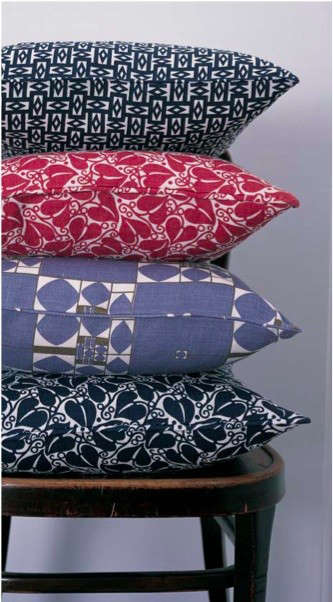
One of the most recognizable examples is the Wiener Werkstätte Beehive Pillow, based on Josef Hoffmann’s 1907 Beehive textile design. The pillow has been listed as a Neue Galerie exclusive, hand-tailored with a double-sided flange-edge pillowcase, a feather down insert, 100% linen fabric, and a 16-by-16-inch size. It is compact, graphic, and full of the tidy visual energy associated with Hoffmann’s geometric approach.
The Beehive pattern works because it balances order and charm. It has enough structure to suit a modern room, but enough personality to avoid looking sterile. Place it on a reading chair, and suddenly that chair seems to be reading Rilke between appointments.
Wiener Werkstätte Riva Pillow
The Riva Pillow is tied to another Josef Hoffmann textile design, dated around 1910 to 1913. It has been offered as a hand-tailored, double-sided flange-edge pillowcase with a feather down insert, made from 100% cotton in a 16-by-16-inch format. Compared with louder decorative pillows, Riva’s appeal comes from rhythm and refinement. It is the kind of pattern that rewards looking closely.
Riva-style pillows are ideal for people who want a museum-quality accent without making the room shout. They add visual texture to neutral upholstery, especially cream, gray, black, camel, or deep wood tones. In a minimalist apartment, one strong patterned pillow can do more than a whole parade of generic cushions marching across the sofa like they have nowhere else to be.
Heinz Weingarten Leaf Patterns
The Neue Galerie shop has also carried textiles based on Heinz Weingarten’s 1912 leaf designs, produced by Backhausen in 100% linen. Red Leaf Pattern and Blue Leaf Pattern items have been offered in formats such as napkins, placemats, pillow covers, tablecloths, and aprons. The pillow cover format, at 16 by 16 inches, gives the botanical design a crisp, useful scale.
These leaf-pattern pillows are excellent for people who want a softer organic motif without drifting into country-cottage territory. They have botanical warmth, but the layout remains disciplined. Think “Viennese garden party with good posture,” not “lost in a craft store.”
Dagobert Peche and the Viola Cushion
Dagobert Peche brought a more ornamental, playful spirit to Wiener Werkstätte design. A Viola Cushion based on a 1922 Peche textile design has been associated with vintage textile produced by Backhausen and hand-tailoring by Kathe Williams. Peche’s work often feels more lyrical than strict geometry, making it a good choice for interiors that need a touch of movement, floral energy, or decorative wit.
A Peche-inspired cushion can soften a room filled with hard lines. It pairs beautifully with dark wood, brass, velvet, or a simple linen sofa. The effect is elegant but not sleepy. It has enough personality to make a room feel curated rather than simply furnished.
Green Leaf and Berry Cushion
The Green Leaf and Berry Cushion, connected to a 1912 Heinz Weingarten textile design, represents another appealing bridge between historical pattern and contemporary interiors. With fabric produced by Backhausen and hand-tailoring by Kathe Williams, this cushion style reflects the shop’s emphasis on quality, craft, and design lineage.
Green tones are especially versatile in interiors because they connect naturally with plants, wood, books, ceramic lamps, and warm metals. A green leaf-and-berry pillow can make a room feel more layered without turning it into a jungle. Unless, of course, your houseplants are already staging a coup. In that case, the pillow will blend right in.
How to Style Neue Galerie Pillows at Home
Use One as the Hero Piece
The easiest way to style a museum shop pillow is to let it lead. Choose one patterned Neue Galerie pillow and place it against a plain sofa or armchair. This works especially well with neutral furniture in ivory, charcoal, taupe, chocolate, navy, or olive. The pillow becomes the visual anchor, much like a small painting in textile form.
A single statement pillow is also useful for smaller apartments. New York homes, in particular, do not always offer acres of decorating space. A pillow can add artful design without demanding a wall, a pedestal, or a security guard.
Pair Geometry With Texture
If your Neue Galerie pillow has a strong geometric pattern, pair it with softer textures. A linen throw, wool blanket, boucle chair, or velvet cushion can create balance. The goal is contrast: crisp pattern against tactile comfort. This keeps the room from feeling too rigid.
For example, a Hoffmann-inspired pillow on a nubby cream chair can look sharp but inviting. Add a small side table, a reading lamp, and one book you fully intend to read someday, and the corner is complete.
Mix Botanical Designs With Solids
Leaf-pattern pillows work beautifully with solid cushions in muted greens, rust, ivory, brown, or blue. Avoid pairing too many competing botanical prints unless you are intentionally creating a maximalist room. There is a fine line between “layered European interior” and “the sofa has become a salad.”
For a polished arrangement, use one patterned pillow, one solid pillow, and one textural throw. Keep the color palette tight. The pattern will feel curated rather than chaotic.
Think Beyond the Sofa
Museum shop pillows are not limited to sofas. Try one on a bedroom bench, an entry chair, a reading nook, or a window seat. A smaller 16-by-16-inch pillow is particularly flexible because it can fit where larger cushions look bulky. It can also refresh a room without requiring a full redesign.
In a bedroom, a Vienna 1900-inspired pillow can add sophistication at the front of standard bed pillows. In an office, it can make a desk chair look less like punishment and more like a deliberate design choice.
Why Museum Shop Pillows Make Meaningful Gifts
A pillow from the Neue Galerie Design Shop is a strong gift because it combines beauty, usefulness, and cultural story. It says more than “I panicked and bought a candle.” It suggests that the giver noticed the recipient’s taste, interests, and home. For design lovers, museum fans, architecture enthusiasts, or anyone who appreciates Gustav Klimt and Vienna 1900, these pillows can feel personal without being overly intimate.
They are also easier to use than many art gifts. A framed print requires wall space and commitment. A decorative object requires a shelf. A pillow simply needs a chair, bed, or sofa. It enters daily life gracefully. People may not always use a fancy serving bowl, but they will absolutely lean against a beautiful cushion while scrolling, reading, or pretending not to nap.
Buying Tips Before Choosing a Neue Galerie Pillow
Check the Current Online Shop
Because museum shop inventory changes, shoppers should check the Neue Galerie online shop for current availability, pricing, and product details. As of summer 2026, the museum building, galleries, shops, and Café Sabarsky are temporarily closed for a multi-phase construction project, with reopening planned for autumn 2026. The Book Store and Design Shop remain available online, which is convenient for anyone who wants design history delivered without wearing museum-appropriate shoes.
Look Closely at Fabric and Insert Details
Pay attention to whether a product is a pillow cover, a full pillow with insert, cotton, linen, vintage textile, or feather down. These details affect price, care, softness, and how the pillow will sit on furniture. A linen pillow may feel crisp and structured, while cotton may feel smoother. Feather down inserts usually create a fuller, more relaxed shape.
Measure Before You Buy
A 16-by-16-inch pillow is versatile, but scale still matters. On a large sectional, it may work best as part of a group. On a small lounge chair, it may be perfect on its own. Measure your furniture and imagine the pillow in place before ordering. This five-minute step can prevent the classic home decor tragedy known as “beautiful object, wrong size.”
Choose a Pattern That Matches Your Room’s Energy
Geometric patterns feel architectural and modern. Botanical patterns feel warmer and more organic. Ornamental designs can feel romantic, expressive, and artistic. None is better than the other; the right choice depends on the mood of your room. A spare black-and-white interior may love a Hoffmann-inspired geometric pillow. A library-like room with books, wood, and plants may welcome a Weingarten leaf design.
The Café Sabarsky Connection: Why Atmosphere Matters
No discussion of Neue Galerie style feels complete without mentioning Café Sabarsky. The museum’s famous Viennese café is inspired by the great cafés of early twentieth-century Austria and includes period details such as Josef Hoffmann lighting, Adolf Loos furniture, and banquettes upholstered with a 1912 Otto Wagner fabric. The café helps visitors understand that design at Neue Galerie is immersive. You do not simply look at art; you sit in an environment shaped by related design ideas.
That same feeling carries into the pillows. A museum shop textile becomes a small way to bring the atmosphere home. It is not the same as installing a Bösendorfer piano in your apartment, which your downstairs neighbor would probably discuss with the building board. But it does let you borrow a piece of the museum’s design mood: elegant, intelligent, and quietly theatrical.
Are Pillows at Neue Galarie Worth It?
For shoppers who only want the cheapest cushion available, probably not. There are plenty of inexpensive pillows that can do the basic job of existing on a couch. But for people who value design history, craftsmanship, museum-quality curation, and distinctive pattern, pillows at Neue Galarie are worth serious consideration.
The value is not only in the materials. It is in the connection to a larger design story. When you buy a pillow inspired by Josef Hoffmann or Heinz Weingarten, you are buying into a tradition that treated daily life as worthy of beauty. That idea still feels fresh. In a world filled with disposable decor, a historically rooted textile has the rare ability to feel both old and new.
Experience: Living With the Idea of Pillows at Neue Galarie
The experience of encountering pillows at Neue Galarie begins before the purchase. It starts with the museum itself: the mansion on Fifth Avenue, the quiet intensity of the galleries, the glow of Klimt, the angular intelligence of Hoffmann, the drama of Schiele, and the feeling that every object has been placed with purpose. By the time a visitor reaches the shop, a pillow no longer looks like a casual accessory. It looks like part of the same conversation.
Imagine stepping from the galleries into the Design Shop after seeing decorative arts from Vienna 1900. Your eye has already adjusted to pattern, proportion, ornament, and craft. Suddenly, a square pillow does not seem small. It seems concentrated. The Beehive design feels like architecture softened into fabric. A leaf pattern feels like nature disciplined by a designer who knew exactly when to stop. A Peche-inspired cushion feels like a wink from the decorative arts department: serious, but not humorless.
At home, the experience continues in quieter ways. A museum-inspired pillow can change how a room feels because it introduces intention. You may have the same sofa, the same coffee table, and the same stack of books that keeps pretending to be a “reading plan,” but the pillow adds focus. It gives the eye somewhere to land. It suggests that the room was assembled with care, not merely furnished because people need somewhere to sit while eating crackers.
There is also a memory effect. A pillow purchased from a museum shop often carries the day with it. It may remind you of a visit to the Neue Galerie, a walk along Museum Mile, a slice of Sachertorte at Café Sabarsky, or the first time you stood in front of a Klimt painting and understood why people use words like “luminous” even when they normally talk like regular humans. That emotional connection gives the object more staying power than a trend-driven purchase.
In practical terms, living with Neue Galerie-style pillows teaches restraint. Because the patterns are strong, you do not need many. One well-chosen cushion can do the work of three forgettable ones. It encourages better editing: fewer objects, better objects, more meaning. That is a helpful lesson for anyone decorating a home, especially a small apartment where every item has to earn its rent.
The best experience comes from using the pillow rather than treating it as a sacred artifact. Yes, it may be inspired by museum-worthy design, but it is still part of daily life. Let it sit on the reading chair. Let it support your back during a movie. Let guests admire it, ask about it, and maybe even lean on it. The spirit of the Wiener Werkstätte was not about locking beauty away. It was about bringing art into useful objects.
That is the lasting charm of pillows at Neue Galarie. They make the home feel more thoughtful without making it stiff. They offer comfort without surrendering style. They remind us that design history does not have to stay behind glass. Sometimes, it can sit on the sofa, looking elegant, slightly smug, and extremely comfortable.
Conclusion
Pillows at Neue Galarie are more than decorative accents. They are approachable pieces of design culture inspired by the world of Neue Galerie New York, Vienna 1900, Wiener Werkstätte craftsmanship, and modern decorative arts. Whether you are drawn to Josef Hoffmann’s geometric clarity, Heinz Weingarten’s botanical patterns, or Dagobert Peche’s ornamental imagination, these pillows offer a stylish way to bring museum-level design into everyday life.
For homeowners, renters, collectors, and gift buyers, the appeal is simple: a great pillow can transform a chair, sharpen a sofa, warm up a bedroom, and tell a story without making the room feel like a lecture hall. Choose the pattern carefully, respect the scale, pair it with calm textures, and let it do what good design always does best: make ordinary life feel a little more intentional, a little more beautiful, and just a bit more interesting.