Note: This article is written in original language and synthesized from U.S. workplace research, career guidance, labor data, mental health reporting, and public career discussions. No direct personal posts are copied.
When the Dream Job Finally Arrivesand Brings Its Own Villain Arc
Everyone has a dream job until the dream job sends a calendar invite titled “Mandatory Alignment Sync” at 7:30 a.m. The phrase sounds magical: a job that matches your passion, pays the bills, makes your parents proud, and maybe even lets you use a nice notebook without feeling ridiculous. But for many people, finally getting the role they once fantasized about becomes less like stepping into a movie montage and more like realizing the movie is three hours long and mostly paperwork.
The truth is not that dream jobs are fake. Some people truly do find meaningful, stable, satisfying work. The problem is that society sells the “dream job” as a finished destination instead of a complicated relationship. You do not simply arrive, hang your emotional luggage in a gold-plated cubicle, and live happily ever after. You still have managers, metrics, rude clients, low budgets, office politics, unpaid overtime, unpredictable schedules, and the occasional printer that behaves like it was raised by wolves.
Across industries, workers often describe the same rude awakening: the job they loved in theory became exhausting in practice. The glamorous role had invisible labor. The creative career came with demanding clients. The helping profession came with burnout. The prestigious title came with bureaucracy. The flexible freelance path came with seventeen tiny bosses and an inbox full of “quick tweaks.”
That gap between expectation and reality is what makes these dream job stories so relatable. They are not just funny complaints from people who got what they wanted and then changed their minds. They are small warning labels on the modern idea of career identity. Loving animals does not automatically mean loving veterinary medicine. Loving games does not automatically mean loving the game industry. Loving children does not automatically mean thriving in a classroom with 28 students, three fire drills, and a lesson plan that somehow needs to differentiate for every learning style known to humanity.
Why Dream Jobs Often Disappoint
A dream job usually starts as a clean image: a writer typing in a sunny café, a pilot soaring above clouds, a teacher changing lives, a doctor saving patients, a designer making beautiful things, a zookeeper cuddling adorable animals. Reality adds the missing details: deadlines, liability, debt, emotional strain, low entry-level pay, exhausting customers, repetitive tasks, and managers who think “passion” is a substitute for compensation.
One of the biggest traps is confusing the symbol of a job with the daily work of that job. A person may love books, but publishing can involve spreadsheet battles and marketing pressure. Someone may love travel, but working as a flight attendant can mean jet lag, difficult passengers, and waking up in hotel rooms that all look like beige copies of each other. A person may love science, but a lab career can involve grant anxiety, academic politics, and experiments that fail with the confidence of a toddler throwing pasta.
Another reason dream jobs can sour is that passion-heavy fields often attract people willing to accept less. Creative industries, nonprofit work, academia, entertainment, animal care, education, and healthcare are famous for drawing idealistic peopleand sometimes using that idealism as a discount code. “Do it for the mission” sounds noble until rent arrives with the emotional sensitivity of a parking ticket.
There is also the culture problem. A role can be perfect on paper and still feel awful if the workplace is cold, competitive, chaotic, or poorly managed. Employees rarely leave a job only because the job description disappointed them. They leave because the work environment drains them, the pay does not match the effort, the schedule eats their life, or they feel invisible.
30 Dream Job Stories That Turned Into Reality Checks
1. The veterinary worker who loved animals but hated the silence around trauma
They expected healing, wagging tails, and noble purpose. Instead, the job brought injury, grief, euthanasia, angry pet owners, and a workplace culture where everyone was expected to swallow the pain and keep moving.
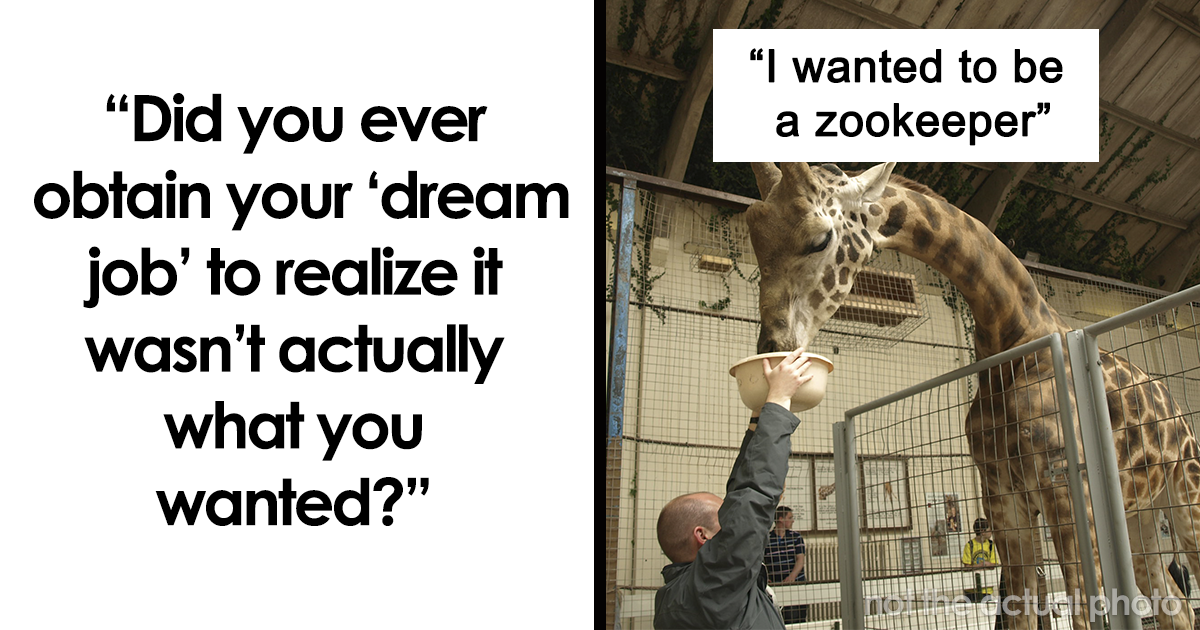
2. The zookeeper who discovered that cute animals make catastrophic messes
The dream was enrichment activities and bonding with wildlife. The reality was intense smells, heavy cleaning, physical exhaustion, and the realization that nature is beautiful but not especially interested in your laundry schedule.
3. The freelance designer who became “self-employed” with 18 bosses
Working for yourself sounded like freedom. Then every client had urgent feedback, conflicting taste, tiny budgets, and a strong belief that “make it pop” counted as useful creative direction.
4. The flight attendant who loved travel until travel became repetition
The job offered cities, hotels, and adventure. After years of irregular sleep, repetitive routes, difficult passengers, and living out of a suitcase, the glamour started wearing compression socks.
5. The aspiring pilot who learned flying could feel like driving in 3D
They imagined wonder. Training brought procedures, costs, checklists, weather limitations, and the strange realization that even a childhood fantasy can become routine once it turns professional.
6. The game artist who loved 3D models but not office culture
Working in games sounded creative and exciting. The actual job had low starter pay, long hours, corporate pressure, and the uncomfortable feeling of turning a favorite hobby into production labor.
7. The professor who found academia less wise and more political
The dream involved books, ideas, and meaningful research. The reality involved hierarchy, fragile egos, funding pressure, unpaid extra work, and senior colleagues guarding power like dragons with tenure.
8. The medical resident who wanted to help people but lost themselves
Medicine promised purpose. Residency delivered brutal hours, exhaustion, low hourly value after debt and time, and a system that often rewards sacrifice until sacrifice becomes the job description.
9. The forestry worker who learned camping is different after a 10-hour shift
Outdoor work sounded peaceful. Then came grime, isolation, no cell service, rough sleeping conditions, heavy gear, and the harsh discovery that “fresh air” does not automatically mean “healthy work-life balance.”
10. The celebrity stylist who found glamour deeply unglamorous
They wanted fashion, famous clients, and creative energy. Instead, the job involved pressure, ego management, impossible expectations, and the awkward truth that celebrity proximity does not pay in inner peace.
11. The pediatric healthcare worker who met the emotional edge of compassion
Helping children sounded meaningful. Seeing severe illness, family trauma, medical crises, and heartbreaking outcomes required a level of emotional stamina that no inspirational poster had mentioned.
12. The teacher who loved learning but struggled with classroom management
Teaching looked wholesome from the outside. Inside the classroom, lesson planning, behavior management, parent communication, testing pressure, and emotional labor turned passion into panic.
13. The retail worker who dreamed of sitting quietly but got boredom with fluorescent lighting
After physical jobs, a calm store position sounded perfect. Then the long empty hours, customer awkwardness, repetitive tasks, and low stimulation made the chair feel less like rest and more like a trap.
14. The academic chemist who loved science but not the funding scramble
Research promised discovery. The lab delivered politics, unstable funding, narrow specialization, pressure to publish, and the suspicion that some “breakthroughs” were mostly paperwork wearing a lab coat.
15. The college instructor who loved the subject but not administration
They could talk about the field for hours. Unfortunately, teaching also meant institutional rules, student complaints, department drama, low support, and administrative decisions that made chalkboards look emotionally advanced.
16. The forensics worker who found the darkness stayed longer than expected
The field sounded fascinating and important. But repeated exposure to grim cases, poor management, and emotional heaviness made the job feel less like a crime show and more like carrying a storm home.
17. The theme park employee who escaped the “magic”
Working at a beloved theme park sounded joyful. Low pay, demanding guests, strict rules, and the cost of staying near the job turned the fantasy into a mouse-shaped financial puzzle.
18. The nonprofit worker who discovered mission does not pay rent
They believed in the cause. The work mattered, but the pay was low, the emotions were high, and the organization sometimes confused “committed staff” with “people who can survive on applause.”
19. The actor who learned performance training can dismantle your confidence
Drama school looked like a gateway to art. It also meant constant critique, rejection, body awareness, voice correction, competition, and learning that talent is only one ingredient in a very unstable recipe.
20. The railway worker who loved trains but not permanent night shifts
The money and machinery looked appealing. The reality involved bad weather, weekends, nights, heavy equipment, safety pressure, and the realization that loving trains is easier from a platform.
21. The audio engineer who loved music but not the touring lifestyle
Concerts, gear, and backstage access sounded amazing. Long nights, travel fatigue, unstable routines, and the physical toll made the dream difficult to build a life around.
22. The magazine designer whose workload doubled but pay did not
The role combined design with a topic they loved. Then coworkers left, duties expanded, raises vanished, and the “dream job” became a discount buffet of responsibilities.
23. The animal rescue worker who saw more heartbreak than happy endings
The dream was helping damaged dogs recover and find homes. The reality included neglect cases, behavioral limits, difficult decisions, and the emotional cost of not being able to save every animal.
24. The software engineer who learned code is not always impact
They pursued tech for creativity and problem-solving. The job became tedious tickets, underappreciated teams, tiny product changes, and a creeping sense that life should involve more than debugging dropdown menus.
25. The paid writer who found that creative work still has bosses
Writing for a living sounded romantic. But unstable contracts, strange notes, edits from non-writers, tight deadlines, and lack of benefits made the keyboard feel less poetic.
26. The new manager who missed doing the actual work
Leadership looked like influence. The real job involved conflict mediation, scheduling, performance conversations, emotional support, and very little time for the hands-on work they once loved.
27. The fashion intern who met nepotism before lunch
Fashion seemed stylish and fast-paced. The internship brought unpaid labor, hierarchy, unrealistic standards, insider favoritism, and the uncomfortable sense that access mattered as much as skill.
28. The journalist who loved truth but not the shrinking newsroom
They wanted to investigate, inform, and write stories that mattered. Instead, speed, traffic goals, layoffs, angry readers, and low budgets made the mission feel permanently under construction.
29. The chef who loved cooking until dinner service became war
Cooking for people felt creative and joyful. Professional kitchens added heat, pressure, physical pain, late nights, thin margins, and customers who wanted fine dining with microwave patience.
30. The startup employee who believed in the mission until chaos became normal
The dream included innovation, ownership, and changing the world. Then priorities flipped weekly, leadership overpromised, job security vanished, and “fast-paced” turned out to mean “no one knows what is happening.”
The Pattern Behind the Pain: It Wasn’t Always the Job
What stands out in these dream job stories is that most people did not suddenly stop caring about their interests. The animal lover still loved animals. The teacher still valued education. The designer still cared about visual work. The doctor still wanted to help patients. The problem was the system around the passion.
That distinction matters. When a dream job disappoints, people often blame themselves first. They think, “Maybe I am lazy,” “Maybe I am ungrateful,” or “Maybe I was never meant for this.” Sometimes that is partly true: a person can misjudge their temperament, strengths, or lifestyle needs. But often, the job fails because the workplace asks for too much and gives back too little.
Burnout does not appear because someone lacks passion. Burnout often appears because passion is being mined without renewal. A person can deeply love their field and still need fair pay, manageable hours, respectful leadership, psychological safety, and a life outside work. “Dream job” should not mean “job allowed to eat you because you once wanted it badly.”
Another lesson is that status can be misleading. A job can impress strangers and disappoint the person doing it. Medicine, academia, entertainment, aviation, fashion, technology, and creative work all carry social shine. But status does not cancel fatigue. Prestige does not make a toxic boss less toxic. A fancy title does not tuck you into bed at night and whisper, “Your overtime was meaningful.”
What These Stories Teach Anyone Chasing a Dream Career
The answer is not to abandon ambition. The answer is to make ambition more specific. Instead of asking, “What is my dream job?” ask, “What daily tasks do I want to repeat for years?” A career is not built from the best 5% of the role. It is built from the ordinary 95%: emails, meetings, mistakes, deadlines, cleaning, documentation, commuting, customer service, and all the unglamorous work hiding behind the brochure photo.
Before chasing a dream career, talk to people who are five years into itnot just students, recruiters, influencers, or people standing next to a ring light. Ask what the job does to their body, schedule, relationships, finances, and mental health. Ask what new hires misunderstand. Ask what kind of person thrives there. Ask what makes people quit.
Also, separate the hobby from the industry. Loving video games is not the same as working in game production. Loving makeup is not the same as managing demanding clients. Loving food is not the same as surviving restaurant service. Loving travel is not the same as working while everyone else vacations. Sometimes the healthiest choice is to keep a passion as a passion, where it can remain fun and not start sending invoices.
Finally, remember that a dream job is allowed to change. The career you wanted at 19 may not fit the life you need at 35. That is not failure. That is updating the software. Humans are not required to honor every old dream like it came engraved on a stone tablet.
Extra Experiences: The Dream Job Hangover and How People Recover
The strangest part of landing a dream job and hating it is the guilt. People imagine they will feel lucky forever, so when disappointment shows up, they often keep quiet. They do not want to sound spoiled. They do not want friends to say, “But this is what you wanted.” They do not want family members to remind them how hard they worked to get there. So they stay, smile, and slowly become the human version of a phone battery stuck at 9%.
This is especially common in careers with a strong identity attached to them. When someone says, “I am a nurse,” “I am a teacher,” “I am a filmmaker,” or “I am a scientist,” the job becomes more than employment. It becomes a story about who they are. Leaving can feel like betraying the self they built. But changing direction does not erase the effort. It simply means the evidence changed.
Many people recover by identifying what part of the dream was real. A burned-out teacher may realize they still love education but prefer curriculum design, tutoring, instructional coaching, or educational technology. A tired chef may move into recipe development, food writing, private catering, or product testing. A game artist may leave the studio grind but keep making art independently. A healthcare worker may move into administration, training, research, telehealth, or a smaller practice setting with healthier boundaries.
Others recover by admitting that the dream was partly borrowed. Sometimes people chase careers because they look impressive, because adults praised them for a talent, or because the media made the job look like a personality upgrade. The fantasy was never about the work itself. It was about approval, freedom, creativity, stability, adventure, or belonging. Once people name the deeper need, they can pursue it in a better container.
For example, someone who wanted to be a journalist because they loved curiosity might find satisfaction in research, communications, documentary work, or policy analysis. Someone who wanted to be an actor because they loved expression might enjoy teaching, public speaking, content creation, or community theater without relying on auditions to pay for groceries. Someone who wanted to work with animals might volunteer at a rescue while earning a stable income elsewhere. This is not “settling.” It is designing a life with fewer dramatic plot holes.
The healthiest dream job stories usually end with a more mature definition of success. Instead of asking whether a job sounds exciting at parties, people start asking whether it supports their nervous system, pays fairly, leaves room for relationships, and lets them sleep without mentally answering emails at 2 a.m. They learn that meaningful work is wonderful, but meaning should not require misery as proof of loyalty.
So if you got your dream job and it actually sucked, you are not broken. You are informed. You tested a theory with real-world data. Maybe the role needs better boundaries. Maybe the company is the problem. Maybe the industry is not built for the life you want. Maybe your dream has evolved. Whatever the answer, the disappointment is not the end of the story. It may be the first honest chapter.
Conclusion
Dream jobs can be beautiful, meaningful, and worth pursuingbut they are still jobs. They come with systems, people, money, schedules, stress, and trade-offs. The fantasy usually focuses on the inspiring parts; the reality includes the maintenance work. The smartest career move is not to stop dreaming, but to dream with better questions.
Before chasing a role, look beyond the title. Study the daily routine. Learn the pay range. Ask about turnover. Notice the culture. Protect your hobbies. Keep your identity bigger than your occupation. A dream job should add depth to your life, not quietly repossess it.
And if your once-perfect career turned into a soul-sucking spreadsheet with a badge and benefits, take heart. Plenty of people have been there. Some left. Some adjusted. Some found a different version of the same passion. The dream was not uselessit showed you what mattered. Now you get to build something wiser.