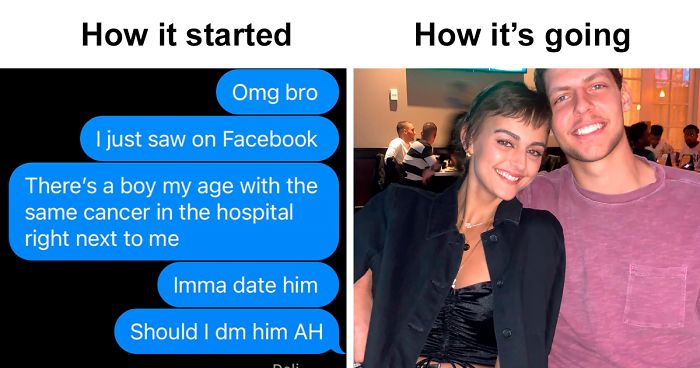
Some internet trends are built for jokes, some are built for memes, and some unexpectedly walk into the room holding tissues, a survivor’s bell, and a camera roll full of courage. The “How It Started vs. How It’s Going” challenge became popular because it is simple: show where a journey began and where it stands now. But when people began using the format to share their cancer stories, the trend transformed from a playful before-and-after meme into something far more meaningful.
Instead of comparing awkward first dates to wedding photos or messy startups to sleek office spaces, cancer survivors shared pictures from diagnosis day, hospital rooms, chemotherapy sessions, shaved heads, recovery milestones, remission celebrations, scars, family hugs, and ordinary days that suddenly looked extraordinary. The result was a powerful collection of cancer survivor stories that reminded the internet of something it occasionally forgets between dance challenges and comment-section chaos: people are astonishingly resilient.
This viral wave of “How It Started vs. How It’s Going” cancer stories is wholesome not because every story is easy or perfectly tied with a pink ribbon. It is wholesome because it is honest. It shows fear and fatigue, but also humor, stubborn hope, community, and the kind of joy that comes from making it to another birthday, another scan, another cup of coffee, another bad hair day worth complaining about.
Why This Cancer Story Challenge Hit So Hard
The phrase “How It Started vs. How It’s Going” works because it compresses an entire life chapter into two images. In cancer stories, that compression becomes emotionally intense. One photo may show a person sitting in an infusion chair, wrapped in a blanket, trying to smile through exhaustion. The next may show them hiking, holding a baby, ringing a bell, wearing a graduation cap, returning to work, or simply standing in the sun like they have defeated a dragon and still remembered to moisturize.
That contrast is why the challenge feels so powerful. Cancer often arrives like an unwanted plot twist written by the world’s rudest screenwriter. It interrupts jobs, school, parenting, relationships, finances, travel plans, and even someone’s sense of identity. A person who once worried about missing a deadline may suddenly be learning the language of biopsies, ports, staging, scans, side effects, and survivorship care plans.
But the “How It’s Going” half gives the story room to breathe. It says: the diagnosis was not the whole biography. Treatment was not the final paragraph. The hospital gown was not the person’s permanent outfit. The story continued.
The Real Meaning Behind the Before-and-After Photos
At first glance, these posts look like classic transformation content. But they are not the same as fitness glow-ups, home renovations, or “I fixed my bangs” updates. Cancer before-and-after photos are not about perfection. They are about survival, adaptation, and reclaiming the right to be seen.
For many people, the “started” photo represents shock. It may capture the first chemotherapy session, a surgery prep room, a shaved head, a treatment bracelet, or a quiet selfie taken on a day when life felt divided into “before cancer” and “after diagnosis.” These images can be raw, vulnerable, and deeply personal.
The “going” photo may show remission, ongoing treatment, a new body, a changed face, or a person still living with cancer but refusing to let the disease own every frame. That matters. Not every cancer story ends with the word “cured.” Some stories involve long-term treatment, recurrence, chronic side effects, or uncertainty. The most honest versions of this challenge leave space for all of that.
What These 30 Pics Usually Have in Common
Although every cancer journey is different, viral cancer survivor stories often share a few emotional threads. These themes are why so many viewers pause, read, share, and maybe pretend they are not crying into their snack bowl.
1. The Diagnosis Moment Changes Everything
Many stories begin with the moment a person heard the word “cancer.” That moment can feel unreal, as if someone switched the language of daily life without warning. Suddenly, appointments multiply. Loved ones ask what they can do. Search history becomes terrifyingly specific. Even ordinary objectsa hospital parking pass, a water bottle brought to chemo, a favorite hoodiecan become part of the story.
The photos from this stage are often not polished. They are not trying to be inspirational posters. That is exactly why they work. They show the beginning as it often is: confusing, frightening, and full of questions no one wanted to ask.
2. Treatment Becomes a Full-Time Job Nobody Applied For
Chemotherapy, radiation, surgery, immunotherapy, targeted therapy, hormone therapy, and follow-up appointments can reshape someone’s calendar and body. Survivors often describe treatment as exhausting not only physically but emotionally. There may be nausea, fatigue, pain, appetite changes, hair loss, sleep problems, brain fog, anxiety, and financial stress.
Yet the photos also reveal the small rituals that help people keep going: funny socks at infusion appointments, blankets from friends, playlists for treatment days, dark humor in group chats, and family members who learn exactly which snacks are acceptable and which ones have been officially banned by the stomach committee.
3. Hair Loss Becomes a Story of Identity
Some of the most emotional cancer challenge photos involve hair. A person may show long hair before treatment, a shaved head during chemotherapy, and regrowth months later. But the meaning goes far beyond appearance. Hair can represent control, privacy, femininity, masculinity, youth, personality, and normalcy.
Many survivors use humor to cope with this stage. Some name their wigs. Some embrace scarves, hats, or bald confidence. Some celebrate the first tiny fuzz of regrowth like it is a national holiday. And honestly, after cancer treatment, a few millimeters of hair deserves confetti.
4. Scars Become Proof, Not Flaws
Another powerful theme is the way survivors share surgical scars, ports, reconstruction journeys, ostomy bags, mobility aids, or changed bodies. These images can challenge the internet’s obsession with looking flawless. A scar is not a failed aesthetic. It is a receipt from a battle no one ordered.
When survivors post these images, they often help others feel less alone. Someone newly diagnosed may see a body that looks like theirs and think, “Maybe I can get through this too.” That moment of recognition is one of the quiet gifts of public storytelling.
Why Sharing Cancer Stories Online Can Help
Sharing a cancer story is a personal choice. Some people want privacy, and that deserves total respect. Others feel stronger when they talk about the experience openly. For them, social media can become a support network, a diary, a megaphone for awareness, or a place to transform fear into connection.
Cancer organizations often emphasize that emotional support is part of the survivorship journey. Follow-up care is not only about scans and lab results. It can also involve managing fear of recurrence, fatigue, relationship changes, body image concerns, work challenges, and the emotional whiplash of trying to return to “normal” when normal has packed a suitcase and moved to another zip code.
Online stories can help fill some of that emotional space. A post cannot replace medical care, therapy, support groups, or a trusted care team, but it can remind someone that other people understand the strange territory of survivorship. Sometimes, that is enough to make a hard day feel a little less lonely.
The Wholesome Side of Internet Community
The internet has a reputation for being loud, chaotic, and occasionally convinced that pineapple pizza is a matter of international law. But cancer story challenges reveal a softer side of digital life. Comment sections under these posts often fill with encouragement, congratulations, prayers, memories, and messages from people currently in treatment.
There is a special kind of kindness that appears when someone says, “I am starting chemo next week, and your post helped me.” There is also power in survivors responding, “You are not alone.” These exchanges may look small, but for someone facing a frightening diagnosis, a few words from a stranger who has been there can carry real comfort.
The best cancer stories online avoid turning survivors into superheroes who must always be brave. They let people be complicated. A survivor can be grateful and angry. Hopeful and exhausted. Funny and terrified. Proud and still grieving. That complexity makes the stories human instead of overly polished.
What We Can Learn From These Cancer Survivor Stories
These posts are not just emotional; they are educational in a very human way. They remind readers to pay attention to their bodies, keep recommended screenings, support friends through treatment, and avoid making assumptions about what illness looks like. A person can be smiling in a photo and still be dealing with pain, fear, or fatigue. A person can look “better” and still need support.
They also teach us to be careful with language. Not every survivor loves phrases like “battle,” “warrior,” or “fighter.” Some do. Others feel those words imply that people who do not survive somehow did not fight hard enough, which is unfair and untrue. The safest approach is to follow the person’s lead. If they call themselves a warrior, cheer them on. If they simply say, “I’m tired and doing my best,” believe them.
How to Support Someone Sharing Their Cancer Journey
If someone you know posts a cancer update, your response does not need to be poetic enough to win a greeting-card award. Simple, sincere support usually works best.
Helpful responses include: “I’m here for you,” “I’m so glad you shared this,” “You look strong, but I know this must be hard,” or “Can I bring dinner, drive you to an appointment, or help with errands?” Specific offers are often better than vague ones. “Let me know if you need anything” is kind, but “I can drop off groceries Thursday” is easier to accept.
Avoid minimizing the experience with comments like “Everything happens for a reason” or “At least you’re done now.” Even after treatment, many survivors face long-term effects, anxiety, and follow-up care. The end of treatment can be joyful, but it can also feel strangely scary because the daily structure of medical supervision changes.
Why the “How It’s Going” Photo Matters So Much
The second image in the challenge is not always a perfect happy ending. Sometimes it shows a person still in treatment. Sometimes it shows a survivor adjusting to a changed body. Sometimes it shows a family honoring someone who is no longer here. But it matters because it gives the person control over the frame.
Cancer can make people feel observed, tested, scanned, measured, and discussed. Posting a “How It’s Going” photo allows the storyteller to choose how they are seen. They can show joy, grief, humor, defiance, tenderness, or all of the above. They can say, “This happened to me, but I am still the narrator.”
The Bigger Picture: Survivorship Is Growing
In the United States, more people are living after a cancer diagnosis than ever before. Advances in screening, treatment, research, and supportive care have changed many outcomes. Still, survivorship is not a single finish line. It is an ongoing phase of life that may involve follow-up care, monitoring, late side effects, emotional recovery, lifestyle changes, financial concerns, and the work of rebuilding identity.
That is why stories like these matter. They put faces to statistics. Numbers can tell us survival is improving, but a photo of someone holding a “last chemo” sign while their family cheers tells us what that improvement feels like at kitchen-table level.
Experiences Related to the Topic: What These Stories Feel Like Up Close
One of the most moving parts of the “How It Started vs. How It’s Going” cancer trend is how ordinary the victorious moments often are. The internet loves dramatic transformations, but cancer survivorship frequently finds meaning in smaller scenes. A survivor may not post a red-carpet moment. They may post a picture from a grocery store, a child’s soccer game, a messy living room, or a quiet morning walk. After cancer, ordinary life can feel like a luxury suite.
Imagine the first photo: a person in a hospital chair, wearing a mask, holding a paper cup of water, trying to look calm because their family is scared enough already. Maybe they have just learned their treatment plan. Maybe they are joking with the nurse because humor is the only tool that does not require insurance approval. Their caption says, “How it started.” It is short, but behind it are sleepless nights, medical terms, phone calls, and a hundred brave decisions made before breakfast.
Then comes the second photo. “How it’s going.” They are at a birthday party, hair growing back in unpredictable directions, smiling with the slightly stunned expression of someone who has made it through weather that did not appear on any forecast. The cake may be crooked. The lighting may be terrible. Someone’s uncle may be doing something confusing in the background. But the photo is perfect because the person is there.
Another common experience in these stories is the unexpected role of caregivers. Behind many survivor photos is someone who drove to appointments, organized medications, washed blankets, answered texts, cooked food that may or may not have been eaten, and learned how to sit quietly when there were no magic words. Caregivers rarely get enough spotlight, but in cancer stories, they are often the emotional scaffolding holding up the house.
There is also the experience of changing relationships. Some friendships deepen. Others fade because not everyone knows how to handle illness. Survivors often discover who can show up when life gets uncomfortable. Sometimes support comes from surprising places: an old classmate, a neighbor, an online group, a nurse with perfect timing, or a stranger who leaves a comment saying, “I had the same diagnosis. I’m five years out.” That kind of message can feel like a flashlight in a tunnel.
Many survivors also talk about time differently after cancer. The future may feel both precious and uncertain. Plans become meaningful in a new way. A vacation, a graduation, a wedding, or even a regular Tuesday can feel like a milestone. The “How It’s Going” photo captures that shift. It says, “I know this moment looks simple, but I understand exactly how much it cost to get here.”
Of course, not every experience is neat or cheerful. Some people live with lasting side effects. Some face recurrence. Some grieve the body or life they had before diagnosis. Some feel pressure to be inspirational when they really want permission to be tired. That is why the most respectful reading of these posts is not “Look, everything is fine now.” It is “Look, this person is sharing a real chapter of a complicated life.”
The beauty of the challenge is that it lets people tell that chapter in their own way. A survivor can be funny, emotional, blunt, glamorous, messy, private, public, angry, grateful, or all of those things in the same afternoon. Cancer does not erase personality. If anything, many of these posts prove that personality survives treatment with its eyebrows singed and its sarcasm fully intact.
That is what makes these 30-picture-style collections so powerful. They are not just about illness. They are about people reclaiming their stories from a diagnosis that tried to become the headline. The real headline is not only “I had cancer.” It is “I am still here,” “I am still becoming,” “I am still loved,” and sometimes, beautifully, “I am still making jokes because apparently cancer underestimated my commitment to being ridiculous.”
Conclusion
The “How It Started vs. How It’s Going” cancer story challenge took a familiar internet format and turned it into a moving tribute to survival, honesty, and human connection. These stories matter because they show the full emotional range of cancer: fear, pain, humor, love, grief, recovery, uncertainty, and joy. They remind readers that survivorship is not just a medical status; it is a lived experience shaped by follow-up care, community, courage, and the everyday miracle of continuing.
Most of all, these posts prove that wholesome content does not have to be shallow. Sometimes it looks like a hospital selfie beside a beach photo. Sometimes it looks like a scar, a bell, a wig, a child’s hug, or a survivor smiling at a life they fought hard to keep. And sometimes, the most powerful thing a person can post is simply this: how it started, how it’s going, and how much more story there is left to tell.
Note: This article is intended for human-interest storytelling and general awareness. It is not medical advice. Anyone with questions about cancer symptoms, treatment, recovery, or survivorship care should speak with a qualified healthcare professional.