Note: SEO metadata is included in JSON format at the end of this body section.
Airplane etiquette used to be simple. You boarded, buckled up, silently judged the person who took both armrests, and hoped nobody reclined like they were auditioning for a mattress commercial. Now, thanks to assigned seating, upgrade fees, basic economy restrictions, and viral travel stories, one tiny request can turn Row 22 into a full-blown social laboratory.
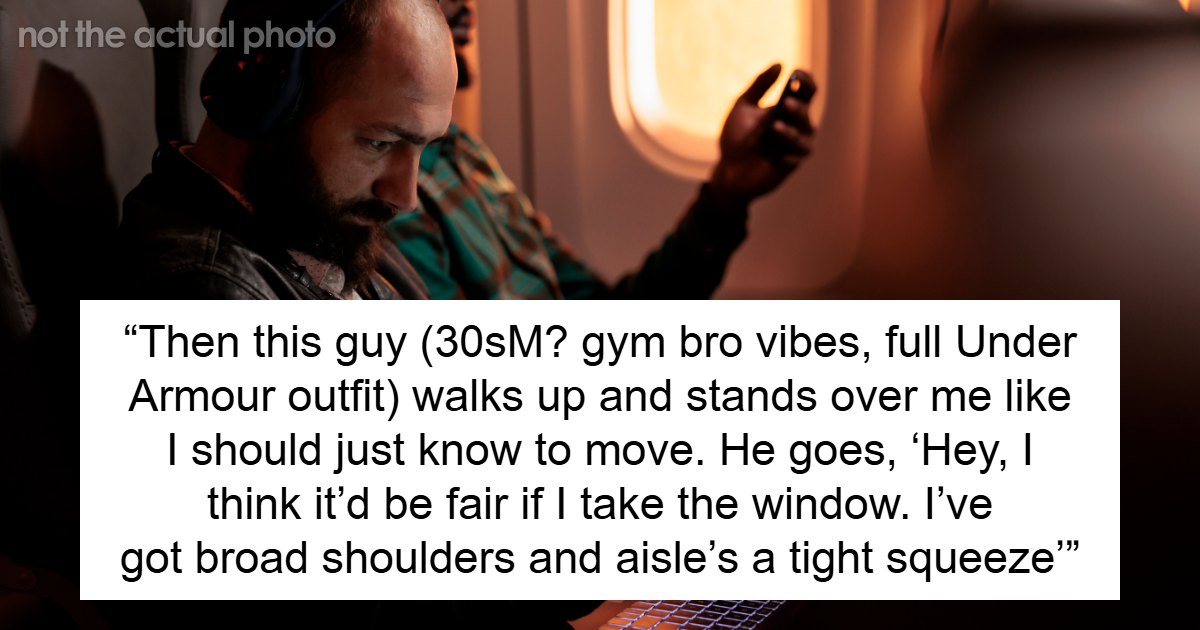
That is exactly why stories about passengers refusing seat swaps keep catching fire online. In this case, the headline-worthy drama starts with a woman declining a man’s request to take her seat. On the surface, it sounds petty. It is, after all, “just a seat,” right? But that phrase tends to fall apart the second someone wants your window seat, your aisle seat, or the spot you specifically chose because you planned ahead, paid extra, or simply wanted to survive the flight with your knees and sanity intact.
What raised eyebrows was not merely the request. It was the reasoning behind it, and the larger assumption floating behind so many in-flight seat disputes: that one passenger’s poor planning, strong preference, family logistics, or dramatic sighing should automatically become another passenger’s problem. Spoiler alert from the flying public: that logic is not getting upgraded.
Why This Kind of Airplane Story Blows Up So Fast
Seat-swap drama spreads because it taps into something familiar. Most travelers have either lived through a similar moment or imagined it with cinematic dread. You finally settle in, stow your bag like a champion, and then somebody appears with the expression of a person about to ask for a “small favor” that somehow costs you all your comfort.
And modern flying has changed the stakes. Seats are no longer random little rectangles assigned by fate and airport printers. They are products. Some airlines let passengers choose seats for free in standard fares, while others charge for preferred locations or assign seats later on cheaper fares. That means a window seat is not always a lucky accident. It may be something a passenger selected deliberately because they wanted to sleep against the wall, avoid being bumped by the cart, manage anxiety, sit near the front for a tight connection, or simply avoid the dreaded middle seat, also known as the world’s least popular sandwich filling.
So when a stranger asks to trade, the request often does not feel casual. It feels like a request to surrender something you planned, bought, or protected. That is why so many readers instantly side with the person who says no. The refusal is not usually about being cold-hearted. It is about boundaries, fairness, and the radical proposition that adults are allowed to keep the seat attached to their own boarding pass.
The Real Issue Was Not the Ask. It Was the Entitlement.
To be clear, asking is not automatically rude. Plenty of reasonable travelers ask to switch seats for understandable reasons. A parent may be trying to sit beside a child. A couple may have been separated after a rebooking. A passenger with mobility concerns may need an aisle. A traveler may be dealing with a broken screen, a faulty seat, or a rowmate who has turned personal space into a myth.
But there is a big difference between making a polite request and acting as though the answer must be yes. That is where these stories go sideways at 35,000 feet. The eyebrow-raising behavior is often not the question itself, but the performance that follows when the answer is no: the guilt trip, the muttering, the passive-aggressive commentary, the attempt to make a stranger look selfish for not volunteering to be less comfortable.
In other words, the problem is not, “Would you mind switching?” The problem is, “Would you mind switching, and if you decline, I will behave like you have personally canceled the concept of kindness?” That is when public sympathy tends to evaporate faster than airplane humidity.
Why “It’s Just a Seat” Is a Weak Argument
Whenever someone says, “It’s just a seat,” the obvious response is: if it is truly just a seat, why are they so desperate to take someone else’s? The phrase sounds noble for about three seconds, then collapses under its own logic. In reality, seats matter. People know they matter. Airlines know they matter. That is why seat maps exist, preferred sections exist, and seat selection fees exist.
Window seats help some travelers rest. Aisle seats help others stretch, manage pain, or make frequent bathroom trips without crawling over strangers like a guilty raccoon. Seats near the front can make short connections less stressful. Seats away from the lavatory can preserve whatever remains of human dignity during a long-haul flight. Pretending all seats are interchangeable is like claiming every hotel room is the same because technically they all contain walls.
What Travel Etiquette Actually Suggests
The unwritten rule repeated by travel experts is refreshingly sensible: if you are going to ask for a seat swap, offer something equal or better. Aisle for aisle? Reasonable. Window for window? Fair enough. Middle for aisle? That is not a swap. That is a hostage negotiation with carry-ons.
Etiquette experts have also made another point that keeps surfacing in reported travel disputes: asking for a seat change is a favor, not a demand. That means the person making the request has to be prepared for a refusal. No debate team rebuttal. No sighing loud enough for the next county to hear. No courtroom speech about how society has declined because a stranger declined to trade away comfort.
Experts also suggest that the cleanest refusal is calm, short, and boring. Not rude. Not dramatic. Just firm. Something like, “I’m sorry, but I’d prefer to keep my assigned seat.” It is polite, clear, and about as exciting as oatmeal, which is exactly the point. Calm language leaves less room for escalation and fewer opportunities for an entitled seat-seeker to audition for viral villain status.
When Flight Attendants Should Step In
Another useful reality check: passengers should not just move around the cabin like they are playing musical chairs with jet fuel. Open seats are not automatically up for grabs, and flight attendants may need passengers to remain in assigned seats during boarding or until the cabin is settled. On some flights, seat changes can involve safety or operational concerns. So if a switch is truly needed, crew members are the people who should help manage it.
That matters because some of the messiest stories involve passengers trying to freelance solutions. One person assumes an open seat is available. Another tries to orchestrate a complicated three-person trade. Someone else attempts a sneaky downgrade disguised as a “favor.” Suddenly half the row needs a whiteboard and a project manager. Crew intervention is often the fastest way to stop the nonsense and protect the passenger who is being pressured.
Why Family Seating Still Creates Tension
Here is where things get more complicated. Families do sometimes end up separated, and not every case is caused by laziness or stinginess. Rebookings happen. Aircraft swaps happen. Flights get changed. Children and parents should obviously not be scattered across the cabin like puzzle pieces from different boxes.
At the same time, family seating remains inconsistent enough across airlines and fare types that it still produces awkward on-board requests. That uncertainty helps explain why strangers keep getting pulled into last-minute seat negotiations. The average passenger did not create the airline seating system, but they are often asked to patch the holes in it with personal sacrifice and a brave smile.
Still, even when a request involves a family, etiquette does not magically disappear. Passengers are more likely to help when the request is respectful, the reason is genuine, and the alternative seat is comparable. They are far less likely to cooperate when the request comes wrapped in entitlement, manipulation, or a suspiciously worse seat. Nobody likes feeling tricked into charity.
The Broader Lesson: Boundaries Are Not Bad Manners
The viral appeal of stories like this one comes down to something bigger than legroom. People are exhausted by the idea that politeness means permanent surrender. Many travelers, especially solo travelers and people who avoid conflict, know the uncomfortable pressure of being expected to give in simply because they are easier to ask than the airline is to deal with.
That is why readers cheer when someone calmly says no. It is not because they hate kindness. It is because they recognize the difference between kindness freely offered and compliance socially extracted. A generous seat swap is lovely. A mandatory one is nonsense.
And let’s be honest: if you want a specific seat badly enough to argue over it in public, then you have unintentionally proven that it was not “just a seat” after all.
How To Handle a Seat Request Without Turning the Cabin Into Group Theater
If You’re the One Asking
Ask once. Ask politely. Accept the answer. Offer an equal or better seat whenever possible. If the other passenger says no, do not launch a campaign based on facial expressions, whispered complaints, or dramatic martyr energy. You asked for a favor. The answer may be no. Congratulations, you have experienced society.
If You’re the One Being Asked
You do not owe a long explanation. You also do not need to apologize for valuing the seat you selected. A simple, respectful refusal works. If the other passenger continues pushing, involve a flight attendant. Your job is to travel, not to moderate an airborne debate club.
If the Situation Is Legitimately Urgent
Medical needs, safety concerns, or a genuinely separated young child are different from simple preference. In those cases, the crew should be informed quickly so they can solve the issue properly. That solution may involve reseating, but it should come through the airline, not through social pressure aimed at the nearest traveler with a desirable window view.
More Real-World Experiences Related to Midair Seat Drama
What makes the headline so relatable is that it does not exist in isolation. Similar stories keep surfacing, and they all reveal the same uncomfortable truth: seat disputes are rarely about the seat alone. They are about expectations, fairness, and who gets pressured to bend first. In one widely discussed account, a traveler who had carefully booked an aisle seat was approached by a couple who wanted to sit together. When she asked whether the replacement seat was also an aisle, the answer was no; it was a middle seat. She declined, was met with visible outrage, and then had to endure the nearby theatrics of a fellow passenger who acted as though sitting one row apart from a spouse was a tragic separation worthy of cinema. The public reaction was swift and unsurprised: turning your poor planning into someone else’s middle seat is not romance, it is audacity.
In another reported story, a passenger who had reserved a window seat months in advance was asked by a mother to hand it over so her teenage son could enjoy the view. Again, the request might have sounded harmless at first, but the tone changed after the refusal. The passenger was told not to be difficult, even though the mother was the one asking a stranger to give up a carefully chosen seat on a five-hour flight. That detail resonated with readers because it captured a pattern travelers know too well: the person keeping their own seat gets labeled selfish, while the person demanding it gets to wear the halo of “just asking.” It is a neat trick, though not a particularly convincing one.
Then there are the sneakier stories. One passenger described what many readers called a seat-swap trap. She and her husband had upgraded, and he offered a courteous switch within their row so someone could improve their comfort. But the arrangement suddenly morphed into a far worse proposal that would have sent her out of the upgraded area entirely so another couple could sit together. She refused, because of course she did. The proposed “swap” was not equal, and the whole thing looked suspiciously like a plan to leverage politeness into a better seat. That example mattered because it showed how often these requests are not neutral. Some are strategic. Some are opportunistic. Some come with the energy of a person hoping nobody will notice the math is bad.
One of the most striking modern examples involved a woman whose refusal to surrender her seat to a child turned into a viral spectacle after another passenger filmed her without permission. The story snowballed far beyond the cabin itself, raising questions not just about seat etiquette, but about public shaming and the speed at which ordinary travel discomfort can become online theater. That case hit a nerve because many people realized the real punishment was no longer just a frosty seatmate or a rude comment. It could also be a camera, a social media pile-on, and strangers deciding your entire character based on a 20-second clip and a window seat.
Put all these experiences together, and a clear pattern emerges. People are often happy to help when the request is fair, the reason is sincere, and the exchange is respectful. What they reject is pressure disguised as politeness. They reject being downgraded in the name of someone else’s convenience. And they definitely reject the idea that refusing a bad deal makes them the villain. The truth is much simpler than the drama suggests: a passenger declining to give up a chosen seat is not causing the conflict. More often than not, they are just refusing to absorb it.
Final Thoughts
So, was the passenger wrong to decline the man’s request to take her seat? Not based on the standards most travelers, experts, and airline policies now reflect. A request can be reasonable. A refusal can also be reasonable. The line gets crossed when one passenger decides their preference matters more than another passenger’s preparation.
The next time an in-flight seat dispute goes viral, expect the same debate to roar back to life. Some people will say kindness should win every time. Others will say the boarding pass is the final word. In truth, both can coexist. You can be kind without being a pushover. You can be polite without giving up what you chose. And you can absolutely keep your seat without owing the cabin a guilt donation.
In the modern age of air travel, that may be the most useful upgrade of all.