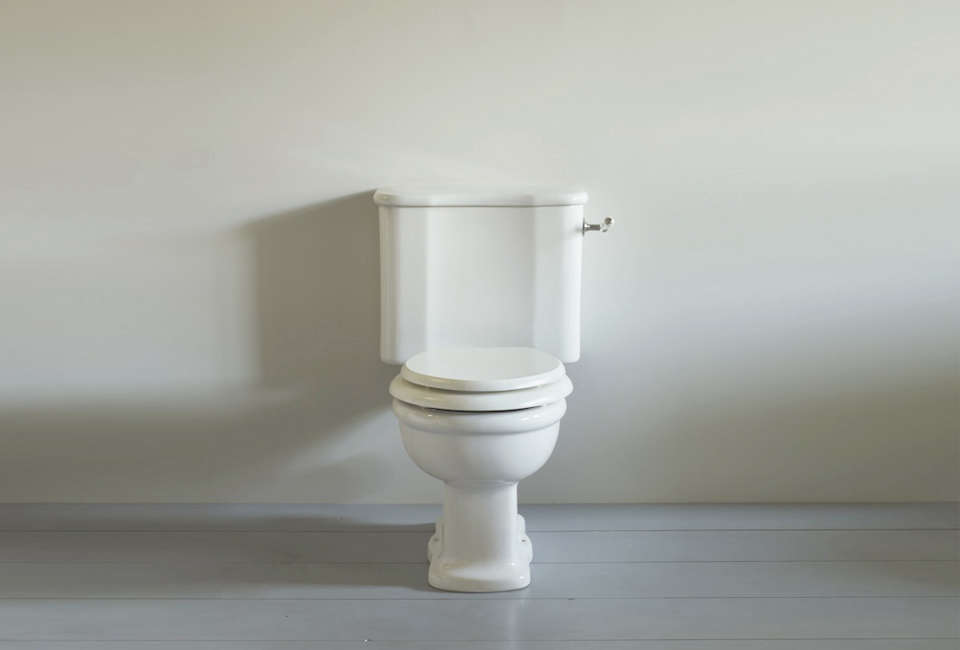
Some toilets are purely functional. Others quietly flex like a well-tailored blazer: classic lines, good posture, and the confidence to sit there looking expensive.
The Paris Lavatory Close Coupled Cistern falls into that second categorya traditional, French-inspired toilet suite where the cistern (tank) is
“close-coupled” to the pan (bowl) to create a compact, old-world silhouette that still plays nicely with modern plumbing expectations.
If the phrase “close coupled cistern” sounds like a Victorian romance novel, here’s the American translation: it’s a two-piece, tank-type toilet
where the tank bolts directly onto the bowl. Simple. Familiar. Easy to service. And, in the Paris style, unusually pretty for something that spends its life
being judged by bathroom guests.
What “Close Coupled Cistern” Means in Real Life
A close-coupled cistern is a toilet tank attached directly to the toilet bowl, forming one visually unified fixture. In most U.S. homes, this is the standard
“two-piece toilet” layout: the bowl anchors to the floor, the tank mounts to the bowl with a gasket and bolts, and the flush mechanism lives inside the tank.
That layout has three big advantages:
- Serviceability: Most repairs happen inside the tankfill valve, flapper, flush valvewithout opening walls.
- Space efficiency: It’s compact compared with high-level cisterns and less invasive than in-wall concealed tanks.
- Parts availability: Tank-type components are widely available and generally interchangeable with common standards.
What Makes the “Paris Lavatory” Version Different
“Lavatory” can be confusing in American English (we often use it to mean a sink). In this context, it refers to a traditional toilet “pan” designed to pair with
classic bathroom fixturesespecially French-style basinsso the whole room looks like it was curated, not cobbled together.
The Paris Lavatory Pan with Close Coupled Cistern is designed as a two-piece water closet with a right-hand flush lever and an elongated bowl.
The look leans vintagesofter detailing, traditional proportions, and a cistern that reads more “heritage suite” than “builder-grade special.”
The manufacturer also notes it can be used with other cistern setups (high level, low level, or concealed), which matters if you’re styling a period bath.
Quick spec-style snapshot (why designers like it)
- Configuration: Two-piece toilet with close-coupled cistern
- Style cues: Traditional, French-inspired detailing meant to pair with classic basins
- Ergonomics: Elongated bowl shape for comfort
- Hardware vibe: Flush lever/handle styling often selected to match vintage finishes
Outlet Choices: Floor vs. Rear (The S-Trap / P-Trap Conversation, Americanized)
Product listings sometimes mention S-trap or P-trap. In toilet speak, that’s essentially about where the waste outlet goes:
- Floor outlet (common in the U.S.): The toilet discharges down into the floor. Most American bathrooms are set up this way.
- Rear outlet (less common, but real): The toilet discharges through the back into the walloften used in certain commercial or remodel situations.
The practical takeaway: don’t fall in love with a toilet before you confirm your rough-in and outlet location.
A “gorgeous vintage toilet” becomes a “gorgeous vintage headache” if the outlet doesn’t match your plumbing layout.
Measuring for Fit: Rough-In, Projection, and the Sneaky Baseboard Problem
In U.S. remodeling, the single most important number is the rough-inthe distance from the finished wall behind the toilet to the center of the
floor bolts/drain. The most common rough-in is 12 inches, though 10-inch and 14-inch setups exist.
Two details matter more than people expect:
- Finished wall thickness: If you measure from unfinished studs or ignore tile thickness, you can end up off by enough to cause fit issues.
- Projection: How far the toilet sticks out into the room affects door swings, knee space, and whether your bathroom feels roomy or cramped.
Classic-profile toilets can also be less forgiving around baseboards. If the tank is designed to sit close to the wall, a chunky baseboard can push it forward,
which may affect how the bowl lands on the flange. It’s not dramatic… until you’re trying to tighten bolts and the toilet is doing a tiny, infuriating wobble.
Water Use and Flush Performance: Vintage Looks, Modern Expectations
Modern toilet performance is a balancing act: you want a confident flush, but you also want efficiency. In the U.S., the federal maximum for most tank-type toilets
is 1.6 gallons per flush (gpf). Many high-efficiency models use 1.28 gpf or less and may earn the WaterSense label.
Traditional-looking toilets can absolutely be efficientwhat matters is the internal engineering: the flush valve design, rim wash, trapway geometry,
and refill calibration. The Paris-style suite is typically positioned as a classic-design fixture that aims to land in the “period-correct look” lane without
forcing you to accept the water waste of truly antique plumbing.
Dual-flush vs. single-flush (and whether you’ll actually use it)
Dual-flush toilets let you choose a reduced flush for liquid waste and a full flush for solids. The best ones feel intuitive; the worst ones feel like a bathroom
escape-room puzzle. If you want the vintage lever aesthetic, many traditional suites stick with a lever-driven single flush, which can be a plus for simplicity.
Inside the Cistern: The Parts That Matter (and the Ones That Love Attention)
A close-coupled cistern is basically a small, hardworking aquarium of moving parts. Understanding the basics makes ownership much calmer.
Here’s what’s typically inside:
- Fill valve: Refills the tank after each flush and shuts off at a set water level.
- Flush valve + seal (often a flapper): Opens to release water into the bowl, then seals to stop water from leaking into the bowl.
- Overflow tube: Prevents overfilling by directing excess water safely into the bowl.
- Trip lever/handle mechanism: Connects your hand movement to the flush valve opening.
If you’ve ever heard a toilet “randomly refill” in the middle of the night, that’s often the flush seal slowly leaking,
lowering the tank level until the fill valve kicks on. Spooky? Yes. A haunting? Usually not.
Installation Reality Check (What’s Straightforward, What’s Worth a Pro)
Installing a close-coupled toilet suite is a common plumbing project, but “common” doesn’t mean “carefree.” The key is getting a stable, watertight seal at the floor
(wax ring or modern gasket) and a leak-free tank-to-bowl connection (gasket + evenly tightened bolts).
A sensible workflow looks like this:
- Shut off water, drain, remove the old toilet, and inspect the flange condition.
- Install new closet bolts and a new seal (wax or wax-free) sized appropriately for flange height.
- Set the bowl straight down and compress the seal evenly without excessive rocking.
- Mount the tank to the bowl with the correct gasket and tighten bolts evenly to prevent leaks or porcelain stress.
- Connect the supply line, fill, test multiple flushes, and check for seepage around the base and tank bolts.
If your flange is damaged, your floor is uneven, or you’re converting from rear outlet to floor outlet (or vice versa), that’s when calling a plumber becomes
less “giving up” and more “making a smart adult decision.”
Troubleshooting: The Three Most Common Cistern Complaints
1) The toilet runs (or “ghost flushes”)
Often caused by a leaking flapper or flush seal. Water sneaks into the bowl, tank level drops, fill valve refills, and your bathroom becomes an amateur sound
effects studio. Replacing the seal is typically the first fix.
2) Slow fill or weak refill
Mineral buildup or debris can affect the fill valve. Sometimes it needs cleaning; sometimes it’s simply time to replace the valve. Homes with hard water tend to
see this sooneryour toilet doesn’t care that you didn’t choose the hard-water lifestyle.
3) Leaks at the base or tank connection
Leaks at the base often point to a compromised floor seal or movement (a wobbly toilet can wreck a wax ring over time). Tank leaks can come from tank bolts,
washers, or a mis-seated gasket. The fix is usually straightforward, but ignoring it is a great way to turn “small drip” into “why does my floor feel squishy?”
Design Pairings: How to Make “Paris” Feel Intentional (Not Costume-y)
The Paris Lavatory look works best when the rest of the bathroom speaks the same language. You don’t have to go full French châteaubut a few cues help:
- Classic basin shapes: Rounded edges and softer profiles echo the toilet’s detailing.
- Warm metals: A traditional lever looks especially good when it matches faucets and lighting (brass, nickel, bronze).
- Period-friendly materials: Marble-look tile, checkerboard floors, beadboard, or plaster-like finishes keep the vibe cohesive.
- Keep modern tech discreet: If you add a bidet seat, choose a slim profile so it doesn’t visually fight the vintage silhouette.
The goal is “timeless bath,” not “theme park restroom.” If one element is vintage, let two or three supporting elements nod in the same direction.
Everything else can stay clean and simple.
Conclusion: Is the Paris Lavatory Close Coupled Cistern Worth It?
If you want a toilet that looks like it belongs in a thoughtfully designed, classic bathroomwithout committing to hidden-tank construction or hard-to-service
vintage plumbingthe Paris Lavatory Close Coupled Cistern concept makes a lot of sense. The close-coupled format is familiar in the U.S.,
repairs are approachable, and the aesthetic payoff is real: you get that traditional “furniture-like” presence instead of a generic porcelain afterthought.
The biggest success factor is planning: confirm your rough-in, outlet type (floor vs. rear), and bathroom clearances before purchase. Do that, and you can get the
best kind of luxury upgradeone that looks refined every day and doesn’t require a secret handshake to maintain.
Real-world experiences: what living with a Paris-style close-coupled cistern is actually like
People usually start with the looks. That’s the point, after all: a Paris-style close-coupled cistern doesn’t try to disappearit tries to belong. Homeowners who
swap from a standard builder-grade toilet to a traditional suite often describe the upgrade as “surprisingly noticeable,” not because anyone stares at the toilet
(well, hopefully), but because the whole bathroom suddenly feels finished. The tank shape, the lever, and the softer detailing read more like a curated fixture and
less like a default setting.
The second thing people notice is the sound and feel of the flush. Traditional-looking toilets are often expected to be “old-fashioned” in performance,
but modern internals can still deliver a firm, predictable flush. When the flush is well-calibrated, owners tend to describe it as confident and consistentespecially
compared to older high-volume toilets that were loud but not necessarily effective. On the flip side, when a classic suite isn’t set up quite righttank water level off,
chain too tight, flapper not sealing cleanlythe user experience can feel finicky. The good news is that finicky is usually fixable, and the fixes often involve small
adjustments rather than dramatic plumbing work.
Measurements are where real life loves to humble people. A common “wish I’d known” moment is discovering that baseboards and wall finishes matter.
Someone measures a perfect 12-inch rough-in, orders the toilet, and then realizes the tank wants to sit where the chunky baseboard already lives. The solution might be
as simple as a small trim adjustment, or it might mean selecting the correct configuration so the toilet sits properly without forcing the bowl forward. This is also where
experienced remodelers quietly win: they measure from the finished wall, they account for tile thickness, and they test clearances like they’re planning a moon landing.
(Because in a small bathroom, a half inch can feel like a mile.)
Maintenance experiences are surprisingly positive for most owners because the close-coupled layout is familiar. When a toilet runs, the instinct is often “oh no, it’s
complicated,” but then you lift the lid and it’s the same cast of characters: fill valve, flapper/seal, overflow tube. Many homeowners appreciate that the parts are
accessible and that common issues don’t require opening a wall. People who live in hard-water areas do report more frequent “tank housekeeping”a little mineral buildup,
occasional fill-valve fussiness, or the need to swap a seal sooner. But they also tend to say the routine feels manageable because everything is right there.
Comfort feedback often centers on bowl shape and sitting height. An elongated bowl is widely viewed as a meaningful upgrade, and users notice it immediatelyespecially
in a primary bath. Some owners also like the slightly more substantial “presence” of a traditional suite; it can feel sturdier and more grounded. That said, people
who prioritize accessibility sometimes compare chair-height models to traditional rim heights and decide based on comfort rather than looks. The best outcomes happen
when style and ergonomics both get a vote.
Finally, there’s the social experiencethe part nobody admits they care about until it happens. Guests notice. Not in a weird way, but in a “your bathroom is cute”
way. The toilet becomes part of the design story, especially when paired with a classic sink, a well-chosen mirror, and hardware that matches. Owners often say the
upgrade feels like it elevated the whole room more than they expected. And if you’re investing in tile, lighting, and finishes, it’s nice when the toilet doesn’t
show up wearing sweatpants to a formal event.