New Mexico School for the Arts, often called NMSA, is not the kind of high school where creativity is squeezed into the final forty-five minutes of the day after everyone has survived algebra. At this Santa Fe-based public arts high school, creativity is part of the architecture, the schedule, the culture, and the daily expectations. Students do not simply “take art.” They train, rehearse, revise, perform, critique, and grow as artists while completing a serious college-preparatory academic program.
For families searching for a school that blends rigorous academics with pre-professional arts training, New Mexico School for the Arts stands out because of its statewide mission. It serves young artists from communities across New Mexico, including students who might otherwise have limited access to intensive arts education. In plain English: it is a place where a dancer from a small town, a filmmaker with a camera full of big ideas, a writer with a notebook stuffed with half-finished worlds, or a musician who practices until the neighbors know the entire scale pattern can find a serious artistic home.
Located in the Santa Fe Railyard area, NMSA reflects the personality of New Mexico itself: artistic, layered, historic, practical, and just a little bit magical. Its campus, programs, and public-private structure make it one of the most distinctive high school options in the state.
What Is New Mexico School for the Arts?
New Mexico School for the Arts is a four-year public high school for students in grades 9 through 12. Its core purpose is to provide strong academic instruction alongside intensive training in the arts. The school is statewide, which means it is designed not only for students living in Santa Fe but also for talented young artists from across New Mexico.
The school’s model is built around a dual curriculum. Students complete academic coursework required for a New Mexico high school diploma while also spending substantial time in an arts department. This is not a casual enrichment program. The arts training is structured, demanding, and intended to help students develop discipline, technique, creative voice, and professional habits.
In many traditional schools, art is treated like the “dessert” of education: nice to have after the vegetables are finished. NMSA flips that thinking. Here, the arts are not extra. They are central to how students learn, communicate, collaborate, and understand the world.
A Public Arts High School With a Statewide Mission
One of the most important features of New Mexico School for the Arts is accessibility. The school is public and tuition-free, which matters deeply in a state where geography can make specialized education difficult to reach. New Mexico is wide, rural, culturally diverse, and full of communities where students may have enormous talent but limited local access to advanced instruction in dance, music, theatre, visual arts, creative writing, or film.
NMSA’s statewide mission helps address that gap. The school serves students from many communities and Pueblos across New Mexico, creating a student body that reflects a broad range of backgrounds and artistic influences. That diversity strengthens the learning environment. A poem, a dance piece, a film scene, or a theatre performance becomes richer when students bring different landscapes, languages, family histories, and community experiences into the room.
Arts Departments at New Mexico School for the Arts
NMSA currently offers six major arts departments. Each department gives students focused training while also encouraging collaboration across disciplines. That cross-pollination is important. After all, the real creative world rarely stays politely inside one box. Films need writers and actors. Theatre needs visual design and music. Dance needs rhythm, space, costume, story, and a brave relationship with gravity.
Creative Writing and Literature
The Creative Writing and Literature department is designed for students who think in sentences, scenes, metaphors, and dramatic pauses. Students study fiction, poetry, nonfiction, dramatic writing, editing, literary analysis, and public presentation. The program helps young writers move beyond “I like writing stories” into the deeper craft of revision, structure, voice, and audience.
For a student who carries a notebook everywhere, this kind of environment can be transformative. Writing becomes less lonely and more disciplined. Students learn that inspiration is wonderful, but deadlines are also very real. The muse may visit at midnight, but the workshop starts at 9:10.
Dance
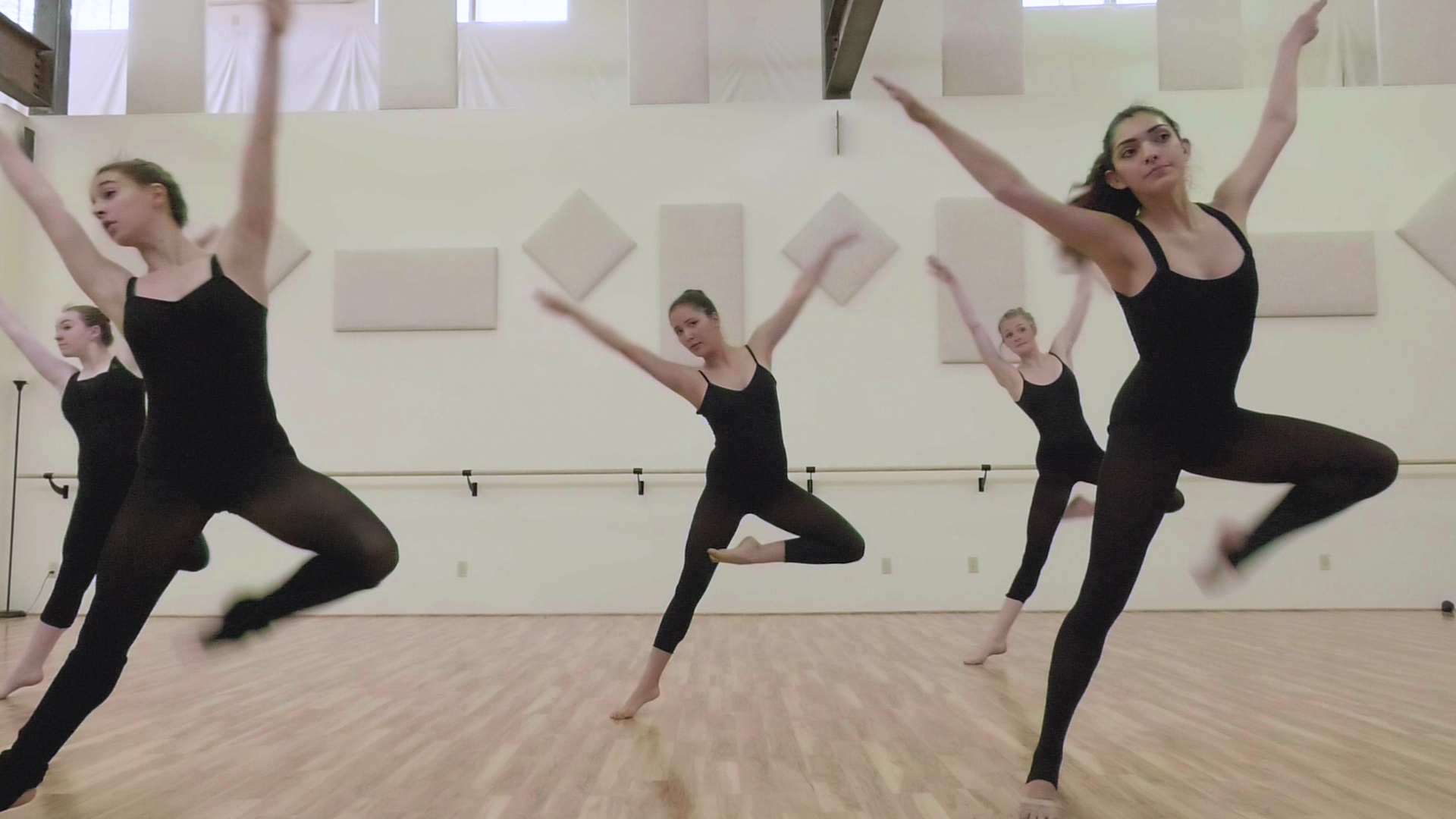
The Dance department supports students who communicate through movement. Training may include technique, choreography, performance preparation, body awareness, and artistic interpretation. A strong dance program teaches more than steps. It teaches stamina, musicality, presence, resilience, and the ability to accept correction without melting into a dramatic floor puddle.
Dance students at an arts high school often learn the value of repetition earlier than most people. They know that one clean turn, one controlled landing, or one expressive gesture may require dozens of attempts. That process builds both artistry and character.
Film and Cinematic Storytelling
Film and Cinematic Storytelling is one of the most exciting areas for students interested in modern media. This department connects visual imagination with narrative structure, technical skills, collaboration, and editing. Film students learn that a good story is not created only by pressing “record.” It involves planning, framing, sound, pacing, performance, and countless choices that viewers may never notice but will definitely feel.
In today’s digital world, cinematic storytelling is a powerful field. Students who learn film in high school can build foundations for careers in directing, screenwriting, editing, production, animation, media arts, and digital communication.
Music
The Music department serves students with serious interest in vocal, instrumental, jazz, and other musical training. Music education at this level requires daily practice, ensemble awareness, theory, listening skills, and performance discipline. It also requires humility, because nothing exposes overconfidence faster than a missed entrance in front of people holding sheet music.
Music students benefit from learning both individual mastery and group responsibility. A solo can show personality, but ensemble work teaches listening, timing, balance, and trust. Those skills are useful far beyond the stage.
Theatre
The Theatre department is a natural home for students drawn to acting, voice, movement, script analysis, stagecraft, and performance. Theatre training helps students understand character, conflict, storytelling, emotional truth, and collaboration. It also teaches the beautiful terror of live performance, where there is no “undo” button and everyone must keep going even if a prop, line, or shoe decides to betray the production.
Theatre students often develop confidence, empathy, and communication skills that help them in college, careers, interviews, public speaking, and everyday life. A student who can perform Shakespeare, devise an original scene, or handle opening night nerves is building more than artistic ability.
Visual Arts
The Visual Arts department supports students interested in drawing, painting, sculpture, design, mixed media, critique, and visual thinking. Students learn how to observe carefully, develop concepts, experiment with materials, and present finished work. Strong visual arts education teaches students that art is not only about “being talented.” It is about making choices, solving problems, and learning how to see.
Visual artists at NMSA also benefit from Santa Fe’s rich cultural environment. The city has long been known for galleries, museums, architecture, Native arts, contemporary art, and a deep relationship between place and creative practice.
Academics: More Than an Arts School Stereotype
One common misunderstanding about arts schools is that academics are somehow lighter because students spend so much time creating. New Mexico School for the Arts challenges that assumption. Its curriculum includes college-preparatory academic classes in English, mathematics, science, social studies, world language, wellness, and other required areas.
The daily structure typically includes academic classes followed by an arts block, giving students a full day that demands both intellectual focus and artistic energy. This schedule is not for students who want to coast gently through high school like a leaf in a decorative fountain. It is for students willing to work.
The school emphasizes a growth mindset, which fits naturally with arts education. Artists understand that improvement comes through practice, feedback, mistakes, and new strategies. A dancer does not master technique by reading one inspirational quote. A writer does not produce a polished essay by typing one heroic first draft. A musician does not develop tone by wishing very sincerely at the instrument. Growth takes repetition, reflection, and persistence.
The Santa Fe Campus and the Sanbusco Story
The New Mexico School for the Arts campus is located at 500 Montezuma Avenue in Santa Fe, near the city’s Railyard District. The campus has a distinctive history because it is connected to the former Sanbusco Market Center, a site with commercial and industrial roots. Rather than erase that history, the campus redevelopment adapted existing structures into creative learning spaces.
This matters because the physical environment of a school influences how students feel and work. NMSA’s campus combines old Santa Fe character with practical arts education needs. Renovated and repurposed spaces support academic classrooms, studios, rehearsal areas, administrative functions, and student gathering areas.
The result is not a generic school building that could be dropped anywhere in America. It feels connected to Santa Fe: textured, historic, urban, artistic, and walkable. For a school that teaches students to respect voice, place, and material, that architectural story fits beautifully.
Residential Program: Access for Students Across New Mexico
Because New Mexico School for the Arts serves students statewide, the residential program is a key part of its mission. Students who live too far from Santa Fe for a daily commute may apply for residential options after acceptance. The school’s on-site dormitory program helps make NMSA realistic for young artists from distant communities.
The residential program is more than a place to sleep. It helps students build independence, time management, social responsibility, and community. For teenagers, those are not small things. Anyone who has ever seen a high school student search for a missing sock five minutes before class knows that independence is a curriculum of its own.
By providing a residential pathway, NMSA expands opportunity. A student’s ZIP code should not determine whether they can access advanced arts training. The dorm program helps bring the statewide mission to life.
Admissions: Talent, Passion, and Readiness
Admission to New Mexico School for the Arts is connected to artistic interest, demonstrated ability, and readiness for the school’s demanding environment. Students apply through an arts-focused process and may select departments as part of that application. This approach makes sense because NMSA is not simply choosing students for empty seats; it is building cohorts of young artists prepared to participate seriously in arts training.
Prospective students should understand that passion matters, but preparation also matters. A strong application is not about pretending to be a finished professional at age fourteen. It is about showing curiosity, commitment, potential, and willingness to learn. In the arts, teachability is gold.
Why NMSA Matters in New Mexico Education
New Mexico has a complex educational landscape, with rural access challenges, cultural diversity, economic differences, and ongoing debates about how to improve student outcomes. In that context, New Mexico School for the Arts offers a powerful example of specialized public education. It shows that public schools can be both academically serious and artistically ambitious.
Arts education is sometimes treated as optional, especially when budgets tighten. But schools like NMSA show why the arts belong at the center of learning. Students who train in the arts practice analysis, discipline, collaboration, problem-solving, presentation, and resilience. These are not “soft” skills. They are human skills, and the world needs them badly.
NMSA also contributes to New Mexico’s cultural future. The state has long been a home for artists, storytellers, musicians, performers, filmmakers, and craftspeople. By educating young artists within New Mexico, the school helps keep that creative ecosystem alive and evolving.
Student Life: A Community of Young Artists
Student life at New Mexico School for the Arts is shaped by shared intensity. Students are surrounded by peers who understand what it means to rehearse, revise, audition, critique, practice, and perform. That creates a different kind of high school culture. Instead of hiding artistic ambition, students can bring it into the open.
Of course, an arts school is still a high school. There are assignments, friendships, deadlines, nerves, cafeteria conversations, and days when everyone looks like they could use one more hour of sleep. But the central difference is that students are united by creative purpose. That shared purpose can make school feel less like a waiting room for adulthood and more like a training ground for meaningful work.
Challenges Families Should Consider
No school is perfect, and families should approach New Mexico School for the Arts with clear expectations. The schedule can be demanding. Students must balance academic classes with intensive arts training, which requires maturity and stamina. The environment may be inspiring, but inspiration still has homework.
Families should also consider the social and emotional demands of a specialized arts school. Critique is part of the process. Performances, portfolios, deadlines, and auditions can create pressure. Students need support systems, healthy habits, and the ability to recover from setbacks.
For residential students, living away from home adds another layer. It can be exciting and empowering, but it also requires responsibility. Parents and guardians should talk openly with students about independence, communication, routines, and self-care.
Who Is a Good Fit for New Mexico School for the Arts?
NMSA may be a strong fit for students who are deeply interested in the arts and ready for a serious daily commitment. A good candidate does not need to have everything figured out. Most adults do not have everything figured out either; we just own better coffee machines. But students should be curious, hardworking, open to feedback, and excited by the idea of improving over time.
The school is especially appealing for students who want their artistic identity to be taken seriously. It can also be a meaningful choice for students seeking a smaller, focused community where peers share creative goals.
Experiences Related to New Mexico School for the Arts
To imagine the experience of New Mexico School for the Arts, picture a school day that begins with academic focus and gradually shifts into creative intensity. A student might start the morning analyzing a novel, solving equations, discussing history, or completing a science lab. By afternoon, that same student may be in a studio, rehearsal room, writing workshop, music space, or film discussion, using a different part of the brain but the same level of discipline.
For a creative student, that rhythm can feel energizing. Instead of waiting until after school to become “the artist,” the student spends the day moving between scholar and creator. That combination can change how young people see themselves. They are not choosing between academics and art. They are learning that both can strengthen each other.
A writer at NMSA might spend the afternoon workshopping a poem and learning that one vivid image can do more than a paragraph of explanation. A dancer might repeat a phrase until the movement looks effortless, which of course means it required an enormous amount of effort. A theatre student might learn that listening onstage is just as important as speaking. A visual artist might discover that a failed sketch is not a disaster but a map toward a better idea. A music student might realize that practice is not punishment; it is how sound becomes expression. A film student might learn that storytelling lives in tiny choices: the cut, the angle, the silence, the light.
The school experience is also shaped by Santa Fe. Students are learning in a city with a strong artistic identity, surrounded by museums, galleries, performance traditions, Indigenous and Hispanic cultural histories, contemporary art spaces, and a landscape that has inspired artists for generations. That setting gives students a living classroom. The city itself seems to say, “Yes, art belongs here. Now get back to rehearsal.”
Another important experience is community. Young artists often feel unusual in traditional school settings. They may be the student who sketches during lunch, writes dialogue in the margins of notes, practices choreography in the hallway, or hears rhythm in everything from footsteps to windshield wipers. At NMSA, those habits are not strange. They are part of the atmosphere. Being surrounded by other serious young artists can help students feel seen and challenged at the same time.
There is also the experience of learning how to accept critique. This may be one of the most valuable lessons at any arts school. Critique teaches students that feedback is not an attack on their identity. It is information. It can sting, yes, but it can also sharpen the work. Students who learn to separate ego from revision gain a skill that will help them in college, careers, relationships, and every group project life throws at them.
Residential students have another layer of experience. Living on or near campus with peers from across the state can create friendships and independence. Students learn routines, responsibility, and the small practical arts of daily life: managing time, keeping track of belongings, asking for help, and occasionally discovering that laundry does not do itself, despite years of wishful thinking.
The New Mexico School for the Arts experience is ultimately about becoming more intentional. Students learn to ask better questions: What am I trying to say? What does this piece need? How can I improve? What does my community teach me? What kind of artist, scholar, and citizen am I becoming? Those questions matter. They turn high school from a checklist into a journey of practice, identity, and purpose.
Conclusion
New Mexico School for the Arts is more than a specialized high school in Santa Fe. It is a statewide public arts education model built around access, discipline, creativity, and academic growth. With departments in Creative Writing and Literature, Dance, Film and Cinematic Storytelling, Music, Theatre, and Visual Arts, NMSA gives young artists the chance to train seriously while completing a full high school education.
Its location in the Santa Fe Railyard, its adaptive campus, its residential program, and its dual academic-arts curriculum make it a unique institution in New Mexico. For students with talent, passion, and the willingness to work, NMSA can be a place where artistic identity becomes stronger, academic skills deepen, and creative dreams receive structure.
In a world that often tells young people to be practical before they are imaginative, New Mexico School for the Arts offers a better message: be both. Learn the technique. Do the homework. Take the note. Revise the draft. Practice the measure. Rehearse the scene. Build the portfolio. Tell the story. And yes, bring a pencil. Probably three.