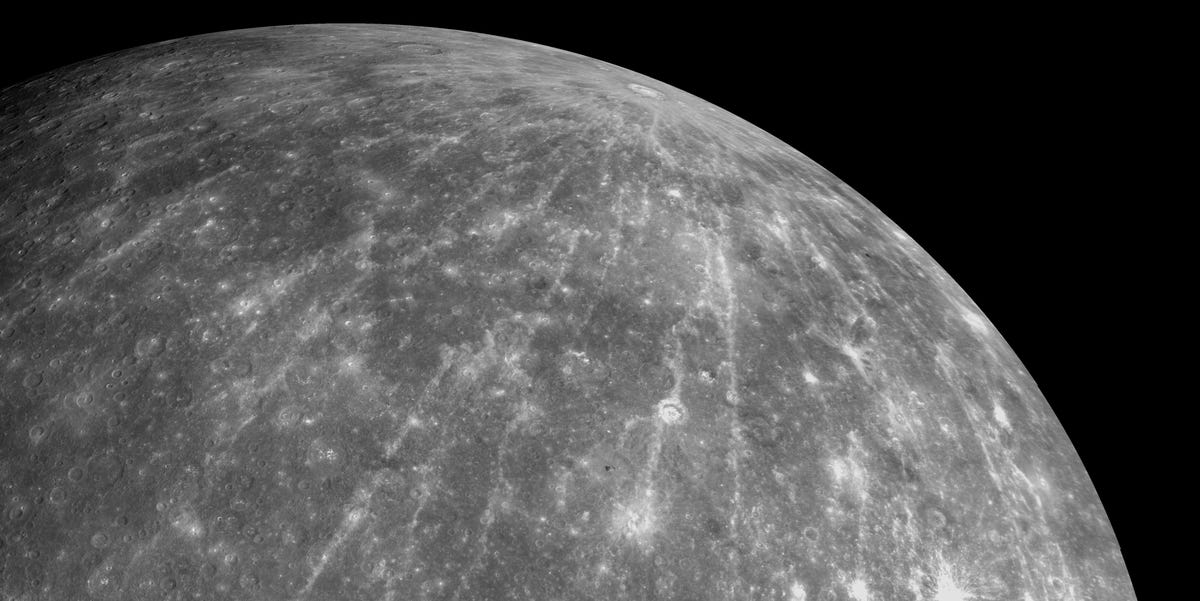
Mercury is the tiny speed demon of the solar system. It is the closest planet to the Sun, the smallest planet in our planetary neighborhood, and the kind of world that seems designed to make astronomers say, “Wait, how does that work?” On paper, Mercury sounds simple: a small rocky planet with no moons, no rings, and a gray cratered surface. In reality, it is a world of extremesboiling hot by day, freezing cold by night, surprisingly dense, magnetically active, geologically wrinkled, and still full of mysteries.
If Earth is the comfortable family minivan of planets, Mercury is the compact sports car with questionable air conditioning. It races around the Sun in only 88 Earth days, spins slowly, has almost no atmosphere, and carries an enormous iron core that makes it heavier than its size suggests. For readers searching for clear, useful, and fun Mercury planet facts, this guide covers the essential science without turning your brain into space dust.
What Is Mercury?
Mercury is one of the four terrestrial planets, meaning it is made mostly of rock and metal, like Venus, Earth, and Mars. It is the innermost planet in the solar system and orbits closer to the Sun than any other planet. Because of that, it is often difficult to observe from Earth. Mercury usually appears low near the horizon shortly before sunrise or shortly after sunset, hanging close to the Sun’s glare like a shy celebrity avoiding the paparazzi.
Mercury is named after the swift Roman messenger god, and the name fits perfectly. The planet moves faster around the Sun than any other planet, traveling at an average orbital speed of about 29 miles per second. That means one Mercury year lasts just 88 Earth days. If birthdays happened according to Mercury years, you would need a much bigger cake budget.
Mercury at a Glance: Quick Facts
- Planet type: Terrestrial, rocky planet
- Position from the Sun: First planet
- Diameter: About 3,032 miles, or 4,879 kilometers
- Average distance from the Sun: About 36 million miles, or 58 million kilometers
- Length of year: 88 Earth days
- Length of rotation: About 58.6 Earth days
- Length of solar day: About 176 Earth days
- Moons: None
- Rings: None
- Surface temperature: Roughly 800°F during the day and -290°F at night
- Known for: Extreme temperatures, fast orbit, huge iron core, cratered surface, and polar ice
How Big Is Mercury?
Mercury is the smallest planet in the solar system. It is only a little larger than Earth’s Moon, which makes it easy to underestimate. But small does not mean boring. Mercury’s diameter is about 38 percent of Earth’s, and its mass is only about 5.5 percent of Earth’s. Even so, it is denser than most planets, second only to Earth in overall density.
Two moons in the solar systemJupiter’s Ganymede and Saturn’s Titanare larger than Mercury. That fact feels unfair at first. Imagine being a full planet and still getting outsized by someone else’s moon. But Mercury earns its planetary status because it orbits the Sun directly and has enough gravity to form a rounded shape.
Why Mercury Is Not the Hottest Planet
Because Mercury is closest to the Sun, many people assume it must be the hottest planet. Surprisingly, that title belongs to Venus. The reason is atmosphere. Venus has a thick carbon dioxide atmosphere that traps heat with an intense greenhouse effect. Mercury, on the other hand, has only a very thin exosphere, which is not enough to hold heat.
During the day, Mercury’s surface can reach about 800°F, hot enough to make your frying pan feel underqualified. At night, temperatures can drop to around -290°F. This dramatic swing happens because Mercury has almost no insulating blanket of air. Heat escapes rapidly into space once the surface rotates away from sunlight.
Mercury’s Strange Day and Year
Mercury has one of the strangest calendars in the solar system. It orbits the Sun in only 88 Earth days, but it rotates slowly, taking about 58.6 Earth days to spin once. Because of the way Mercury’s rotation and orbit interact, one full solar dayfrom one sunrise to the nextlasts about 176 Earth days. In other words, a day on Mercury is twice as long as its year.
This unusual pattern is called a 3:2 spin-orbit resonance. Mercury rotates three times for every two trips it makes around the Sun. The result is a sky show that would be bizarre from the surface. In some locations, the Sun would appear to rise, pause, move backward briefly, and then continue across the sky. Mercury does not just break the rules; it edits the rulebook with a laser pen.
Mercury’s Orbit: Fast, Oval, and Dramatic
Mercury has the most eccentric orbit of all the major planets. That means its path around the Sun is more oval-shaped than circular. At its closest point, called perihelion, Mercury is about 29 million miles from the Sun. At its farthest point, called aphelion, it is about 43 million miles away.
This changing distance affects the intensity of sunlight on Mercury’s surface. From Mercury, the Sun would appear more than three times larger than it does from Earth, and sunlight could be several times brighter. Bring sunglasses? Sure. Also bring a spacecraft-grade heat shield, a physics degree, and a strong reason for being there.
What Is Mercury Made Of?
Mercury is a rocky planet with a crust, mantle, and core. What makes it especially unusual is the size of its metallic core. Scientists estimate that Mercury’s iron-rich core makes up a huge portion of the planet’s interior. Compared with Earth, Mercury has much more metal relative to rock.
Why is Mercury so metal-rich? Scientists are still studying that question. One idea is that Mercury may have formed from material already rich in metal. Another possibility is that early collisions stripped away some of its outer rocky layers. A third theory involves intense heat and solar effects near the young Sun. The answer may include more than one process, because planets rarely enjoy being simple.
Mercury’s Surface: Craters, Cliffs, and Cosmic Scars
At first glance, Mercury looks a lot like the Moon. Its surface is gray, dusty, rocky, and covered with impact craters. These craters formed when asteroids and comets slammed into the planet over billions of years. Without a thick atmosphere or active weather to erase the damage, Mercury keeps its scars like an ancient stone notebook.
The Caloris Basin
One of Mercury’s most famous features is the Caloris Basin, a massive impact basin more than 950 miles wide. It formed when a huge object crashed into Mercury early in the planet’s history. The impact was so powerful that it reshaped a large region of the planet. On the opposite side of Mercury, scientists have identified chaotic terrain that may have been disturbed by shock waves from the same impact.
Lobate Scarps: Evidence That Mercury Shrunk
Mercury has long cliffs called lobate scarps. These features likely formed as the planet’s interior cooled and contracted. As Mercury shrank, its crust wrinkled, cracked, and buckled. Think of it as a planetary raisin effect, except with more geology and fewer lunchbox snacks.
Evidence from spacecraft observations suggests Mercury has contracted significantly over time. This makes the planet an important place for studying how small rocky worlds cool and evolve. Unlike Earth, Mercury does not have active plate tectonics, so its surface preserves a different kind of geological story.
Does Mercury Have an Atmosphere?
Mercury does not have a true atmosphere like Earth. Instead, it has a thin exosphere made of atoms blasted from the surface by solar radiation, micrometeoroid impacts, and the solar wind. Elements detected around Mercury include oxygen, sodium, hydrogen, helium, and potassium.
This exosphere is extremely thin. If Earth’s atmosphere is a thick winter coat, Mercury’s exosphere is one loose thread from a sweater. It cannot support weather, clouds, breathing, or comfortable vacation packages. It also cannot protect the surface from space rocks, which is why Mercury is so heavily cratered.
Does Mercury Have Water Ice?
Yes, Mercury has water ice, and that is one of its most surprising facts. Even though the planet is extremely close to the Sun, some craters near its poles contain permanently shadowed regions. Sunlight never reaches the floors of these deep polar craters, so temperatures there stay cold enough for ice to survive.
NASA’s MESSENGER mission helped confirm evidence for water ice and other frozen materials near Mercury’s poles. This discovery changed how scientists think about volatile materials in the inner solar system. It also proves that location is everything. On Mercury, you can have blazing sunlight and deep-freeze ice on the same planet.
Mercury’s Magnetic Field
Mercury has a global magnetic field, which is unusual for a planet so small. Earth has a strong magnetic field generated by motion in its liquid outer core. Mercury’s magnetic field is much weaker than Earth’s, but its existence suggests that part of Mercury’s core may still be molten and active.
This magnetic field interacts with the solar wind, creating a small magnetosphere. Because Mercury is so close to the Sun, it faces intense solar particles and radiation. Studying this interaction helps scientists understand how planets behave in harsh space environments, especially rocky worlds close to their stars.
Can Humans Live on Mercury?
Mercury is not a friendly place for human life. It has no breathable atmosphere, no liquid water on the surface, extreme temperature swings, intense solar radiation, and long days that would make scheduling lunch very confusing. A person standing unprotected on Mercury would not have time to admire the view.
However, Mercury remains scientifically valuable. Learning about Mercury helps researchers understand how rocky planets form, how planetary interiors cool, how magnetic fields survive, and how water ice can exist in unexpected places. Mercury may not be livable, but it is a brilliant natural laboratory.
Space Missions to Mercury
Mariner 10
NASA’s Mariner 10 was the first spacecraft to visit Mercury. It flew past the planet three times in 1974 and 1975, mapping part of the surface and revealing Mercury’s magnetic field. Before Mariner 10, much of Mercury was a mystery because Earth-based observations were limited by the planet’s closeness to the Sun.
MESSENGER
NASA’s MESSENGER spacecraft transformed our understanding of Mercury. Launched in 2004, it used multiple planetary flybys before entering Mercury orbit in 2011. It became the first spacecraft ever to orbit the planet and collected data until 2015, when it intentionally crashed into Mercury’s surface after running out of fuel.
MESSENGER mapped the entire planet, studied Mercury’s chemistry, measured its magnetic field, examined its exosphere, and confirmed polar ice deposits. It showed that Mercury is not just a dull, burned rock but a complex world with a dynamic history.
BepiColombo
BepiColombo is a joint European-Japanese mission designed to study Mercury in even greater detail. Launched in 2018, it is scheduled to enter Mercury orbit in November 2026. The mission includes two science orbiters that will investigate Mercury’s surface, interior, magnetic field, exosphere, and interaction with the solar wind.
BepiColombo is expected to answer questions left open by MESSENGER, including how Mercury formed, why its core is so large, how its magnetic field works, and how volatile materials survive on such a Sun-blasted planet.
Why Mercury Is Hard to Explore
Mercury may be close to Earth compared with many outer planets, but reaching it is surprisingly difficult. A spacecraft traveling inward toward the Sun gains speed as solar gravity pulls it forward. To enter orbit around Mercury, the spacecraft must slow down dramatically. That requires careful planning, fuel-efficient routes, and multiple gravity assists from planets.
There is also the heat problem. Spacecraft near Mercury must survive intense sunlight and high radiation. Engineers need special shielding, thermal control systems, and clever mission designs. Visiting Mercury is not like driving to the nearest cosmic convenience store. It is more like trying to park a spacecraft beside a giant nuclear furnace while doing orbital math in a wind tunnel.
Best Mercury Planet Facts for Students and Space Fans
- Mercury is the closest planet to the Sun.
- Mercury is the smallest planet in the solar system.
- Mercury has no moons and no rings.
- A year on Mercury lasts only 88 Earth days.
- A solar day on Mercury lasts about 176 Earth days.
- Mercury is not the hottest planet; Venus is hotter.
- Mercury has water ice in shadowed polar craters.
- Mercury has a huge iron-rich core.
- Mercury has a weak but real magnetic field.
- Mercury’s surface has craters, volcanic plains, cliffs, and strange shallow depressions called hollows.
Common Myths About Mercury
Myth 1: Mercury Is Always Burning Hot
Mercury gets extremely hot during the day, but its nights are brutally cold. The planet’s lack of a thick atmosphere means heat is not trapped or spread evenly.
Myth 2: Mercury Has No Ice Because It Is Near the Sun
Mercury does have ice in permanently shadowed polar craters. These areas never receive direct sunlight, allowing frozen water to remain stable for long periods.
Myth 3: Mercury Is Just Like the Moon
Mercury may look Moon-like, but it is very different inside. It has a huge metallic core, a magnetic field, a unique orbit, and a more complicated geological history than its plain gray appearance suggests.
Experiences Related to Mercury Planet Facts
Learning Mercury planet facts becomes much more interesting when you connect them to real experiences, especially skywatching. Mercury is one of the five classical planets visible to the naked eye, but it is also one of the trickiest to spot. Unlike Jupiter or Venus, which can shine boldly in the night sky, Mercury usually stays close to sunrise or sunset. That means the best experience of seeing Mercury often starts with timing, patience, and a clear horizon.
Imagine standing outside just after sunset with a skywatching app open, looking toward the western horizon. The sky is still glowing orange and blue, birds are arguing about bedtime, and you are scanning for one small point of light. When Mercury appears, it may not look dramatic at first. It does not show rings like Saturn or bright cloud bands like Jupiter. But the excitement comes from knowing what you are seeing: a rocky world racing around the Sun, where one day lasts longer than a year and ice hides in craters on a planet hot enough to melt lead in daylight.
For students, Mercury is a fantastic planet for classroom demonstrations. One simple activity is to compare the lengths of a Mercury year and a Mercury day. A teacher can place a lamp in the center of a room as the Sun, then have a student slowly rotate while walking around it. This makes the strange relationship between Mercury’s spin and orbit easier to understand. Suddenly, the phrase “3:2 spin-orbit resonance” stops sounding like a password for a secret robot club and starts making sense.
Another memorable experience is comparing Mercury with Earth’s Moon through images. At first, both look cratered and gray. But when learners start identifying Mercury’s giant cliffs, volcanic plains, and Caloris Basin, they begin to notice that Mercury has its own personality. It is not a copy of the Moon. It is a world shaped by impacts, cooling, shrinking, solar radiation, and internal metal-rich structure.
Amateur astronomers often describe Mercury as a rewarding challenge. Because it appears near the Sun, safe viewing is essential. Never point binoculars or a telescope near the Sun unless you are using proper solar equipment and know exactly what you are doing. The safest naked-eye opportunities usually occur during Mercury’s greatest elongation, when it appears farthest from the Sun in the sky. Even then, trees, buildings, haze, and hills can block the view.
The experience of studying Mercury also changes how people think about the solar system. It reminds us that small worlds can have big stories. Mercury has no clouds, no oceans, no moons, and no dramatic color palette, yet it raises huge questions about planetary formation, magnetic fields, solar wind, and the survival of water ice. The more you learn about Mercury, the more it feels like the solar system’s quiet genius: small, fast, intense, and full of surprises.
Conclusion: Why Mercury Matters
Mercury may be small, but it is one of the most fascinating planets in the solar system. It is the closest planet to the Sun, the fastest planet in orbit, and the smallest official planet. It has a surface covered with craters, cliffs, volcanic plains, and polar ice. It has an enormous iron core, a thin exosphere, and a magnetic field that should make anyone curious about planetary science lean forward in their chair.
The best Mercury planet facts show us that worlds do not need oceans, clouds, or giant storms to be exciting. Mercury is a planet of extremes and contradictions: hot yet icy, small yet dense, ancient yet scientifically fresh. As missions like BepiColombo continue exploring it, Mercury will keep revealing clues about the early solar system and the formation of rocky planets, including our own Earth.