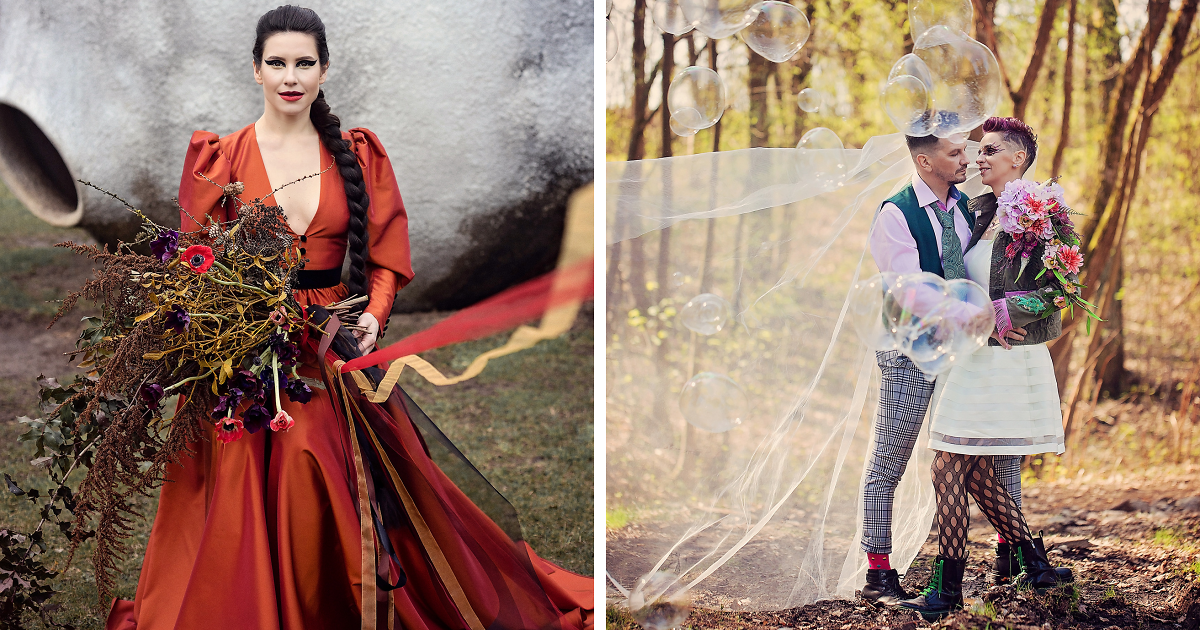
Love has a funny habit of refusing to stay in one tidy emotional drawer. It blooms, sulks, forgives, overthinks, dances in the kitchen, and occasionally stares dramatically out a window like it has just been cast in an indie film. That is exactly why “Love Speaks: The Cycle Of 12 Works” feels so compelling: it treats love not as one glittery postcard moment, but as a full calendar of change.
The project centers on a cycle of twelve photo canvases inspired by the seasons, wedding floristry, photography, dried plants, 3D botanical details, and expressive graphic elements. At first glance, it may sound like a romantic art collection built for soft lighting and polite gallery whispers. Look closer, though, and the work becomes more layered. Each piece suggests that love is not always pink roses and perfect vows. Sometimes it is roots. Sometimes it is snow. Sometimes it is Narcissus staring too long into the mirror and needing someone to say, gently, “Friend, maybe blink.”
This article explores the meaning, mood, and creative power of Love Speaks: The Cycle Of 12 Works, examining how the cycle uses the twelve months as emotional chapters. It also looks at why seasonal art, flowers, wedding symbolism, and mixed-media photography can make love feel more honest, physical, and human.
What Is “Love Speaks: The Cycle Of 12 Works”?
“Love Speaks” is a visual cycle built around twelve works, each connected to a month of the year. The collection combines photography with floral decoration, dried plants, graphic marks, and three-dimensional elements. Rather than presenting love as a single clean idea, the cycle turns it into an unfolding story. Each month becomes a stage, a mood, and a mirror.
The project is especially interesting because it places wedding-related emotion inside the larger rhythm of nature. Weddings are often marketed as polished perfection: white dresses, glowing skin, tablescapes that cost more than a used car, and flowers that somehow look relaxed while being aggressively arranged. But real love is rarely that airbrushed. It has weather. It has roots. It changes color. It grows wild in places nobody planned.
By using seasonal imagery, Love Speaks invites viewers to think about love as something alive. January love may feel quiet and protected. April love may be dangerous if it becomes too self-absorbed. June love may reach back toward myth and ancestral belief. September love may carry maturity, while December love may ask what remains when the year has nearly closed its book.
Why a Cycle of 12 Works Matters
The number twelve immediately suggests completion. Twelve months form a year. Twelve signs form a zodiac cycle. Twelve hours mark the face of a clock. In art and storytelling, a cycle of twelve can feel like a full journey from beginning to ending and then, because nature loves a sequel, back to beginning again.
That structure gives Love Speaks: The Cycle Of 12 Works a built-in emotional rhythm. The viewer is not simply looking at twelve separate images. The viewer is walking through a year of feeling. Love is allowed to be young, passionate, uncertain, rooted, blooming, fading, and reborn.
This is one reason the work feels richer than a standard romantic series. A single love image might capture a kiss, a bouquet, or a bride standing beautifully in expensive shoes she regrets by 8 p.m. A twelve-part cycle can do something deeper. It can show love as process. It can admit that devotion is not one grand statement but a repeating pattern of attention, patience, rupture, repair, and return.
Love, Seasons, and the Language of Nature
Seasonal imagery has long helped artists express human emotion. Spring often suggests renewal, desire, and beginnings. Summer can feel lush, confident, and overflowing. Autumn brings maturity, memory, and the first hint of letting go. Winter strips everything down to essentials. In Love Speaks, these seasonal associations become emotional tools.
Flowers and plants are especially powerful because they already carry symbolic weight. A rose may suggest romance or passion. Lilies are often connected with purity and ceremony. Carnations have appeared in art as symbols of love and marriage. Myrtle can suggest luck and affection in marriage. Dried flowers add another layer: they preserve beauty, but they also acknowledge time. They are not fresh blossoms pretending the clock does not exist. They are memory made visible.
That matters. A dried flower in a love artwork can say, “This was alive, and it still matters.” In relationships, that may be the most honest sentence in the room.
The Wedding Theme: Beauty With a Pulse
Weddings are full of symbols: rings, flowers, veils, vows, candles, family rituals, and awkward speeches from uncles who should have been given a strict two-minute limit. Yet weddings are not only decorative events. They are emotional thresholds. They bring joy, but also pressure. They celebrate union, but also reveal expectations, family histories, cultural traditions, and personal fears.
Love Speaks: The Cycle Of 12 Works appears to understand that tension. It does not treat wedding floristry as mere ornament. Instead, flowers become emotional actors. They frame the human figure, interrupt the surface, and transform the canvas into something between portrait, botanical study, memory object, and private confession.
This approach makes the cycle feel more sincere. Real weddings are not simply about matching napkins to dahlias. They are about two people stepping into a future where love must become practical. Someone has to remember the dentist appointment. Someone has to apologize first. Someone has to learn that “I’m fine” sometimes means “Please ask again, but bring snacks.”
Mixed Media: When Photography Refuses to Stay Flat
One of the strongest creative choices in the project is its use of mixed media. Photography gives the works a sense of presence and realism. Graphic elements add interpretation, mood, and symbolic emphasis. Dried plants and 3D floral details bring texture into the experience, making the image feel less like a window and more like an object.
This matters because love itself is not flat. It is physical and symbolic at the same time. A hand on a shoulder may mean comfort. A bouquet may mean celebration. A root may mean growth, but also entanglement. A shadow may mean mystery, fear, or the part of ourselves we bring into relationships without reading the instruction manual first.
By combining photographic realism with tactile floral materials, the cycle suggests that love exists between the seen and the felt. It is both image and evidence. It is both story and residue.
The Emotional Calendar of Love
January: Quiet Beginnings
January often feels like a blank page, though usually one written on while wearing thick socks. In a love cycle, January may represent beginnings, vows, private hope, and the courage to start again. The use of plants in winter imagery can suggest hidden life beneath the surface. Love may look still, but roots are working quietly.
February: Romance and Tender Illusion
February naturally invites thoughts of romance, Valentine symbols, and the language of flowers. But the most interesting love is not the greeting-card version. February in this cycle can be read as tenderness mixed with expectation. It asks whether romance is only performance or whether it can become a daily practice of seeing another person clearly.
March: Roots and Transformation
March is a turning point. The season begins to shift, and the earth prepares to show what has been hidden. If roots represent personal growth and transformation, March becomes one of the most psychologically rich chapters. Love is not only about choosing another person. It is also about becoming someone capable of loving well.
April: Narcissus and the Mirror of Desire
April, connected with the myth of Narcissus, introduces a sharp and necessary question: when does love become self-obsession? The Narcissus theme gives the cycle complexity. It reminds viewers that attraction can be beautiful, but it can also trap us inside our own reflection. Healthy love requires admiration, but it also requires looking outward.
May: Bloom and Sensual Energy
May feels lush, fragrant, and full of promise. In the emotional calendar, it suggests the moment when love becomes visible. The bloom is no longer theoretical. Something has opened. Yet flowers also remind us that beauty requires care. Neglect a garden long enough and it will not politely remain picturesque for your convenience.
June: Myth, Ritual, and Shared Belief
June, often associated with weddings, becomes even richer when filtered through older beliefs and cultural symbolism. Love is never created in a vacuum. It carries family stories, inherited rituals, folklore, and private superstitions. June may represent the ceremonial side of love: the promises we make in public and the meanings we build in private.
July: Heat, Abundance, and Emotional Exposure
July is the month of fullness. In love, that can mean passion, confidence, and celebration. But abundance can also overwhelm. Too much heat can wilt even the showiest flower. July may suggest that love needs both intensity and shade. Yes, passion is wonderful. So is hydration, emotional and otherwise.
August: Ripeness and Reflection
August carries the feeling of late summer: golden, heavy, beautiful, and slightly aware that change is coming. Love at this stage may feel mature but not finished. It is a moment of gratitude and gentle warning. What has grown must be gathered, protected, or released.
September: Maturity and the First Edge of Distance
September often feels like a return to seriousness. The brightness of summer softens. In a love cycle, September can symbolize maturity, decision, and emotional harvest. It asks what love has become after the first excitement. Is it still rooted? Does it still speak? Has it learned a quieter language?
October: Mystery, Memory, and the Unshown Chapter
October is important because every cycle needs a shadowed room. Even when a chapter is less visible, the idea of October belongs naturally in a twelve-part love story. It suggests mystery, memory, transformation, and the beauty of things half-lit. In relationships, October may be the month of honest questions: What are we afraid to say? What have we outgrown? What still glows in the dark?
November: Endurance and Emotional Weather
November strips romance down. The spectacle fades. The air changes. This is where love must become durable. November love is not less beautiful; it is simply less interested in showing off. It knows that staying present through gray days is its own kind of poetry.
December: Closure, Memory, and Renewal
December completes the cycle, but it does not shut the door forever. It gathers the year’s emotions and turns them into reflection. Love at this stage may be quieter, wiser, and more aware of time. The dried botanical details feel especially meaningful here: preserved beauty, remembered vows, and the strange comfort of knowing that endings often carry seeds.
Why “Love Speaks” Feels Contemporary
The project fits beautifully into contemporary visual culture because it blends disciplines. It is not just photography. It is not just floristry. It is not just graphic art. It is a hybrid form, and hybrid forms often feel closer to real life. Our emotions do not arrive neatly labeled. They show up like a group chat with too many notifications.
Modern viewers are also increasingly drawn to art that feels personal, tactile, and symbolic. In a digital world where images move past us at ridiculous speed, physical texture can slow us down. A dried stem, a raised floral fragment, or a hand-drawn graphic mark asks the viewer to pause. It says: this image has weight. This feeling has a surface.
That is why Love Speaks: The Cycle Of 12 Works works not only as a romantic project but also as a meditation on attention. To love someone is to notice details. To make this kind of art is also to notice details: the curve of a petal, the posture of a figure, the symbolic charge of a season, the emotional temperature of a month.
What Viewers Can Learn From the Cycle
The first lesson is that love changes form. Many people panic when love no longer feels like its earliest season. But the cycle reminds us that change is not failure. A winter landscape is not a dead spring. It is simply another phase of life.
The second lesson is that beauty and discomfort can coexist. Some works in the cycle may surprise or unsettle viewers, and that is part of their strength. Love is not always soft-focus sweetness. It can reveal pride, fear, longing, jealousy, devotion, and transformation. Honest romantic art should have room for all of that.
The third lesson is that symbols matter. Flowers, roots, mirrors, seasons, and wedding references help us speak about emotions that are difficult to explain directly. Sometimes a rose says what a paragraph cannot. Sometimes a root tells the truth better than a speech.
Experiences Related to “Love Speaks: The Cycle Of 12 Works”
Experiencing Love Speaks: The Cycle Of 12 Works is a bit like walking through someone else’s emotional year and realizing, halfway through, that you packed the same baggage. The cycle invites a viewer to remember not only romantic love, but also family love, lost love, unfinished love, and the odd little forms of love that show up when someone saves you the last piece of cake without making a dramatic announcement.
One relatable experience connected to the project is the way flowers become memory keepers. Many people have pressed a flower inside a book, saved a wedding bouquet, dried a rose from a first date, or kept a tiny botanical souvenir from a place they cannot fully return to. Years later, the flower may be fragile, faded, and slightly crunchy in a way that does not scream “glamour.” Still, it holds a feeling. That is the strange magic of preserved nature. It does not keep the moment alive exactly as it was; it keeps the evidence that the moment mattered.
The cycle also speaks to anyone who has watched love move through seasons. In the beginning, love can feel like spring: thrilling, fragrant, and full of ridiculous optimism. You notice everything. A text message becomes literature. A shared coffee becomes destiny. Even a walk in bad weather feels cinematic, although your shoes may disagree. Then summer arrives, bringing intensity and abundance. The relationship becomes more visible. Friends know. Families ask questions. Plans grow bigger.
But autumn always teaches something important. It asks whether love can mature. Can two people handle routine? Can they listen when the mood is not sparkling? Can they disagree without turning every conversation into a courtroom drama with imaginary background music? The autumn of love is where beauty becomes less about display and more about depth.
Winter, meanwhile, is the honest test. Every long relationship has winter moments: distance, stress, grief, misunderstanding, exhaustion, or simply the boredom of ordinary days. Yet winter is not the enemy of love. In many ways, it reveals love’s structure. When flowers are gone, what remains? Trust, patience, humor, forgiveness, and the willingness to make soup when someone is too tired to be impressive.
For artists, designers, photographers, and writers, Love Speaks offers another experience: the reminder that a theme becomes stronger when it is given boundaries. Twelve months create a frame. Within that frame, creativity can move freely. This is useful for anyone making a personal project. Instead of trying to explain all of love at once, choose chapters. Choose symbols. Choose a rhythm. Let one piece speak for beginnings, another for longing, another for repair, another for memory.
For couples, the cycle can also become a conversation starter. Looking at a twelve-part love story might inspire questions that are more meaningful than the usual “What do you want for dinner?” although, to be fair, that question has ended many empires. Partners might ask: What season are we in right now? What part of our love feels like spring? What part needs pruning? What are we preserving? What are we ready to let grow?
That is the deeper beauty of the project. It does not provide a single answer about love. It opens a calendar of questions. And maybe that is what love does when it speaks clearly. It does not shout a slogan. It changes tone. It returns. It asks to be noticed again.
Conclusion
Love Speaks: The Cycle Of 12 Works is more than a seasonal art project. It is a layered meditation on love as an evolving force: romantic, symbolic, imperfect, rooted, blooming, fading, and renewing. Through photography, dried plants, 3D floral details, and graphic expression, the cycle turns each month into an emotional chapter. It reminds us that love is not a fixed pose for the camera. It is a living process.
The project’s strength comes from its willingness to complicate beauty. Wedding imagery becomes more than decoration. Flowers become more than accessories. Seasons become more than backgrounds. Together, they form a visual language that speaks about desire, vulnerability, memory, ritual, transformation, and endurance.
In the end, love speaks most clearly when we stop demanding that it sound the same all year. Sometimes it whispers like January. Sometimes it blooms like May. Sometimes it stares into the mirror like April and needs a reality check. Sometimes it survives November by staying warm in small ways. And sometimes, after everything, it becomes December: reflective, tender, and ready to begin again.