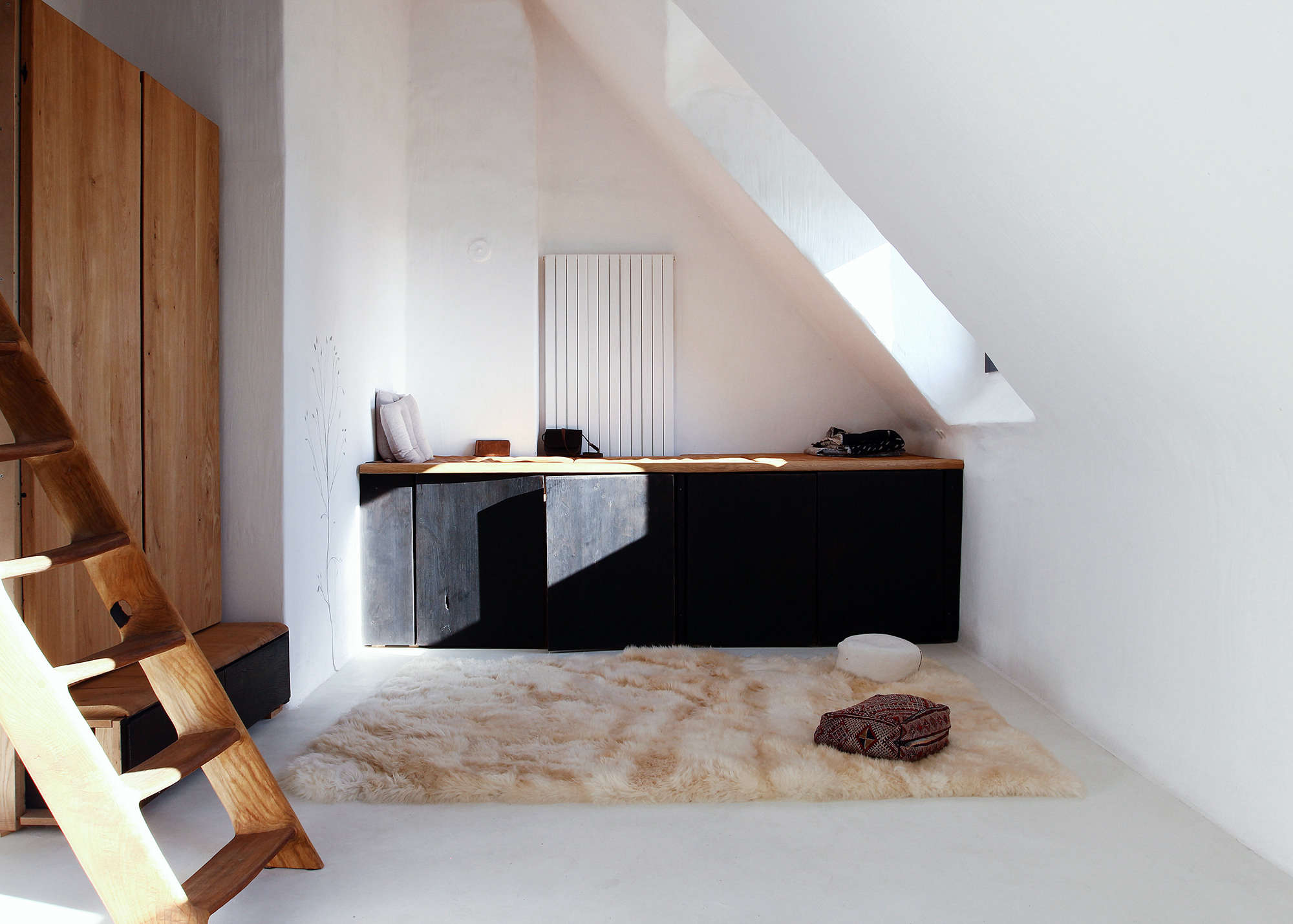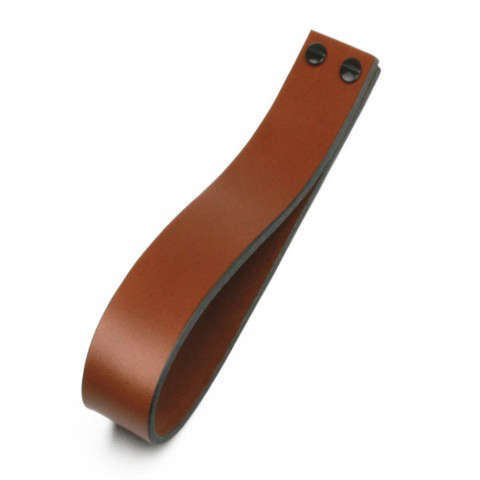
Cabinet hardware rarely receives top billing. It normally waits in the wings while countertops, paint colors, and dramatic pendant lights collect applause. The Leather Loop in British Tan changes that arrangement. This compact strip of leather turns an ordinary drawer, wardrobe, or cabinet door into something warmer, more tactile, and considerably more interesting.
Created by Australian hardware specialist MadeMeasure, the Leather Loop is both a cabinet pull and a hanging loop. Its shape is simple, but simplicity is doing some serious work here. The warm British tan leather introduces color without becoming loud, while the flexible loop offers a softer alternative to conventional metal hardware.
It is the sort of detail that makes guests ask, “Where did you find those handles?” Nobody has ever leaned across a kitchen island to say that about a generic chrome knob.
What Is the Leather Loop in British Tan?
The Leather Loop is a handcrafted leather hardware accessory designed for use on cabinetry, joinery doors, drawers, wardrobes, and walls. Folded into a generous loop and secured with a fixing, it can function as a leather cabinet handle or as a hanging point for lightweight household items.
The current MadeMeasure version is produced from high-grade Italian leather and hand-finished in Melbourne. The standard loop is approximately 35 millimeters wide and 180 millimeters long when folded. Earlier specifications for the British Tan model described a flat length of about 360 millimeters, leather approximately 2.8 millimeters thick, and a fixing hole around 6 millimeters in diameter.
Notable design details
- A broad leather loop that is comfortable to grasp
- A smooth, closely grained surface
- Warm British tan coloring
- Dark finished edges that sharpen the silhouette
- A preformed fixing point for straightforward installation
- Compatibility with cabinets, drawers, wardrobes, and wall applications
The basic form could not be much simpler: leather, a fold, and a fixing. Yet the proportions prevent it from looking like a leftover belt that wandered into the hardware aisle.
Why British Tan Leather Works So Well
British tan sits in the useful territory between pale natural leather and dark chocolate brown. It typically carries amber, caramel, cognac, and reddish-brown undertones, giving it more depth than an ordinary beige handle. The color is warm enough to soften modern cabinetry but rich enough to hold its own against traditional woods.
A neutral with personality
British tan behaves much like a well-made pair of leather shoes. It can look polished in a formal room, relaxed in a casual space, and completely natural beside wood, stone, brass, or painted cabinetry. Unlike a highly fashionable color, it does not demand that the entire room revolve around it.
On white cabinets, the leather creates warm contrast. On navy or forest-green doors, it produces a handsome, tailored effect. Against oak, it emphasizes natural warmth, while on black cabinetry it becomes a softer alternative to bright metal.
Color combinations worth trying
- White oak and British tan: Light, calm, and distinctly Scandinavian without feeling sterile.
- Matte navy and British tan: Classic and slightly nautical, especially with aged brass accents.
- Warm white and British tan: A clean combination for kitchens, nurseries, and built-in storage.
- Walnut and British tan: Rich and layered, ideal for studies, bars, and media cabinets.
- Charcoal and British tan: Modern contrast with more warmth than black metal hardware.
- Olive green and British tan: Earthy, relaxed, and well suited to mudrooms or utility spaces.
The Appeal of Vegetable-Tanned Leather
MadeMeasure’s leather collections include high-grade vegetable-tanned Italian leather. Vegetable tanning is a traditional process that uses tannins derived from plant materials such as bark, leaves, wood, nuts, and other botanical sources. The method generally takes longer than many modern tanning processes, but it produces leather prized for its structure, natural character, and ability to age attractively.
That aging process is especially relevant for cabinet hardware. A leather drawer pull is touched repeatedly, so its surface gradually records everyday use. Instead of remaining factory-perfect, it may deepen in color, soften slightly, and develop a patina in the areas most frequently handled.
Patina is a feature, not a malfunction
Some homeowners want every finish to remain frozen on opening day. Vegetable-tanned leather has other plans. Its tone may become richer, and minor marks may blend into a more varied surface over time. This evolving appearance is one reason leather hardware feels at home in interiors that value natural materials.
Patina should not be confused with neglect. Grease, standing water, harsh cleaners, and constant exposure to wet hands can still damage leather. Graceful aging is charming; a permanent salad-dressing stain is less poetic.
A Small Piece of Hardware with Two Jobs
The Leather Loop was designed for dual use. It can open a door or drawer, but it can also become a wall-mounted hanging feature. This flexibility makes it useful beyond the kitchen.
As a cabinet or drawer pull
Mounted vertically, the loop works well on tall wardrobe doors, pantry cabinets, and narrow cupboard fronts. Positioned horizontally, it becomes an easy-to-grasp drawer pull. Because the leather flexes, it feels less rigid than a metal bar and is unlikely to produce the sharp bump associated with projecting hardware.
As a hanging loop
Used on a wall or panel, the loop can hold lightweight accessories such as a hand towel, scarf, reusable shopping bag, or decorative object. The attachment point and supporting surface must be suitable for the intended load. It is an elegant loop, not a covert climbing anchor.
Where it can be installed
- Kitchen cabinets and pantry doors
- Bathroom vanities away from repeated splashing
- Bedroom wardrobes and dresser drawers
- Entryway cupboards and mudroom storage
- Home-office drawers and media cabinets
- Custom furniture and freestanding storage
- Wall panels for towels or lightweight accessories
How Leather Hardware Changes a Room
Designers often compare cabinet hardware to jewelry because it supplies a finishing layer without requiring major construction. Leather introduces something metal cannot: visual softness. It breaks up hard surfaces and adds texture to rooms dominated by painted wood, tile, stone, glass, and stainless steel.
That contrast is particularly effective in minimalist interiors. Flat-panel cabinets can occasionally look more like office storage than residential furniture. A British tan leather loop provides enough warmth to make the cabinetry feel intentional and human.
Modern interiors
On slab-front cabinets, the clean shape supports a minimalist design while the leather keeps the room from becoming chilly. Pair it with white oak, pale gray, off-white, muted green, or matte black.
Traditional and transitional interiors
Leather also works with Shaker doors, paneled wardrobes, and traditional millwork. British tan has enough historical character to sit comfortably beside brass hinges, dark timber, linen upholstery, and vintage-inspired lighting.
Children’s rooms and family spaces
A flexible leather pull has no hard bar extending into the room. That does not make it childproof, but it can reduce the number of sharp hardware projections on lower drawers. The loop is also easy for different hand sizes to grasp.
Planning the Placement
Beautiful hardware can still look peculiar when installed at inconsistent heights. Before drilling, use painter’s tape or a reusable hardware template to test the position. Stand back, open neighboring doors, and confirm that the loop will not collide with trim, countertops, or adjacent handles.
Vertical or horizontal?
Vertical placement usually suits cabinet doors and wardrobes. Horizontal placement feels natural on drawers. However, custom joinery does not have to follow a strict formula. Repeating the same orientation throughout a bank of cabinets can create a calm architectural rhythm.
Consider the folded length
The loop hangs farther from the fixing than a conventional knob. Check that its lower edge will remain within the cabinet front and clear of nearby moldings. On small drawers, a shorter leather tab may look more proportional than a full 180-millimeter loop.
Test the grip
Temporary positioning also reveals whether the loop is comfortable to reach. Hardware should look good in photographs, but it must also cooperate when someone is holding a coffee mug, a grocery bag, and unreasonable confidence in their multitasking ability.
Installation Tips for a Clean Result
The Leather Loop is designed to be relatively simple to install, but accuracy matters. A misplaced hole cannot be reasoned with afterward.
- Confirm the hardware package. Check the supplied fixing, screw length, cabinet thickness, and manufacturer’s instructions.
- Inspect the mounting surface. Make sure the cabinet door, drawer front, or wall panel is strong enough for the intended use.
- Mark the centerline. Use a ruler, level, and template rather than estimating by eye.
- Protect the finish. Painter’s tape can reduce surface marking and make pencil lines easier to see.
- Drill a pilot hole. Select the bit size recommended for the supplied fixing and drill squarely through the surface.
- Install without overtightening. The fixing should be secure, but excessive force can compress the leather or damage the cabinet face.
- Check movement. Pull the loop several times and confirm that it sits flat, feels stable, and clears neighboring surfaces.
When replacing existing hardware, measure the old hole pattern before ordering. A single-fixing leather loop may not conceal two holes left by a conventional bar pull. In that case, filling and refinishing may be necessary.
Care and Maintenance
Leather cabinet hardware benefits from gentle, restrained care. Aggressive cleaning products may dry the surface, alter the color, or damage the finish. For routine maintenance, wipe the loop with a clean, dry, soft cloth.
Handling small marks
For light surface dirt, use a barely damp cloth only when permitted by the manufacturer’s care instructions, then dry the leather immediately. Test any cleaning or conditioning product on an inconspicuous area first. Products formulated for one type of leather may not be appropriate for another.
What to avoid
- Abrasive pads and stiff brushes
- Household disinfectants, bleach, and strong solvents
- Alcohol-based cleaners
- Furniture polish intended for wood
- Repeated soaking or installation beside constant splashing
- Heavy applications of oil or conditioner that can darken the color
Kitchen and bathroom considerations
Leather can be used in kitchens and bathrooms, but placement matters. Handles beside a sink, range, or frequently wet countertop may encounter water, grease, soap, cosmetics, and cleaning sprays. Dry hands before use when practical, clean accidental spills promptly, and avoid placing the loop where it will remain damp.
Advantages and Trade-Offs
Advantages
- Adds warmth and texture without changing the cabinetry
- Works with modern, rustic, traditional, and Scandinavian styles
- Feels soft and flexible in the hand
- Can develop an attractive natural patina
- Offers dual use as joinery hardware or a hanging loop
- Makes mass-produced furniture look more customized
Trade-offs
- Requires more careful cleaning than solid metal hardware
- May darken or mark with regular handling
- Is not ideal for constantly wet or greasy locations
- Natural leather can vary slightly in grain and color
- May not cover holes from previously installed bar pulls
The decision largely depends on expectations. Anyone seeking identical, wipe-anything-with-anything hardware may prefer metal. Anyone who appreciates tactile materials and gradual patina will probably consider the changes part of the appeal.
Real-World Experience: What Living with British Tan Leather Loops Feels Like
The first impression after installation is usually visual. A plain cabinet that previously disappeared into the room suddenly appears more deliberate. The British tan color creates a point of contrast, but the effect is quieter than polished brass or black steel. It reads as warm and crafted rather than shiny and decorative.
On a bank of white wardrobe doors, for example, repeated leather loops create a vertical rhythm. The cabinetry begins to resemble custom furniture instead of a row of anonymous storage panels. In a kitchen with oak fronts, the effect is subtler. The handles blend with the wood’s warmth while adding a separate layer of texture.
The first week
New leather generally feels structured. The loop retains its shape and may feel firmer than expected when first grasped. Because it is broad, the pressure is distributed across the fingers rather than concentrated on a narrow edge. That can make it comfortable on medium-size doors and drawers.
The flexible construction changes the opening motion slightly. A rigid metal bar stays exactly where it is; a leather loop moves with the hand. After a few uses, that movement feels natural. It is a small sensory difference, but one noticed every time the drawer opens.
Placement becomes important during this stage. A loop installed too close to the edge may twist, while one installed too high on a heavy drawer may not provide ideal leverage. Testing the location before drilling prevents these everyday annoyances.
After several months
With regular handling, the British tan surface may begin to deepen around the grip area. This is especially noticeable on hardware used throughout the day, such as a pantry pull or frequently opened desk drawer. Less-used loops may remain closer to their original shade, producing minor variation across a room.
That difference can be appealing because it reveals how the space is used. The snack drawer may acquire character at a suspiciously rapid rate. The cabinet holding the appliance manuals could remain pristine for decades.
The leather may also relax slightly while maintaining its basic loop shape. Good-quality material should feel broken in rather than floppy. If a fixing starts to loosen, it should be tightened according to the manufacturer’s guidance before repeated movement enlarges the mounting hole.
How it handles daily mess
In a bedroom or home office, maintenance is minimal. Dust can usually be removed with a soft cloth. Kitchens require more attention because cooking oil, flour, sauces, and wet hands have impressive range. British tan is more forgiving than very pale natural leather, but it can still record stains.
A practical approach is to use leather loops on pantry cabinets, upper storage, islands, or furniture-style cabinetry while selecting metal hardware immediately beside sinks and cooktops. Mixing materials in this way can look intentional when the shapes and finishes are coordinated.
How the color changes the atmosphere
British tan is particularly effective in rooms that feel overly cool. Gray cabinetry, white walls, and stainless-steel appliances can create a clean but impersonal palette. Adding leather loops introduces warmth without repainting anything. The change is small in square footage but large in visual impact.
In darker rooms, the color behaves differently. Against navy, charcoal, or black, it becomes a focal point. The contrast outlines each handle and highlights the cabinet layout. Repeating the tan elsewhere through a leather chair, woven basket, wood frame, or cognac-colored cushion helps the hardware feel connected to the overall design.
The long-term ownership experience
The most satisfying part of living with vegetable-tanned leather hardware is that it does not remain visually static. Metal hardware can tarnish, scratch, or lose a coating, changes often treated as damage. Leather’s gradual darkening and softening can feel more natural because they become part of the material’s story.
This does not mean every mark will be beautiful. Thoughtful placement and reasonable care remain essential. Yet when used in an appropriate setting, the Leather Loop in British Tan offers something uncommon in cabinet hardware: a surface that becomes more personal through ordinary contact.
Over time, the loop stops feeling like an accessory added to the cabinet. It becomes the part everyone reaches for without thinking, which may be the best compliment functional design can receive.
Is the Leather Loop in British Tan Worth Considering?
The British Tan Leather Loop is best suited to homeowners and designers who value natural texture, restrained color, and small handcrafted details. It can upgrade a basic dresser, soften a minimalist kitchen, add character to custom joinery, or create a useful hanging point in an entryway.
It is not maintenance-free, waterproof, or immune to change. That is precisely what separates it from ordinary hardware. The leather responds to touch, develops character, and brings an organic element to surfaces that might otherwise feel flat.
For the right project, this modest loop delivers an impressive design return. It is warm but not rustic, refined but not fussy, and distinctive without performing cartwheels for attention. Sometimes the smallest detail really does pull the room togetherquite literally in this case.