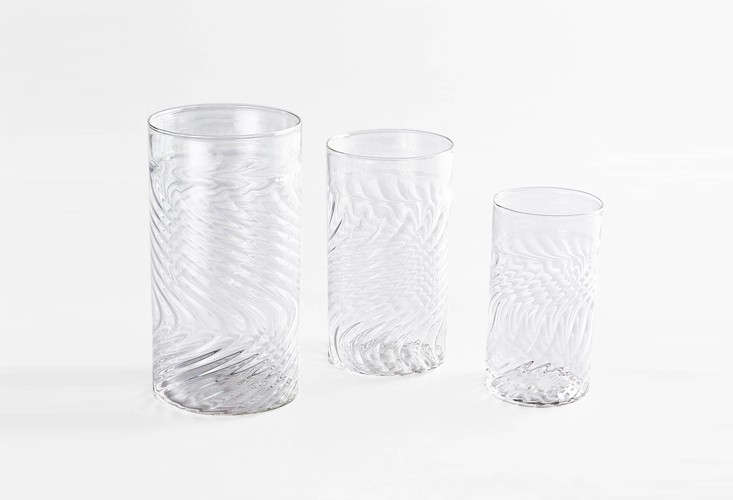
Some glasses sit quietly in the cupboard, waiting to hold water. Laurence Brabant Spiraled Glasses do something far more dramatic: they arrive looking like they have just twirled out of a Parisian design studio after taking a ballet class. Thin, luminous, and gently distorted by spiral decoration, these handmade glasses turn everyday drinking into a small performance. Pour water, iced tea, sparkling lemonade, or a careful cocktail into one, and suddenly your table looks less like “Tuesday lunch” and more like “someone here owns linen napkins and knows how to use them.”
Created within the world of Laurence Brabant and Alain Villechange, these spiraled tumblers belong to a family of poetic French glassware known for technical skill, visual movement, and deceptively simple forms. Brabant is the designer; Villechange is the flameworker. Together, they have built a practice around glass objects that feel playful, functional, and quietly clever. Their work often uses borosilicate glass, the heat-resistant material many people associate with laboratory glass and durable kitchenware, but here it is transformed into elegant tableware with a sense of humor.
The main keyword, Laurence Brabant Spiraled Glasses, may sound like a niche design treasure, and that is exactly what it is. These are not anonymous tumblers stamped out by the thousands. They are handmade, often without molds, with variations that reveal the human hand behind the finished object. In a world where many products look like they were designed by a committee, these glasses look like they were designed by curiosity.
Who Is Laurence Brabant?
Laurence Brabant is a French designer recognized for her poetic approach to glass, lighting, tableware, and decorative objects. Her work often explores transparency, distortion, movement, and the way everyday objects can become quietly surprising. She studied in Paris and developed a design language that values simplicity without boredom and beauty without excessive ornament. In other words, she understands the rare art of making something look effortless while secretly making it very difficult.
Her creative partnership with Alain Villechange is central to the story. Brabant brings the design vision; Villechange brings deep technical expertise in flame-worked glass. This collaboration allows them to create objects that combine clear function with experimental form. Their pieces frequently appear delicate, but the techniques and materials behind them are rigorous. The result is glassware that feels like a useful object and a small sculpture at the same time.
A Studio Built Around Hand Skill
Laurence Brabant Editions is often described as a studio that rejects mass-production shortcuts. Many pieces are made by hand, without molds, and in a single focused process. That matters because the spiraled effect is not simply printed or slapped onto the surface like a sticker on a lunchbox. It is part of the glassmaking process itself, involving heat, rhythm, and control. The finished tumbler carries evidence of that moment of making.
This is why two glasses from the same line may not be perfectly identical. For collectors and design lovers, that is not a flaw. It is the whole point. Handmade glassware has a pulse. It may lean into a slightly irregular rim, a subtle difference in spiral flow, or a tiny variation in proportion. These are the details that separate artisan glass tumblers from factory-made drinking glasses.
What Makes Laurence Brabant Spiraled Glasses Special?
The defining feature is, of course, the spiral. The decoration creates a visual rhythm that appears to move around the glass. Depending on the specific version, the spiral may appear as clear movement, white and colored lines, black filigree, or colored borders. The effect can be graphic, optical, and tactile all at once. Pick one up and the glass seems to invite your fingers to follow the curve.
The spiraled design also changes how liquid appears inside the glass. Water looks brighter. Juice looks more layered. A cocktail can appear almost architectural, especially if served with citrus, herbs, or a large ice cube. These glasses do not need much styling. They are the styling. Even plain sparkling water gets promoted from “hydration” to “tiny celebration.”
Borosilicate Glass: Light, Strong, and Elegant
Many Laurence Brabant pieces use borosilicate glass, a material valued for thermal resistance, clarity, and durability. Borosilicate is lighter and thinner than many common soda-lime glasses, but it can be surprisingly resilient. That contrast is one of the pleasures of these spiraled glasses: they look fragile, yet they are made from a material associated with performance and heat resistance.
This does not mean you should treat them like cafeteria tumblers. A handmade Laurence Brabant glass deserves thoughtful handling. It should not be thrown into a sink like a defeated spoon after spaghetti night. But for careful everyday use, borosilicate glass offers a practical advantage. It allows the maker to create thin, refined shapes that still feel usable rather than purely decorative.
The Beauty of Visual Movement
The spiral is more than decoration. It creates movement. A straight-sided glass usually behaves politely: it holds liquid and minds its business. A spiraled glass adds energy. It bends the eye, catches light, and creates a sense of rotation even when sitting perfectly still. This optical play is part of Brabant’s larger design personality, where transparency and distortion are used to make familiar objects feel fresh.
That is why Laurence Brabant Spiraled Glasses work so well in modern interiors. They can sit on a minimalist table without looking plain, or join a colorful dinner setting without looking shy. They are expressive but not loud. Think of them as the guest at the party who says the funniest thing in the room without raising their voice.
Design Details and Sizes
Spiraled glasses associated with Laurence Brabant have appeared in different sizes and variations over time, including small, medium, and large tumblers. Some listings describe them as ultra-thin, mouth-blown or handmade in France, with proportions suitable for cocktails, water, wine alternatives, or aperitif service. Other spiral tumblers feature colored borders and graphic linework, giving the form a more contemporary art-table feel.
Because these pieces are handmade and sometimes sold through design shops, museum stores, or specialty retailers, availability can change. Certain versions may be discontinued, limited, or available only through galleries and design boutiques. That scarcity is part of the appeal, though it can also make shopping for them feel like a tasteful scavenger hunt.
Common Uses
Laurence Brabant Spiraled Glasses are versatile enough for several drinks and occasions. They work beautifully for sparkling water, iced tea, juice, lowball cocktails, small mixed drinks, dessert wine alternatives, or a carefully presented aperitif. A smaller version can feel delicate and intimate, while a taller tumbler makes a stronger visual statement.
They also make excellent display pieces. Open shelving, bar carts, glass-front cabinets, and dining room sideboards all benefit from their sculptural quality. Unlike some decorative objects that politely collect dust while pretending to be useful, these glasses can actually earn their keep.
How to Style Laurence Brabant Spiraled Glasses at Home
The easiest way to style these glasses is to let them breathe. Do not crowd them with too many competing patterns. A simple tablecloth, plain ceramic plates, natural linen, or wood surfaces will make the spiraled form stand out. Clear glass versions look especially striking against darker tabletops, while colored spiral designs can bring energy to a neutral setting.
For a casual lunch, use them with sparkling water and lemon slices. For dinner, pair them with low, simple floral arrangements so the table does not turn into a botanical traffic jam. For cocktails, choose drinks with color and clarity: a citrus spritz, a jewel-toned mocktail, a cucumber cooler, or a simple drink with herbs. The spiral will add visual complexity without needing an umbrella, glitter rim, or flaming garnish. Please do not set the garnish on fire. The glass has done enough work.
Pairing With Tableware
These glasses pair well with handmade ceramics, matte plates, linen napkins, stoneware bowls, and simple flatware. Their French design character also works nicely with bistro-inspired settings: marble boards, small plates, olives, cheese, fruit, and bread. For a more gallery-like table, combine them with monochrome ceramics and let the glass provide the movement.
If your home leans vintage, the spiraled shape can still fit in. It brings a touch of modern craft without clashing with older wood furniture or collected tableware. If your home is ultra-modern, the glasses soften the room by adding human irregularity and warmth. Basically, they are design diplomats. They get along with almost everyone.
Why Handmade Glassware Feels Different
Handmade glassware changes the relationship between object and owner. A mass-produced tumbler may be practical, but it rarely invites attention. A handmade glass asks you to notice the curve, the rim, the weight, the light, and the slight differences from piece to piece. It reminds you that someone made it, not just something.
That experience is especially strong with Laurence Brabant Spiraled Glasses because the spiral decoration emphasizes motion. You can see the labor and timing involved. The design looks spontaneous, but it depends on precision. That tension between freedom and control is what gives the piece personality.
Not Just Pretty: Functional Art
One of the best things about this glassware is that it does not force you to choose between beauty and function. It can be used. It can hold a drink. It can sit comfortably on a table. It can join a dinner party without requiring a museum guard. At the same time, it brings the emotional quality of collectible design into daily life.
This is a useful reminder for anyone building a home slowly and thoughtfully. Not every special object needs to be locked away for holidays. Sometimes the best pieces are the ones that upgrade ordinary routines. A morning glass of water can feel a little more intentional. A simple drink after work can feel like a pause. A dinner with friends can look effortlessly considered, even if the main course arrived from a grocery store container five minutes ago.
Care Tips for Laurence Brabant Spiraled Glasses
Because these glasses are handmade and often thin, care matters. Hand washing is the safest approach, especially for collectible or limited glassware. Use mild soap, warm water, and a soft sponge. Avoid abrasive scrubbers, sudden temperature shocks, and aggressive stacking. Your dishwasher may be talented, but it does not appreciate French glass design the way you do.
Dry the glasses with a lint-free cloth to keep them clear and luminous. If you display them on open shelves, rinse before use if dust has settled inside. Store them with enough space that rims do not knock against each other. Thin glass can be strong, but no glass enjoys being bullied by a neighboring coffee mug.
Everyday Handling
Use them confidently but respectfully. Hold the glass near the body rather than pinching only the rim. Avoid dropping ice cubes from a dramatic height. If serving cold drinks, add liquid before large ice when possible to reduce impact. These small habits help preserve the glass and keep the spiral detail looking beautiful over time.
If you own a set, rotate usage so one favorite glass does not become the overworked star of the cabinet. If you own only one, treat it like a signature piece. A single Laurence Brabant Spiraled Glass on a desk, bedside table, or bar cart can be enough to add character.
Buying Guide: What to Look For
When shopping for Laurence Brabant Spiraled Glasses, start with authenticity. Look for reputable design retailers, galleries, museum shops, or sellers that clearly identify Laurence Brabant and Alain Villechange. Product descriptions should mention handmade glass, borosilicate or Pyrex-type glass, spiral decoration, French production, and sometimes the technique of rolling up glass canes or flame-working.
Pay attention to dimensions. These glasses may look larger or smaller in photos than they are in real life. A small tumbler might be ideal for aperitifs or tasting pours, while a taller version may suit water or mixed drinks. If you plan to use them at meals, check diameter and height so they feel comfortable in the hand.
New, Vintage, and Discontinued Versions
Some spiraled glass versions have appeared through design shops and may be discontinued. That means secondary-market listings can vary widely in price, condition, and description quality. When buying pre-owned or vintage pieces, ask for clear photos of the rim, base, and side walls. Chips, cracks, and stress marks should be disclosed.
Because handmade glass has natural variation, do not confuse slight asymmetry with damage. A subtle irregularity may be part of the handmade character. However, sharp chips, cloudy cracks, or unstable bases are practical problems. Beauty is wonderful, but a glass that wobbles like a nervous flamingo is less charming during dinner.
Laurence Brabant Spiraled Glasses in Modern Interior Design
Modern interiors have been moving toward objects with personality. After years of perfectly blank minimalism, people are rediscovering texture, craft, color, and imperfect handmade details. Laurence Brabant Spiraled Glasses fit neatly into that shift. They are minimal in material but expressive in form. They do not scream for attention, but they reward attention.
In a kitchen, they soften the hard surfaces of stone, metal, tile, and appliances. On a dining table, they add vertical interest and sparkle. On a bar cart, they signal that the host has taste and possibly opinions about ice. In a small apartment, they can serve as both everyday drinkware and decorative objects, which is helpful when storage space is limited and every object must justify its rent.
A Great Gift for Design Lovers
These glasses make a thoughtful gift for people who appreciate design, craft, tableware, or unusual home objects. They are especially good for someone who already has the basics and does not need another ordinary set of tumblers. A single handmade glass can be more memorable than a larger but less distinctive gift.
For weddings, housewarmings, anniversaries, or holiday gifting, a pair of spiraled glasses feels personal without being overly sentimental. Pair them with a bottle of sparkling water, a small cocktail book, linen coasters, or a handwritten note. The result feels curated rather than rushed, which is the polite way of saying, “I did not buy this in a panic at 8:47 p.m.”
Experience Section: Living With Laurence Brabant Spiraled Glasses
Owning or using Laurence Brabant Spiraled Glasses is less about showing off and more about noticing. The first experience is usually visual. You place the glass near a window, and the spiral catches light in a way that makes the object seem animated. It is the sort of small design moment that can interrupt a busy day. You reach for water and end up admiring a curve. That is not inefficient; that is civilization.
The second experience is tactile. These glasses often feel lighter than expected. The thinness gives them refinement, while the spiral adds a subtle sense of structure. When your fingers wrap around the form, the design becomes more than decoration. It becomes part of the grip, part of the way the object communicates with the hand. This is where handmade glassware separates itself from ordinary drinkware. A standard tumbler holds liquid. A spiraled Laurence Brabant glass holds attention.
At the table, the experience changes again. Fill one with still water, and it looks clean and architectural. Add sparkling water, and the bubbles interact with the spiral like tiny stage performers who have been waiting for their cue. Pour a colored drink, and the glass becomes more dramatic. Orange, pale pink, green, amber, and ruby tones all appear richer when seen through the curved lines. The glass does not hide the beverage; it gives it choreography.
For hosting, these glasses create a relaxed kind of sophistication. Guests notice them, but they do not make the table feel stiff. That balance is important. Some luxury tableware behaves like it expects everyone to sit up straight and discuss opera. Laurence Brabant Spiraled Glasses feel artistic but friendly. They can sit beside roast chicken, salad, takeout sushi, or homemade dessert without seeming out of place. They elevate the mood without demanding a dress code.
They also encourage slower habits. Because the glasses feel special, you tend to set the table more carefully, pour more thoughtfully, and wash them by hand afterward. This may sound like extra work, but it can become part of the pleasure. Not every object in a home should be optimized only for speed. Some objects are valuable because they ask us to pause. In a culture of disposable cups and rushed meals, a handmade spiraled glass quietly says, “Maybe drink this like you are actually here.”
There is also joy in mixing them rather than matching them perfectly. A table with two spiraled glasses, a few plain tumblers, and a ceramic pitcher can feel collected and personal. Perfection is not required. In fact, these glasses often look best when they are allowed to be part of a layered table rather than a showroom set. Add flowers from the market, mismatched plates, soft napkins, and good lighting, and suddenly the whole table has warmth.
For everyday use, the key is to avoid treating them as too precious. Yes, they are handmade. Yes, they deserve care. But hiding them forever would miss the point. Use them for weekend breakfasts, evening drinks, birthday dinners, or quiet nights when you want the table to feel a little better than usual. A beautiful object becomes more meaningful when it gathers memories.
Over time, Laurence Brabant Spiraled Glasses can become part of household ritual. One glass may become your favorite for sparkling water. Another may be reserved for guests. A pair may live on a bar cart because they look too good to hide. These small rituals are what turn design into lived experience. The spiral is not only a pattern in the glass; it becomes part of the rhythm of the home.
Conclusion
Laurence Brabant Spiraled Glasses are a beautiful example of how functional objects can carry artistry, humor, and technical skill. They combine French design, handmade glassmaking, borosilicate clarity, and visual movement in a form that feels both practical and poetic. Their spiraled decoration gives the eye something to follow, while their thin construction keeps them elegant and refined.
For collectors, they represent the appeal of artisan glassware. For hosts, they bring instant character to the table. For design lovers, they offer a lesson in restraint: an object does not need to be loud to be unforgettable. Whether used for sparkling water, cocktails, juice, or display, Laurence Brabant Spiraled Glasses prove that even a humble tumbler can have a plot twist.
Note: Availability, colors, dimensions, and pricing may vary because handmade Laurence Brabant glassware is often sold through specialty design retailers, galleries, museum shops, or limited collections. Always check product details carefully before purchasing.