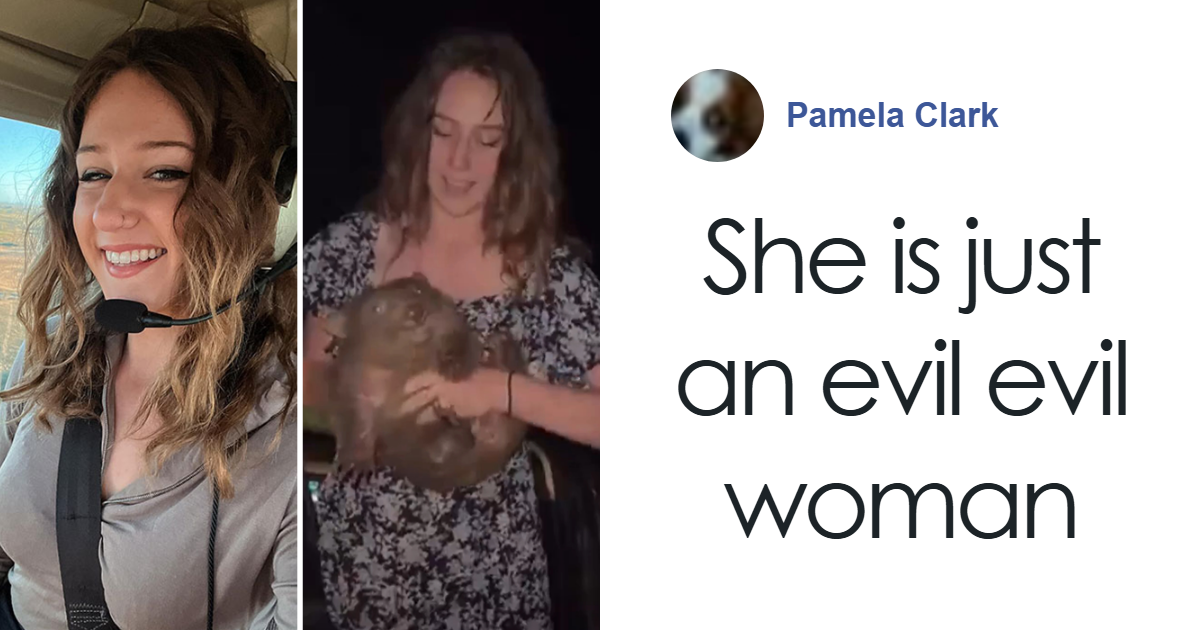
There are viral videos, and then there are viral videos that make an entire country collectively point at the screen and say, “Absolutely not.” The baby wombat incident belongs firmly in the second category. What began as a short social media clip of an American influencer grabbing a baby wombat from its mother in Australia exploded into international outrage, government criticism, animal welfare warnings, and eventually a very uncomfortable spotlight on the influencer’s wider relationship with wildlife.
Months after the wombat video turned her into the internet’s least-favorite tourist, Samantha Strable, known online as Sam Jones, reportedly resurfaced in legal trouble in the United States. This time, the controversy was not about a wombat joey on an Australian roadside. It involved alleged hunting-law violations in Wyoming, including accusations that she falsely claimed state residency to obtain resident hunting licenses.
Online commenters quickly reached for the phrase “karma train,” and while the internet loves a dramatic soundtrack, the real story is more complicated. Strable has been accused, not convicted, and the legal process still matters. But the case has reopened a larger conversation about influencer culture, wildlife ethics, and the dangerous idea that animals exist as props for engagement.
The Baby Wombat Video That Started The Firestorm
The original controversy began in March 2025, when a video circulated showing Strable picking up a baby wombat, also called a joey, from the side of a road in Australia. In the clip, the young animal appeared distressed while its mother followed nearby. The footage drew immediate anger because it looked less like wildlife rescue and more like content creation with a frightened native animal caught in the middle.
According to reports at the time, the video was later deleted, and Strable’s social media presence became harder to access as criticism intensified. Australian officials did not treat the clip as a harmless travel mishap. The country’s foreign affairs and home affairs officials publicly criticized the behavior, and immigration authorities reviewed whether her visa conditions had been breached.
The public response was swift because wombats are not exotic toys, roadside souvenirs, or furry background extras for a reel. They are native marsupials with specific needs, and a joey’s relationship with its mother is not something to interrupt for a better camera angle. Even if an animal looks calm for two seconds on a phone screen, the stress behind the scene can be serious.
Why Australians Reacted So Strongly
To understand the scale of the backlash, it helps to understand Australia’s relationship with native wildlife. Wombats are beloved animals, but they are also vulnerable to road accidents, habitat pressures, disease, and human interference. Wildlife rescuers spend countless hours dealing with injured animals, orphaned joeys, and situations caused by people who meant well but acted badly.
That is why many Australians saw the video as more than a single foolish decision. It touched a nerve. A visitor had arrived in a country famous for its unique wildlife, picked up a native baby animal, ran with it while its mother followed, and then posted the moment online. For viewers, the scene seemed to capture everything wrong with the “content first, consequences later” mindset.
Officials and animal welfare advocates emphasized that people who find a sick, injured, or orphaned wild animal should contact trained wildlife rescuers, veterinarians, or local authorities rather than chase, grab, or handle the animal for social media. The safest response is rarely the most dramatic one. Conveniently, the algorithm has not yet learned to reward quiet responsibility with the same enthusiasm it gives chaos in portrait mode.
Strable’s Explanation And Apology
After the backlash, Strable said she was concerned the wombat might be sick, injured, or in danger from traffic. She claimed the joey was returned quickly and reunited with its mother. She also apologized for the distress caused, while criticizing some of the extreme threats and abuse directed at her online.
That explanation did little to calm the broader criticism. Many people argued that even if her intentions were not malicious, the action still demonstrated poor judgment. Good intentions do not automatically turn a bad wildlife interaction into a rescue. If anything, the incident became a textbook example of why “I was trying to help” must be paired with “I knew what I was doing.”
The distinction matters. Wildlife care is not simply a vibe. It requires training, local knowledge, disease awareness, and an understanding of animal stress. A baby animal that appears slow, still, or confused may be sick, stunned, or simply reacting to a terrifying human encounter. The wrong handling can worsen the situation, injure the animal, or separate it from the care it needs most.
Then Came The Arrest Reports In Wyoming
Months after the wombat controversy, Strable was reportedly booked into the Sublette County Jail in Wyoming on November 21, 2025, and released the same day on her own recognizance. Reports citing court documents said she faced eight misdemeanor charges connected to alleged hunting violations.
The charges reportedly included six counts of false swearing, one count of taking wildlife without a license, and one count of nonresident hunting in a wilderness area without a guide. The central allegation was that Strable falsely claimed Wyoming residency to obtain resident hunting licenses, despite records indicating she lived elsewhere, including Great Falls, Montana.
This is where the “karma train” commentary came roaring in like it had missed its station and was making up for lost time. Many online observers connected the Wyoming charges to the earlier wombat incident, seeing both stories as part of a larger pattern involving wildlife, social media, and questionable decision-making.
However, it is important to be precise: the arrest was not for snatching the baby wombat in Australia. It was reportedly tied to alleged hunting-license and residency violations in Wyoming. Strable remains presumed innocent unless and until proven guilty in court.
What The Wyoming Case Is Allegedly About
Resident hunting licenses can come with major advantages. In many states, residents may pay lower fees, receive different access to tags, or qualify for opportunities that nonresidents cannot easily obtain. Because of that, residency rules are not casual paperwork. They are part of wildlife management systems designed to regulate who can hunt, where they can hunt, and under what conditions.
Reports about the Wyoming case said investigators reviewed license history, addresses, travel records, and social media activity. The allegations suggested that Strable continued to obtain Wyoming resident tags even though she may not have met the state’s residency requirements for hunting purposes.
For hunters who follow the rules, that kind of allegation is not a minor clerical hiccup. It can feel like someone cutting the line, taking resources from lawful applicants, and undermining conservation systems funded by license fees. Wildlife management depends on trust, accurate reporting, and enforcement. When people treat licenses like a shortcut menu, everyone else pays the price.
Why This Story Became Bigger Than One Influencer
The reason this story has stuck around is simple: it sits at the intersection of several modern flashpoints. There is influencer culture, where attention can be converted into income. There is wildlife tourism, where animals are too often treated as props. There is hunting ethics, where legal compliance and respect for conservation rules matter. And there is public accountability, where a single clip can follow someone long after the post disappears.
In the old days, bad judgment might embarrass you at a dinner table. Today, bad judgment can become a searchable chapter heading in your life story. That may sound harsh, but the internet has a long memory, especially when animals are involved. People are often more forgiving of human awkwardness than they are of someone distressing a baby animal while a camera rolls.
The baby wombat video also highlighted how quickly audiences can detect the difference between genuine care and performative concern. If someone truly believes an animal needs help, the camera should not be the main character. The priority should be safety, distance, expert advice, and minimal stress to the animal.
The Ethics Of Wildlife Content
Wildlife content can be educational, beautiful, and genuinely useful. A well-made video can teach people how to coexist with animals, report injured wildlife, support rescue groups, or understand ecosystems. But the line between education and exploitation gets crossed when creators interfere with animals to manufacture drama.
Picking up wild animals, chasing them, cornering them, feeding them inappropriate food, or staging “rescue” scenes can all cause harm. It also encourages copycats. If one creator gets attention for handling a wild animal, another may try something even riskier. Suddenly, the internet has invented a terrible game show called “Who Can Stress Out Nature The Most?” No one wins, least of all the animal.
Responsible wildlife content usually follows a few basic principles: observe from a distance, avoid touching, do not separate young animals from parents, do not reveal sensitive locations, and call professionals when an animal appears injured. The best wildlife creators understand that restraint is part of the craft. Sometimes the most ethical footage is the shot you choose not to take.
Public Outrage: Helpful Accountability Or Online Pile-On?
The backlash to the wombat video raised another question: when does accountability become a mob? Criticism of the action was fair. Threats and harassment were not. A person can make a poor decision, face consequences, and still be protected from abuse. The internet often struggles with that balance, because outrage travels faster than nuance and usually has better lighting.
That said, public anger did force attention onto an important issue. Without the backlash, the video might have been just another clip in the endless stream of animal-handling content. Instead, it became a global discussion about how tourists and influencers should behave around wildlife.
The lesson is not that every mistake deserves permanent destruction. The lesson is that people with large platforms have large responsibilities. If your audience is big enough to monetize, it is big enough to influence behavior. That means your choices matter, especially when animals cannot consent, explain distress, or hire a publicist.
What To Do If You Find A Wild Animal In Trouble
The practical takeaway from this story is simple: do not improvise with wildlife unless there is an immediate safety emergency and you know the correct local guidance. If you see an injured or orphaned animal, contact a wildlife rescue organization, veterinarian, ranger service, or local animal authority as quickly as possible.
If the animal is near a road, the safest first step may be to slow traffic or mark the location from a safe distance, not run toward the animal with a phone. If you must intervene because an animal is in immediate danger, keep handling minimal, avoid separating young from parents, and follow professional instructions. Wild animals are not pets, and fear can look very different from what humans expect.
For travelers, the rule is even clearer: learn the wildlife laws and rescue contacts of the place you are visiting before you interact with animals. Australia’s animals are iconic precisely because they are unique. Treating them with respect is not optional tourist etiquette; it is basic responsibility.
Experience-Based Lessons From The Wombat Controversy
One of the most useful ways to understand this story is to imagine the scene without the camera. A driver sees wildlife near a road at night. A baby animal appears vulnerable. The mother is nearby. In that moment, the responsible choice is not always obvious, especially for someone unfamiliar with the species. But the presence of a camera changes the emotional temperature. Suddenly, the moment becomes performative. The animal becomes content. The person holding the phone becomes an audience director instead of a cautious observer.
People who have spent time around wildlife rescuers often notice one thing immediately: professionals are calm. They do not rush in yelling. They do not celebrate when an animal panics. They do not treat distress as proof that the footage is exciting. Their goal is to reduce harm, and reducing harm often looks boring. It involves phone calls, towels, crates, gloves, location details, waiting, and careful handover to trained carers. It rarely looks like sprinting toward a vehicle while a baby animal cries and its mother follows.
This is the experience many viewers brought to the wombat controversy. Even people who had never handled a wombat could sense that something was wrong. Parents understood the fear of a mother chasing after her young. Pet owners recognized distress sounds. Conservation-minded viewers saw a native animal being turned into a prop. Hunters who follow licensing rules saw another problem later in the Wyoming allegations: wildlife systems rely on honesty, and honest participants resent anyone accused of gaming the rules.
The influencer economy also creates a trap. Once a creator becomes known for outdoor adventure, animal encounters, or extreme experiences, ordinary restraint may feel less clickable. A respectful shot from a distance might be ethical, but it may not generate the same reaction as a dramatic close-up. That pressure can tempt creators into escalating behavior. The wombat story shows why that temptation is dangerous. The internet may reward a shocking clip for a day, but the reputational bill can arrive months later with interest.
There is also a travel lesson here. Visitors often underestimate how seriously local communities take their native wildlife. In Australia, animals like wombats are not just cute mascots. They are part of national identity, ecological systems, and ongoing conservation debates. A tourist who interferes with one can appear disrespectful not only to the animal but to the country itself. The same principle applies everywhere: do not assume that because an animal is visible, it is available.
For publishers, creators, and everyday social media users, the best lesson is to build a personal wildlife rulebook before emotion takes over. Do not touch unless trained or instructed. Do not separate babies from adults. Do not chase. Do not feed. Do not stage. Do not turn fear into entertainment. Call experts. Record only if filming does not increase stress or delay help. And if you make a mistake, apologize clearly, learn publicly, and do not make yourself the victim of the lesson.
The phrase “karma train” may be catchy, but the deeper point is accountability. Wildlife is not scenery with a pulse. It is living, vulnerable, and often protected by laws that exist because humans have not always behaved wisely. Whether in Australia with a wombat joey or in Wyoming with hunting tags, the message is the same: nature is not a loophole, and animals are not props.
Conclusion
The story of the influencer who snatched a baby wombat on camera and later faced arrest reports in Wyoming is not just a viral drama with a neat punchline. It is a cautionary tale about attention, responsibility, and the real-world consequences of treating wildlife like content. The wombat video sparked outrage because it showed a vulnerable animal and its mother placed under unnecessary stress. The later hunting-law allegations added another layer to public concern about respect for wildlife rules.
Strable is entitled to the presumption of innocence in the Wyoming case, and online threats are never acceptable. But public criticism of harmful wildlife behavior is not only fair; it is necessary. The next time someone encounters a wild animal, the goal should not be a viral clip. The goal should be leaving that animal safer than you found it. If that sounds less exciting than a dramatic video, congratulations: you may have discovered the entire point.