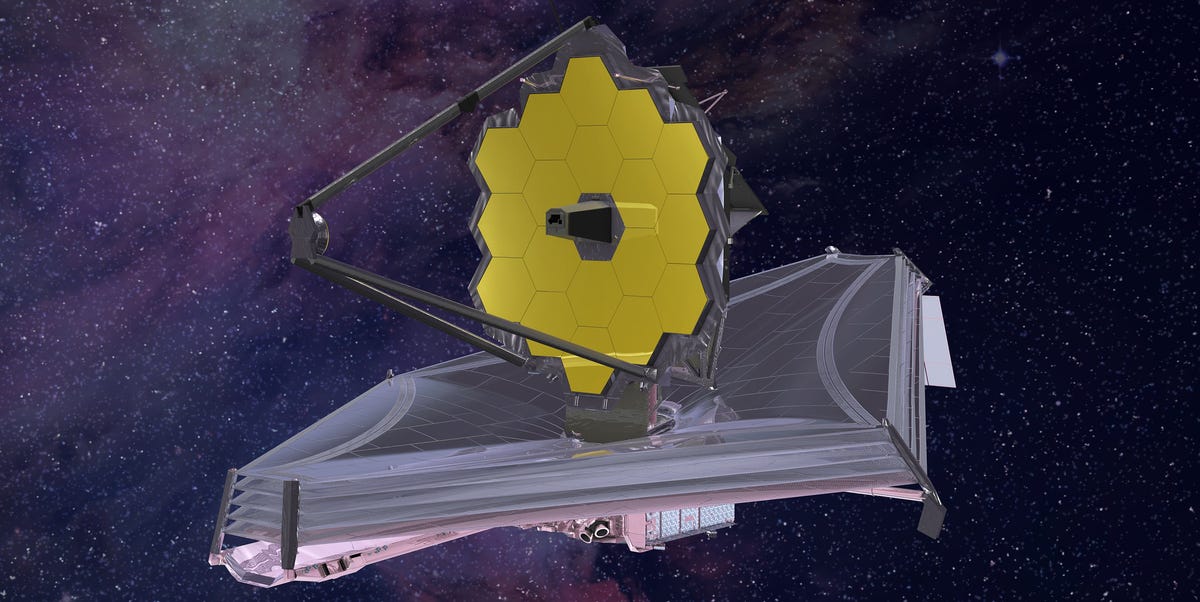
The James Webb Space Telescope has had more plot twists than a prestige sci-fi series with an unlimited effects budget. Before it became the universe’s favorite golden-eyed detective, Webb was known for something less glamorous: delays, cost overruns, tense engineering reviews, and launch dates that moved around like a cat avoiding bath time.
Today, the important reality check is this: Webb is not currently waiting on Earth. The telescope successfully launched on December 25, 2021, reached its destination near the Sun-Earth L2 point, completed commissioning, and began delivering science data in 2022. But the phrase “James Webb Telescope gets hit with more delays” still captures a very real chapter in space history. For years, NASA’s flagship observatory seemed permanently stuck in the cosmic waiting room.
Why did the James Webb Space Telescope face so many delays? The short answer is complexity. The longer answer involves a giant segmented mirror, a tennis-court-sized sunshield, cryogenic instruments, international partnerships, pandemic disruptions, launch vehicle issues, and the terrifying fact that Webb had to unfold itself in space with no repair crew standing by. When your telescope has to perform cosmic origami 1 million miles from Earth, you do not rush the checklist.
What Happened to the James Webb Space Telescope?
The James Webb Space Telescope, often called JWST or simply Webb, was designed as NASA’s premier infrared observatory and a scientific successor to the Hubble Space Telescope. It was built to look deeper into the universe, study the first galaxies, observe star formation, analyze exoplanet atmospheres, and explore cosmic dust clouds that visible-light telescopes struggle to penetrate.
That ambition came with a price. Webb was not a normal satellite with a few panels and a polite attitude. It was a massive observatory with a 6.5-meter primary mirror made from 18 gold-coated beryllium segments, four advanced science instruments, and a five-layer sunshield roughly the size of a tennis court. It had to launch folded inside an Ariane 5 rocket and then deploy piece by piece after reaching space.
In other words, Webb was less like sending a telescope into space and more like mailing a grand piano, a freezer, a camera shop, and a butterfly net to deep spacethen asking the box to unpack itself perfectly.
A Timeline of James Webb Telescope Delays
Webb’s development stretched across decades. Early concepts for a “Next Generation Space Telescope” appeared in the 1990s, and early expectations imagined a launch sometime around the late 2000s. As the design matured, engineers realized they were building something far more difficult than a bigger Hubble.
Early Plans and Rising Complexity
Initial projections underestimated how hard it would be to design, build, test, and integrate Webb’s components. Infrared astronomy requires extreme cold, which meant the observatory needed a large sunshield to block heat and light from the Sun, Earth, and Moon. The mirror had to be large enough to gather faint infrared signals from the early universe, but light enough to launch. The whole spacecraft had to fit inside a rocket fairing, then unfold in space.
Every one of those requirements added engineering risk. A normal delay might come from a supplier issue or a test failure. Webb’s delays came from the fact that nearly every part of the spacecraft was a one-of-a-kind invention.
The 2018 Delay: Testing, Sunshield Trouble, and an Independent Review
One of the most significant schedule slips came in 2018, when NASA moved Webb’s launch target to March 30, 2021. The delay followed problems discovered during integration and testing, including issues related to the spacecraft’s sunshield and propulsion system. An Independent Review Board examined the program and pointed to several factors: human error, embedded technical problems, excessive optimism, system complexity, and limited experience in some critical areas.
The sunshield was especially challenging. Webb’s five-layer Kapton shield had to unfold in space and separate into precise layers to protect the telescope from heat. It sounds simple until you remember that the shield is about the size of a tennis court and thinner than you would emotionally prefer for a $10 billion space observatory. Engineers had to test it repeatedly, repair it when necessary, and make sure it would not snag, tear, wrinkle in the wrong way, or behave like a cosmic picnic blanket in a windstorm.
The 2020 Delay: COVID-19 Joins the Guest List
By 2020, Webb was targeting March 2021. Then the COVID-19 pandemic disrupted work at Northrop Grumman’s facility in Redondo Beach, California, where the telescope was undergoing final integration and testing. NASA later announced a new target launch date of October 31, 2021, citing both pandemic impacts and remaining technical challenges.
Reduced on-site staffing, safety precautions, disrupted shift work, and slower testing all affected the schedule. Space missions are not easy to finish over video calls. You cannot exactly say, “Can everyone see my screen?” while someone is trying to inspect a spacecraft component that must survive launch vibrations and operate at cryogenic temperatures.
The 2021 Delays: Final Checks, Launch Vehicle Concerns, and a Clamp Band Incident
Even after Webb arrived at Europe’s Spaceport in Kourou, French Guiana, the drama continued. The launch target moved from October 2021 to December 2021. Then a clamp band incident during launch preparations caused an unexpected vibration through the observatory. NASA formed an anomaly review board and delayed the launch to allow engineers to verify that no systems had been damaged.
Later, an issue involving communication between the observatory and launch vehicle systems added another short delay. The final target became December 25, 2021. So yes, after decades of effort, Webb launched on Christmas morning. NASA did not exactly put a bow on it, but emotionally, it was close.
Why Did Webb Keep Getting Delayed?
The James Webb Telescope delays were not caused by one single mistake. They were the result of a difficult mission pushing multiple technologies at once. Large space projects often suffer when early estimates are too optimistic, and Webb became a famous example of how ambitious science can outgrow its first budget and schedule.
1. Webb Was Built to Do What No Telescope Had Done Before
Hubble orbits Earth and has been serviced by astronauts. Webb operates around the Sun-Earth L2 point, far beyond the reach of traditional repair missions. That changed everything. Engineers had to design a spacecraft that could deploy, cool down, align itself, and begin science operations without hands-on repairs.
The deployment sequence included hundreds of steps, from solar array extension to sunshield tensioning to mirror unfolding. Any mission-critical step had to work. This is the kind of pressure that makes engineers double-check a bolt, then triple-check the checklist used to double-check the bolt.
2. The Sunshield Was a Marvel and a Menace
Webb’s sunshield is one of the mission’s greatest engineering achievements. It keeps the telescope cold enough to detect faint infrared light from distant galaxies and exoplanets. But building and testing it was extraordinarily hard.
The shield had to be folded for launch, then unfolded and tensioned in space. It included membranes, cables, pulleys, motors, and deployment hardware. Problems during testing forced repairs and additional verification. The sunshield was not just a protective layer; it was a mission-critical machine.
3. Testing Took Longer Than Expected
Spacecraft testing is slow because failure in space is brutally inconvenient. Webb had to pass vibration tests, acoustic tests, thermal vacuum tests, deployment tests, and instrument checks. Each test could reveal new work. Fixes had to be verified. Verified fixes sometimes required more tests. Then those tests had paperwork. The paperwork probably had paperwork.
For Webb, testing was especially important because the telescope had to launch folded and later become a precisely aligned observatory. NASA could not simply say, “Close enough.” In space telescopes, “close enough” is how you get blurry galaxies and very uncomfortable congressional hearings.
4. Costs Increased as Delays Piled Up
Schedule delays often increase costs because teams, facilities, contractors, and testing campaigns must continue operating. Webb’s NASA cost eventually reached about $9.7 billion over 24 years, with development accounting for most of that total. ESA contributed the Ariane 5 launch vehicle and science instrument elements, while the Canadian Space Agency contributed guidance and instrument technology.
Critics argued that Webb consumed too much of NASA’s astrophysics budget and delayed other missions. Supporters countered that flagship observatories are rare, transformative, and worth the long investment. Both views contain truth. Webb was expensive and late. It also became one of the most powerful scientific instruments ever built.
Was the James Webb Telescope Worth the Wait?
Based on the science already returned, the answer looks increasingly like yes. Webb’s first full-color images and spectroscopic data stunned the public in July 2022. The images included the Carina Nebula, Stephan’s Quintet, the Southern Ring Nebula, and a deep-field view packed with distant galaxies. But the pretty pictures were only the appetizer.
Webb has helped astronomers study some of the earliest galaxies, analyze exoplanet atmospheres, observe star-forming regions, investigate black holes, and refine questions about the expansion rate of the universe. Its infrared sensitivity lets it see through dust and detect ancient light stretched by cosmic expansion.
In plain English, Webb helps scientists look backward in time. The farther away a galaxy is, the longer its light has traveled to reach us. By observing extremely distant objects, Webb can examine the universe when it was young. That is not just cool; that is “sit quietly and rethink your entire place in existence” cool.
The Final Delay Before Launch
The phrase “more delays” became almost attached to Webb by the time it reached the launch pad. Yet the final delays were relatively short and careful. The clamp band incident and communication issue delayed launch by days, not years. NASA and its partners chose caution because Webb was too valuable to risk.
That caution paid off. Webb launched successfully on December 25, 2021, separated from the Ariane 5 rocket, deployed its solar array, and began its journey toward L2. The Ariane 5 launch was so accurate that it helped conserve Webb’s onboard fuel, improving expectations for the telescope’s operational lifetime.
After launch, Webb still had to survive its deployment sequence. The sunshield unfolded. The mirrors moved into place. Instruments cooled. Alignment began. The entire process took months, and each milestone reduced the collective blood pressure of astronomers around the world.
What Webb’s Delays Teach Us About Big Science
Webb’s delay history offers a useful lesson: breakthrough science often looks messy before it looks brilliant. Large projects live in the uncomfortable zone between imagination and execution. It is easy to say “build a telescope that sees the first galaxies.” It is much harder to design one that survives launch, unfolds in deep space, and aligns mirror segments with microscopic precision.
Big science also depends on public patience. Taxpayers, lawmakers, scientists, engineers, and space agencies all have to tolerate uncertainty. That does not mean delays should be ignored. Oversight matters. Budget discipline matters. Transparent communication matters. But ambitious exploration will always involve risk.
Webb is a reminder that some of humanity’s best tools are not built quickly. Cathedrals took generations. Particle accelerators take decades. Space telescopes apparently take long enough for multiple generations of laptops to become museum pieces.
Common Questions About the James Webb Telescope Delays
Is the James Webb Space Telescope delayed now?
No. Webb launched successfully on December 25, 2021, completed commissioning, and began science operations in 2022. Articles about delays usually refer to its development and pre-launch history.
Why was Webb delayed so many times?
Webb was delayed because of technical complexity, sunshield problems, integration and testing challenges, cost growth, pandemic disruptions, launch vehicle concerns, and final pre-launch checks.
How much did the James Webb Space Telescope cost?
NASA’s cost for Webb is commonly cited at about $9.7 billion over 24 years, with additional contributions from ESA and the Canadian Space Agency.
What makes Webb different from Hubble?
Hubble mainly observes visible and ultraviolet light from low Earth orbit. Webb observes primarily infrared light from near the Sun-Earth L2 point. Webb’s larger mirror and cold operating environment allow it to study distant galaxies, star formation, and exoplanet atmospheres in ways Hubble cannot.
Experience and Reflections: Living Through the Webb Delay Era
Following the James Webb Telescope delay saga felt a little like tracking a package that says “out for delivery” for several years. Space fans would see a new launch target, get excited, make mental plans to watch history happen, and thensurprisethe date would slide again. At some point, Webb’s launch schedule became a running joke among astronomy enthusiasts. It was the telescope that was always almost ready.
But that long wait also made the launch feel unusually personal for many people. Webb was not just another NASA mission. It had been discussed in science classrooms, astronomy forums, budget hearings, documentaries, and space news articles for years. People grew from students into working scientists while Webb was still being prepared. Some engineers spent major parts of their careers on components that would not prove themselves until the observatory was already far from Earth.
That is what made the Christmas Day launch so emotional. It was not only a rocket launch; it was the release of decades of tension. Every second of ascent carried the weight of years of criticism and hope. When Webb separated from the Ariane 5 upper stage and unfolded its solar array, the mood shifted from “Will this ever launch?” to “Oh wow, now it really has to work.” The anxiety did not end at liftoff. It simply moved into space.
The deployment period was its own suspense series. Each successful step felt like a tiny miracle performed by motors, cables, sensors, and very tired engineers. The sunshield deployment was especially nerve-racking because it had been such a major source of concern on Earth. Watching NASA report milestone after milestone was like seeing someone solve a Rubik’s Cube while skydivingexcept the Rubik’s Cube cost billions of dollars and was trying to become a space telescope.
For writers, educators, and science communicators, Webb’s delay history is a gift because it makes science feel human. The story is not just about galaxies and infrared wavelengths. It is about planning mistakes, engineering courage, political pressure, public skepticism, teamwork, and patience. It shows that even elite scientists and engineers must wrestle with uncertainty. They do not defeat complexity with magic; they defeat it with testing, review boards, spreadsheets, humility, and occasionally the willingness to say, “Not yet.”
There is also a useful everyday lesson here. Some projects are late because they are poorly managed. Others are late because they are genuinely difficult. Webb had elements of both, which makes its story more honest than a simple hero narrative. The delays were frustrating and expensive, but the final result changed astronomy. That does not erase the overruns, but it does put them in context.
In hindsight, the Webb delays built a strange kind of suspense that made the telescope’s first images even more powerful. When those deep-field galaxies appeared, the long wait suddenly had a faceor rather, thousands of tiny galaxy faces, each one carrying ancient light across billions of years. The telescope that had once been known for delays became known for wonder. That is a pretty good rebrand.
Conclusion
The James Webb Telescope delay story is not just a tale of missed deadlines. It is a case study in what happens when human ambition tries to build a machine capable of seeing the universe’s earliest light. Webb was delayed by technical problems, testing setbacks, budget challenges, pandemic disruptions, and final launch precautions. Yet those delays also reflected the extraordinary difficulty of the mission.
Now that Webb is operating, its long and sometimes painful development history feels different. The telescope has opened a new era of infrared astronomy, giving scientists sharper tools to study galaxies, stars, planets, and cosmic mysteries that were once beyond reach. The delays were real. The frustration was real. But so is the science.
In the end, Webb teaches a simple lesson: sometimes the universe makes us wait. And sometimes, when the waiting is finally over, it sends back pictures that make the whole planet stop scrolling for a minute.
SEO Metadata
Note: This article is based on publicly available information from reputable space and science sources, including NASA, ESA, the U.S. Government Accountability Office, The Planetary Society, Space.com, Popular Mechanics, Scientific American, The Verge, IEEE Spectrum, Astronomy Now, and other established science reporting outlets. The topic is treated as a historical analysis of Webb’s pre-launch delays; the telescope successfully launched and is currently operating.