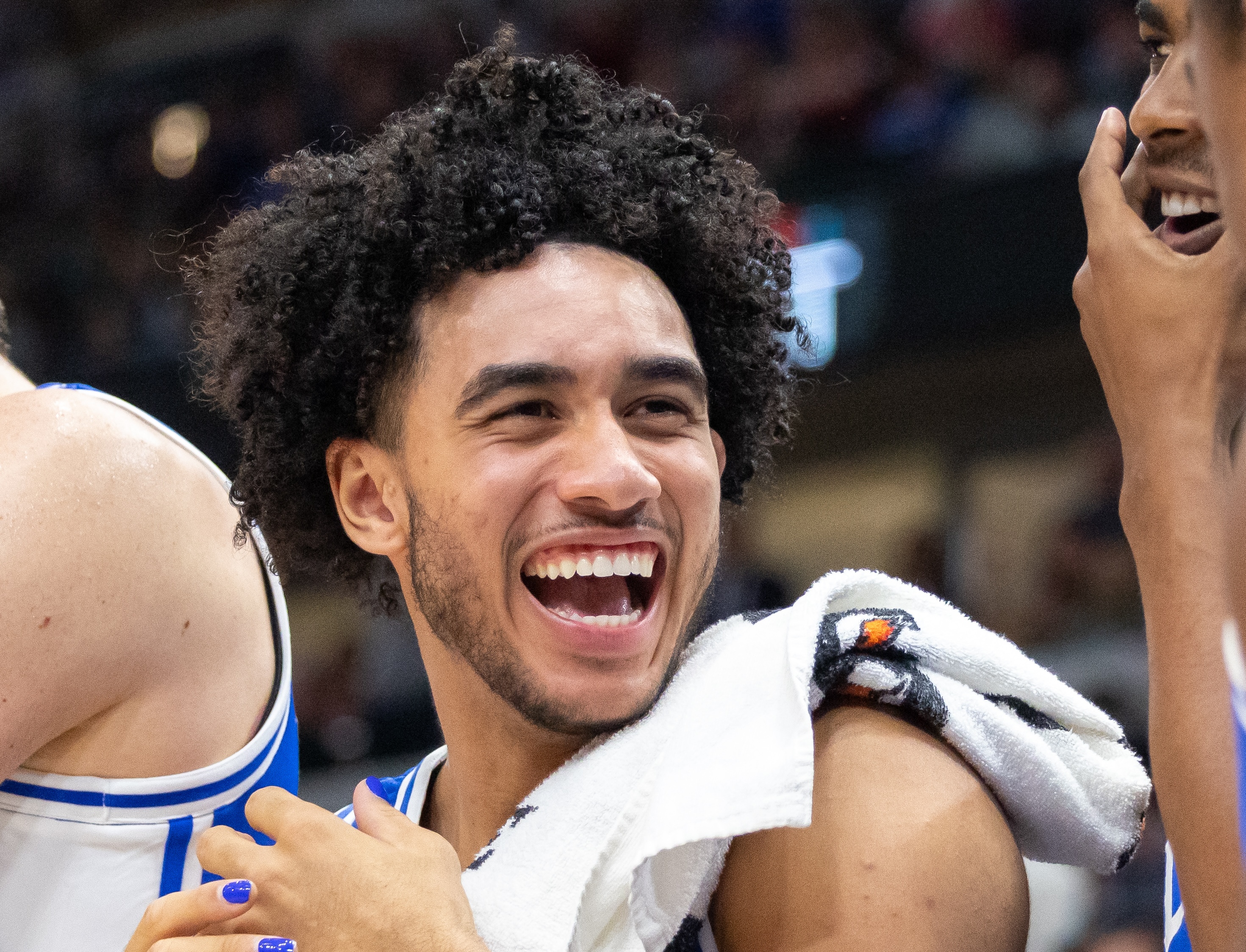
The internet loves three things: jump shots, hot takes, and making giant assumptions out of tiny details. That brings us to one of the most searched questions around rising NBA guard Jared McCain: Is Jared McCain gay? It is a question that keeps popping up online, usually tied to his painted nails, polished fashion sense, upbeat TikTok presence, and comfort with standing out in a sports culture that still treats self-expression like it needs a permission slip.
Here is the clean, honest answer: there is no verified public statement confirming that Jared McCain is gay. As of now, there is no credible evidence showing that McCain has publicly identified his sexual orientation. What is public is his confidence, his style, and his refusal to shrink himself to fit old-school ideas about how male athletes are “supposed” to look or act.
That means the smarter conversation is not about turning rumor into fact. It is about understanding why NBA rumors like this spread so fast, why fans confuse personal style with sexuality, and why that says more about internet culture than it does about McCain himself. So let’s separate what is real from what is just social media doing social media things.
The Short Answer: Nothing Publicly Confirms It
If you came here for a direct answer, here it is in plain American English: No public source confirms that Jared McCain is gay. He has not made a widely reported public statement identifying himself that way, and reputable coverage about him focuses on his basketball career, personal style, confidence, mental-health routine, and social media presence.
That distinction matters. In celebrity and sports culture, people often act as if repeated rumors magically become facts. They do not. A thousand reposts are still just a thousand reposts. Until McCain chooses to speak about his sexuality himself, anything more than that is speculation wearing sneakers.
For SEO readers and casual fans alike, this is the core truth behind the phrase “Jared McCain gay rumors”: they are rumors, not confirmed facts. And in the case of a young athlete building an NBA career, that difference is not a technicality. It is the whole game.
Why the Rumors Started in the First Place
So why are people even asking the question? The answer is not especially mysterious. McCain has built a very visible public persona that does not fit the old, narrow mold of “serious male athlete.” He paints his nails. He enjoys fashion. He has a huge social media following. He posts dance videos. He seems comfortable being cheerful, stylish, and expressive in public.
For many fans, that is refreshing. For others, it triggers a kind of cultural short circuit. Somewhere in the darker corners of the internet, people still treat any sign of femininity, softness, flair, or visual creativity in men as automatic evidence about sexuality. That leap is lazy, outdated, and usually wrong.
In other words, the Jared McCain rumors were not built on a statement, a confirmed relationship revelation, or a trustworthy report. They were built on a stereotype. And stereotypes are terrible scouts. They miss the play entirely and still act confident about it.
Painted Nails Became a Shortcut for Assumptions
Much of the chatter around McCain traces back to one very visible detail: his painted nails. He has spoken publicly about that choice as part of feeling like himself. But online culture often treats appearance as if it is a secret code that anyone can “decode” from a screenshot or a ten-second clip. That is where the rumor machine gets loud.
The problem is simple: painted nails do not tell you someone’s sexual orientation. Neither does a sharp outfit. Neither does a TikTok dance. Neither does smiling a lot. None of these are reliable clues. They are just pieces of personal style, and style is not a sworn affidavit.
People love categories because categories feel tidy. Human beings, unfortunately for the rumor mill, are much messier than that. McCain’s public image reflects confidence and individuality, not a confirmed label on his private life.
Sports Culture Still Has Old Ideas About Masculinity
Another reason the rumor gained traction is that men’s sports can still be deeply conservative about image. A player can hit threes, defend multiple positions, and grind through rehab, but the internet will still lose its mind over nail polish. That tells you everything you need to know about the internet, and not much about the player.
For decades, male athletes have been rewarded for projecting one narrow kind of masculinity: stoic, rugged, emotionally limited, aesthetically basic, and preferably dressed like they were chased out of a team hotel at 7 a.m. Anyone who steps outside that box gets extra scrutiny. McCain stepped outside it, and the rumor machine clocked in early.
This is why discussions about Jared McCain sexuality rumors are really discussions about gender expectations, fan culture, and the policing of image. The rumor itself may be about one player, but the pattern is much bigger.
What Jared McCain Has Actually Shown Publicly
What makes McCain interesting is not mystery. It is openness about self-expression. Public interviews and profiles have shown him as someone who embraces style, enjoys social media, and values confidence. He has also spoken about mental wellness habits such as journaling, meditation, and staying grounded amid criticism. That is not scandalous. That is just modern self-awareness with a crossover dribble.
He has also made it clear that he is not interested in reshaping himself to make strangers more comfortable. That is probably the most important real takeaway here. McCain appears to understand that visibility invites noise, and he is choosing authenticity anyway. In a world where many public figures sand down every edge until they sound like brand-approved wallpaper, that is not weakness. That is backbone.
Fans searching “Is Jared McCain gay?” are often looking for a hidden truth. But the funny thing is that McCain’s public message is not hidden at all. It is basically this: be yourself, look how you want to look, and let the comment section stretch before trying another reach.
Why Style Does Not Equal Sexual Orientation
This point deserves its own spotlight because the internet keeps pretending not to hear it. Self-expression is not proof of sexuality. That is true for athletes, actors, musicians, influencers, and the guy from your hometown who wears pearl necklaces and grills on weekends.
People often confuse three totally different things: appearance, personality, and identity. They are not interchangeable. A person can be expressive without being gay. A person can be quiet and still be gay. A person can be masculine, feminine, neither, both, or somewhere in the great middle of human complexity. None of that can be responsibly “confirmed” from fashion choices or social media clips.
That is why so many celebrity rumor articles feel flimsy: they are often trying to draw a map with crayons and then calling it satellite data. If the only evidence behind a rumor is “he paints his nails” or “he acts different,” then there is no evidence. There is just projection.
In McCain’s case, this matters even more because he is a young athlete whose public identity is still developing in real time. The smarter reading is not, “Aha, we solved it.” The smarter reading is, “Maybe this player simply has range.”
Why the Rumor Story Keeps Growing
The rumor has stuck around because modern internet culture rewards repetition over accuracy. Search engines notice what people ask. Social platforms notice what people react to. Content creators notice what gets clicks. Suddenly one stereotype-driven question becomes a mini economy. Before long, the search term looks bigger than the truth behind it.
That is why NBA rumors explained pieces like this exist in the first place. The search volume is real, but search volume is not evidence. It just means people are curious, bored, judgmental, entertained, or all four at once. Quite often, all four before breakfast.
Rumors also persist because ambiguity makes people itchy. If a public figure does not spell out every detail of private life, fans start playing detective. Some do it out of genuine curiosity. Some do it out of projection. Some do it because the internet has taught them that another person’s boundaries are merely a fun obstacle course.
But private life remains private life. McCain is not required to answer every rumor just because social media invented it. Public visibility is not a surrender form.
What Responsible Coverage Should Say
Responsible writing on this topic should do three things. First, it should state clearly that there is no verified public confirmation that Jared McCain is gay. Second, it should explain that the rumors appear to be driven mainly by assumptions about appearance and self-presentation. Third, it should avoid turning someone’s private identity into clickbait theater.
That does not mean the subject is off limits. It means the framing matters. There is a legitimate cultural conversation here about masculinity, sports, image, and how quickly people attach labels to public figures. What is not legitimate is pretending speculation is reporting.
That distinction is especially important for younger readers. Many people searching this topic are not media critics. They are fans, students, and casual readers trying to understand what is true. They deserve an answer based on reality, not recycled gossip with a dramatic headline and zero brakes.
Experiences Related to the Topic: Why These Rumors Feel So Familiar
If this whole story feels familiar, that is because it is. Not necessarily because every athlete faces the same rumor, but because many people have lived some version of this dynamic in everyday life. A boy wears something colorful, and suddenly people start making jokes. A man is emotionally open, and people act like that must reveal something secret. A public figure shows a little personality, and the internet responds like it just cracked the Da Vinci Code with a manicure photo.
That experience is bigger than Jared McCain. It happens in schools, workplaces, locker rooms, family gatherings, and online spaces every single day. People get sorted by appearance first and understood much later, if ever. A teenager learns very quickly that being different can attract attention before it attracts understanding. Some lean into it. Some hide. Some do a little of both depending on the room. That emotional math is exhausting, and a lot of people recognize it immediately when they see a public figure go through it in real time.
There is also the experience of watching a rumor become “truth” simply because enough people repeat it. Anyone who has ever had something misread about them knows the frustration. Maybe it was a false assumption about a friendship, a relationship, a personality trait, or a private struggle. Once people decide they know your story, they stop asking whether they are right. They start performing certainty. That is what makes rumor culture so sticky: confidence is cheap, but accuracy takes effort.
For athletes, the pressure can be even stranger. Fans often want players to be entertaining, marketable, unique, stylish, and authentic, but only inside a very specific box. Step outside it, and suddenly authenticity becomes “controversy.” It is a weird bargain. Be yourself, but not too much. Be visible, but only in approved ways. Build a brand, but make sure it does not challenge anyone’s assumptions. That is not freedom. That is branding with a dress code attached.
Another experience many people will recognize is the split between admiration and policing. Some viewers look at a player like McCain and see confidence. Others see a target. The same trait that inspires one audience annoys another. That split says a lot about culture right now. We are still negotiating what masculinity can look like in public, especially in sports. And every athlete who refuses to play by old image rules becomes a kind of accidental test case.
The healthiest lesson from all this is simple: curiosity is normal, but entitlement is not. You can notice a public figure’s style. You can discuss media narratives. You can critique how the internet responds. What you should not do is confuse your interpretation with someone else’s identity. That is the line too many rumor threads trip over like they are running wind sprints in clown shoes.
In that sense, the experience related to this topic is not just about Jared McCain. It is about how quickly people label others, how stubborn stereotypes remain, and how much more respectful public conversation becomes when we let people define themselves on their own terms.
Conclusion
So, is Jared McCain gay? Based on publicly available, credible information, there is no verified confirmation that he is. The rumor appears to be driven mostly by assumptions about his painted nails, fashion choices, upbeat social media presence, and willingness to express himself in ways that some fans still read through outdated stereotypes.
The more accurate story is not about a secret revelation. It is about a young NBA player refusing to flatten his personality for public approval. That should not be turned into a guessing game about his private life. It should be recognized for what it is: confidence, individuality, and a reminder that style is not evidence.
And honestly, if the internet ever learns that nail polish is not a legally binding statement about sexuality, we may all deserve a parade. Until then, the best answer is the simplest one: there is no public proof behind the rumor, only speculation.