There are few modern online experiences more specific than opening Instagram to check one harmless story and, five minutes later, realizing you’ve been ambushed by a glittering parade of ring selfies, posed hand shots, beach proposals, rooftop proposals, vineyard proposals, and captions that somehow use the phrase “forever starts now” without even blinking. If your thumb has ever hovered over the screen while your brain whispered, good for them, good for them, good for them, wow I need a snack, you are not alone.
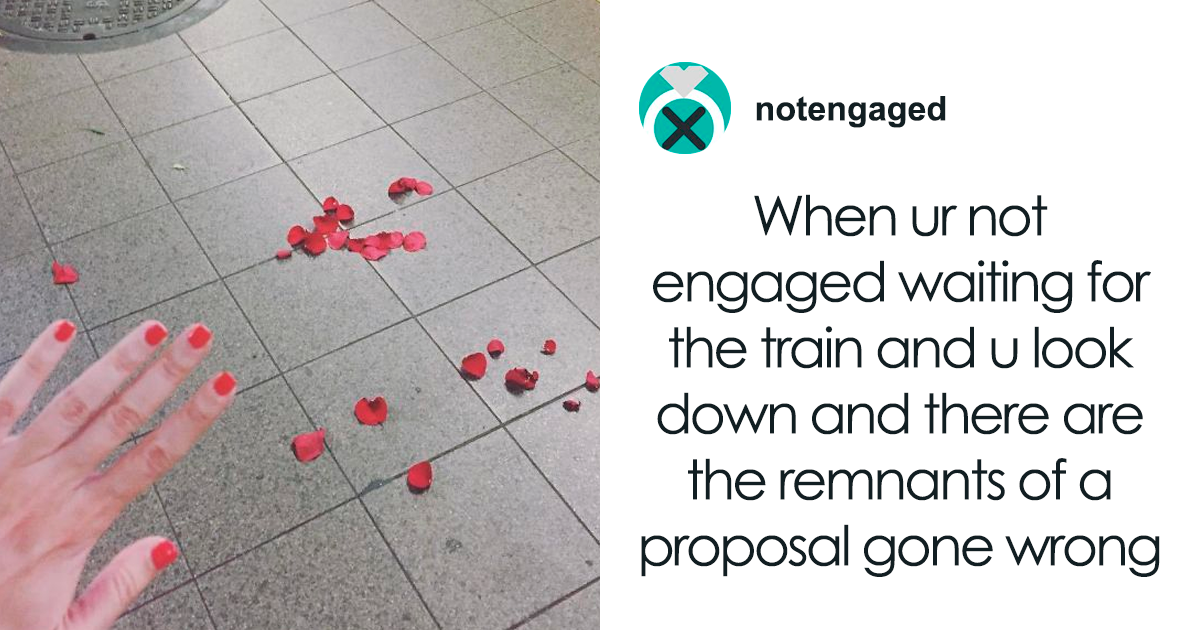
That is exactly why the Instagram account ‘Not Engaged’ hits such a sweet spot. It is funny, a little absurd, and much smarter than it first appears. Instead of feeding the same polished engagement announcement formula back into the algorithm, it pokes fun at the culture around it. The account turns the classic engagement-photo language on its head by spotlighting a ringless left hand living a perfectly normal, often delightful life. No diamond. No dramatic kneel. No rose petals spelling destiny. Just one gloriously unengaged hand out in the world, minding its business.
And that is the magic of it. ‘Not Engaged’ is not simply a joke account for single people who are one ring selfie away from a full spiral. It is a sharp, funny commentary on how social media can make relationship milestones feel less like personal news and more like a public performance. It reminds us that adulthood is not a conveyor belt, that happiness does not arrive in a velvet ring box, and that sometimes the healthiest thing you can do for your feed is laugh at it.
What Is ‘Not Engaged,’ Exactly?
At its core, ‘Not Engaged’ is a parody of engagement-photo culture. The concept is deliciously simple: instead of presenting a sparkling ring as proof that life is officially happening, the account features a bare left hand in everyday settings. The humor lands because it imitates a format everyone recognizes instantly. We all know the engagement pic pose. The hand gets the close-up. The caption gets misty. The comments section turns into a digital rice toss.
‘Not Engaged’ takes that visual language and swaps out the expected ending. The hand is still front and center, but the grand announcement is basically, “Look at me, still not engaged, still alive, still eating brunch.” That twist makes the account more than a gimmick. It is satire with excellent timing. It works because it recognizes how repetitive engagement announcements can feel once social media turns them into a genre.
The account also succeeds because it never needs to become bitter to be funny. It does not scream, “Love is fake!” and run into the woods. Instead, it gently mocks the idea that romantic milestones deserve their own cinematic universe while everyone else should sit quietly in the background like underwritten supporting characters. The joke is not that engagement is bad. The joke is that the internet has made engagement look like a mandatory season finale.
Why So Many People Instantly Get the Joke
Engagement announcements have become a full-blown online ritual
One reason ‘Not Engaged’ resonates so strongly is because engagement announcements are no longer just announcements. They are social events. On today’s internet, a proposal often comes with a whole content package: the setup, the reveal, the ring close-up, the caption, the soft-focus couple shot, the comments from old classmates, and maybe a follow-up carousel for anyone who somehow missed the first round. Social media did not invent engagement joy, but it absolutely gave it better lighting.
That is not inherently bad. Sharing happy news is normal. Celebrating love is lovely. The problem begins when one person’s milestone becomes another person’s measuring stick. Scroll long enough and you can start to feel as if everyone else received a memo titled How to Successfully Advance to the Next Stage of Adulthood while you were busy trying to remember whether you paid your electric bill.
The algorithm makes “engagement season” feel endless
On paper, relationship posts should be just one category of content among many. In reality, platforms tend to magnify what already gets attention. Proposals are emotional, visual, shiny, and highly commentable, which means they travel fast. One ring post becomes two, then six, then seventeen, and suddenly your feed looks like a jewelry-store mood board curated by fate itself.
That repetition can distort perception. You may know intellectually that social media shows a curated highlight reel, but emotionally? Emotionally, it can still feel like the entire internet got engaged over the weekend while you were eating cereal in a T-shirt with mystery stains. This is where ‘Not Engaged’ feels like a necessary palate cleanser. It breaks the rhythm. It interrupts the script. It reminds you that the feed is not reality, and the most refreshing content online is often the kind that refuses to posture.
Why the Account Feels Surprisingly Therapeutic
It punctures the fantasy
Social media thrives on polish. People tend to post the best version of the moment, not the full emotional spreadsheet behind it. That is especially true with romantic milestones. The proposal photo may be gorgeous, but it rarely includes the stress, the family dynamics, the money conversations, the uncertainty, or the fact that someone probably had to crouch behind a bush to get the shot. ‘Not Engaged’ exposes that polished performance by mirroring it just enough to show how theatrical it has become.
Humor is useful here because it creates emotional distance. It lets people look at the machine without getting swallowed by it. Instead of silently absorbing the message that “everyone is moving forward except me,” you get to laugh at the formula itself. That laugh matters. It turns passive comparison into active perspective.
It refuses the idea that being single is a placeholder life
This is the deeper reason the account hits home. ‘Not Engaged’ suggests that life is not on pause just because a proposal has not happened. A ringless hand can still travel, vote, celebrate, work, eat dessert, go to concerts, and have a fully developed personality. Revolutionary stuff, apparently.
That message lands because many people still absorb a quiet cultural pressure that says adulthood only counts once it becomes publicly legible through couple milestones. Get engaged. Get married. Buy the matching mugs. Post the tasteful announcement. Smile like you invented devotion. Against that backdrop, a deliberately “not engaged” account feels oddly liberating. It says your life is not a waiting room.
It makes room for complicated feelings
One of the least discussed truths about social media is that you can be genuinely happy for other people and still feel exhausted by the performance around their happiness. Those emotions are not enemies. They are roommates. You can wish your friends well and also need a break from 42 consecutive close-ups of oval-cut diamonds hovering above cappuccinos.
‘Not Engaged’ gives people permission to admit that contradiction. It says: yes, love is nice, but so is not being emotionally flattened by an endless slideshow of coordinated beige outfits and caption poetry. That blend of affection and fatigue is deeply modern, and the account captures it beautifully.
What ‘Not Engaged’ Gets Right About Social Media Culture
What makes the account more than a one-note joke is that it exposes a larger truth about internet life: platforms are very good at turning personal milestones into public brands. A proposal used to be something you told people. Now it can become a mini media rollout. There is often an audience strategy, an image strategy, and an engagement strategy for the engagement. That sentence should not make sense, and yet here we are.
By parodying engagement pics, ‘Not Engaged’ also critiques the way social media rewards sameness. Even when people think they are expressing individuality, they often end up reproducing the same visual grammar. The same hand angle. The same caption energy. The same surprised face that suspiciously looks well rehearsed. The same comments: “Crying!” “Obsessed!” “About time!” “Dead!” Social media loves originality in theory and templates in practice.
The account reminds viewers that not every meaningful life update needs to be optimized for applause. Sometimes the funniest thing in the room is the person who declines to perform at all. Or, in this case, performs by pretending to perform, which is honestly very online and very brilliant.
Engagement Fatigue Is Real, Even If You’re a Nice Person
If you feel worn out by relationship content, that does not make you cynical. It makes you human. Constant exposure to curated milestone posts can trigger comparison, loneliness, impatience, insecurity, boredom, or that very specific flavor of emotional whiplash that comes from thinking, I love my friends, but if I see one more manicured hand gripping a champagne flute, I may become a forest cryptid.
And no, the answer is not to become allergic to joy. The answer is to understand that social media changes the scale and repetition of joy. It packages personal milestones so efficiently that they can start to feel less intimate and more industrial. ‘Not Engaged’ is funny because it pushes back against that industrial feeling. It says not every life event deserves a campaign, and not every viewer wants to sit through the campaign either.
That perspective can actually make the internet kinder. Once you stop treating other people’s posts as a scoreboard, you can appreciate them without assigning them magical meaning about your own life. Satire helps with that. It loosens the grip of comparison and returns a little oxygen to the room.
How To Survive Engagement Season Without Throwing Your Phone Into a Decorative Pond
1. Curate your feed like an adult with boundaries
If certain kinds of posts leave you feeling deflated, mute them for a while. You do not need to announce it like a tiny social-media war. Just quietly protect your peace. The mute button was invented by someone who understood humanity.
2. Remember that a post is not a full relationship
A beautiful announcement can be sincere and still incomplete. A cute carousel does not tell you everything about a partnership, and it certainly does not tell you anything definitive about your own worth.
3. Use social media actively, not passively
There is a difference between choosing what to engage with and becoming a helpless sponge for whatever the algorithm sprays at you. Comment on things you actually enjoy. Follow accounts that widen your sense of what a good life can look like. Be more curator, less hostage.
4. Treat humor like a tool, not a distraction
Accounts like ‘Not Engaged’ work because they interrupt the comparison loop. Laughter does not solve everything, but it can stop a weird spiral before it becomes your whole evening.
5. Build a definition of adulthood that is bigger than romance
A meaningful life can include love, but it should also include friendship, work, health, creativity, rest, curiosity, community, money management, and knowing how to keep basil alive longer than four days. Any culture that reduces adulthood to ring status is leaving out most of the plot.
The Bigger Reason ‘Not Engaged’ Matters
Ultimately, the account works because it does something the internet desperately needs more of: it humanizes people who are not in the spotlight of the usual milestone machine. It offers a funny, low-stakes reminder that there is no moral superiority in being publicly chosen and no personal deficiency in not having posted a ring photo by 29, 31, or 47. Life is not late just because it looks different.
That is why ‘Not Engaged’ feels less like a novelty account and more like a tiny cultural correction. It gently mocks the pressure, softens the comparison, and restores some dignity to the gloriously ordinary fact of just existing without a staged announcement attached to it. In an internet built to reward performance, there is something almost rebellious about that.
So yes, if you are tired of all the engagement pics on social media, the Instagram account ‘Not Engaged’ really might be what you need. Not because it hates romance. Not because it wants everyone to become emotionally unavailable and move into cabins. But because it understands a basic truth: the funniest antidote to overshared perfection is a perfectly timed joke and a very confident, very unbedazzled left hand.
Related Experiences: What It Feels Like When Engagement Pics Start Taking Over Your Feed
For a lot of people, engagement fatigue does not arrive in one dramatic moment. It sneaks in. First, a college friend gets engaged. Then a coworker. Then a cousin. Then three people you vaguely remember from sophomore biology all post nearly identical ring shots within the same month, and suddenly your phone starts to feel less like a communication tool and more like a bridal cannon. You are not mad, exactly. You are just… very aware of your own hand.
One common experience is the strange mix of sincerity and irritation. You really do feel happy for people. You mean it. You type “Congratulations!!!” with honest enthusiasm. And yet two seconds later, you are staring at the ceiling wondering why every major life event now arrives with a mini photoshoot and a caption that sounds like it was drafted by a candle company. That emotional split can make people feel guilty, but it is actually normal. Social media encourages comparison while pretending it is only offering celebration.
Another relatable moment is what you might call the accidental self-audit. You see enough engagement posts and, before you know it, your brain starts opening tabs you did not ask for. Am I behind? Should I be dating more seriously? Do I need a five-year plan? Why does everyone else own neutral-toned outfits suitable for proposal photography? None of those questions necessarily reflect reality, but the repetition of romantic milestone content can make them feel urgent anyway.
Then there is the algorithmic pile-on, which deserves its own minor documentary. Once you interact with one proposal post, the platforms often assume this is now your entire personality. Suddenly you are getting engagement rings in your ads, wedding venues in your Explore tab, and content creators explaining “how to soft launch your fiancé” as if this is essential civic knowledge. Even if you were only mildly tired before, the volume alone can push you into comedy-or-collapse territory.
That is why humorous counter-programming matters so much. Accounts like ‘Not Engaged’ create breathing room. They let people feel seen without requiring a meltdown. They acknowledge the pressure without turning it into tragedy. And for people who are single, uncertain, divorced, happily uninterested in marriage, or simply not in the mood to make ring content their full-time emotional weather system, that kind of relief is powerful.
There is also a quieter experience behind all of this: the realization that adulthood looks different than many people expected. Some imagined they would be married by now. Some thought they would care more about getting married than they actually do. Some are in loving relationships with no proposal in sight. Some are building rich lives outside couple culture altogether. ‘Not Engaged’ speaks to all of them because it turns that uncertainty into something lighter. It says you do not need a viral milestone to prove your life is real. Sometimes you just need a sense of humor, a functioning group chat, and the wisdom to know when to close the app and go get tacos.
Note: This article is formatted as clean HTML body content for direct web publishing and does not include source-link placeholders or extra reference markup.