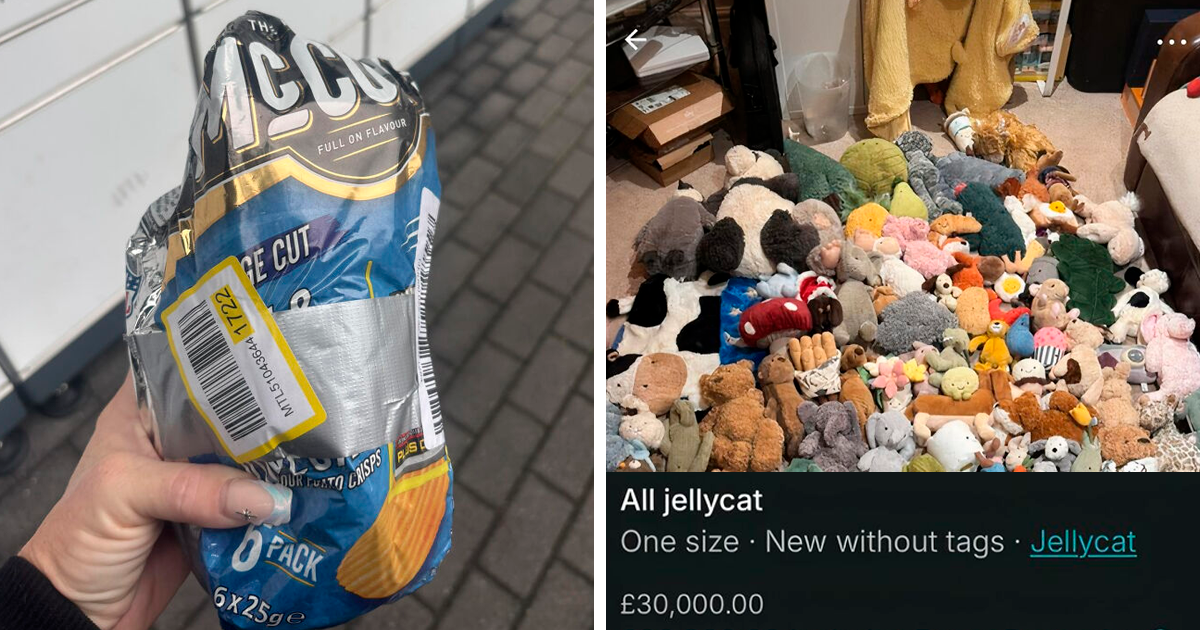
Online secondhand shopping was supposed to be simple: photograph an unwanted sweater, set a reasonable price, mail it to a stranger, and enjoy the satisfying glow of making five dollars while saving one garment from the landfill. Then humans got involved.
The collection known as "Idiots of Vinted" pulls together 82 bizarre listings, dramatic conversations, suspicious bargains, packaging disasters, and negotiations that somehow become international incidents over the price of a used tank top. The screenshots originated from a large Facebook community devoted to documenting the stranger side of Vinted, where everyday resale regularly mutates into accidental performance art. At the time the collection was published, the community reportedly had more than 173,000 members.
Some posts are harmlessly ridiculous. Others reveal genuine problems involving misleading descriptions, counterfeit goods, harassment, unsafe transactions, and packages held together by optimism. Together, they offer an entertaining tour through the wonderful, worrying, and occasionally damp world of peer-to-peer resale.
Vinted Is a Thrift Store With a Group Chat Attached
A traditional thrift store limits the amount of chaos a shopper can experience. You may find a mysterious gravy boat, a commemorative plate from 1987, or jeans with a zipper in a location that raises anatomical questions. However, the objects do not message you at midnight asking why you have not purchased them.
Vinted and similar resale platforms combine shopping with direct communication. Buyers can ask about measurements, condition, delivery, fabric, authenticity, and price. Sellers can clarify details and negotiate. This should make transactions easier. It also gives two strangers an open channel in which to misunderstand each other with breathtaking efficiency.
The platform itself is built around legitimate peer-to-peer commerce. Buyers browse listings, communicate with sellers, use integrated payment options, and receive certain protections when transactions remain inside the system. The unpredictable part is not the basic machinery. It is the person typing, “Would you accept $1.25, free shipping, and my sincere gratitude?”
Why the 82 Unhinged Vinted Posts Are So Funny
Low-Stakes Purchases Produce High-Stakes Emotions
One of the collection’s funniest patterns is the enormous emotional investment attached to extremely inexpensive objects. A lightly worn top might cost less than lunch, yet a conversation about it can acquire the tension of a courtroom drama.
A buyer makes a tiny offer. The seller declines. The buyer returns with a final offer that is three cents higher and presents it as a historic compromise between nations. Someone becomes offended. Paragraphs are written. Screenshots are taken. By the end, nobody remembers whether the original item was a blouse, a scarf, or a mildly haunted cardigan.
This mismatch between value and intensity creates perfect comedy. The object is ordinary, but the behavior surrounding it is magnificently disproportionate.
Item Descriptions Become Creative Fiction
Online resale depends on words such as “new,” “excellent,” “vintage,” and “minor wear.” Unfortunately, these words can become surprisingly flexible.
In the strangest listings, “new without tags” appears to mean “not currently on fire.” “Vintage” means “found behind a radiator.” “Rare” means “the manufacturer stopped making it, possibly after receiving complaints.” “Small mark” describes a stain visible from low Earth orbit.
One notorious Vinted listing offered a heavily burned designer bag for a substantial price, with the damage presented almost as a desirable antique effect. Another viral example involved a visibly used piece of soap labeled as new. These are not merely optimistic descriptions. They are bold experiments designed to determine whether buyers possess eyes.
Packaging Becomes an Extreme Sport
Reusing packaging is sensible. A clean box or durable mailing bag can reduce waste and keep shipping costs under control. The trouble begins when sellers confuse “reused packaging” with “whatever was closest to the door.”
Resale communities have documented printers sent in thin plastic bags, watches wrapped in baking paper, clocks placed in grocery bags, and clothing protected by cereal boxes or other containers that were clearly enjoying an unexpected second career. One pair of leggings may arrive safely inside breakfast-cereal armor. Another purchase may appear to have been packaged during an earthquake.
Official USPS guidance recommends strong packaging, sufficient cushioning, and enough protection to stop contents from moving during automated processing. A supermarket bag and a hopeful knot do not meet that standard, no matter how emotionally supportive the knot may be.
Photographs Create Accidental Surrealism
A successful resale photo should show the item clearly, reveal flaws, and help shoppers understand fit, color, and condition. The posts in this collection demonstrate several alternative philosophies.
Some sellers photograph clothing on the floor beside unrelated household objects. Others use dark rooms, chaotic backgrounds, unusual poses, or creative styling that makes the product harder to identify. A pair of jeans might be modeled as a top. A dress may be displayed from an angle normally reserved for experimental cinema. A mirror selfie can reveal seventeen fascinating details about the seller’s bedroom and almost nothing about the jacket.
It is difficult to know whether these photos discourage sales or attract buyers who appreciate mystery. Either way, they make excellent screenshots.
The Main Characters in Every Vinted Chaos Collection
The Lowball Philosopher
This buyer does not simply make an offer. They present an economic theory. They explain fuel prices, household expenses, delivery fees, the position of Jupiter, and why accepting 70 percent less than the asking price would be spiritually beneficial for the seller.
The “Brand-New” Optimist
The item has stains, fading, missing hardware, and evidence of previous ownership by either a large dog or a small tornado. Nevertheless, the seller marks it “new” because they once considered washing it.
The Emergency Shopper
This person needs a $4 skirt immediately. Not eventually. Not tomorrow. Immediately. If the seller does not respond within seven minutes, follow-up messages arrive asking whether the parcel has been shipped, delivered, and worn to the event already.
The Unlicensed Authentication Expert
Designer resale attracts counterfeit concerns, but some users diagnose authenticity from a single blurry photograph taken beneath a yellow light. They identify fake shoes by the emotional energy of the stitching and authenticate handbags by zooming into three pixels near the zipper.
The Measurement Mystic
Rather than provide the waist, length, or chest measurement, the seller says an item should fit “a normal medium.” This is useful only if the fashion industry has finally agreed on what normal means, which it has not.
The Oversharer
A simple question about fabric triggers a complete autobiography. The buyer learns about the seller’s former relationship, upcoming vacation, difficult neighbor, recent dental procedure, and personal theory about delivery drivers. The original question remains unanswered.
The Revenge Reviewer
The item arrived on time and matched the description, but the packaging was not beautiful enough, the seller did not include a handwritten poem, or the parcel was delivered while the buyer was making coffee. A one-star review follows. Justice, apparently, has been served.
Why Normal People Behave Strangely in Marketplace Messages
The psychological idea known as the online disinhibition effect helps explain why digital conversations can become unusually blunt, intimate, demanding, or aggressive. Distance, reduced social cues, delayed communication, and the feeling of invisibility can weaken the restraint people normally use in face-to-face interactions.
In person, few shoppers would walk into a consignment store, hold up a $6 shirt, and deliver a ten-minute speech about why it should cost $2. Online, that same request can be typed from the safety of a couch. The seller becomes a username rather than a person who spent time photographing, listing, packing, and shipping the item.
Text also removes tone. “Can you ship today?” may be an innocent question, a firm demand, or the opening line of a hostage negotiation. Emojis help, but an aggressive sentence followed by six smiling faces does not necessarily become friendly. Sometimes it becomes more threatening.
The Serious Side Beneath the Memes
Misleading Listings Create Real Disputes
Clear descriptions and photographs are not optional decorations. They establish what the buyer should receive. Major resale platforms emphasize accurate condition details, photographs of the actual used item, and disclosure of visible defects because vague or misleading listings increase returns and complaints.
Sellers should mention stains, odors, missing pieces, repairs, pilling, fading, and alterations. Buyers should read the entire description and inspect every image. Nobody benefits when a garment described as “excellent” arrives looking like it recently completed military service.
Off-Platform Payments Are a Major Warning Sign
Vinted states that its Buyer Protection can cover qualifying purchases that do not arrive, arrive damaged, or differ significantly from the listing. It also warns that payments made outside its system are not covered by that protection. The FTC similarly recommends checking marketplace refund rules, using safer payment methods, and understanding who can help when something goes wrong.
Common marketplace scams include fake payment confirmations, fabricated refund requests, overpayment schemes, and attempts to move communication away from the platform. The FTC and Better Business Bureau both warn sellers to verify payments independently and avoid buyers who request unusual financial arrangements or unnecessary personal information.
Harassment Is Not a Punchline
Most awkward messages are merely annoying, but some cross into sexual harassment, intimidation, or privacy violations. Reports involving Vinted have included unwanted sexual messages and the unauthorized reuse of sellers’ photographs. Broader research has also found that online harassment is common across social media and messaging environments.
Sellers do not owe strangers personal photographs, conversations about how clothing was worn, or answers to intrusive questions. Blocking and reporting a suspicious user is often more appropriate than attempting to determine whether the person is joking.
How to Avoid Becoming an “Idiot of Vinted” Screenshot
For Sellers
- Use bright, clear photographs of the actual item.
- Show labels, closures, soles, seams, and every visible flaw.
- Choose the correct condition instead of the condition you wish the item had.
- Provide useful measurements rather than saying it fits “true to vibes.”
- Keep communication polite, brief, and focused on the transaction.
- Use strong, weather-resistant packaging with appropriate cushioning.
- Keep payment and shipping inside the platform’s approved system.
- Photograph valuable items and packaging before shipment.
For Buyers
- Read the full description before asking questions already answered in it.
- Check seller reviews, photos, measurements, and item condition.
- Make reasonable offers without attaching an emotional manifesto.
- Do not pressure sellers for immediate responses or impossible shipping times.
- Avoid off-platform payments, suspicious links, and requests for verification codes.
- Report problems promptly through the platform’s official process.
- Remember that inexpensive secondhand goods may show normal signs of previous use.
Why People Cannot Stop Reading These Posts
The “Idiots of Vinted” phenomenon works because the screenshots are more than shopping mistakes. They are compact human comedies with characters, conflict, escalation, and an unexpected ending.
Readers recognize familiar situations: the buyer who offers half the price, the seller who disappears after promising to ship, the confusing description, the parcel wrapped like a school science project, or the message that begins normally and suddenly reveals far too much information.
The community also serves an informal educational purpose. Laughing at a printer sent in a plastic bag reinforces the idea that printers require boxes. Mocking a misleading “new” listing helps establish shared expectations about honesty. Screenshots can therefore function as both entertainment and cautionary tales.
Still, public mockery deserves restraint. Not every typo is evidence of stupidity, and not every misunderstanding requires thousands of strangers to assign blame. Names, addresses, tracking information, and other identifying details should be removed before conversations are shared.
What the Vinted Chaos Says About the Resale Economy
Secondhand fashion is no longer a niche activity. ThredUp’s 2026 resale research projects that the global secondhand apparel market could reach $393 billion by 2030, while industry analysis continues to forecast faster growth for resale than for conventional apparel.
Environmental interest is one reason for that momentum. The EPA identifies discarded clothing as a major source of textile waste and has estimated a relatively low recycling rate for clothing and footwear. Keeping usable garments in circulation through resale or reuse can delay disposal, although resale is not a magical environmental solution if it simply encourages people to buy more things.
Affordability and discovery matter too. A resale app can offer discontinued designs, unusual sizes, vintage clothing, and designer pieces at lower prices. It turns millions of closets into searchable inventory.
That scale produces both opportunity and absurdity. When ordinary individuals become retailers, photographers, negotiators, customer-service representatives, packaging departments, and logistics coordinators in a single afternoon, quality will vary. Some users operate like professional boutiques. Others appear surprised that the sold item must eventually be placed inside a container.
A Familiar Resale Experience: From Closet Cleanout to Minor Crisis
The following is a fictionalized composite based on common experiences reported across online resale communities.
The process begins on a peaceful Sunday afternoon. You decide to clean your closet and discover a jacket you have not worn in two years. It is in good condition, still fashionable, and deserves a life beyond hanging beside a bridesmaid dress you are emotionally unprepared to discuss.
You photograph the jacket near a window. You include the front, back, label, zipper, lining, and one tiny mark near the cuff. You measure the chest and length. You write a clear description. For one shining moment, you believe preparation will protect you from confusion.
The first message arrives immediately.
“Lowest?”
You reply with a polite price. The potential buyer counters with an amount so low that you briefly check whether a decimal point is missing. You decline. They ask why. You explain that the jacket is already fairly priced. They send a sad face, followed by a speech about shipping costs. You begin to feel responsible for international commerce.
A second shopper asks whether the jacket will fit. You request their measurements. They respond, “I’m usually between small and large.” This does not narrow the field.
A third person asks for a photograph of the jacket being worn. You provide one. They ask for another photograph from the side, then from the back, then outdoors. You realize you are producing a fashion campaign for someone who may never click the buy button.
Finally, a normal buyer purchases the jacket without negotiation. Relief floods the room. You package it carefully in a clean mailing bag, protect it from moisture, attach the label, and ship it the next morning.
Tracking confirms delivery. Four minutes later, the buyer messages: “Have you been paid yet?” You have not. Two minutes later, another message arrives: “Why does it say delivered?” You explain that delivered means the package was delivered to them. They respond, “Oh.”
That evening, the buyer reports a problem. Your heart sinks. Did the zipper break? Did the package tear? Did the jacket transform during transit?
The issue is that the jacket appears slightly darker indoors than it did beside your sunny window. You compare the photographs. It is clearly the same navy jacket. The buyer agrees that it is navy but says they expected “a brighter navy.” You stare at the phrase until it loses all meaning.
After several messages, the buyer decides to keep it. The transaction completes. You earn enough money to buy dinner, provided dinner does not include beverages.
The experience should discourage you from selling again. Instead, you list three more items the next day. That is the strange appeal of online resale. Between the confusing questions and microscopic negotiations, useful objects find new homes. Closets become manageable. Buyers discover bargains. Sellers recover a little money.
Most transactions are uneventful, which is why nobody screenshots them. A buyer pays, a seller ships, and both parties behave like adults. The internet quietly refuses to celebrate this achievement.
The memorable cases are the exceptions: the cereal-box parcel, the “new” product with obvious battle damage, the buyer demanding same-hour delivery, or the message that becomes a family history. Those exceptions keep communities such as “Idiots of Vinted” endlessly supplied with materialand remind everyone else to photograph clearly, describe honestly, package securely, and perhaps wait ten minutes before sending that fourth follow-up message.
Conclusion
The 82 unhinged “Idiots of Vinted” posts reveal the unpredictable human layer beneath digital resale. A platform may provide listings, payments, shipping labels, reviews, and dispute systems, but it cannot prevent every questionable photograph, insulting offer, bizarre explanation, or package constructed from household leftovers.
That chaos is precisely why the screenshots are so entertaining. They transform ordinary secondhand transactions into tiny stories about optimism, impatience, creativity, misunderstanding, and the eternal human desire to save another fifty cents.
The best lesson is simple: be accurate, be reasonable, protect your information, use secure payment systems, and treat the stranger on the other side of the screen like a person. Above all, place fragile electronics in an actual box. Civilization depends on it.