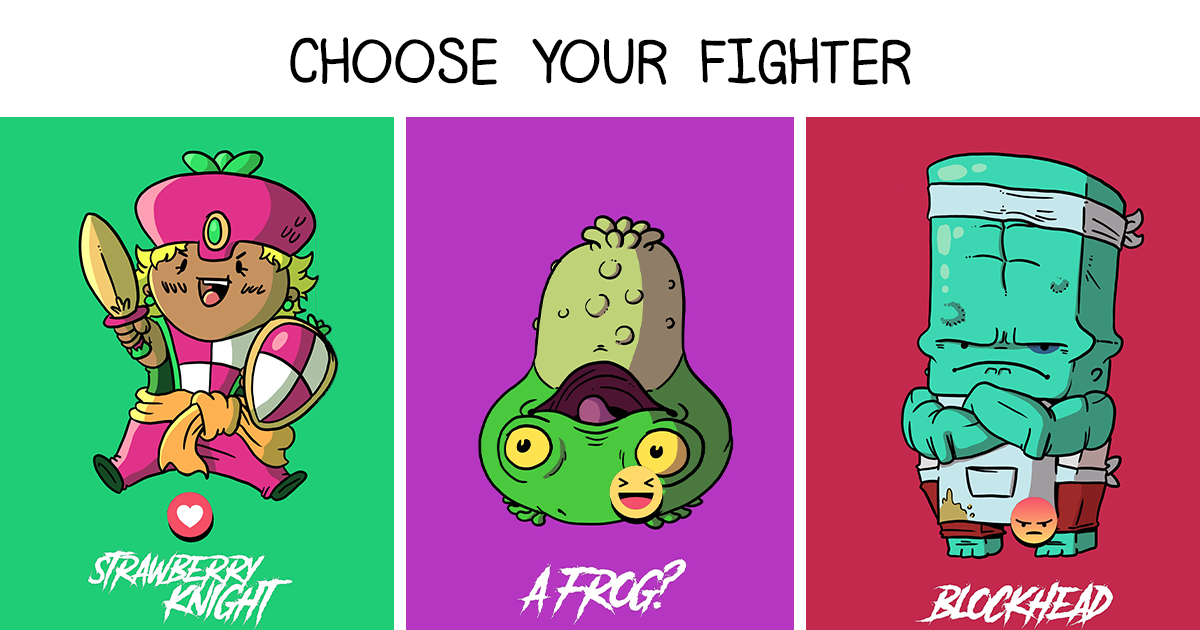
What happens when an artist places 16 strange, charming, battle-ready original characters into a public tournament and gives the audience control of the bracket? You get dramatic upsets, instant fan favorites, suspiciously passionate arguments about imaginary warriors, and a creative experiment that turns a gallery into a living story.
Most original characters begin quietly. They appear in the margin of a notebook, on a tablet at 1:17 a.m., or during a meeting in which the artist is technically “taking notes.” Usually, they wait for a comic, game, animation, or story to give them something useful to do. This group received a less peaceful assignment: enter a tournament, survive a series of public votes, and hope the internet considered them champion material.
Artist, game developer, and webcomic creator Matthew J. Wills built a colorful field of original fighters and invited his social-media followers to choose the winners. The project was later presented as a 16-picture gallery, transforming a collection of character designs into an interactive fantasy competition. The roster included imposing warriors such as the Blade Maiden and wonderfully absurd threats such as the Birthday Beana name that sounds harmless until you imagine it approaching with boss music.
The result was more than a popularity contest. It was a compact lesson in character design, visual storytelling, audience participation, and the strange emotional power of a tournament bracket.
How an Original Character Tournament Becomes a Story
Sixteen Contestants Create Immediate Stakes
A single character portrait asks viewers to observe. A tournament asks them to choose. With 16 contenders, every picture becomes part of a larger question: Who advances, who gets eliminated, and which tiny bean-shaped menace has secretly become unstoppable?
A 16-entry bracket creates four clean stages: the opening round, quarterfinals, semifinals, and championship. It is large enough to produce rivalries and surprises but small enough that followers can remember the major players without hiring a statistician.
The Audience Becomes a Co-Author
Once voting begins, the artist gives up part of the outcome. Fans invent attack styles, debate power levels, create nicknames, defend underdogs, and explain why a character “obviously” deserves to win. Obviously, in this case, often means “I liked the hat.” Those reactions add spontaneous worldbuilding to images that originally stood alone.
Why Some Original Characters Win People Over Instantly
A Readable Silhouette Makes the Introduction
Memorable character design often starts with a recognizable overall shape. A broad armored figure, a narrow blade-focused fighter, and a compact round creature communicate different energies before the viewer studies costume details. This matters on a phone or fast-moving social feed, where every design competes with memes, messages, and possibly a raccoon stealing cat food.
Contrast Creates Better Matchups
If all 16 contestants share the same body type, armor, expression, and dramatic pose, the bracket becomes a meeting of extremely similar coworkers. Strong lineups mix intimidating and funny characters, humanoids and monsters, elegant fighters and chaotic little gremlins. “Which sword knight do you prefer?” is a design review. “Would you choose the Blade Maiden or a suspicious birthday creature?” is an event.
Personality Must Appear Before the Biography
A tournament gallery rarely has room for a long backstory under every picture. Pose, proportions, costume, weapon, expression, and color must suggest whether a contender is disciplined, reckless, ancient, cheerful, haunted, arrogant, or powered entirely by snack-related rage. Mystery is useful; confusion is not.
Building a Fair and Entertaining Community Voting Bracket
Set the Rules Before the First Vote
Organizers should state how long each round remains open, whether people can vote once or repeatedly, what happens in a tie, and whether the choice is based on design, imagined combat ability, overall charm, or pure emotional chaos. The strongest fictional fighter may not be the most beloved design, and a tiny creature can advance because hundreds of voters suddenly decide it must be protected at all costs.
Seed the Bracket With Intention
Random pairings are simple, but they can place two likely favorites against each other immediately. Deliberate seeding spreads strong contenders across the field and creates thematic clashes such as steel versus magic, elegance versus brute force, or noble hero versus sentient dairy product. No bracket is perfectly neutral, so transparency matters more than pretending chance has no influence.
Keep Voting Simple and Consistent
A good fan poll should not feel like applying for a mortgage. Each matchup needs clear images, short labels, obvious controls, and a deadline. Use equal image sizes and voting windows, announce a tie-break method in advance, and avoid changing rules because a personal favorite is losing. The artist may privately mourn, but the bracket must remain emotionally unavailable.
Hiding live totals until a round closes can also reduce bandwagon behavior and discourage frantic vote recruitment. The goal is not a scientifically representative public-opinion survey; it is a fair, enjoyable decision among the people who chose to participate.
What the 16 Pictures Invite Viewers to Notice
The gallery works as a collection of funny and imaginative character illustrations, but it becomes more rewarding when viewed like a tournament scout. Each picture offers clues about why a contender might attract votes.
Concept, Movement, and Emotion
- Concept clarity: Can the basic idea be understood immediately, with details deepening rather than rescuing it?
- Visual rhythm: Do large, medium, and small shapes guide the eye toward a clear focal point?
- Implied movement: Does the pose suggest strength, speed, caution, confidence, or a strategic retreat from the arena?
- Emotional attachment: Does the design inspire humor, curiosity, admiration, protectiveness, or delightful concern?
Technical polish helps, but voters often remember how a character made them feel. A highly rendered warrior can lose to a simpler design with a stronger emotional hook. That result may sting, yet it gives the creator useful information about what the audience understood and remembered.
Why Brackets Work So Well for Artists and Online Communities
Every Round Creates a Return Visit
A traditional art post has one launch moment. A bracket has several. The opening field introduces the cast; later rounds produce eliminations, upsets, predictions, and harder choices. The final becomes a scheduled community event instead of another image drifting down a feed.
Eliminated Characters Still Provide Feedback
Losing does not mean a design failed. A first-round contestant may inspire the most jokes, fan art, or requests for lore. Another may have faced an unusually popular opponent. Smart creators review more than the champion: which silhouettes were remembered, which personalities were understood, and which characters made people ask for another story?
The Winner Gains a Shared History
A fan-selected champion carries memories of close votes, unexpected upsets, and defeated rivals. That history gives followers a sense of ownership. They may arrive for the poll and stay for the larger fictional world, which is a much better outcome than collecting one afternoon of likes and disappearing into the algorithmic fog.
Practical Lessons for Your Own OC Art Challenge
- Build a balanced cast: Choose characters that remain distinct at thumbnail size while still feeling part of one creative universe.
- Prepare before launch: Finish portraits, bracket graphics, captions, rules, schedules, and tie-break plans before followers begin voting.
- Protect and credit the art: Keep source files and dates, identify the creator, and state whether fan art or reposting is allowed.
- Celebrate everyone: Publish a recap featuring the champion, finalists, memorable upsets, and all 15 defeated weirdos who made the event possible.
Experience: What It Feels Like to Let the Audience Choose the Champion
Running an original character tournament can feel like hosting a talent show for imaginary people who all live in your head and refuse to contribute to the venue rental. Before the first poll opens, the project seems controlled. The art is finished, the bracket is neat, and the organizer has a private prediction about which character will win. That prediction usually survives until approximately the first unexpected vote.
The opening round is exhilarating because every design receives attention at once. Followers who rarely comment suddenly become campaign managers. Someone writes a detailed tactical analysis of a character who has no official abilities. Another person chooses a contender because the boots are “giving final-boss energy.” A third supports the smallest creature on moral grounds. The artist quickly learns that audiences do not separate design, personality, humor, and imagined story as neatly as creators sometimes do.
The first elimination is often the hardest. Artists know that a bracket requires losers, yet seeing a beloved design fall by a wide margin can feel personal. The healthiest response is curiosity. Maybe the silhouette was unclear on a small screen. Maybe the opponent had a stronger emotional hook. Maybe the matchup divided voters in an unexpected way. Or maybe the internet simply woke up and chose beans.
Close rounds create a different kind of stress. Refreshing a poll every two minutes does not improve statistical accuracy, but it does transform the creator into a nervous sports commentator. A favorite moves ahead, falls behind, and ties with twenty minutes remaining. The artist must resist changing the deadline, lobbying too aggressively, or inventing a mysterious judges’ save that never appeared in the rules.
The most useful feedback often appears in the comments. People reveal what the artwork communicated without explanation. If voters consistently identify a character as gentle when the creator intended menace, that matters. If a background figure becomes the community favorite, that also mattersand is slightly rude to the protagonist, who spent three weeks getting custom armor.
By the final round, the remaining contenders are no longer isolated drawings. They have victories, rivals, fan arguments, memes, and expectations. Announcing the champion feels satisfying because the crown represents several rounds of collective attention rather than a single click.
Afterward, the creator can preserve the momentum with bonus art of the winner, a consolation scene for the runner-up, a group illustration, a fictional awards ceremony, or a short comic about what happened next. This rewards the audience without treating the vote as a binding creative command. Community feedback can inspire the next story, but the artist still decides what the world becomes.
The larger lesson is encouraging: people enjoy entering a creative process when the invitation is clear and playful. Give them a meaningful choice, a cast worth caring about, and enough time to form opinions, and a collection of original characters can become a genuine community event.
Conclusion: One Crown, Sixteen Memorable Characters
“I Made An Original Character Tournament And Got People To Vote For The Champion (16 Pics)” combines imaginative art, elimination-round suspense, and the irresistible human desire to declare one fictional creature objectively better than another.
The format encourages viewers to study designs, invent personalities, defend favorites, and return for the next round. For artists, it offers feedback about visual clarity and emotional appeal. For followers, it turns admiration into participation. One winner receives the crown, but all 16 characters help create the storyand probably several unresolved grudges.