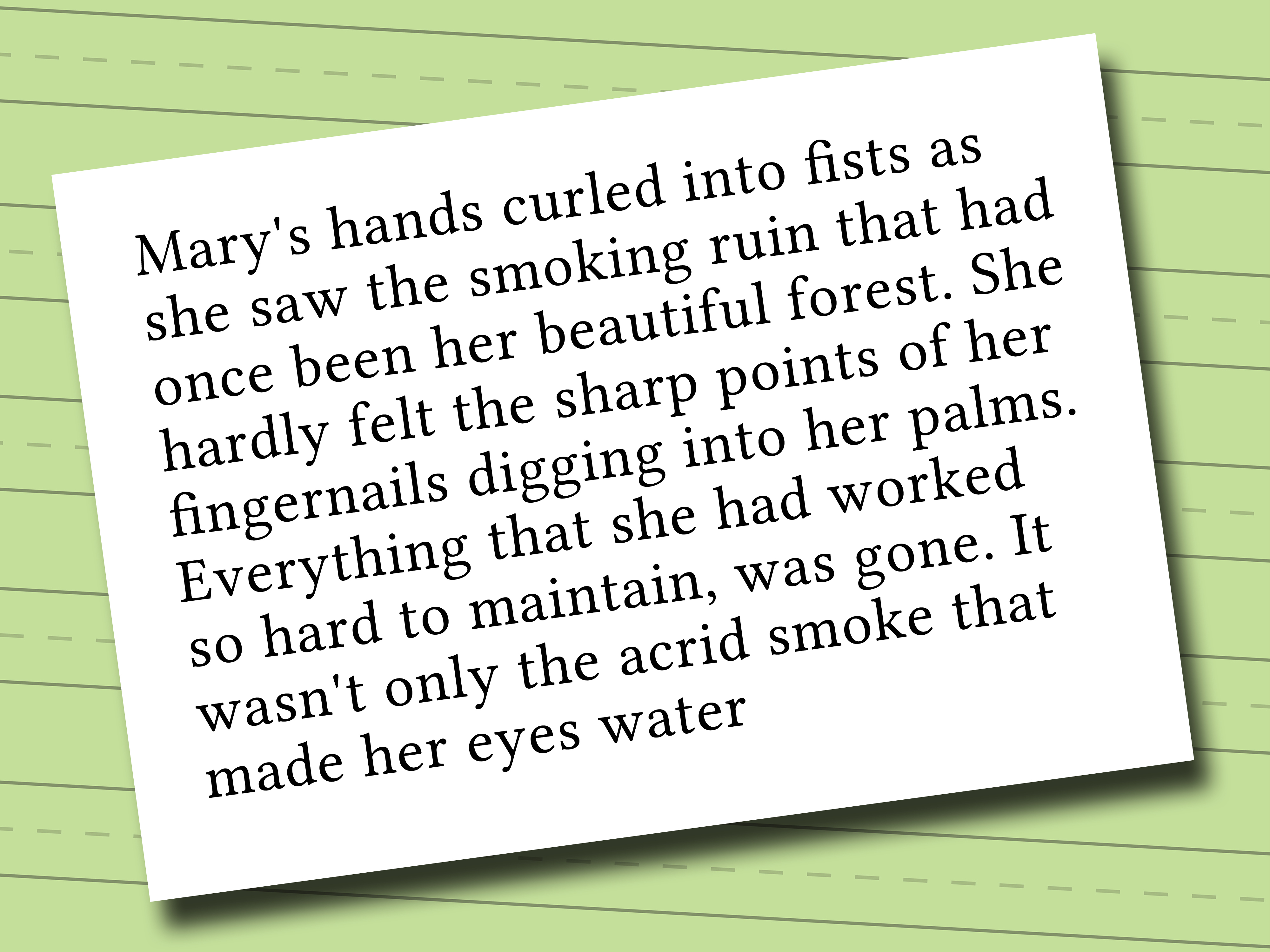
A good descriptive story does not simply tell readers what happened. It invites them to step inside the moment, smell the rain on the sidewalk, hear the chair creak in the quiet room, feel the knot in a character’s stomach, and wonder what will happen next. In other words, descriptive storytelling turns plain information into an experience. It is the difference between “the house was scary” and “the porch sagged under Maya’s shoes, and behind the cracked front window, a curtain twitched though no one was supposed to live there.” One sentence reports. The other opens a door.
Learning how to write a good, descriptive story is not about stuffing every paragraph with fancy adjectives until your sentence collapses from exhaustion. Strong description is selective, purposeful, and tied to emotion, character, setting, and conflict. The best writers use sensory details, vivid verbs, clear structure, and meaningful scenes to help readers see, feel, and care. This guide breaks the process into seven practical steps you can use whether you are writing a short story, a personal narrative, a school assignment, a blog post, or the opening chapter of a novel you keep promising yourself you will finish “after snacks.”
What Makes a Descriptive Story Good?
A descriptive story combines narrative movement with vivid detail. Narrative gives the story direction: something happens, someone wants something, a problem appears, and the ending changes the situation in some way. Description gives the story texture: the world feels specific, characters seem alive, and the reader can picture the action without needing a movie trailer.
The key is balance. Too little description makes a story feel thin, like a cardboard stage set. Too much description slows everything down, like a tour guide who insists on explaining every pebble on the path while the dragon is clearly approaching. A good descriptive story uses details that matter. Each image, sound, smell, gesture, or object should reveal something about the scene, the character, the mood, or the conflict.
Step 1: Start With a Clear Story Idea
Before you decorate your story with beautiful description, you need to know what the story is about. A descriptive story still needs a central idea, situation, or question. Ask yourself: Who is the main character? What do they want? What stands in their way? Where does the story happen? Why does this moment matter?
Your idea does not need to be complicated. In fact, simple ideas often make the strongest descriptive stories because they leave room for emotional depth and sensory detail. A child walking home before a storm. A teenager waiting backstage before a performance. An old man opening a letter he has avoided for years. A family dog hearing fireworks for the first time. These are small moments, but they can carry tension, memory, humor, fear, or hope.
Example
Weak idea: “A girl goes to the beach.”
Stronger idea: “A girl returns to the beach where she lost her grandmother’s necklace and must decide whether to keep searching or finally forgive herself.”
The second idea gives you emotional direction. Now the waves, sand, gulls, wind, and sunlight can all support the mood of the story. Description becomes more than decoration; it becomes part of the meaning.
Step 2: Build a Setting Readers Can Feel
Setting is more than a location. It is the atmosphere surrounding your characters. A classroom can feel boring, chaotic, mysterious, or electric depending on what details you choose. A forest can feel peaceful in one story and threatening in another. Your job is not to describe everything in the room; your job is to describe the right things.
Use the five senses: sight, sound, smell, taste, and touch. Many beginning writers rely heavily on visual description, but smell, sound, and texture can make a scene feel instantly more real. A bakery is not just golden bread in a glass case. It is warm air, powdered sugar on the counter, the sharp ding of the doorbell, and the buttery smell that makes every customer forget they only came in “just to look.”
Use Specific Details Instead of Generic Ones
Generic: “The room was messy.”
Descriptive: “Dirty socks hung from the desk chair, comic books leaned in slippery towers beside the bed, and a bowl of cereal had become a science project on the windowsill.”
The second version gives readers evidence. Instead of asking them to accept that the room is messy, it lets them discover the mess for themselves. That is one of the secrets of descriptive writing: trust the reader to understand the feeling through concrete details.
Step 3: Create Characters With Observable Details
Good descriptive storytelling does not stop at scenery. Characters need description too, but not the kind that reads like a driver’s license. Height, hair color, and eye color can be useful, but they rarely make a character memorable on their own. What readers remember is behavior: the way a character taps a pencil when nervous, folds every receipt into perfect squares, laughs too loudly when embarrassed, or checks the door every time a car passes.
When describing a character, choose details that reveal personality, emotion, or history. A mother wearing running shoes with a formal dress tells us something. A boy carrying a backpack patched with duct tape tells us something. A principal whose smile disappears the moment adults leave the room definitely tells us something, and none of it is good news.
Show Emotion Through Action
Instead of writing, “Eli was angry,” describe what anger looks like in Eli’s body and behavior. Maybe he presses his lips together until they go pale. Maybe he speaks politely but grips the glass so tightly his knuckles whiten. Maybe he does not yell at all, which makes everyone in the room more nervous.
Descriptive character writing helps readers infer emotion. This creates a richer experience because readers participate in understanding the scene instead of being handed a label.
Step 4: Use Sensory Language With Purpose
Sensory language is one of the most powerful tools in descriptive writing. It helps readers experience the world of the story through the body. But sensory detail works best when it matches the mood and focus of the scene.
If your character is walking into a hospital room, the smell of disinfectant, the squeak of rubber soles, and the stiff chill of the sheets may matter more than the color of the wallpaper. If your character is entering a childhood kitchen after many years away, the smell of cinnamon, the chipped blue mug, and the hum of the old refrigerator may unlock memory. If your character is hiding from someone, sound may become the dominant sense: footsteps, breathing, floorboards, a phone vibrating at exactly the worst possible moment because phones are tiny agents of chaos.
Avoid Overloading the Reader
Using all five senses does not mean cramming all five into every paragraph. A sentence that mentions sight, sound, smell, taste, touch, temperature, moon phase, and wallpaper pattern may technically be descriptive, but it may also make the reader feel trapped in a furniture catalog. Choose two or three strong sensory details that serve the scene.
For example, if the mood is peaceful, you might write: “The lake held the sunset in soft orange strips, and the canoe knocked gently against the dock.” If the mood is tense, the same lake might become: “The black water slapped the dock, and somewhere beyond the reeds, something moved.” Same place, different details, completely different feeling.
Step 5: Structure the Story Around Conflict and Change
A descriptive story still needs movement. Beautiful sentences cannot rescue a story where nothing changes. Conflict does not always mean explosions, arguments, or villains in dramatic coats. Conflict can be quiet: a secret, a difficult choice, a misunderstanding, a fear, a memory, a deadline, or a desire that clashes with reality.
Most effective stories include a beginning, middle, and end. The beginning introduces the character, setting, and situation. The middle develops tension and complications. The end shows a result, decision, realization, or change. Even a short descriptive story should leave readers feeling that something has shifted.
Simple Story Structure
Beginning: A character enters a meaningful situation.
Middle: A problem, obstacle, or emotional pressure grows.
End: The character responds, and something changes.
For example, imagine a story about a boy cleaning out his grandfather’s garage. The beginning shows the dusty garage and the boy’s reluctance. The middle reveals old tools, photographs, and a broken fishing rod that brings back memories. The end might show the boy keeping one small object, not because it is valuable, but because he finally understands something about his grandfather. Description supports the emotional arc.
Step 6: Choose Strong Verbs and Precise Words
Descriptive writing is not only about adjectives. In fact, strong verbs often do more work than adjectives. “The dog walked across the yard” is clear, but “the dog slunk across the yard,” “bounded across the yard,” and “limped across the yard” each creates a different image. The verb carries mood, motion, and character.
Precise nouns also strengthen description. “Vehicle” is vague. “Pickup truck,” “minivan,” “rusted taxi,” and “ice cream truck with a fading clown painted on the side” all create different worlds. The more specific your language, the easier it is for readers to picture the scene.
Cut Empty Intensifiers
Words like “very,” “really,” and “extremely” can be useful sometimes, but they often signal that a sentence needs a stronger word. Instead of “very cold,” try “freezing,” “icy,” “numbing,” or “bitter.” Instead of “really loud,” try “deafening,” “thunderous,” or “window-rattling.”
Revision is where word choice shines. Your first draft only needs to exist. It can be clumsy. It can wear mismatched socks. The second draft is where you replace weak verbs, remove repeated phrases, sharpen images, and make the story sound like you meant to do this all along.
Step 7: Revise for Clarity, Rhythm, and Emotional Impact
Writing a good descriptive story is not finished when you type the last sentence. Revision turns raw material into readable storytelling. Start by checking the big picture: Does the story have a clear situation? Does the main character want something? Is there tension? Does the ending feel earned?
Next, review the description. Highlight sensory details and ask whether each one helps the reader understand the mood, setting, character, or conflict. If a detail is pretty but pointless, consider cutting it. Good writing is not about proving you own a thesaurus. It is about creating an experience readers want to continue.
Read the Story Aloud
Reading aloud helps you catch awkward rhythm, repeated words, confusing sentences, and dialogue that sounds like robots trying community theater. Listen for places where the story drags. Long descriptive passages may need to be broken up with action, dialogue, or internal thought.
Also check your ending. A descriptive story does not always need a dramatic twist, but it should leave the reader with a clear feeling. That feeling might be wonder, sadness, relief, surprise, amusement, or curiosity. The ending should echo the heart of the story.
Common Mistakes to Avoid in Descriptive Story Writing
Using Description as Decoration Only
Description should not sit on top of the story like frosting on a brick. It should support meaning. Describe the locked gate because it represents separation. Describe the cracked mug because it reminds the character of home. Describe the sudden silence because it signals danger or emotional distance.
Explaining Too Much
Readers enjoy making connections. Instead of explaining every emotion, give them clues. A character who avoids looking at an empty chair may reveal grief more powerfully than a paragraph announcing that she is sad.
Forgetting the Reader’s Pace
Too much description in one block can slow the story. Mix description with action. Let characters move through the setting, touch objects, react to sounds, and notice details while doing something. This keeps the story alive.
Writing Vague Sentences
Vague description weakens imagery. “It was a nice day” tells readers almost nothing. “Sunlight flashed on the wet grass, and the air smelled like cut lemons and rain” gives them a scene they can enter.
Mini Example: Turning a Plain Scene Into a Descriptive Story
Plain version: “Lena went into the old shop. She was nervous. The owner gave her a box.”
Descriptive version: “The bell above the shop door gave one tired jingle as Lena stepped inside. Dust floated in the yellow window light, and the shelves leaned under jars of buttons, cracked clocks, and books with titles rubbed blank by time. Behind the counter, the owner slid a narrow wooden box toward her. ‘Your grandmother wanted you to have this,’ he said. Lena reached for it, but her fingers stopped just above the lid.”
The second version adds setting, sound, visual detail, dialogue, and hesitation. It also creates questions. What is in the box? Why did her grandmother leave it? Why is Lena nervous? Description works because it deepens curiosity.
of Practical Experience: What Writing Descriptive Stories Teaches You
One of the biggest lessons in writing descriptive stories is that observation matters more than fancy language. Many writers think they need rare words to sound impressive, but readers usually connect with details that feel true. A scratched lunch table, a loose shoelace before a race, a grandmother’s perfume in an empty hallway, or the weird buzzing of a refrigerator at midnight can do more than a paragraph full of glittering adjectives. The best descriptive writing often begins with paying attention to ordinary life.
When practicing descriptive storytelling, it helps to carry a small notebook or use a phone notes app to collect details. Write down how people actually move when they are impatient. Notice what a grocery store sounds like five minutes before closing. Pay attention to how rain changes the smell of pavement. These little observations become your personal library of images. Later, when you sit down to write, you will not have to invent every detail from thin air. You will have a treasure chest of real moments, minus the pirate hat unless that helps your process.
Another useful experience is learning that description should follow the character’s attention. A frightened character notices exits, shadows, and sudden sounds. A hungry character notices the smell of toast from another apartment. A jealous character notices someone else’s smile lasting one second too long. This means description is not neutral. It is filtered through emotion. When you understand what your character wants or fears, you can choose details that reveal their inner world without explaining everything directly.
Feedback also teaches valuable lessons. When readers say a scene feels slow, it may not mean your description is bad. It may mean the description is not connected to conflict. Try adding a question, goal, or pressure. For example, describing a garden for three paragraphs may feel slow. But describing the same garden while a character searches for a hidden key before someone returns home creates tension. Suddenly, every rosebush, stone path, and locked shed matters.
Revision is where descriptive stories become stronger. In a first draft, writers often describe too much at the beginning because they are trying to “set the scene.” During revision, move some details later, after the action begins. Let the reader learn the room while the character crosses it. Let the storm appear through the character’s wet sleeves, the rattle of windows, and the lights flickering over the dinner table. Description feels more natural when it arrives with movement.
Finally, writing descriptive stories teaches patience. You may not get the perfect sentence immediately. That is normal. Good writing is built through noticing, drafting, cutting, replacing, and reading again. The goal is not to create a flawless jewel on the first try. The goal is to help readers forget they are reading words on a screen and feel, for a moment, that they are standing inside the story with the characters. When that happens, your descriptive writing has done its job beautifully.
Conclusion
Writing a good, descriptive story is a craft anyone can improve with practice. Start with a clear idea, build a setting readers can feel, create characters through meaningful details, use sensory language with purpose, structure the story around conflict and change, choose precise words, and revise until the writing feels clear and alive. The goal is not to describe everything. The goal is to describe the right things so readers see the scene, understand the emotion, and want to keep reading.
Whether you are writing for school, personal expression, creative practice, or publication, descriptive storytelling gives your words staying power. A strong story does more than say, “This happened.” It whispers, “Come closer. You need to see this.”