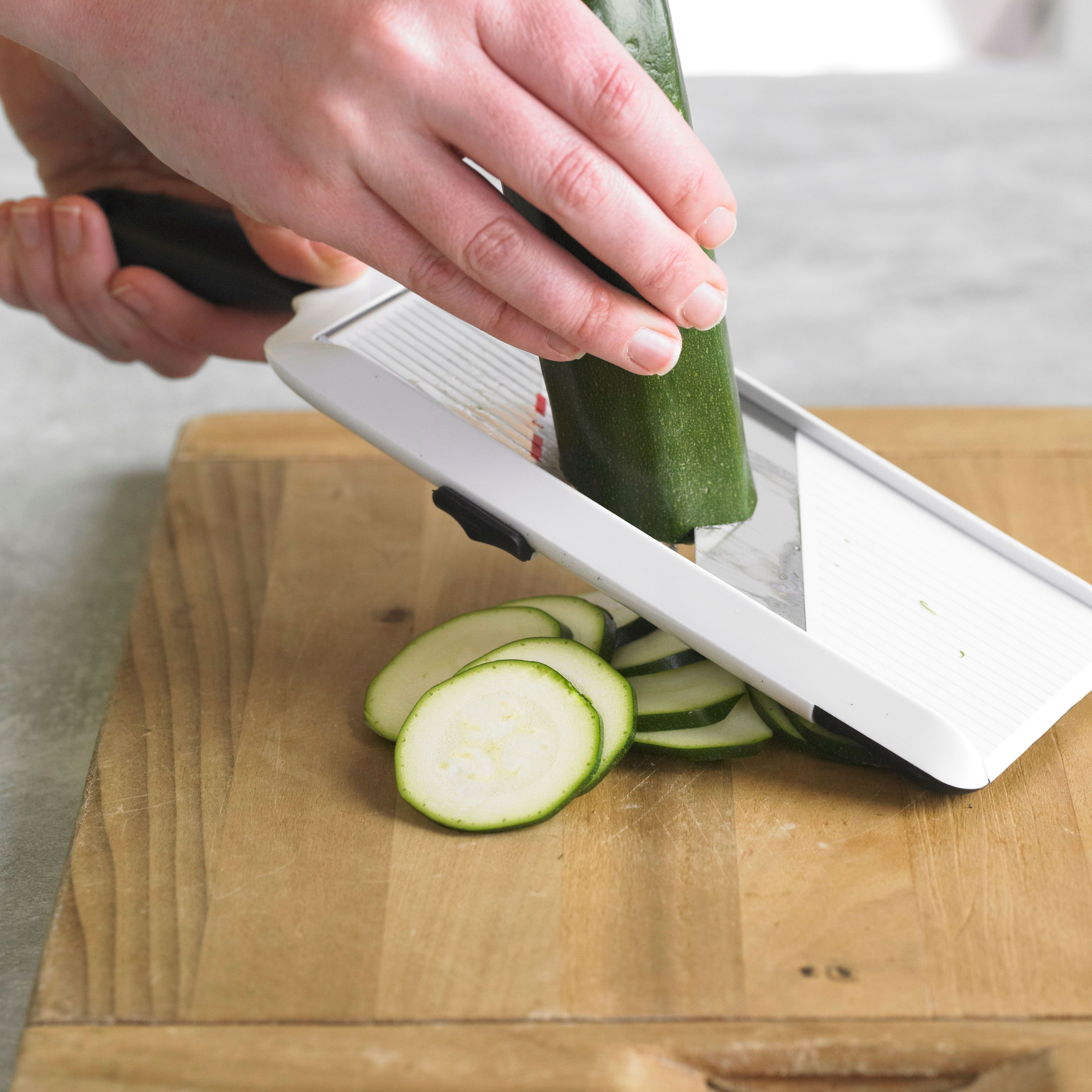
A mandoline slicer is one of those kitchen tools that can make you feel like a genius and a little bit nervous at the same time. On the good days, it turns potatoes into perfect gratin slices, cucumbers into salad-ready coins, and cabbage into cloud-like slaw in minutes. On the bad days, it reminds you that dinner prep should come with a healthy respect for sharp blades. The good news is that learning how to use a mandoline slicer safely is not rocket science. It is mostly setup, patience, and the discipline to stop before your brain says, “I can totally get one more slice out of this onion.”
If you have ever wondered how to use a mandoline slicer without creating a side dish of panic, this guide covers the whole process. You will learn what a mandoline slicer does, how to choose the right foods for it, how to set it up, how to slice safely, how to clean it, and how real-life kitchen experience can save you from common mistakes. Think of this as the calm, practical friend you want standing next to you while you prep dinner.
What Is a Mandoline Slicer?
A mandoline slicer is a kitchen tool designed to create thin, even slices much faster and more consistently than most people can manage with a knife. Depending on the model, it can also make julienne strips, waffle cuts, crinkle cuts, and matchsticks. In plain English, it is the shortcut to uniform produce that looks neat, cooks evenly, and makes your weeknight meals look suspiciously competent.
There are a few common types:
- Handheld mandoline slicers: compact, affordable, and good for small jobs or smaller kitchens.
- Standing mandolines with legs or a kickstand: more stable and better for larger batches.
- V-blade mandolines: often handle soft and firm produce well because the blade shape helps start the cut.
- Safer enclosed or chute-style mandolines: these keep your hand farther from the blade and are excellent for beginners.
It works best on foods that benefit from uniformity. Think scalloped potatoes, cucumber salad, shaved fennel, apple chips, pickles, onions for sandwiches, zucchini ribbons, and cabbage for slaw. If you care about even cooking or pretty presentation, a mandoline earns its drawer space fast.
Why Use a Mandoline Instead of a Knife?
A knife is versatile, but a mandoline is all about speed and consistency. If you are slicing six potatoes for a gratin, a knife can do the job. A mandoline can do it faster, with slices that are almost identical in thickness. That matters because even slices cook at the same rate. No one wants a casserole where one potato slice is buttery and tender while its neighbor still tastes like it has career ambitions.
Mandolines are especially useful for:
- Potato gratin, chips, and hash brown prep
- Cucumber salads and quick pickles
- Shaved Brussels sprouts, fennel, and cabbage
- Apple, pear, or citrus slices for desserts and salads
- Julienne carrots, radishes, and zucchini
That said, the tool only becomes a hero when it is used correctly. Otherwise, it turns into the most dramatic piece of equipment in your kitchen.
Before You Start: Set Up for Safety
The safest way to use a mandoline slicer starts before the first slice. Good setup is half the battle.
1. Put it on a stable surface
Use a large cutting board or set the mandoline securely over a bowl if the model is designed for that. If your slicer has legs or rubber feet, extend them fully and make sure nothing wobbles. A shifting mandoline is like a shopping cart with one bad wheel: annoying at best, dangerous at worst.
2. Choose the right blade and thickness
Start thicker than you think you need, especially if you are new to the tool. Thin slices are great, but paper-thin can feel tricky when you are still learning the motion. If you are making potato gratin, cucumbers for salad, or apples for a tart, a medium-thin setting is usually a friendly starting point.
3. Wash and prep your produce
Wash fruits and vegetables before cutting them, even if you plan to peel them. For firm produce like potatoes, cucumbers, apples, and melons, scrub the outside if needed. If the package says the produce is prewashed or ready to eat, do not wash it again.
4. Trim for stability
If the vegetable or fruit does not have a flat side, cut one. This is especially helpful for round foods like potatoes, onions, apples, or beets. A stable base gives you better control and reduces slipping.
5. Grab the safety gear
Use the hand guard that came with the mandoline whenever possible. If your guard is awkward, poorly designed, or missing, wear a cut-resistant glove. Many experienced home cooks do both. This is not overkill. This is called liking your fingertips.
How to Use a Mandoline Slicer Safely
Step 1: Secure the food in the holder
Attach the produce firmly in the hand guard or holder. Make sure it is centered and stable. If it is loose, it may twist as you slice, which makes the motion less controlled.
Step 2: Stand the slicer correctly
Position the mandoline so the blade faces away in a stable direction. Keep your body relaxed and your work area clear. You do not need a dramatic power stance. You do need enough room to move smoothly without knocking into a spice jar, dish towel, or your own bad decisions.
Step 3: Use smooth, even strokes
Move the food across the blade with steady, even pressure. Do not shove. Do not slam. Let the sharp blade do the work. Pressing too hard can make the food slip or the motion jerky, which is exactly what you do not want with a tool that slices faster than your reflexes.
Step 4: Keep your fingers out of the picture
If you are using the hand guard, keep your hand fully on the guard, not creeping down the sides. If you are slicing without a holder because the shape demands a different grip, use a cut-resistant glove and keep your fingertips tucked. Better yet, save that trick for later when you have more practice.
Step 5: Stop early
Do not try to slice the very last bit of carrot, potato, onion, or cucumber. Leave a small nub and save it for stock, soup, stir-fry, or snacking. This tiny scrap is not worth gambling your thumb over. The most important rule of mandoline slicing is that the final slice is often the least necessary and the most dangerous.
Best Foods to Slice on a Mandoline
Some foods practically beg for a mandoline.
Potatoes
Perfect for gratins, chips, scalloped potatoes, and fries. Russets and Yukon Golds slice beautifully. Sweet potatoes can be a little denser, so start with a thicker setting and steady pressure.
Cucumbers
Great for salads, pickles, and sandwiches. Their shape makes them beginner-friendly, especially when cut into shorter lengths first.
Cabbage and Brussels sprouts
Ideal for slaws, shaved salads, and quick sautés. Quarter a cabbage and leave a bit of the core attached to hold the leaves together while slicing.
Apples and pears
Excellent for tarts, chips, and salads. Remove seeds and core as needed, and use even pressure. Softer fruit may work better on a V-blade or sharper model.
Onions, fennel, radishes, and zucchini
These all benefit from thin, consistent cuts. They can go from bulky to elegant in a few strokes, which is one reason mandoline slicers have such loyal fans.
Foods That Can Be Tricky
Not everything belongs on a mandoline every time.
- Very soft tomatoes: possible on a sharp V-blade, but annoying on dull models.
- Large, hard squash: can be risky if the shape is awkward or too tough. Trim into smaller, flatter pieces first or use a knife.
- Slippery small items: unless you have a secure holder, they are not worth the hassle.
- Anything you have to force: if it fights back, switch tools.
A good rule is simple: if the food feels unstable, oversized, or weirdly shaped, change your prep method. Confidence is helpful. Overconfidence is how bandages become part of dinner.
Common Mandoline Mistakes to Avoid
Skipping the guard
This is the classic mistake. People skip the hand guard because it feels awkward, slows them down, or seems unnecessary for just a few slices. That logic lasts right up until it does not.
Using too much force
You are slicing vegetables, not trying to win a wrestling match. A sharp blade should cut with controlled, even movement.
Slicing the last inch
The tiny leftover piece is not a personal challenge from the universe. Let it go.
Working on a cluttered counter
Give yourself room. You need space for the slicer, the produce, and a bowl or board for the cut pieces.
Ignoring cleanup safety
The blade is still sharp when dinner prep is over. Many people focus during slicing and then get casual while washing or changing blades. Handle cleanup like the tool is still very much in business, because it is.
How to Clean and Store a Mandoline Slicer
Wash the mandoline carefully after use, especially after cutting produce. Use hot, soapy water unless the manufacturer says dishwasher-safe parts are allowed. If your slicer has removable blades, take them out slowly and handle them by the dull edges or designed grips. A dish brush can help keep your fingers away from the sharp parts.
Let all parts dry completely before storing. Fold legs, lock blades if the model allows it, and keep attachments together. If your slicer came with blade guards, use them. If not, store it where no one will casually grab it from a drawer like they are reaching for a spatula and finding a tiny medieval trap instead.
Real-World Tips for Better Results
- Slice directly into a bowl when making salads or slaws to keep the counter cleaner.
- For potatoes, rinse slices if needed to remove extra starch before certain recipes.
- For cabbage, cut into wedges so the layers stay intact and slice more neatly.
- For apples, work quickly or use a little lemon water later if browning is a concern.
- If the slices are ragged, the blade may be dull, the setting may be too thin, or the food may simply be too soft for that particular model.
Experience-Based Lessons: What Using a Mandoline Really Feels Like
Reading directions is one thing. Using a mandoline in a real kitchen, with dinner happening and a sink full of dishes judging you from across the room, is another. That is why experience matters so much with this tool. Not years of professional training, just real-life repetition and a few smart habits that make the slicer feel less intimidating every time you pull it out.
One of the most common experiences people have is realizing that the first few minutes set the tone for everything else. If you rush the setup, the whole job feels stressful. If you take an extra minute to wash the produce, dry the counter, pick the blade setting, and secure a bowl underneath, suddenly the mandoline feels far more manageable. It is not glamorous advice, but it works. A calm start makes for calmer slicing.
Another very real lesson is that the hand guard often feels annoying at first. Many home cooks dislike it because it can seem clunky, especially on oddly shaped produce. But experience usually changes that opinion. Once you have used the guard several times, you stop fighting it and start appreciating the freedom of not worrying about your fingertips every second. It becomes less of a nuisance and more of a seatbelt: not exciting, deeply useful, and weird to skip once you know better.
People also learn quickly that different foods have different personalities. Cucumbers are usually cooperative. Potatoes are reliable. Cabbage can be wonderfully productive once quartered properly. Onions are helpful but can get slippery. Sweet potatoes sometimes act like they are personally offended by the whole arrangement. Those little differences matter. With experience, you begin to recognize when to keep going and when to say, “You know what? A knife is the better tool for this one.” That is not failure. That is kitchen judgment.
There is also the experience of discovering just how much slice thickness affects the final dish. Very thin cucumbers become delicate and quick to dress. Slightly thicker potatoes hold their shape better in a bake. Shaved fennel practically melts into a salad. Zucchini ribbons can go from elegant to mushy if cut too thin. A few sessions with a mandoline teach you that thickness is not just a setting. It is a cooking decision.
Then there is the humbling but valuable lesson about the “last little piece.” Almost everyone is tempted to keep slicing until the produce disappears completely. Experience teaches the opposite. The last inch is where confidence starts writing checks that common sense has to cash. Seasoned home cooks tend to leave that final nub behind without a second thought. It goes into stock, gets chopped with a knife, or heads to the compost. Either way, dinner survives, and so do your fingers.
Cleaning creates its own kind of experience too. People often say the most dangerous moment comes after the slicing is done, when attention fades. That is why experienced cooks clean the blade slowly, never blindly, and never with a sponge wrapped around their fingers. A brush, careful rinsing, and a deliberate grip make all the difference. Over time, cleanup becomes part of the safety routine, not an afterthought.
Perhaps the biggest experience-driven truth is this: confidence with a mandoline does not come from bravado. It comes from repetition, caution, and knowing your limits. The best users are not the ones slicing at lightning speed. They are the ones who stay steady, keep their station organized, and stop the second something feels off. That kind of confidence makes the tool incredibly useful. You start reaching for it not with dread, but with a practical little thrill, because now you know it can make quick pickles, gorgeous slaw, crispy chips, and layered bakes much easier.
In other words, the mandoline rewards respect. Treat it like a precision tool instead of a kitchen dare, and it becomes one of the most satisfying gadgets you own. It may still look a little dramatic. Fine. Let it. Some tools earn their reputation. The smart move is learning how to make that reputation work for you.
Conclusion
A mandoline slicer can be one of the most useful tools in your kitchen when you treat it with a little planning and a lot of respect. Wash your produce, stabilize the slicer, use the hand guard or a cut-resistant glove, apply even pressure, and stop before the final nub. That is the formula. Do that, and your salads look sharper, your gratins cook more evenly, your prep time gets shorter, and your fingers stay exactly where they belong.
So yes, you can absolutely use a mandoline slicer safely. You just need the right setup, the right pace, and the humility to admit that one last slice is not worth becoming the most dramatic story at the dinner table.