Note: This article is written in standard American English and reflects real-world product patterns, specifications, and care guidance commonly used by U.S. manufacturers and retailers. In the United States, this fixture is more often called a bridge faucet, while bridge mixer is a British-style term.
Some fixtures are quiet team players. Others walk into a room like they own the deed, the backsplash, and possibly the family silver. A cross top two-hole sink bridge mixer belongs firmly in the second category. It is the kind of faucet that makes even an ordinary sink look like it has opinions about architecture.
If you are shopping for one, designing around one, or simply trying to figure out whether this gloriously traditional piece is practical or just extremely photogenic, you are in the right place. The short answer is this: a cross top two-hole sink bridge mixer can absolutely be both beautiful and useful. The trick is knowing what you are buying, where it works best, and which details matter before your plumber starts sighing under the sink.
This guide breaks down the style, function, installation logic, maintenance, and everyday experience of owning one. We will also cover why cross handles remain so charming, why bridge construction still has loyal fans, and how to avoid the classic mistake of buying a gorgeous faucet that looks like royalty but performs like a moody stage actor.
What Is a Cross Top Two-Hole Sink Bridge Mixer?
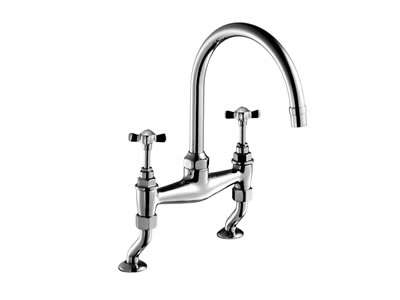
A cross top two-hole sink bridge mixer is a two-handle faucet built around a bridge-style body. In plain English, the hot and cold controls sit on either side and connect visibly to the spout through an exposed horizontal bridge. That exposed connection is the signature look. It is not hiding its mechanics. It is dressed up and stepping into the spotlight.
The phrase cross top refers to the handles. Instead of simple levers, you get classic cross-shaped controls that feel traditional, decorative, and tactile. The phrase two-hole refers to the mounting setup. The phrase sink bridge mixer refers to the fact that hot and cold water mix within the faucet before leaving the spout.
In American product language, you will commonly see related terms like bridge kitchen faucet, bridge sink faucet, two-handle bridge faucet, or cross-handle bridge faucet. Different product pages may describe the same basic concept with slight variations, but the core identity stays the same: exposed bridge body, separate hot and cold controls, and a distinctly classic silhouette.
Why This Style Still Has Such a Grip on Designers
Because it works. Not only functionally, but emotionally. A bridge faucet brings visual structure to a sink area in a way many sleek modern faucets do not. It has presence. It has symmetry. It makes your countertop look deliberate, even if the rest of the kitchen is currently being held together by takeout menus and optimism.
Cross handles add another layer of charm. They signal tradition without requiring the whole room to become a time capsule. You can pair a cross-handle bridge faucet with a farmhouse sink, a Shaker kitchen, a formal butler’s pantry, a vintage-inspired powder room, or even a transitional space that mixes old and new. This is one of the rare fixtures that can feel elegant, nostalgic, and hardworking all at once.
Many U.S. manufacturers and retailers position bridge faucets as timeless or traditional, and that tracks with real-world use. They are often offered in finishes such as polished chrome, brushed nickel, polished nickel, matte black, bronze tones, and brass-inspired looks. That broad finish range helps the style adapt to everything from bright white kitchens to moodier, more layered interiors.
The Features That Actually Matter
1. Two-hole installation
Not every bridge faucet installs the same way. Some are deck-mounted for sinks or countertops with two faucet holes, while others are wall-mounted and use two holes in the wall. Buyers sometimes see the word bridge and assume the install is universal. It is not. Measure first, admire second.
For many two-hole bridge models sold in the U.S., 8-inch centers are common. That means the distance between the handle connections is typically designed around an 8-inch spread. If your sink or countertop already has a different drilling pattern, that matters a lot more than your Pinterest board does.
2. Cross handles
Cross handles are not just decorative. They also change the user experience. Some people love the grip and old-school feel. Others find levers easier, especially with messy hands. If accessibility is a concern, check carefully. Some bridge faucets with cross handles are ADA-compliant, while many are not. That detail should never be guessed.
3. Spout reach and spout height
This is where beauty meets reality. A faucet can be stunning and still be terrible at reaching the center of your sink. Spout reach determines how far the water stream projects into the basin. Spout height affects clearance for washing large pots, filling pitchers, or maneuvering around oversized cookware.
If you use your sink heavily, do not shop by photo alone. A dramatic bridge faucet with too little reach can leave you rinsing vegetables in a sad corner of the basin like you are apologizing to a carrot. High-arc or hook spouts can provide better clearance, while lower-arc traditional spouts may prioritize period style.
4. Swivel spout
A swivel spout is one of those features that sounds boring until you live without it. Many bridge faucets offer a spout that rotates, giving you better access across a wider sink area. On a busy kitchen sink, that can make everyday cleaning much easier.
5. Side spray or pull-down function
Traditional bridge faucets often come with a matching side spray, especially in kitchen applications. That is useful for rinsing dishes, blasting food debris from corners, and cleaning the sink without turning your entire forearm into a water feature. Some newer bridge-style faucets even combine the traditional body with pull-down functionality, which gives the old-world look a very modern work ethic.
6. Ceramic disc cartridges
This is one of the most important performance details. Many reputable U.S. bridge faucet listings highlight ceramic disc cartridges because they are associated with drip-free operation and long-term durability. In buyer terms, this means fewer annoying drips, smoother turning, and less daily irritation. Nobody needs a faucet that looks aristocratic and sounds like a metronome at 2 a.m.
7. Solid brass or premium metal construction
Bridge faucets are often sold as premium fixtures, so material quality matters. Solid brass construction is a frequent selling point because it supports durability, corrosion resistance, and a more substantial feel. If the faucet is one of the visual anchors of the room, you want it to feel like a real fixture, not a costume prop.
Where a Cross Top Bridge Mixer Works Best
Kitchen sinks
This is the most common application in the American market. A cross top bridge mixer works especially well in farmhouse, traditional, cottage, English-inspired, and transitional kitchens. If you have a fireclay apron-front sink, butcher block accents, unlacquered brass hardware, or beadboard details, this faucet style often looks right at home.
Prep sinks and bar sinks
In smaller secondary sinks, a bridge faucet can act like jewelry. It elevates the station without demanding a full kitchen remodel. For prep areas, a compact but well-proportioned bridge faucet can bring character to a spot that often gets ignored.
Utility and statement spaces
Depending on the model, bridge faucets can also shine in laundry rooms, pantry sinks, and vintage-inspired wash areas. A wall-mounted two-hole bridge mixer is especially good when you want to free up counter space or create a more old-world look.
How to Choose the Right One Without Regret
Start with the sink configuration. Count the holes. Measure the centers. Confirm whether the faucet is deck-mounted or wall-mounted. This is not glamorous advice, but it prevents the glamorous disaster of ordering the wrong fixture and then trying to negotiate with reality.
Next, think about daily use. Do you rinse large stockpots? Wash sheet pans? Need extra flexibility for cleaning? If yes, prioritize spout reach, swivel function, and either a side spray or pull-down option. If the sink is mostly decorative or lightly used, you can lean harder into pure style.
Then consider finish. Polished chrome reads classic and bright. Brushed nickel is forgiving and versatile. Polished nickel adds warmth and richness. Matte black looks bold and graphic. Brass-toned finishes can lean vintage, luxurious, or lived-in depending on whether the finish is lacquered, brushed, or designed to patina. Match the faucet to nearby cabinet hardware, lighting, and sink material so the room feels intentional instead of accidentally assembled during a hardware store fever dream.
Finally, read the specs. Really read them. Flow rate, reach, clearance, deck thickness limits, handle type, included accessories, and hole requirements all matter. The prettiest faucet in the world cannot save a poor fit.
Installation and Maintenance Tips
Installation basics
Before installation, confirm the faucet type, mounting surface, and required tools. Many manufacturer installation guides recommend basics like a wrench, plumber’s tape, towels, supply lines if needed, and sealant appropriate for the countertop material. Also make sure there is enough clearance behind the sink and around the backsplash, especially for bridge bodies and side sprays.
If you are replacing an older faucet, check whether the existing hole pattern matches the new one. If not, you may need deck plates, modifications, or a different model. It is much better to discover that before the water is off and the sink is in pieces.
Care and cleaning
Bridge faucets tend to feature decorative finishes, so cleaning them gently is smart. A soft damp cloth and drying with a soft towel are common care recommendations. For hard-water spots, several major faucet brands suggest a diluted white vinegar and water solution, followed by a thorough rinse. Abrasive pads, harsh chemicals, and aggressive scrubbing are generally a bad idea because they can damage the finish.
In other words, clean it like a nice fixture, not like a cast-iron grill pan that insulted your family.
Pros and Cons of a Cross Top Two-Hole Sink Bridge Mixer
Pros
- Timeless style with strong visual character
- Cross handles add traditional charm and tactile control
- Bridge construction creates a distinctive architectural look
- Many models offer durable ceramic disc valves
- Available in a wide range of finishes and configurations
- Can include helpful extras like swivel spouts, side sprays, or pull-down functions
Cons
- Not always the easiest choice for accessibility compared with lever handles
- Style-forward designs can cost more than simpler faucets
- Two-hole or 8-inch-center requirements may limit compatibility
- Decorative finishes may need gentler maintenance
- Some highly traditional models prioritize looks over maximum reach or modern ergonomics
Real-World Design Advice
If you want the faucet to feel truly integrated, repeat its visual language elsewhere. Cross handles pair beautifully with bridge-style pot fillers, unlacquered brass cabinet latches, schoolhouse pendants, apron-front sinks, marble counters, and classic tile. If your room is more transitional, let the faucet be the old soul while the rest of the space stays cleaner and simpler.
Also, scale matters. A large, dramatic bridge faucet can look magnificent over a wide farmhouse sink, but oversized hardware can overwhelm a compact bar sink. On the flip side, a tiny low-reach faucet can look apologetic over a large workstation sink. Good design is not just about style. It is about proportion, which is a fancy way of saying the faucet should not look like it borrowed the sink’s shirt and forgot to return it.
Experience: Living With a Cross Top Two-Hole Sink Bridge Mixer
Living with a cross top two-hole sink bridge mixer feels a little different from living with a standard modern faucet, and that difference is exactly why many people love it. The experience starts visually. You walk into the room, and the sink area feels finished. Not just functional, finished. The faucet creates a focal point. It has shape, symmetry, and a sense of permanence that makes the entire sink wall feel more thoughtfully designed.
Then there is the tactile side. Cross handles make you interact with the faucet in a more deliberate way. You do not flick a lever and move on with your life. You reach, turn, and feel the mechanism engage. For some homeowners, that small ritual is part of the appeal. It feels classic, calm, and a bit elevated, like your kitchen briefly put on a blazer.
In everyday use, the best bridge mixers balance that old-world charm with modern convenience. A good swivel spout makes a huge difference when you are moving between sink bowls, rinsing produce, or washing a large pan. If the faucet includes a side spray, that often becomes the unsung hero of the setup. The bridge body gets the compliments, but the side spray handles the messy parts of real life.
Owners also tend to notice the finish more than they would on an ordinary faucet. Polished nickel catches light beautifully. Chrome feels crisp and clean. Brass-toned finishes bring warmth and richness. Matte black can look dramatic and tailored. That means the faucet does more than deliver water. It actively contributes to the room’s mood.
There are practical realities, of course. Cross handles can take a little more effort than levers, especially if your hands are greasy or soapy. Highly decorative models may need more careful wiping to keep water spots from dulling the finish. And if the spout reach is not right for the sink, you will notice that every single day. That is why a well-chosen bridge mixer feels luxurious, while a poorly chosen one feels like an expensive lesson with plumbing.
Still, when the proportions are right and the installation suits the sink, the experience is excellent. The faucet feels sturdy, substantial, and intentional. It adds character without sacrificing function. It turns a routine space into one with personality. And unlike a lot of trendy fixtures, it does not rely on novelty. It relies on design language that has already proven it can last.
That may be the biggest reason this style continues to resonate. A cross top two-hole sink bridge mixer gives you something many homeowners want but rarely say out loud: utility with charisma. It washes dishes, fills pots, and helps clean up after dinner, but it also gives the room a point of view. It says the space was chosen, not just assembled. That is a hard quality to fake, and this faucet style wears it very well.
Final Thoughts
A cross top two-hole sink bridge mixer is not just a faucet. It is a design decision. It brings together exposed structure, traditional handles, and practical sink performance in a form that feels both classic and expressive. Whether you are designing a full kitchen renovation or upgrading one hardworking sink, this style can deliver serious visual impact without abandoning everyday function.
The smart move is to treat it like both a design feature and a tool. Check the hole configuration. Study the spout reach. Decide whether you need a side spray. Choose a finish that works with your room. And pay attention to construction details like ceramic disc cartridges and durable metal bodies. Do that, and you will end up with a faucet that looks excellent, performs reliably, and makes the sink area feel a whole lot less ordinary.