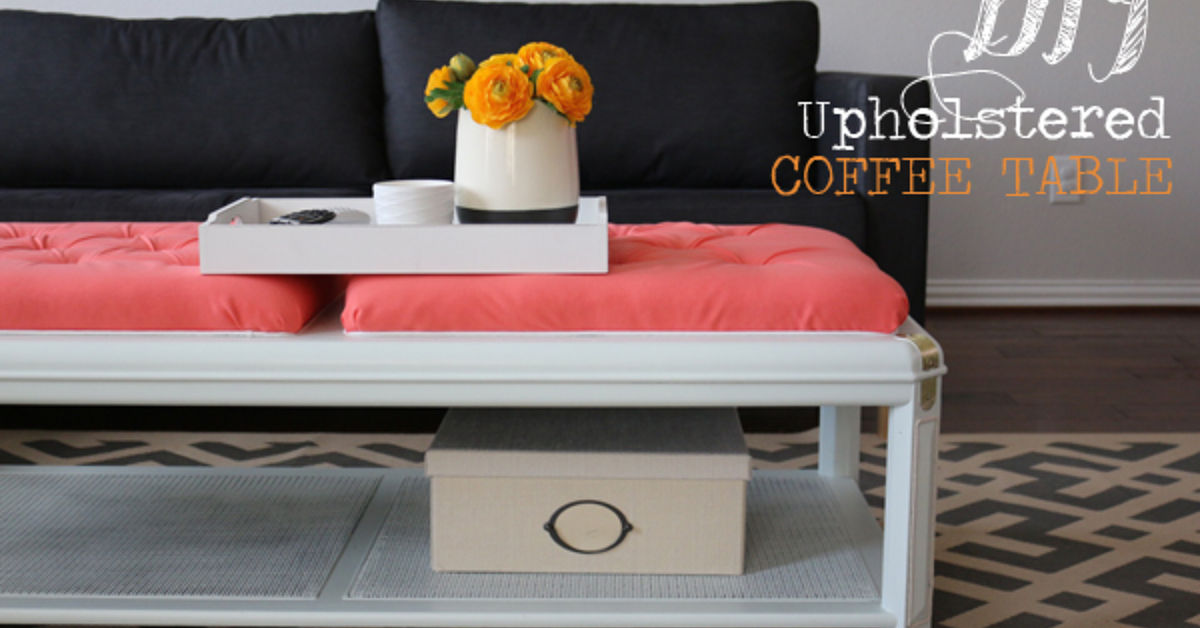
Turning a plain coffee table into an upholstered coffee table is one of those DIY projects that looks expensive, feels custom, and secretly does not require you to own a professional workshop or know the emotional life story of every staple gun on the market. With the right fabric, foam, batting, and a little patience, an old wooden coffee table can become a soft ottoman-style centerpiece for your living room.
An upholstered coffee table is especially useful if your living room needs more comfort. It can work as a footrest, extra seating, a padded game-night surface, or a stylish ottoman coffee table when topped with a tray. It is also a smart way to upcycle furniture instead of sending a perfectly sturdy table into retirement. If the frame is solid, the legs are stable, and the size fits your room, you already have the foundation for a beautiful DIY upholstered coffee table.
This guide walks you through the full process: choosing the right coffee table, selecting upholstery fabric, adding foam and batting, wrapping corners neatly, securing fabric, and finishing the underside. By the end, your old table will look less like “forgotten basement furniture” and more like something a designer casually placed in a photo shoot.
Why Upholster a Coffee Table?
Learning how to upholster a coffee table is worth it because the result is both decorative and practical. A hard coffee table can be beautiful, but it is not always friendly to bare shins, toddlers, pets, or anyone who dramatically flops onto the sofa after a long day. Upholstery softens the edges and makes the piece feel warmer, cozier, and more inviting.
Another major benefit is customization. Store-bought upholstered ottomans can be expensive, and they may not come in the exact size, color, or pattern you want. When you upholster your own coffee table, you choose the thickness of the cushion, the texture of the fabric, and the overall style. Want neutral linen for a calm living room? Great. Want emerald velvet because your sofa deserves drama? Also great. Want a performance fabric that can survive snacks, pets, and mysterious household stains? Extremely wise.
Best Coffee Tables for Upholstery
Not every coffee table is a perfect candidate, but many can work beautifully. The best option is a sturdy wooden table with a flat top, solid legs, and enough surface area to support foam and fabric. Rectangular and square tables are easiest for beginners because the corners are more predictable. Round and oval tables can also be upholstered, but they require more careful fabric stretching and pleating.
Look for a Strong Frame
Before you start, press down on the tabletop and wiggle the legs. If the table creaks like it is telling ghost stories, tighten screws, reinforce joints, or choose a better piece. Upholstery adds weight and turns the table into something people may sit on or rest their feet on, so the base needs to be dependable.
Consider Height and Scale
A coffee table usually looks best when it is close to the height of the sofa seat or slightly lower. Once you add foam and batting, the table will become taller. If your table is already high, use thinner foam or consider shortening the legs. For a plush ottoman look, 2-inch to 4-inch foam is common, but the right thickness depends on the table height and the look you want.
Tools and Materials You Will Need
Gather everything before you begin. Upholstery is much easier when you are not searching for scissors while holding a half-wrapped table like a very awkward burrito.
- Wooden coffee table
- Upholstery foam, usually 2 to 4 inches thick
- Upholstery batting or polyester batting
- Upholstery fabric or performance fabric
- Spray adhesive suitable for foam
- Staple gun or pneumatic upholstery stapler
- Heavy-duty staples
- Scissors or fabric shears
- Utility knife or electric carving knife for cutting foam
- Measuring tape
- Marker
- Screwdriver or drill
- Cambric dust cover fabric for the underside, optional but recommended
- Upholstery tacks or trim, optional
Choosing the Best Fabric for an Upholstered Coffee Table
Because a coffee table gets more wear than a decorative pillow, fabric choice matters. This is not the place for delicate material that panics when someone looks at it while holding coffee. Choose a durable upholstery fabric with a tight weave. Performance fabrics, indoor-outdoor fabrics, denim, canvas, microfiber, faux leather, and heavy linen blends can all work well.
If the upholstered coffee table will be used in a busy family room, prioritize stain resistance and easy cleaning. A patterned fabric can hide small marks better than a solid pale color. However, patterns require more careful alignment, especially if you want stripes, checks, or geometric prints to look straight.
How Much Fabric Do You Need?
Measure the length and width of the tabletop, then add the foam thickness, batting thickness, and extra fabric to wrap underneath. A safe formula is to add at least 8 to 12 inches to each side, depending on cushion thickness. For example, if your table is 40 inches long and 24 inches wide, you may need a fabric piece around 56 by 40 inches or larger. It is better to have extra fabric than to discover you are one inch short and suddenly negotiating with gravity.
Step-by-Step: How to Upholster a Coffee Table
Step 1: Clean and Prep the Coffee Table
Start by cleaning the table thoroughly. Remove dust, grease, old polish, and anything sticky. If the table has drawers, hardware, a glass insert, or decorative trim that will interfere with the upholstery, remove those pieces. Tighten loose screws and repair wobbly legs.
If the tabletop is slick, lightly sand it so the adhesive grips better. You do not need to refinish the entire piece unless exposed wood will remain visible. Focus on making the surface clean, stable, and ready for foam.
Step 2: Measure and Cut the Foam
Place the foam on the table and mark the shape of the tabletop. For a clean ottoman look, you can cut the foam exactly to the size of the top. For a softer rounded edge, allow the foam to extend slightly beyond the tabletop. Use a utility knife, foam saw, or electric carving knife to cut the foam carefully.
If you want a rounded cushion profile, bevel the top edges slightly or soften them with batting later. Sharp foam edges can show through fabric, especially with thinner materials. Batting helps smooth everything out, but starting with neatly cut foam makes the finished coffee table look more professional.
Step 3: Attach the Foam to the Tabletop
Use spray adhesive designed for foam and fabric. Apply it according to the product directions in a well-ventilated area. Spray the tabletop and the underside of the foam, wait until tacky if instructed, then carefully position the foam on the table. Press firmly and let it set.
This step keeps the foam from shifting while you wrap the batting and fabric. Without adhesive, the foam may slide around like it has weekend plans elsewhere.
Step 4: Add Batting for a Softer Shape
Lay batting over the foam and cut enough to cover the top, sides, and several inches underneath the tabletop. Batting softens the cushion edges, fills small gaps, and gives the finished piece a smoother, fuller look. Wrap it over the foam and staple it to the underside of the tabletop.
Start by placing one staple in the center of each side. Pull the batting gently but not aggressively. Then continue stapling from the center outward, alternating sides to keep the tension even. Trim away bulky excess, especially at the corners.
Step 5: Position the Upholstery Fabric
Lay your fabric face down on a clean floor or large work surface. Place the coffee table upside down on the fabric, with the foam and batting against the wrong side of the material. If the fabric has a pattern, take time to center it. For stripes or plaids, measure from the table edges to make sure the design runs straight.
This is the moment to be picky. Once you staple everything, adjusting the pattern becomes much more annoying. Flip, check, adjust, and then begin.
Step 6: Staple the First Four Sides
Pull the fabric over one long side and place a staple in the center underneath the tabletop. Move to the opposite side, pull the fabric snug, and staple the center. Repeat with the two shorter sides. This creates balanced tension and prevents the fabric from drifting.
Continue stapling from the center toward the corners, alternating sides as you go. Keep the fabric smooth on top, but do not pull so hard that the foam compresses unevenly. The goal is firm and tidy, not “wrestling match with upholstery.”
Step 7: Fold the Corners Neatly
Corners are where beginner upholstery projects reveal their secrets. The cleanest method is to fold the fabric like wrapping a present. Pull the corner point toward the center underneath the table, staple it, then fold the remaining side fabric into small pleats. Keep the pleats even and place them where they are least visible.
For square and rectangular tables, try to make all four corners match. For round tables, create small, even pleats around the entire curve. Trim excess fabric carefully so the underside does not become bulky.
Step 8: Finish the Underside
Once the fabric is secure, trim extra material to about one or two inches beyond the staple line. For a polished finish, cover the underside with black cambric dust cover fabric. Fold the edges under and staple it neatly. This hides raw fabric edges, staples, and batting, making the project look finished instead of “I gave up under here.”
If the original table had feet or legs that were removed, reattach them securely. Add felt pads to the bottom of the legs to protect floors. If you want a decorative touch, you can add nailhead trim, piping, or upholstery tacks around the lower edge.
Optional Design Upgrades
Add Button Tufting
Button tufting gives an upholstered coffee table a classic, high-end look. To do it, you need to mark button placement, drill holes through the tabletop, cover buttons with matching fabric, and pull strong upholstery thread through the foam and fabric. Tufting looks beautiful but requires more planning, especially if you are working with thick foam.
Add Storage
If your coffee table has a removable top or a boxy base, you may be able to turn it into a storage ottoman. The upholstered top can become a padded lid, while the interior holds blankets, board games, remotes, or the pile of things everyone pretends not to see before guests arrive.
Use a Tray for Drinks
An upholstered coffee table is soft, which is wonderful for feet but less wonderful for a glass of iced tea. Place a sturdy tray on top when serving drinks, snacks, candles, or decor. A tray creates a stable surface and protects the fabric from spills.
Common Mistakes to Avoid
Using Fabric That Is Too Thin
Lightweight cotton may look pretty, but it can stretch, wrinkle, or wear quickly. Use upholstery-weight material whenever possible. If you fall in love with a lighter fabric, consider backing it with lining or choosing a more durable alternative with a similar look.
Skipping Batting
Foam alone can look boxy. Batting rounds the edges and makes the table feel more comfortable. It is a small step that makes a big visual difference.
Stapling Without Checking the Top
Flip the table occasionally as you staple to check that the fabric remains smooth and centered. This is especially important with patterned fabric. A crooked stripe can haunt a living room more effectively than any Halloween decoration.
Ignoring the Table Height
Adding thick foam can make the coffee table too tall. Measure before buying foam. A gorgeous ottoman that towers over the sofa may look awkward and feel uncomfortable.
How to Care for an Upholstered Coffee Table
Vacuum the fabric regularly with an upholstery attachment to remove dust and crumbs. Spot-clean spills quickly using a cleaner appropriate for the fabric type. Always test cleaning products in a hidden area first. If you have pets or children, consider applying a fabric protector suitable for your material.
Use trays, coasters, and washable throws to protect the surface during daily use. Rotate decorative trays or books occasionally so one area does not become compressed or faded. With reasonable care, your upholstered coffee table can stay attractive and useful for years.
Real-Life Experience: What I Learned Upholstering a Coffee Table
The first time I upholstered a coffee table, I made the classic beginner mistake: I thought the fabric would magically behave because I had measured it “pretty well.” Upholstery does not reward pretty well. It rewards careful measuring, extra fabric, sharp scissors, and the humility to pull out staples when something looks off. The table itself was a rectangular thrift-store find with sturdy legs and a scratched top. In other words, it was not winning beauty contests, but it had good bones.
The biggest lesson was that foam thickness changes everything. I originally wanted a very plush, lounge-worthy ottoman, so I chose thick foam. It looked luxurious, but once I placed it on the table, the piece became taller than expected. It still worked, but if I had measured the sofa seat height first, I might have chosen slightly thinner foam. Now, before upholstering any coffee table, I measure the table height, sofa height, and foam thickness together. That small bit of math saves a lot of design regret.
Another experience-based tip: do not rush the corners. The sides are straightforward, but the corners decide whether the final piece looks custom or homemade in the wrong way. I found that making small, controlled pleats worked better than trying to force one giant fold. I also learned to staple lightly at first, check the top, and then commit with more staples once the fabric looked smooth.
Patterned fabric taught me patience. A floral or textured fabric can be forgiving, but stripes and checks are brutally honest. They reveal every uneven pull. If you are a beginner, a small-scale pattern, tweed, boucle, velvet, or textured solid is easier than a bold stripe. If you do use a directional pattern, mark the center of the table and the center of the fabric before you start. That one step makes alignment much easier.
I also discovered that the underside matters, even though no one sees it during normal life. Adding a dust cover made the piece feel finished and sturdy. It hid the staples and trimmed fabric, and it gave the table a clean professional look when moved. It is a small detail, but it makes the project feel complete.
Finally, an upholstered coffee table changes how a room feels. The finished piece made the living room softer and more relaxed. People naturally put their feet up, kids used it as a board-game surface, and a tray turned it back into a practical coffee table when needed. That flexibility is the real magic. You are not just covering a table with fabric; you are creating a piece of furniture that works harder, looks warmer, and feels more personal than something pulled straight from a showroom floor.
Conclusion
Upholstering a coffee table is a rewarding DIY project that combines comfort, style, and smart upcycling. With a sturdy table, durable upholstery fabric, quality foam, batting, and careful stapling, you can create a custom ottoman coffee table that fits your home perfectly. The process is beginner-friendly, but the details matter: measure carefully, choose fabric wisely, keep tension even, and take your time with the corners.
Whether you want a soft footrest, extra seating, a family-friendly living room centerpiece, or a budget-friendly furniture makeover, an upholstered coffee table delivers serious style without requiring a designer price tag. Add a tray for function, use performance fabric for durability, and enjoy the satisfaction of turning an ordinary table into a cozy custom statement piece.