Pyramid Solitaire is what happens when a regular deck of cards decides to become a puzzle. It looks elegant, feels simple, and then quietly humbles you three minutes later. Unlike classic Solitaire, where you build suits and stacks, Pyramid Solitaire is all about making pairs that add up to 13 and clearing a pyramid-shaped layout before the game clears you.
If you have ever stared at a Queen and an Ace like they were hiding state secrets, this guide is for you. Below, you will learn the official basics, common variations, beginner-friendly strategy, and the little habits that make a big difference. By the end, you will know how to set up Pyramid Solitaire, what moves are legal, how the stock and waste work, and how to play smarter instead of just faster.
What Is Pyramid Solitaire?
Pyramid Solitaire is a one-player card game played with a standard 52-card deck. The goal is to remove cards from a seven-row pyramid by pairing exposed cards that total 13. Kings are special because they are already worth 13, which means they can be removed on their own. No dramatic backstory required. They simply show up, act important, and leave immediately.
The game is easy to learn because the math stays small, but it can be surprisingly tricky because every move changes which cards become exposed. That means Pyramid Solitaire is part card game, part logic puzzle, and part “why did I do that two turns ago?”
What You Need to Play
- One standard 52-card deck
- A flat surface
- A little patience
- An optional sense of humor for when the perfect card appears exactly one move too late
You can play with physical cards or online. The basic idea stays the same, although some digital versions change how many times you can go through the stockpile or what counts as a win.
How to Set Up Pyramid Solitaire
Step-by-Step Setup
- Shuffle the deck well.
- Deal one card face up. This is the top of the pyramid.
- Deal two cards below it, slightly overlapping the first card.
- Continue row by row until the seventh row has seven cards.
- You will use 28 cards total to build the pyramid.
- Place the remaining 24 cards face down in a pile. This becomes the stockpile or draw pile.
- Leave space next to the stockpile for a waste pile and another space for discarded pairs.
That seven-row pyramid is the star of the show. The bottom row starts fully exposed, while higher cards stay blocked until the cards covering them are removed. In other words, the pyramid rewards planning and punishes random clicking like a disappointed math teacher.
What “Exposed” Means
A card is exposed when no cards overlap it from below. At the start of the game, only the seven cards in the bottom row are exposed. As you remove cards, more of the cards above become available.
This rule matters a lot. You might see a useful 9 sitting in the middle of the pyramid, but if it is still covered, it is off-limits. In Pyramid Solitaire, close enough does not count.
Card Values in Pyramid Solitaire
- Ace = 1
- 2 through 10 = Face value
- Jack = 11
- Queen = 12
- King = 13
Suits do not matter in Pyramid Solitaire. Hearts, clubs, diamonds, and spades are all invited to the same party. Only the values matter.
Valid Pairs That Add Up to 13
- Ace + Queen
- 2 + Jack
- 3 + 10
- 4 + 9
- 5 + 8
- 6 + 7
- King by itself
That is the entire math engine of the game. Once you memorize these combinations, the game becomes much smoother. Many players eventually stop “doing the math” and start recognizing patterns automatically.
How to Play Pyramid Solitaire
1. Remove Any Available Pairs That Total 13
Start by looking at the exposed cards in the pyramid. Whenever you find two exposed cards that add up to 13, remove them from play. For example, if the bottom row shows a 5 and an 8, you can remove that pair immediately.
If an exposed King appears, remove it right away. A King does not need a partner. It is the lone wolf of Pyramid Solitaire, except far less mysterious and much easier to deal with.
2. Use the Stockpile When No Pyramid Pair Is Available
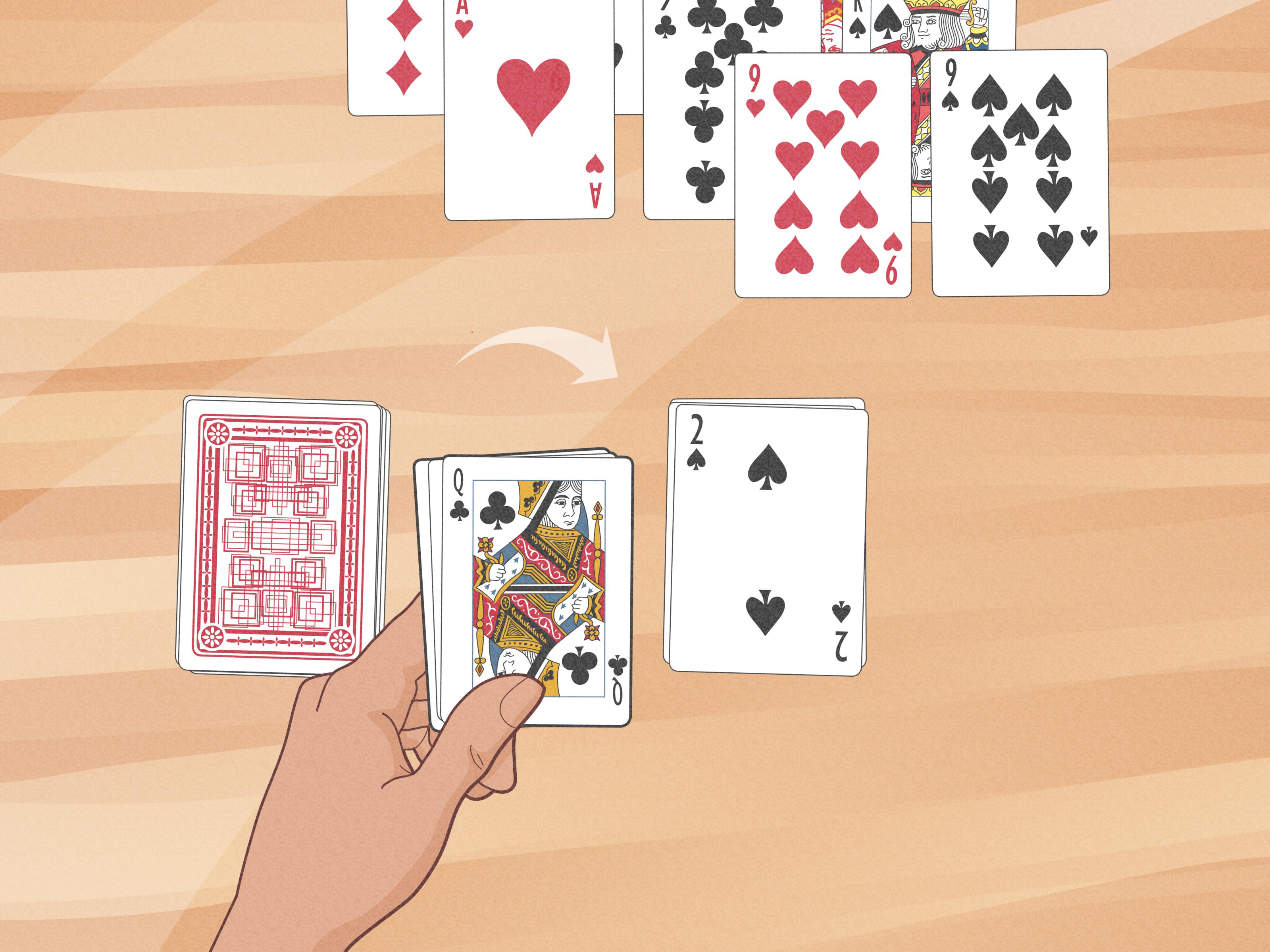
When you cannot make a pair using exposed pyramid cards, turn over the top card of the stockpile and place it face up in the waste pile. The top waste card becomes playable.
You may pair that waste card with any exposed pyramid card, as long as the total is 13. For example, if the waste pile shows a Queen, you can pair it with an exposed Ace from the pyramid.
3. Keep the Waste Pile Under Control
Only the top waste card is usually available for play. That means you cannot go digging through the waste pile looking for the card you “meant” to use. Pyramid Solitaire is not a junk drawer.
If the waste card cannot be paired, draw the next stock card. The old waste card stays underneath, and the new one becomes the top card.
4. Continue Until You Win or Run Out of Useful Moves
You keep removing pairs, exposing new cards, and drawing from the stockpile until one of two things happens:
- You remove all cards from the pyramid and win.
- You can no longer make any legal moves and the game ends.
In many home versions, clearing the pyramid is enough to win. In stricter versions, all cards may need to be cleared, or the stock may have tighter limits. More on that in a moment.
A Simple Example of Play
Imagine your exposed bottom-row cards include a 6, 7, 9, 4, and King. Here is a smart sequence:
- Remove the King immediately.
- Remove the 6 and 7 together.
- Remove the 9 and 4 together.
- Check what new cards become exposed above them.
- If no new pairs appear, flip one card from the stockpile to the waste.
That example shows the rhythm of Pyramid Solitaire. You are not just removing pairs. You are choosing which pairs expose the most helpful new cards.
Common Pyramid Solitaire Rule Variations
Here is where things get interesting. Different websites, apps, and household rule sets may change one or two details. The core game stays the same, but these differences affect difficulty.
One Pass, Three Passes, or Unlimited Redeals
Some versions allow only one trip through the stockpile. Others allow three passes. Some online versions let you reset the stock more freely. The fewer redeals you get, the more important every move becomes.
Strict Win vs. Relaxed Win
In a relaxed version, you win once the pyramid is cleared, even if cards remain in the stock or waste. In stricter versions, the game may expect all playable cards to be cleared or may treat leftover stock cards as unfinished business.
Covered-Card Pairing Variants
Some digital versions allow a card to pair with a card it partially covers, as long as the move is otherwise legal. Traditional physical-card play is usually stricter and treats only fully exposed cards as available. When in doubt, decide your house rules before you start.
Scoring Differences
With physical cards, many people simply treat the game as win or lose. Online versions often add points, timers, deal counters, or bonuses for speed. Those are fun extras, but they are not required to understand the basic rules.
Best Strategy Tips for Winning More Often
Prioritize Moves That Expose More Cards
If two different pairs are available, choose the one that reveals blocked cards. Exposing new cards gives you more options, and more options usually means a better chance to keep the game alive.
Remove Kings As Soon As They Appear
Kings are instant clears. Removing them often opens the board and costs you nothing. Leaving a King in place is like refusing free parking because you want a better spot.
Work Low in the Pyramid
Bottom-row cards are especially powerful because they support the rest of the structure. Clearing from the lower rows tends to unlock the pyramid faster than making flashy but less useful moves higher up.
Do Not Rush to Draw from the Stock
Before flipping a new stock card, scan the pyramid carefully. Many games are lost because a player overlooks a simple pair that was already available. Pyramid Solitaire loves rewarding calm eyes.
Think One Move Ahead
Suppose you can remove either a 5 and 8 or a 4 and 9. If the 4 and 9 expose two new cards while the 5 and 8 expose only one, the 4 and 9 are usually the stronger play. Small choices snowball.
Use the Waste Pile With Intention
When the waste pile gives you a card that could pair with multiple exposed cards, pause and choose the pairing that opens the most future possibilities. The right waste-pile move can rescue an otherwise doomed board.
Common Mistakes Beginners Make
- Ignoring exposed Kings: They should almost always be removed immediately.
- Drawing too quickly: Missing available pairs in the pyramid is the classic rookie move.
- Choosing the first legal move instead of the best one: Legal and smart are not always the same thing.
- Forgetting that only exposed cards count: A blocked card is still blocked, no matter how badly you need it.
- Using the stockpile carelessly: In tighter versions, redeals are limited, so every draw matters.
Why Pyramid Solitaire Is So Popular
Pyramid Solitaire has lasting appeal because it combines luck, memory, simple arithmetic, and strategy in a game that takes only a few minutes to play. It feels approachable, but it does not play like a pushover. That balance is why so many people return to it.
It is also a great fit for quick breaks. You can finish a game while coffee brews, while waiting for a meeting, or while pretending you only opened your phone to check the weather. Suddenly you are three deals deep, and the weather remains a mystery.
Experiences Related to “How to Play Pyramid Solitaire: Card Game Rules”
One of the most interesting things about learning Pyramid Solitaire is how quickly the game changes from “simple matching” to “I should really think this through.” Most beginners start with the obvious pairs. They spot a 5 and an 8, a Queen and an Ace, maybe a King sitting there like a gift. At first, that feels like enough. Then the game tightens, the easy matches disappear, and you realize Pyramid Solitaire is not testing whether you can add to 13. It is testing whether you can make good choices when the board gets awkward.
That is a very common player experience. Early games often feel encouraging for about thirty seconds and then suddenly complicated. Many people assume they are doing something wrong because they get stuck so often. Usually, they are not misunderstanding the rules at all. They are just meeting the real personality of the game. Pyramid Solitaire is supposed to make you think. That moment of “Oh, this is more strategic than it looks” is part of the fun.
Another familiar experience is learning to slow down. New players often draw from the stockpile too fast because it feels active and productive. In reality, one of the most satisfying breakthroughs happens when you stop rushing and start scanning the board more carefully. You notice that two exposed cards in the pyramid already make 13. You realize a move on the left side will expose two cards while the move on the right side exposes only one. Suddenly the game feels less random and more readable. That shift is a huge part of getting better.
Players also tend to remember the first game they almost win. Not even the first win. The first almost win. You clear most of the pyramid, only a few cards remain, and you are sure the next stock card will save you. It does not. You lose by a whisker. Somehow that near miss is exactly what makes you want to play again. Pyramid Solitaire has a knack for making defeat feel strangely motivating. It rarely says, “You are terrible at this.” It says, “You were close. Try one more time.” That is a sneaky little talent for a deck of paper rectangles.
For some players, the game becomes almost meditative. The rules are simple enough that you do not need to memorize a giant handbook, but the choices are meaningful enough to keep your brain engaged. That makes Pyramid Solitaire a nice middle ground between relaxing and stimulating. It is not mindless, but it is also not exhausting. You can play casually, or you can get very serious and start analyzing every exposed card like a detective at a crime scene involving a suspicious number of sevens.
There is also a social side to a supposedly solo game. People often learn Pyramid Solitaire from a parent, grandparent, teacher, or a card-loving friend. Because the math is small and the setup is visual, it is easy to teach across age groups. Kids can practice number combinations, adults can enjoy the strategy, and everyone understands the universal feeling of drawing exactly the wrong card at exactly the wrong time.
Over time, experienced players usually develop their own rhythm. Some always remove Kings instantly. Some pause before every stock draw. Some mentally track which partner cards are still missing. Those habits are part of the lived experience of the game. The rules teach you how to play. Repetition teaches you how to play well. And somewhere between those two, Pyramid Solitaire turns from a simple card game into a favorite little challenge you keep coming back to.
Final Thoughts
If you want a card game that is easy to learn but still has real depth, Pyramid Solitaire is an excellent pick. The rules are straightforward: build the pyramid, remove exposed pairs that add to 13, use the stockpile when needed, and clear the layout if you can. The challenge comes from choosing the right move at the right time.
Once you know the setup, card values, and common strategy tips, the game becomes much more enjoyable. You will still lose some deals. That is normal. Not every game is meant to be conquered. But with practice, you will spot patterns faster, avoid beginner mistakes, and turn what looks like a simple puzzle into a satisfying skill game.
So shuffle the deck, build the pyramid, and start pairing. The math is small, the stakes are low, and the smug feeling after a clean win is absolutely priceless.