Escalators look simple: step on, ride up or down, step off, continue living your busy, snack-seeking life. Easy, right? Usually, yes. But anyone who has ever frozen at the top of a moving escalator knows that those metal steps can suddenly feel like a tiny mechanical mountain. The good news is that learning how to get on and off an escalator safely is mostly about timing, awareness, balance, and not treating the handrail like a theme-park ride.
Whether you are using an escalator at a mall, airport, subway station, office building, hotel, hospital, or stadium, the same basic safety habits apply. You want to check the direction, prepare before boarding, step confidently onto the center of the step, hold the handrail, face forward, keep your feet away from the sides, and exit without stopping at the landing. Think of it as escalator etiquette plus common sense wearing comfortable shoes.
This guide breaks the process into 10 clear steps, with practical tips for kids, seniors, travelers, people carrying bags, and anyone who gets a little nervous around moving stairs. By the end, you will know exactly how to ride an escalator safely, calmly, and without doing that awkward half-hop, half-panic dance at the end.
Why Escalator Safety Matters
Escalators move continuously, which is what makes them convenient. But that movement also means riders need to pay attention. Unlike a regular staircase, an escalator has moving steps, side panels, comb plates at the entrance and exit, and handrails that may move slightly differently from the steps. Small issuesloose shoelaces, long clothing, bulky luggage, distracted walking, or stopping at the exitcan turn a simple ride into a stressful moment.
Most escalator rides are safe and uneventful. The goal is not to fear escalators; it is to respect them. A little preparation goes a long way. Before boarding, take two seconds to look at the direction of travel, secure loose items, and choose the right moment to step. That tiny pause is your safety superpower.
How to Get On and Off an Escalator: 10 Steps
Step 1: Check the Direction Before You Step On
Before getting on an escalator, look at the direction of the moving steps. This sounds obvious, but busy places can be distracting. A person may be looking at a phone, following a crowd, or juggling a coffee and a carry-on bag. The first rule is simple: make sure the escalator is going the way you want to go.
Watch the steps for a second. Are they moving up or down? Is the escalator running normally? Is there a sign saying it is closed? Never use an escalator that is stopped, blocked, damaged, or marked out of service. If the escalator is not operating, use a nearby staircase or elevator instead.
Step 2: Prepare Your Shoes, Clothes, Bags, and Children
Before boarding, check for loose shoelaces, untied straps, long scarves, dangling belts, dragging pants, or long coats that could brush against the steps or side panels. Escalator safety starts before your foot touches the step. Soft, floppy, loose, or open footwear can make boarding less stable, so step carefully and keep feet centered.
If you are with a child, hold the child’s hand before getting on. Do not wait until you are already moving. Children should stand, face forward, and avoid sitting, playing, leaning, or touching the side panels. If you have a stroller, cart, wheelchair, walker, or other wheeled item, use an elevator instead. Escalators are designed for standing passengers, not rolling equipment.
Step 3: Stand Near the Entrance, Not on the Comb Plate
At the entrance, you will see flat metal teeth where the steps appear or disappear. This is called the comb plate. Do not stand with your toes pressed against it while you wait. Give yourself a little space so you can watch the steps form and choose a clean moment to board.
The best approach is to stand calmly, face the escalator, and look down at the step pattern. You are not trying to jump on like an action hero entering a moving train. You are simply choosing one step and placing your foot on it with control.
Step 4: Hold the Handrail Before or As You Step On
The handrail is there for balance. Use it. Place one hand on the handrail as you step onto the escalator. Keep your grip steady, not stiff. Sometimes the handrail may feel as if it is moving slightly ahead of or behind the steps. If that happens, adjust your hand slowly instead of yanking it back.
A good habit is to keep one hand free for the rail. If you are carrying bags, hold them securely in one hand and use the other for support. Do not place bags, purses, or packages on the handrail. The rail is not a luggage carousel, no matter how persuasive your overpacked tote bag may be.
Step 5: Step Onto the Center of the Moving Step
When a step becomes level in front of you, step onto the center of it. Pick up your foot and place it firmly; do not slide or drag your foot onto the escalator. Keep your feet away from the sides, where the step meets the skirt panel. Standing in the middle gives you more space and helps reduce the chance of shoes, clothing, or small items brushing against the edges.
Try not to hesitate halfway. Hesitation is what creates the classic escalator wobble. If you feel nervous, count the rhythm in your head: watch, step, hold, stand. That simple pattern can make the motion feel predictable.
Step 6: Face Forward and Stand Upright
Once you are on the escalator, face forward in the direction of travel. Stand upright, keep your feet planted, and hold the handrail. Avoid turning around to talk, leaning on the side, sitting on the step, or walking backward. The escalator is moving; your job is to be a calm passenger, not a sidewalk performer.
Facing forward helps you see the exit coming. It also helps you react if someone ahead of you stops, drops something, or needs extra time getting off. Your eyes should be up often enough to know what is happening around you, not buried in a phone the entire ride.
Step 7: Keep Feet, Hands, and Clothing Clear of the Sides
During the ride, keep your shoes, hands, and clothing away from the side panels. Do not let children drag fingers along the sides. Do not lean against the panels. Do not sit on the steps. Escalators have narrow spaces between moving and stationary parts, so the safest position is centered, standing, and facing forward.
If you are wearing a long dress, coat, robe, scarf, or wide-leg pants, gather the loose fabric slightly so it does not trail behind you. If you are traveling with shopping bags, keep them close to your body and off the steps whenever possible.
Step 8: Avoid Running, Playing, or Walking Against the Escalator
Running on an escalator increases the risk of tripping and can make other riders nervous. Walking up the down escalator or down the up escalator may look funny in cartoons, but in real life it is a bad idea. Escalators are shared spaces, and safe riding depends on predictable behavior.
If local signs ask riders to stand on one side and walk on the other, follow posted guidance. In crowded areas, standing still and holding the handrail is often safer and more orderly. Either way, do not push, shove, block, or rush other riders. The train, sale rack, or food court pretzel will survive a few extra seconds.
Step 9: Prepare to Exit Before You Reach the End
As you approach the top or bottom, look ahead and get ready. The exit comes quickly. Keep holding the handrail, shift your attention to the landing, and prepare to step over the comb plate. Do not wait until the final half-second to realize the escalator is ending. That is when feet start doing confused little tap dances.
If you are helping a child, tell them, “Step off now,” and guide them forward. If you are carrying luggage, lift or guide it carefully so it does not catch or block the person behind you. If the landing is crowded, keep moving forward as soon as you step off.
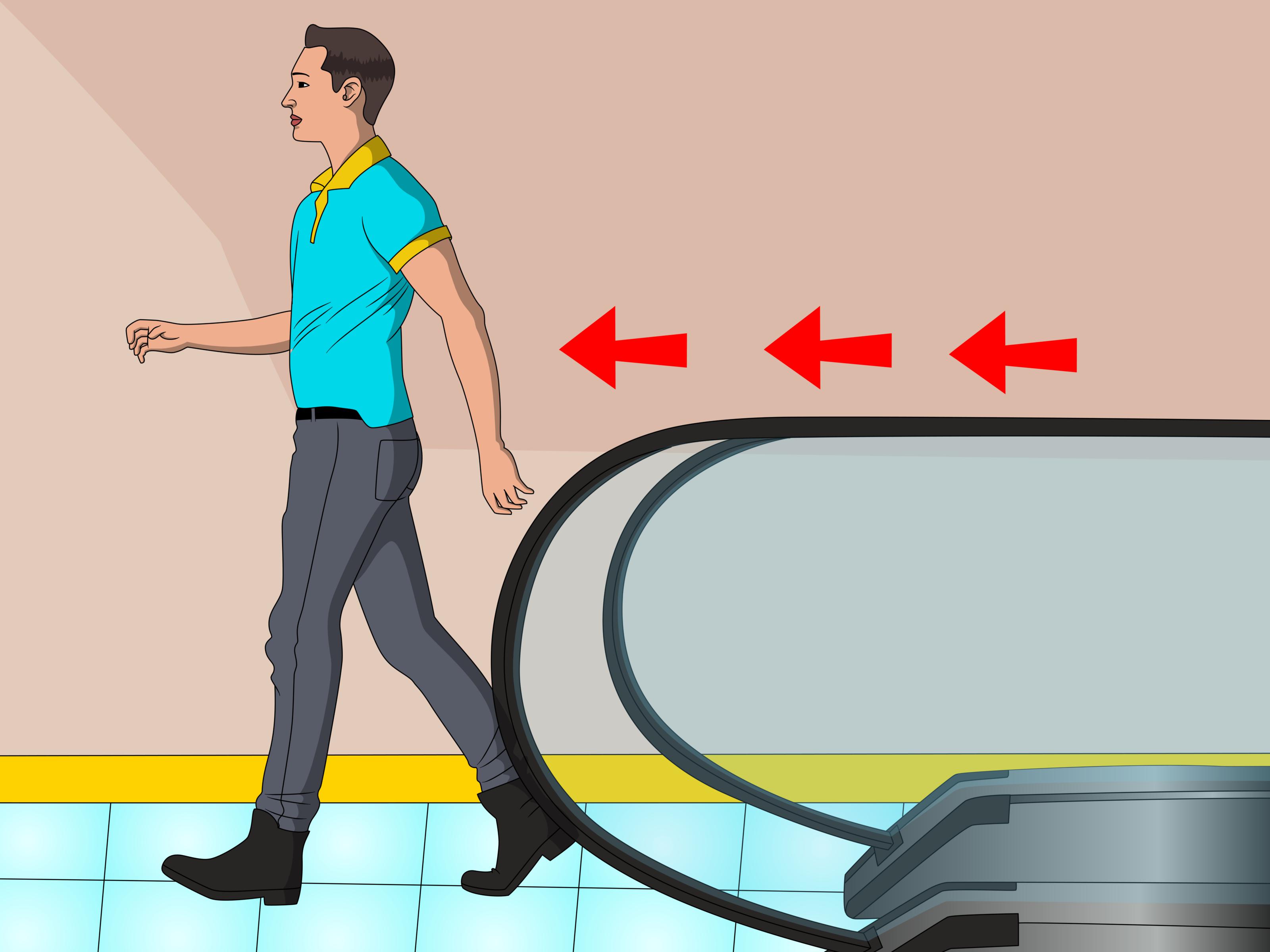
Step 10: Step Off Promptly and Move Away From the Landing
When you reach the end, pick up your foot and step off cleanly. Do not let your feet slide off the end. Do not stop at the landing to check your phone, fix your bag, look for friends, or debate where the cinnamon smell is coming from. People behind you are still moving toward the same exit, whether you are ready or not.
After stepping off, continue walking several steps away from the escalator. If you need to pause, move to the side first. This keeps the landing clear and prevents a pileup. The ride is not truly finished until you are safely away from the exit zone.
Special Tips for Children, Seniors, and Travelers
For Children
Children should always be supervised on escalators. Hold their hand, keep them standing, and remind them not to sit, climb, touch the sides, or play with the handrail. Small children may be fascinated by the moving steps, but curiosity and moving machinery are not a great team. If a child is scared, tired, or in a stroller, use the elevator.
For Older Adults
Older adults should take extra time before boarding. If vision, balance, mobility, or depth perception is a concern, the elevator may be the better choice. People wearing bifocals or progressive lenses may need to be especially careful when judging the moving step. There is no prize for choosing the escalator when the elevator is safer.
For Travelers With Luggage
Airports and transit stations often combine escalators with rolling suitcases, backpacks, coffee cups, and people who are late for something. Keep luggage in front of you or beside you in a controlled position, but do not let it block the step. Avoid taking large carts or heavy rolling loads onto escalators. Use an elevator when bags are bulky, unstable, or difficult to lift.
Common Escalator Mistakes to Avoid
The most common escalator mistakes are usually small habits: looking at a phone while boarding, stepping too close to the side, leaving shoelaces untied, stopping at the exit, letting children play, or trying to bring strollers and carts onto the steps. These mistakes are preventable with a little awareness.
Another mistake is rushing. Many people treat escalators like speed boosters. But the safest escalator ride is smooth and boring. Boring is good. Boring means you got where you were going without drama, spilled coffee, or a new fear of department stores.
What to Do If Something Goes Wrong
If you feel unsteady, grip the handrail and focus on stepping off safely at the end. If an item falls, do not bend down suddenly on the moving steps. Wait until you are off the escalator, then ask nearby staff for help if needed. If clothing, a shoe, or an item appears caught, call for assistance immediately and use the emergency stop button if necessary and safe to do so.
Emergency stop buttons are typically located near escalator landings. They are for real safety problems, not for pranks or convenience. If someone falls, becomes trapped, or is in immediate danger, stopping the escalator can help prevent further harm while assistance is called.
Real-Life Experiences: What Escalators Teach You After Enough Rides
After you have ridden enough escalatorsin malls, airports, train stations, hotels, hospitals, stadiums, and those giant department stores that seem designed by people who enjoy confusing shoppersyou start to notice patterns. Most escalator problems do not happen because the machine is mysterious. They happen because people are distracted, rushed, overloaded, or trying to multitask at exactly the wrong moment.
One common experience is the “phone freeze.” Someone reaches the escalator while texting, looks up too late, and suddenly pauses at the entrance. The person behind them is ready to board, the steps keep moving, and everyone performs a tiny traffic jam ballet. The lesson is simple: put the phone down before you step on. You do not need to answer a message while your feet are negotiating with moving stairs.
Another familiar scene happens at airports. A traveler has a rolling suitcase, a backpack, a jacket slipping off one arm, and maybe a boarding pass clenched between their teeth like a pirate map. They step onto the escalator, but the suitcase stays behind for half a second, then bumps forward. This is why elevators are better for bulky luggage. If you must use an escalator with a small bag, keep it controlled and close. If your suitcase looks like it packed another suitcase inside it, take the elevator and enjoy the calm.
Parents often learn escalator safety through repetition. Children may want to jump onto the “magic stairs” or touch the sides to feel the motion. A good routine helps: hold hands before getting near the escalator, say “wait, watch, step,” then “stand still, face forward.” At the exit, say “big step off” and keep walking. Turning safety into a simple script makes it easier for kids to remember without turning every mall trip into a lecture series.
Seniors and nervous riders often benefit from choosing a slower moment to board. There is no shame in letting a few people pass first. Timing matters. When the crowd clears, it is easier to see the step, hold the handrail, and board calmly. Confidence grows with practice, but confidence should never replace caution. If the escalator feels too fast, too crowded, or too stressful, the elevator is not a backup plan; it is a smart plan.
The exit is where many riders forget the final step: keep moving. People sometimes step off and immediately stop to check directions, talk to a friend, or scan for a store. But the escalator behind them is still delivering passengers. The best habit is to take several steps forward, move aside, and then pause. Think of the landing as a driveway, not a living room. Clear it first, chat later.
Overall, the best escalator experience is calm, centered, and predictable. Look first. Step carefully. Hold the rail. Stand in the center. Face forward. Step off promptly. Move away. These habits may sound basic, but they work in nearly every public setting. Escalators are built for convenience, and with the right habits, they stay exactly that: a simple ride from one level to another, with no unnecessary excitement.
Conclusion
Learning how to get on and off an escalator safely is not complicated, but it does require attention. The safest riders prepare before boarding, step onto the center of the step, hold the handrail, face forward, keep loose items clear, and move away promptly after exiting. Children should be supervised, strollers and carts should go in elevators, and anyone who feels unsure should choose the safest option without embarrassment.
The next time you approach an escalator, remember the 10-step rhythm: check, prepare, wait, hold, step, stand, center, behave, prepare again, and exit. That is the whole recipe. No panic, no rushing, no dramatic soundtrack required.