Mineral wool insulation sounds like something a geologist would knit into a sweater, but it is actually one of the most practical, high-performing insulation materials used in homes and commercial buildings. It helps slow heat transfer, reduce noise, handle moisture better than many fluffy competitors, and bring serious fire resistance to the party. In other words, it is the quiet overachiever of the insulation aisle.
If you are comparing insulation options for walls, attics, basements, exterior sheathing, or interior soundproofing, mineral wool deserves a spot on your shortlist. It is not always the cheapest option, and it is not magic in batt form, but when installed correctly, it can make a home more comfortable, quieter, safer, and more energy efficient.
What Is Mineral Wool Insulation?
Mineral wool insulation is a fibrous insulation material made from minerals that are melted at very high temperatures and spun into fine strands. Those strands are then formed into batts, boards, loose-fill insulation, or specialty products for firestopping, sound control, and exterior insulation.
In residential construction, the term usually refers to two main types: rock wool, sometimes called stone wool, and slag wool. Rock wool is made primarily from natural minerals such as basalt or diabase. Slag wool is made from blast furnace slag, a recycled byproduct from steel production. Both are considered mineral fiber insulation, and both work by trapping air within a dense web of fibers.
Think of mineral wool as a very disciplined cotton candy made by a lava monster with a building science degree. The fibers create tiny air pockets that slow conductive heat flow. The result is a material that can fit between studs, sit on attic floors, wrap the outside of buildings, or help reduce sound transmission between rooms.
How Mineral Wool Insulation Works
Insulation does not “make heat.” It slows heat movement. During winter, insulation helps keep heated indoor air from escaping quickly. During summer, it helps slow outdoor heat from sneaking inside and acting like it pays rent.
Mineral wool works mainly by resisting conductive heat flow. Its many tiny fibers trap pockets of air, and because still air is a poor conductor, heat moves through the material more slowly. This insulating ability is measured as R-value. The higher the R-value, the better the material resists heat flow.
However, R-value is not the whole story. The actual performance of an insulated wall or attic depends on product thickness, density, proper fit, air sealing, moisture control, and thermal bridging. Thermal bridging happens when heat bypasses insulation through wood or steel framing. That is why continuous exterior insulation, careful air sealing, and correctly filled cavities can matter just as much as the number printed on the insulation package.
Common Types of Mineral Wool Insulation
1. Mineral Wool Batts
Mineral wool batts are pre-cut sections designed to fit between standard wall studs, floor joists, and ceiling framing. They are commonly used in exterior walls, basement walls, interior partitions, floors, and attic knee walls. Compared with fiberglass batts, mineral wool batts are usually denser and more rigid, which helps them hold their shape inside framing cavities.
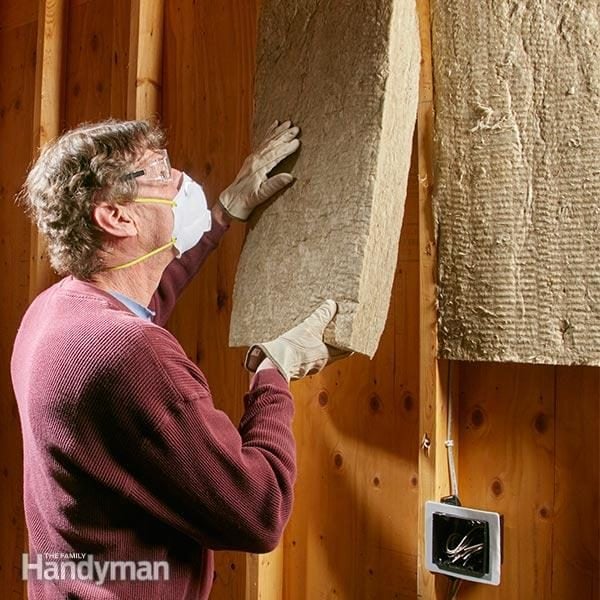
That extra density can be a blessing and a mild arm workout. Batts often stay in place without stapling, but they may require more careful cutting around electrical boxes, wiring, pipes, and odd framing. A serrated knife, insulation saw, or long bread knife is often easier than a standard utility knife.
2. Rigid and Semi-Rigid Mineral Wool Boards
Mineral wool boards are used for exterior continuous insulation, basement applications, commercial wall assemblies, curtain walls, roof assemblies, and sound-control projects. They are typically denser than batts and are available in different compressive strengths and thicknesses.
One big advantage of mineral wool board is vapor permeability. Unlike many foam boards, mineral wool can allow wall assemblies to dry outward, depending on the full wall design. That makes it attractive for builders who want continuous exterior insulation without trapping moisture in the wrong place.
3. Loose-Fill Mineral Wool
Loose-fill mineral wool can be blown into attics or enclosed cavities, although it is less common than blown fiberglass or cellulose in many residential markets. It can be useful in certain retrofit situations, especially when a contractor needs to fill irregular spaces.
4. Firestopping and Safing Products
Mineral wool is also widely used in commercial firestopping systems, perimeter fire containment, and penetrations around pipes or ducts. These specialty products are not the same as ordinary wall batts; they are designed and tested as part of specific fire-rated assemblies.
Mineral Wool R-Value: What to Expect
Mineral wool batts commonly provide around R-4 per inch, depending on the manufacturer, product density, and application. Some high-density batts are sold as R-15 for 2×4 walls and R-23 or R-24 for 2×6 walls. Exterior mineral wool boards may be around R-4 to R-5 per inch, depending on product type.
Those numbers make mineral wool competitive with fiberglass and, in some cases, slightly higher per inch than standard fiberglass batts. It still does not match the R-value per inch of closed-cell spray foam, but insulation choice is not a simple beauty contest where the highest R-value automatically gets crowned. Cost, moisture behavior, fire resistance, environmental profile, installation quality, and assembly design all matter.
Here is the practical takeaway: mineral wool offers strong thermal performance, but it only performs as expected when installed without gaps, voids, or compression. A beautifully labeled batt that is stuffed badly around wiring is like a fancy winter coat worn backward with the zipper open. Technically impressive, practically disappointing.
Key Benefits of Mineral Wool Insulation
Excellent Fire Resistance
One of mineral wool’s biggest strengths is fire resistance. Because it is made from stone or slag, it is noncombustible and can tolerate very high temperatures. This does not mean a house becomes fireproof, because walls, framing, finishes, furniture, and other materials still matter. But mineral wool can improve the fire performance of certain assemblies and is often chosen where fire resistance is a priority.
Strong Sound Control
Mineral wool is dense, fibrous, and excellent at absorbing sound. It is commonly used in interior walls, home offices, media rooms, bedrooms, bathrooms, laundry rooms, and multifamily buildings. If your goal is to reduce everyday noise transmissionvoices, plumbing sounds, TV noise, or the mysterious upstairs thump that sounds like furniture wrestlingmineral wool can help.
For best acoustic results, pair mineral wool with good wall design. That may include thicker drywall, resilient channels, air sealing, door upgrades, or staggered-stud construction. Insulation helps, but it cannot turn a hollow-core door into a recording studio.
Moisture Resistance
Mineral wool is often described as water-resistant. Its fibers can repel liquid water, and the material tends to drain and dry better than many absorbent insulation products. It also does not provide a food source for mold. That is a major plus in basements, exterior walls, and assemblies where drying potential matters.
Still, water-resistant does not mean waterproof. Bulk water leaks, roof failures, plumbing leaks, and poor drainage should be fixed at the source. Insulation is not a substitute for flashing, gutters, drainage planes, or common sense wearing work boots.
Dimensional Stability
Mineral wool is denser and more rigid than many fiberglass products. It tends to hold its shape well and is less likely to slump when properly installed. This can help maintain consistent cavity coverage over time, especially in vertical walls.
Vapor Permeability
Many mineral wool products are vapor permeable, meaning water vapor can pass through them. This can be useful in wall assemblies designed to dry outward. In exterior insulation applications, mineral wool can reduce thermal bridging while still allowing drying potential. The exact wall design should always be matched to climate zone, sheathing type, air barrier strategy, and local code requirements.
Recycled Content
Mineral wool often includes recycled content, especially slag wool made from industrial byproducts. Some products also include recycled stone or other mineral materials. This can make mineral wool attractive for builders and homeowners who care about resource efficiency. As with any material, the full environmental picture depends on manufacturing energy, transportation, product durability, and the energy savings achieved over the life of the building.
Mineral Wool vs. Fiberglass Insulation
Mineral wool and fiberglass are both fibrous insulation materials, but they behave differently in several important ways.
Fiberglass is usually less expensive, widely available, lightweight, and easy to cut. It remains one of the most common residential insulation materials in the United States. For straightforward attic and wall projects, fiberglass can be a practical choice.
Mineral wool is generally denser, more fire-resistant, better at sound absorption, and more resistant to water absorption. It may also offer a higher R-value per inch than some standard fiberglass batts. However, it usually costs more and can take longer to cut and fit neatly.
If budget is the main concern, fiberglass may win. If fire resistance, sound control, moisture behavior, and a snug friction fit are priorities, mineral wool often looks very appealing. The best choice depends on the project, not on brand loyalty or who has the most heroic packaging at the home center.
Mineral Wool vs. Spray Foam
Spray foam and mineral wool are very different animals. Spray foam can provide insulation and air sealing in one product when installed correctly. Closed-cell spray foam also offers a high R-value per inch and can add rigidity to certain assemblies.
Mineral wool, on the other hand, is not an air barrier. It must be paired with a separate air-sealing strategy such as sealed drywall, taped sheathing, caulk, gaskets, or membranes. But mineral wool is noncombustible, vapor permeable, easier to inspect, and does not rely on chemical expansion at the jobsite.
For many homeowners, mineral wool is the more DIY-friendly option. Spray foam is usually best left to trained professionals because installation quality, ventilation, temperature, mixing ratios, and curing conditions matter a lot. Mineral wool may not seal air leaks, but it also does not arrive with a chemical drum and a small opera of installation variables.
Best Places to Use Mineral Wool Insulation
Exterior Walls
Mineral wool batts are excellent for framed exterior walls. They fit tightly between studs and provide thermal performance, sound reduction, and fire resistance. In cold climates, exterior mineral wool boards can also be used as continuous insulation to reduce thermal bridging through framing.
Interior Walls for Soundproofing
Interior partitions are one of the most popular places to use mineral wool. Bedrooms, bathrooms, home offices, laundry rooms, nurseries, and shared walls can all benefit from sound-absorbing batts. The room will not become a silent cave, but it can feel calmer and more private.
Basements
Mineral wool can work well in basement walls when used in an appropriate assembly. Its moisture resistance and mold-unfriendly composition make it appealing below grade. However, basement insulation should always be paired with water management, proper vapor control, and code-compliant wall design.
Attics and Roof Assemblies
Mineral wool can be used in attics, rooflines, and knee walls, but installation details matter. Attic floors often require careful air sealing before insulation is added. Ventilation baffles may be needed at eaves. Around recessed lights, chimneys, and exhaust fans, clearance and fire-safety rules must be followed.
Exterior Continuous Insulation
Semi-rigid mineral wool boards can be installed over exterior sheathing, then held in place with furring strips and long fasteners. This approach reduces thermal bridging, improves wall performance, and creates a rainscreen cavity behind siding. It is popular in high-performance building because it supports both thermal control and drying potential.
Installation Tips for Mineral Wool Insulation
Mineral wool is forgiving in some ways and fussy in others. It friction-fits well, but it still needs careful cutting and full contact with surrounding surfaces.
- Air seal first: Seal gaps, cracks, penetrations, top plates, bottom plates, and wiring holes before installing batts.
- Cut accurately: Oversized pieces can bulge; undersized pieces leave gaps. Aim for a snug fit without crushing the batt.
- Split around wires: Do not just smash insulation over electrical wiring. Split the batt so insulation sits behind and in front of the wire.
- Fit around boxes: Cut clean openings around electrical boxes, plumbing, and blocking.
- Do not compress it: Compression reduces effective R-value and creates uneven coverage.
- Wear protection: Use gloves, long sleeves, eye protection, and a dust mask or respirator when cutting or handling fibrous insulation.
Good installation is not glamorous, but neither is paying to heat the squirrels. A careful installer can make mineral wool perform beautifully; a rushed installer can turn expensive insulation into decorative wall fuzz.
Drawbacks of Mineral Wool Insulation
Mineral wool is excellent, but it is not perfect. The first drawback is cost. It is often more expensive than fiberglass batts. For a whole-house insulation project, that difference can add up quickly.
The second drawback is availability. Some home centers carry common sizes, but specialty boards, high-density products, or exterior insulation panels may need to be ordered through building supply companies.
The third drawback is handling. Mineral wool can irritate skin, eyes, and lungs during installation. The fibers are not something you want to cuddle. Protective clothing and cleanup are important.
Finally, mineral wool does not air seal. This is the mistake that quietly ruins many insulation projects. Air leakage can carry heat and moisture through gaps around framing, outlets, plumbing, and attic penetrations. Mineral wool slows heat flow, but air sealing controls drafts and moisture-laden air movement. For best performance, use both strategies together.
How Much Does Mineral Wool Insulation Cost?
Mineral wool generally costs more than standard fiberglass batts and less than many spray foam installations. The final price depends on thickness, R-value, product type, local availability, labor rates, and whether the project involves open walls, retrofits, exterior work, or specialty fire-rated assemblies.
For a DIY interior wall or basement project, material cost may be the biggest factor. For exterior continuous insulation, labor, fasteners, furring strips, window details, siding removal, and flashing work can matter even more than the boards themselves.
The smartest way to compare costs is not only by package price. Compare total installed performance. If mineral wool helps improve comfort, reduce noise, manage moisture risk, and add fire resistance, the higher upfront cost may be worthwhile in the right project.
Is Mineral Wool Insulation Safe?
Modern mineral wool insulation is commonly used in residential, commercial, and industrial construction. It is not asbestos. However, like other fibrous insulation materials, it can cause temporary skin itching, eye irritation, or throat irritation during handling.
Installers should wear gloves, long sleeves, safety glasses, and respiratory protection when cutting and placing mineral wool. Work areas should be cleaned afterward, and scraps should be bagged rather than scattered around the house like confetti from a very uncomfortable parade.
Once enclosed behind drywall, sheathing, or other building materials, mineral wool is not typically disturbed during normal living. For older homes with unknown insulation, damaged materials, or suspicious-looking fibers, homeowners should avoid guessing and consult a qualified professional.
Is Mineral Wool Worth It?
Mineral wool insulation is worth considering when you want more than basic thermal performance. It is especially useful when sound control, fire resistance, moisture tolerance, and dimensional stability are important. It can be a strong choice for exterior walls, basement walls, interior soundproofing, high-performance building assemblies, and exterior continuous insulation.
It may not be the best choice when the budget is very tight, when availability is limited, or when the project mainly requires affordable attic coverage over a large area. In those cases, fiberglass or cellulose may deliver better value.
The best insulation is not always the fanciest material. It is the material that fits the assembly, climate, budget, and installation conditions. Mineral wool happens to check a lot of boxes, which is why builders, remodelers, and informed homeowners continue to give it serious attention.
Real-World Experience: What It Is Like to Use Mineral Wool Insulation
Working with mineral wool insulation feels different from working with fiberglass. The first thing most people notice is the density. Pick up a batt of mineral wool and it feels more like a firm cushion than a loose blanket. That firmness is helpful because the batt can slide into a stud bay and stay put without sagging. In a vertical wall, that is a beautiful little victory. No stapling gymnastics, no drooping corners, no insulation trying to escape like it has somewhere better to be.
The second thing people notice is that cutting matters. Mineral wool rewards patience. If you measure carefully and cut with a serrated insulation knife, the pieces fit cleanly around framing. If you rush, you get ragged edges, gaps, and muttering. Around electrical boxes, the best approach is to mark the location, cut slightly oversized, and fit the batt so it surrounds the box without being jammed behind it. Around wires, splitting the batt is better than compressing it over the obstruction. This takes more time, but the finished wall looks and performs better.
In interior sound-control projects, mineral wool can make a noticeable comfort difference. A wall filled with mineral wool batts feels more solid after drywall goes up. Bedrooms can feel quieter. Bathrooms can feel more private. A home office can become less vulnerable to dishwasher noise, hallway chatter, or the family member who believes every phone call requires a theater voice. It will not block all noise by itself, but it adds a layer of acoustic calm that many homeowners appreciate immediately.
In basements, mineral wool’s moisture behavior is reassuring, especially when compared with materials that lose performance quickly after getting damp. That said, experience also teaches a firm lesson: do not ask insulation to solve water problems. If a basement wall leaks, fix the drainage, grading, gutters, cracks, or waterproofing first. Mineral wool is tough, but it is not a tiny superhero with a sump pump.
Exterior mineral wool boards are another interesting experience. They are heavier and more flexible than foam boards, so installation requires planning. Long screws, furring strips, careful alignment, and good window flashing details are essential. The reward is a wall assembly with continuous insulation, reduced thermal bridging, and excellent drying potential. For high-performance homes, that combination can be very attractive.
The biggest practical lesson is simple: mineral wool performs best when treated as part of a complete system. Air sealing, vapor control, flashing, drainage, ventilation, and code requirements still matter. Mineral wool is a strong material, but it is not a shortcut around building science. Used thoughtfully, it can make a house feel quieter, steadier, and more comfortablelike the building finally put on a good jacket instead of three questionable sweaters.
Conclusion
Mineral wool insulation is a durable, fire-resistant, sound-absorbing, moisture-tolerant insulation material made from stone, slag, or other mineral sources. It is available as batts, boards, loose-fill products, and specialty firestopping materials. While it often costs more than fiberglass, it offers performance advantages that make it a smart choice for many homes and buildings.
For homeowners, mineral wool is especially appealing in exterior walls, interior partitions, basements, and sound-control projects. For builders, it offers flexibility in high-performance assemblies and exterior continuous insulation systems. The key is proper installation. Cut it well, fit it snugly, air seal before covering it up, and respect local building codes.
If insulation materials had personalities, mineral wool would be the quiet, dependable friend who shows up with a toolbox, noise-canceling headphones, and a fire extinguisher. Not flashy, not cheap, but extremely useful when things get serious.
SEO Tags
Note: This article is for general home-improvement education. Always follow manufacturer instructions, local building codes, and professional guidance for insulation, fire safety, air sealing, and moisture control.