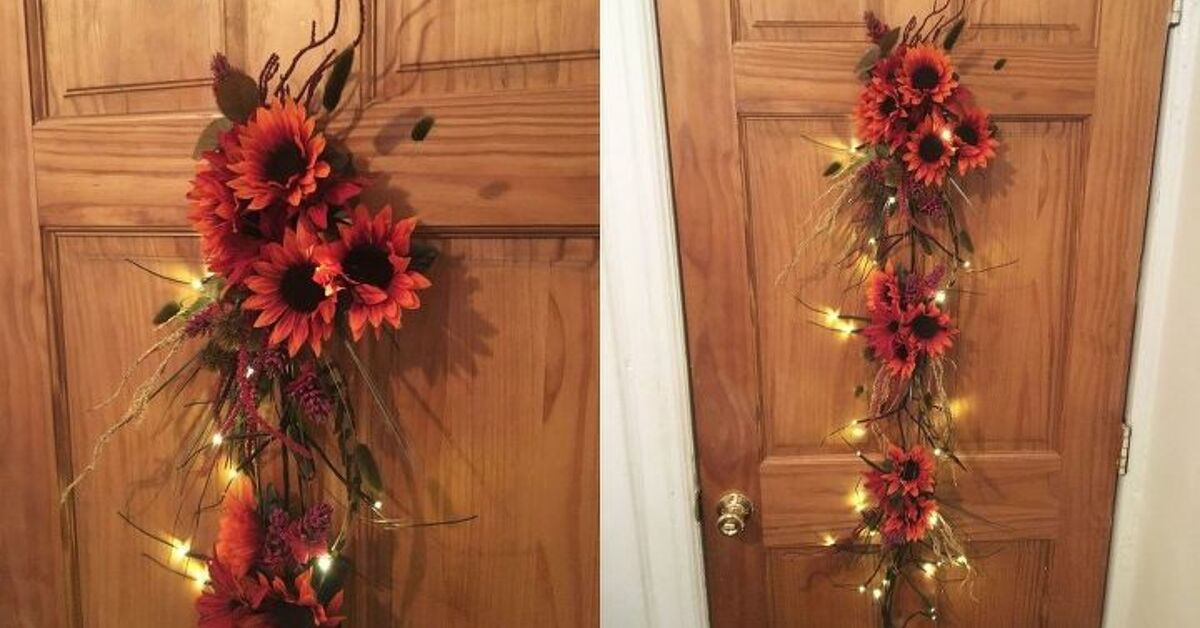
There is something wonderfully unfair about autumn: the leaves show off for a few weeks, then suddenly your porch looks like it has been supervised by a very determined squirrel. A glowing sunflower door hanger is an easy way to bring the cozy part of the season back to your entryway. It combines sunny faux blooms, richly colored leaves, rustic textures, and warm LED lights that make your front door look inviting after sunset.
This DIY project is beginner-friendly, customizable, and far more forgiving than baking a pie crust. You do not need professional floral-design skills. You only need a sturdy base, a few seasonal supplies, a little patience, and the willingness to step back occasionally and ask, “Does this look charmingly full or like a craft store exploded?”
Below is a detailed guide for making an autumnal sunflower door hanger that lights up beautifully for fall, Halloween, Thanksgiving, or the entire stretch of sweater weather.
Why a Light-Up Sunflower Door Hanger Works So Well for Fall
Sunflowers are one of those rare decorations that can look cheerful without feeling overly summery. Pair them with burnt orange leaves, cinnamon-colored ribbon, brown grapevine, mini pumpkins, and berries, and suddenly they become the unofficial mascots of autumn.
A lighted sunflower door hanger also solves a common seasonal decorating problem: many wreaths look fabulous during the day but disappear into the night like they owe someone money. A soft strand of warm LEDs adds enough glow to define the shape and highlight the flowers without turning your front porch into a landing strip.
The best part is that this project can be tailored to nearly any style. You can make it farmhouse-inspired with burlap ribbon and pinecones, polished with velvet ribbon and metallic accents, or playful with a wooden “Hello Fall” sign and tiny faux pumpkins. Fall wreath ideas often mix faux greenery, berries, leaves, flowers, and natural textures because those layers create depth without requiring perfection.
Materials You Will Need
Before you begin, gather everything in one place. This prevents the classic DIY interruption where you have one hand holding a sunflower and the other hand searching the house for wire cutters.
Base and Floral Supplies
- One grapevine wreath, wire wreath form, wooden hoop, or unfinished wood door-hanger shape
- Three to five faux sunflowers in different sizes
- Faux maple leaves, oak leaves, eucalyptus, wheat stems, or fall greenery
- Faux berries, pinecones, mini pumpkins, acorns, or cotton stems
- Floral wire or paddle wire
- Wire cutters
- Hot-glue gun and glue sticks
- Optional floral tape
Lighting and Hanging Supplies
- Battery-operated warm-white LED fairy lights
- Fresh batteries, preferably the type recommended by the light manufacturer
- Small zip ties, floral wire, or twist ties for securing the battery pack
- Outdoor-rated ribbon, burlap ribbon, velvet ribbon, or wired fall ribbon
- Door hanger, wreath hook, or removable exterior hook
A grapevine base is especially helpful for beginners because it has natural gaps where you can tuck stems and thread wire. Faux leaves and florals are also practical for a front-door project because they can be reused season after season. Home-and-garden guides commonly recommend combining a grapevine form with faux foliage, flowers, textured stems, and wired accents for a durable fall design.
Choose a Design Before You Start Gluing
The secret to a door hanger that looks intentional is not buying more stuff. It is deciding where the eye should go first.
For this project, the sunflowers should be the stars. Place your largest sunflower slightly off-center, then build around it with smaller blooms, leaves, berries, and textural pieces. An asymmetrical arrangement often looks more natural than trying to make both sides identical. Nature is not symmetrical, and neither is a really good charcuterie board.
Use this simple formula:
- Anchor: One large sunflower or a cluster of two blooms.
- Support: Leaves and greenery extending outward from the focal flowers.
- Texture: Wheat, berries, pinecones, cotton stems, or mini pumpkins.
- Glow: Warm-white fairy lights woven through the outer edges and around the flowers.
- Finish: A bow, greeting sign, or hanging ribbon at the top.
Lay everything on your base before attaching it. Move pieces around until the design looks balanced from a few feet away. This “dry layout” stage is much easier than performing emergency floral surgery after the glue has cooled.
How to Make a Light-Up Autumn Sunflower Door Hanger
Step 1: Prepare the Base
Start with a clean wreath base or wooden hanger. If you are using a grapevine wreath, snip away any loose vines that look likely to poke unsuspecting visitors. If you are using a wire frame, wrap it with brown floral tape, faux greenery, or burlap ribbon so the metal does not show through the arrangement.
Decide where the top will be before attaching anything. Mark it with a temporary ribbon or clip. This sounds obvious, but many DIYers have discovered too late that their beautiful sunflower cluster is facing sideways once the hanger is on the door.
Step 2: Add a Foundation of Greenery and Leaves
Start with your longest pieces first. Tuck leaf sprays, eucalyptus, wheat, or faux branches into the grapevine base so they flow in one direction. For a crescent-style design, let the foliage travel from the lower left side toward the upper right side, or vice versa.
Secure long stems with floral wire first. Hot glue can help hold small decorative pieces, but wire gives larger stems more strength when wind, door movement, or enthusiastic package deliveries enter the picture.
Mix warm autumn tones such as amber, rust, gold, burgundy, and chocolate brown. If your front door is dark, add a few lighter leaves or cream-colored accents so the design does not blend into the background.
Step 3: Attach the Sunflowers
Trim the sunflower stems to a workable length, leaving enough stem to tuck into the base. Position the biggest bloom first, usually slightly off-center. Add two or three smaller sunflowers nearby, varying their direction so they do not all stare straight ahead like they are posing for a yearbook photo.
Push stems into the wreath base, then secure them with floral wire. Add a small amount of hot glue at the contact point for extra stability. For a wooden door hanger, use strong craft adhesive suitable for wood and lightweight florals, then reinforce heavy pieces with wire loops or a small staple gun if the base allows it.
Step 4: Fill the Gaps With Seasonal Texture
Now add the fun little details: berry clusters, pinecones, tiny pumpkins, acorns, faux apples, dried-look grasses, or cotton stems. These accents should fill empty spaces without hiding the sunflowers.
Work in small clusters rather than placing one lonely berry stem in each gap. A group of three or five elements tends to look fuller and more natural. Also vary the texture. Smooth pumpkin shapes, fluffy cotton stems, glossy berries, and crisp-looking leaves create visual interest even when the colors are similar.
Step 5: Weave in the LED Fairy Lights
Once the floral design is secure, add your lights. Choose a flexible battery-powered LED fairy-light strand with warm-white bulbs. Cool-white lights can look a little icy against autumn colors, while warm white gives the arrangement a golden, candlelike glow without using actual flame.
Begin near the battery pack and gently weave the wire through the wreath base. Let the lights travel around the outer edge, then loop them loosely through the sunflower cluster and foliage. Avoid wrapping lights tightly around delicate flower petals. You want a soft twinkle, not a sunflower hostage situation.
Keep more lights near the focal area and fewer around the edges. This naturally draws attention to the blooms while preventing the door hanger from looking overly bright. If your lights have a timer setting, use it. A six-hours-on, eighteen-hours-off timer is especially convenient for seasonal porch decor because it saves battery life and keeps the glow consistent each evening.
Step 6: Hide but Do Not Bury the Battery Pack
Secure the battery pack behind the lower portion of the arrangement, underneath a bow, or behind a wooden sign. Use floral wire or zip ties to hold it in place. Do not glue the compartment shut or bury it where replacing batteries becomes a scavenger hunt worthy of a reality show.
If the hanger will be on an exposed exterior door, use lights and a battery box specifically rated for outdoor use. “Weather-resistant” does not always mean the battery compartment can sit in direct rain, so follow the manufacturer’s instructions. A covered porch is the easiest location for this kind of project.
Step 7: Add a Bow or Seasonal Sign
Finish the hanger with a wired ribbon bow at the top or lower edge. Wired ribbon is useful because you can shape the loops and tails after hanging the piece. For a farmhouse look, choose burlap, plaid, or muted orange ribbon. For a more polished design, try velvet in rust, mustard, espresso brown, or deep wine red.
You can also add a small wooden sign with a phrase such as “Hello Fall,” “Gather,” “Harvest Blessings,” or “Thankful.” Keep the wording short. Your flowers are doing most of the talking already.
How to Keep Your Door Hanger Looking Good All Season
Faux foliage is generally more durable than fresh flowers for exterior seasonal decor, but even artificial materials appreciate a little protection. Hang your finished sunflower door hanger on a covered porch whenever possible. Direct sun can fade fabric petals over time, while heavy rain can weaken glue and make ribbon look like it has survived a small shipwreck.
Check the hanger once a week. Straighten any leaves that have shifted, test the lights, and make sure the battery pack is still secure. Wipe dust from the sunflowers with a dry microfiber cloth or soft paintbrush. If the lights begin to dim, replace the batteries promptly rather than leaving the door hanger looking haunted in a non-festive way.
When the season ends, remove the batteries and store the hanger in a large box or clear storage tote. Place tissue paper around the flowers to prevent crushing. You can reuse the same base next year and swap the ribbon, sign, or accent colors for a fresh look.
Common Mistakes to Avoid
Using Too Many Large Decorations
Large sunflowers, pumpkins, bows, and pinecones are all wonderful. Using all of them at maximum size is less wonderful. Choose one main feature and let the other elements support it.
Relying on Hot Glue Alone
Hot glue is helpful, but it should not be your only structural support for big flowers or heavy accents. Use floral wire for the pieces that need to survive wind, door slams, and the occasional curious bird.
Choosing the Wrong Lights
Skip incandescent mini lights and open-flame candles. LEDs stay cooler than traditional light strings and use substantially less energy, making them a sensible option for decorative projects.
Forgetting About Battery Safety
Keep battery compartments closed and out of reach of children and pets. Avoid decorative lights with poorly secured button or coin batteries, since accessible button batteries can be dangerous if swallowed.
Creative Variations for Your Sunflower Door Hanger
Once you understand the basic structure, you can make the project your own. Here are a few easy variations:
- Neutral farmhouse: Cream sunflowers, ivory pumpkins, tan ribbon, eucalyptus, and warm lights.
- Bold harvest: Golden sunflowers, orange maple leaves, red berries, plaid ribbon, and copper accents.
- Modern fall: A black hoop, mustard flowers, dried-look grasses, velvet ribbon, and minimalist warm LEDs.
- Thanksgiving-inspired: Add a “Grateful” sign, wheat stalks, small gourds, and deep burgundy leaves.
- Halloween-friendly: Use orange sunflowers, black ribbon, tiny ravens, and soft amber lights.
Fall door decor does not have to be orange from top to bottom. Deep plum, muted green, navy, cream, and metallic copper can all work beautifully with sunflower yellow. The key is to repeat each accent color at least two or three times so the design feels connected.
My Experience Making a Light-Up Autumnal Sunflower Door Hanger
The first time I made a light-up sunflower door hanger, I assumed it would be a quick little afternoon project. You know, the kind of craft people describe as “simple” right before they casually mention needing eighteen specialty supplies, a hot-glue gun, and the emotional stability of a museum curator.
I started with a plain grapevine wreath that looked harmless enough. Then I brought out a bundle of faux sunflowers, orange maple leaves, berry stems, and a roll of burlap ribbon. Within ten minutes, my kitchen table looked like fall had arrived early and started paying rent.
My first lesson was that sunflowers are bossy. One large bloom immediately became the center of attention, and every other piece had to work around it. I tried placing three equally large sunflowers across the front, but the result looked less like a wreath and more like a parade float for a very cheerful vegetable festival. Moving the largest sunflower slightly off-center solved the problem almost instantly.
The second lesson was that floral wire is the quiet hero of the project. Hot glue gave me confidence, but floral wire gave me security. The flowers stayed where I wanted them, the leaf sprays stopped drooping, and the little decorative pumpkins stopped attempting dramatic escapes every time I lifted the wreath.
Adding the fairy lights was the most satisfying part. At first, I wrapped them too evenly around the whole wreath. It was pretty, but it looked a little flat, almost like the wreath had been outlined with a glowing highlighter. I unwound part of the strand and concentrated more lights near the sunflower cluster. That small change made the whole design feel warmer and more dimensional.
Hiding the battery pack took a bit of trial and error. I originally tucked it behind a big bow at the top. It looked fine until I realized changing the batteries would require dismantling half the bow every few weeks. I moved it lower, behind the leaf cluster, where I could reach the switch without disturbing the arrangement. It was not glamorous, but neither is standing on a chair with a screwdriver while your neighbors wonder why you are arguing with a wreath.
Once it was on the front door at night, the project looked completely different. During the day, it was a cheerful autumn decoration. After sunset, the warm lights made the sunflowers glow against the door, and the tiny reflections on the berries gave it just enough sparkle. It felt welcoming without being flashy.
The biggest surprise was how much the door hanger changed the feel of the whole entryway. I had not replaced furniture, repainted the porch, or added a mountain of pumpkins. I had simply made one layered seasonal piece with lights. Yet every time I came home after dark, it made the porch feel finished.
That is the charm of a handmade light-up sunflower door hanger. It is not about creating something flawless. It is about making a seasonal welcome that feels warm, personal, and a little brighter than the average front door. And unlike a real sunflower field, it does not require watering, weeding, or explaining to the neighbors why bees are suddenly holding meetings by your mailbox.
Conclusion
A light-up autumnal sunflower door hanger is one of the easiest ways to give your home a warm seasonal welcome. Start with a strong base, layer in sunflowers and fall foliage, secure larger pieces with floral wire, and finish with outdoor-appropriate warm LED lights. Whether your style is rustic, elegant, modern, or delightfully pumpkin-heavy, this DIY door decor can carry your front porch from the first cool evening through Thanksgiving.
Research note: This original guide synthesizes current U.S. craft, home-decor, lighting, and safety guidance for fall wreath construction, faux floral layering, outdoor decorative lighting, and battery precautions.