Horsepower sounds like something invented after an argument involving a steam engine and a particularly athletic horse. That is not far from the truth. Today, however, horsepower is a precise measurement of powerthe rate at which work is performed.
You can calculate horsepower from torque and engine speed, electrical measurements, force and velocity, or pump operating data. The correct formula depends on what you are measuring. These 12 steps explain how to choose the right method, keep the units consistent, and avoid producing a number that looks impressive but belongs in the mathematical junkyard.
What Does Horsepower Measure?
Horsepower measures power, not force. Force describes a push, pull, or twisting effort. Power describes how quickly that effort performs work. Two motors can produce the same torque, but the one maintaining it at a higher rotational speed produces more horsepower.
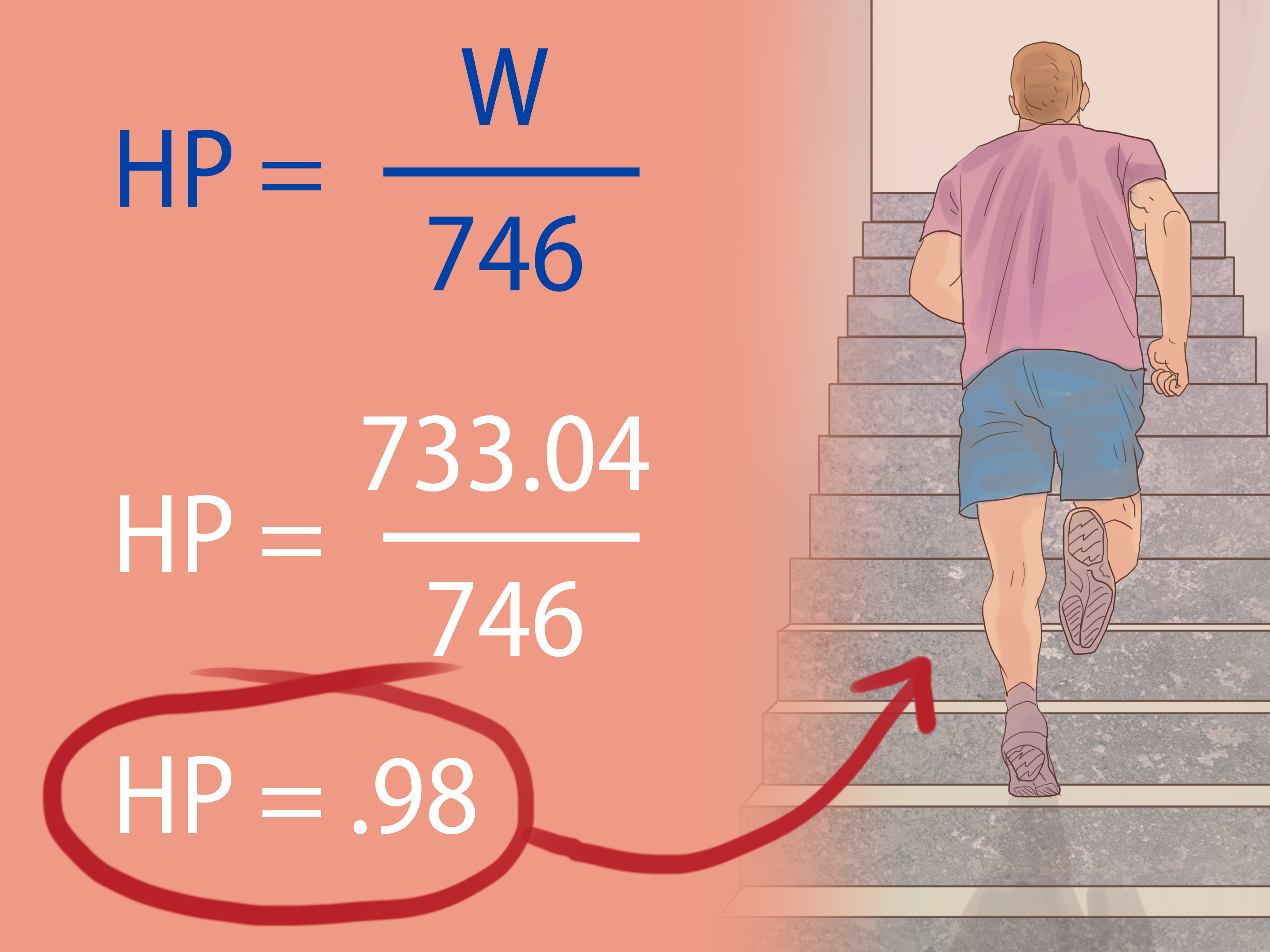
One U.S. mechanical horsepower equals 550 foot-pounds of work per second, 33,000 foot-pounds per minute, or approximately 745.7 watts. It is commonly rounded to 746 watts for everyday calculations.
Common Horsepower Formulas
| Known Measurements | Formula |
|---|---|
| Work and time | HP = Work in foot-pounds ÷ (Time in seconds × 550) |
| Force and linear speed | HP = Force in pounds-force × Speed in feet per second ÷ 550 |
| Torque and rotational speed | HP = Torque in pound-feet × RPM ÷ 5,252 |
| Electrical or mechanical power in watts | HP = Watts ÷ 745.7 |
| Water pump output | Water HP = Flow in GPM × Head in feet ÷ 3,960 |
| Hydraulic power | Hydraulic HP = Pressure in PSI × Flow in GPM ÷ 1,714 |
How to Calculate Horsepower in 12 Steps
Step 1: Decide What Kind of Power You Need
Identify the power location before touching the calculator. An automobile can have engine horsepower measured at the crankshaft or wheel horsepower measured after power passes through the transmission, differential, and tires. A pump may have shaft input horsepower and hydraulic output horsepower. Those numbers describe different points in the energy path and should not be treated as interchangeable.
Step 2: Identify the Measurements You Already Have
List the available data and units. A dynamometer may provide torque and RPM. An electric motor may provide voltage, current, efficiency, and power factor. A lifting mechanism may give force, distance, and elapsed time. Choosing a formula before checking the available measurements is an excellent way to discover that half your variables have wandered off.
Step 3: Use One Horsepower Definition Consistently
For U.S. calculations, use mechanical horsepower: 1 hp equals approximately 745.7 watts. Metric horsepower, sometimes labeled PS, CV, or ch, is approximately 735.5 watts. The difference is only about 1.4%, but it matters when comparing specifications. Never mix mechanical and metric horsepower without identifying which unit you mean.
Step 4: Standardize Your Units
Convert every measurement into the units required by your selected formula. For the familiar torque equation, use pound-feet and revolutions per minute. Do not insert inch-pounds, newton-meters, or radians per second without converting them first. To convert inch-pounds to pound-feet, divide by 12. To convert kilowatts to watts, multiply by 1,000.
Step 5: Calculate Horsepower From Work and Time
When an object is lifted or moved through a measured distance, calculate work by multiplying force by distance. Then divide by elapsed time and 550:
HP = Force × Distance ÷ (Time × 550)
If a hoist raises a 1,000-pound load by 22 feet in 10 seconds, it performs 22,000 foot-pounds of work. Dividing by 10 gives 2,200 foot-pounds per second. The result is 4 hp, before accounting for mechanical losses.
Step 6: Calculate Horsepower From Force and Speed
If force and linear velocity are known, distance and time can be combined into speed:
HP = Force in pounds-force × Speed in feet per second ÷ 550
A machine applying 250 pounds-force while moving at 44 feet per second produces 11,000 foot-pounds per second. Divide by 550 to obtain 20 hp. Use the force acting in the direction of travel, not an unrelated load or vehicle weight.
Step 7: Calculate Horsepower From Torque and RPM
For engines, motors, and rotating shafts, use:
HP = Torque in pound-feet × RPM ÷ 5,252
An engine producing 300 pound-feet at 4,000 RPM develops approximately 228.5 hp at that operating point. The constant 5,252 comes from converting rotational motion into work per minute. It is also why torque and horsepower curves cross numerically at 5,252 RPM when torque is plotted in pound-feet.
Step 8: Handle Metric Torque Correctly
When torque is measured in newton-meters, first calculate kilowatts:
kW = Torque in N·m × RPM ÷ 9,549
Then divide kilowatts by 0.7457 to obtain mechanical horsepower. For example, 400 N·m at 3,000 RPM equals approximately 125.7 kW, or 168.5 hp. This two-stage method keeps the units visible and makes conversion errors easier to catch.
Step 9: Convert Watts or Kilowatts to Horsepower
If mechanical output is already expressed in watts, divide by 745.7. A motor delivering 10,000 watts at its shaft produces approximately 13.4 hp. For kilowatts, use:
HP = kW × 1.341
Remember that kilowatts can describe electrical input or mechanical output. Efficiency determines the difference, so check the label before comparing the result with a motor’s rated horsepower.
Step 10: Estimate Electric Motor Output Horsepower
For a DC motor, output horsepower can be estimated with:
HP = Voltage × Current × Efficiency ÷ 746
For a three-phase AC motor, use:
HP = √3 × Line Voltage × Line Current × Power Factor × Efficiency ÷ 746
A three-phase motor operating at 460 volts and 20 amps with a 0.88 power factor and 90% efficiency produces an estimated 16.9 hp. Electrical work can involve lethal voltage and arc-flash hazards, so live measurements belong in qualified hands.
Step 11: Calculate Pump or Hydraulic Horsepower
For water, calculate useful water horsepower with flow and total head:
Water HP = GPM × Head in feet ÷ 3,960
A pump moving 200 GPM against 60 feet of head delivers about 3.03 water horsepower. At 70% pump efficiency, it requires approximately 4.33 shaft horsepower.
For hydraulic systems, multiply pressure in PSI by flow in GPM and divide by 1,714. A system delivering 12 GPM at 1,800 PSI produces about 12.6 theoretical hydraulic horsepower. At 85% efficiency, the pump requires roughly 14.8 input horsepower.
Step 12: Check the Result Against Reality
Compare the answer with the equipment nameplate, manufacturer curve, or a controlled dynamometer test. Confirm that efficiency was entered as a decimal90% becomes 0.90and verify that torque and RPM were recorded at the same operating point. If a lawn-mower engine calculation suddenly produces 900 horsepower, resist the urge to call a racing team. Check the units first.
Why Calculated Horsepower May Differ From Rated Horsepower
A calculated result is only as accurate as its inputs. Engine power changes with RPM, temperature, air density, altitude, humidity, fuel, accessories, and test procedures. Gross engine power may be measured without certain production accessories, while net power includes more of the equipment required for normal operation.
Chassis dynamometers measure power reaching the drive wheels, so their readings include drivetrain and tire losses. Engine dynamometers measure closer to the crankshaft. Two honest tests can therefore produce different numbers without either machine being “wrong.” Correction standards help normalize atmospheric conditions, but they cannot make different test arrangements identical.
Electric motors also operate at varying efficiencies and power factors as their loads change. A nameplate rating describes operation under specified conditions; it is not a promise that the motor produces full rated horsepower every second it is energized.
Common Horsepower Calculation Mistakes
- Mixing torque units: Inch-pounds must be divided by 12 before using the 5,252 formula.
- Ignoring efficiency: Input power is always greater than useful output power in real equipment.
- Pairing peak values: Peak torque and peak RPM usually occur at different points and cannot be multiplied together.
- Confusing energy with power: A kilowatt-hour measures energy, while a kilowatt measures power.
- Using the wrong voltage: Three-phase formulas normally require line-to-line voltage and line current.
- Comparing unlike ratings: Wheel horsepower, crankshaft horsepower, hydraulic horsepower, and electrical input power measure different stages of a system.
Experience-Based Lessons From Horsepower Calculations
Real-world horsepower work quickly teaches one important lesson: the formula is usually the easy part. The difficult part is deciding what the measurements actually represent. A torque wrench reading, for example, is not automatically engine torque. A clamp meter reading is not automatically mechanical output. A pressure gauge does not reveal hydraulic power unless flow is known at the same operating condition.
Consider a workshop testing a small gasoline engine. The operator records 18 pound-feet of torque at 1,800 RPM. The calculation produces about 6.17 hp. That number describes output at 1,800 RPM, not necessarily the engine’s maximum horsepower. If torque falls only slightly as speed rises, horsepower may continue increasing because the shaft is completing more revolutions each minute. This is why a full power curve tells a better story than one heroic-looking number.
Chassis dynamometer sessions offer another practical lesson: consistency beats drama. Tire pressure, transmission temperature, gear selection, tie-down tension, and cooling airflow can influence repeatability. A modification that appears to add five horsepower on one isolated run may simply have benefited from cooler intake air. Several controlled baseline and comparison runs provide stronger evidence than selecting whichever graph makes the new part feel worth the money.
Pump calculations reveal a different trap. Suppose a water pump moves 200 GPM against 60 feet of total head. The useful water output is about 3.03 hp, but selecting a 3 hp motor would be optimistic because the pump and motor both lose energy. At 70% pump efficiency, the pump already needs approximately 4.33 shaft horsepower. Starting requirements, service factor, changing flow conditions, and motor efficiency may justify a larger rated motor. The arithmetic is clean; the operating environment is less polite.
Electric motor estimates require similar discipline. Voltage and current alone do not provide reliable AC output horsepower because power factor and efficiency matter. Current may remain substantial even when a motor is lightly loaded. Using nameplate efficiency and a guessed power factor can provide a useful screening estimate, but a power analyzer and accurate load data are better when maintenance or purchasing decisions depend on the answer.
Unit checks are among the most valuable habits in any calculation. Writing each unit beside its value makes it easier to spot newton-meters entering a pound-foot formula or minutes being treated as seconds. A quick scale check helps too. If a modest shop motor appears to produce the power of a freight locomotive, the calculator is probably innocent. A conversion factor has escaped.
The most dependable workflow is therefore simple: define the measurement point, record simultaneous operating data, convert the units, apply the appropriate formula, account for efficiency, and compare the result with a credible reference. Horsepower is not mysterious once the energy path is clear. It is simply work performed at speedwith enough unit conversions to keep engineers humble.
Conclusion
To calculate horsepower accurately, begin with the type of system and the measurements available. Use torque and RPM for rotating shafts, force and speed for linear motion, watts for electrical or mechanical power, and pressure or head with flow for pumps. Keep units consistent, apply efficiency in the correct direction, and label where the power was measured. A calculator can perform the division, but only careful setup can make the answer meaningful.