Some architectural details politely mind their business. Columns hold things up. Arches span space. Windows let in light. Gargoyles and grotesques, on the other hand, seem determined to stare back at you like they know your secrets and disapprove of your parking. That strange power is exactly why they have fascinated people for centuries.
The history of grotesques and gargoyles is really the history of how architecture learned to be practical, theatrical, symbolic, and a little gloriously weird all at once. These carved creatures have appeared on sacred buildings, civic landmarks, college campuses, and skyscrapers, shifting from drainage tools to spiritual warnings to pure artistic swagger. What began as functional stonework evolved into one of the most memorable visual languages in world architecture.
To understand why these creatures still loom so large in the imagination, it helps to separate the facts from the folklore. Not every stone monster is a gargoyle. Not every grotesque is meant to scare. And not every grimacing beast was carved to represent evil. Sometimes a monster was there to move rainwater. Sometimes it was there to embody fear. Sometimes it was there because a sculptor had talent, a block of stone, and apparently a fabulous sense of humor.
What’s the Difference Between a Gargoyle and a Grotesque?
Let’s begin with the architectural plot twist that surprises almost everyone: a gargoyle is not just any creepy carving. In strict architectural terms, a gargoyle is a waterspout. It projects outward from a building so rainwater can travel through it and shoot away from the wall, protecting the masonry below. If the creature does not function as a drain, it is not technically a gargoyle.
A grotesque, by contrast, is a broader decorative category. It can be human, animal, hybrid, comic, monstrous, elegant, absurd, or all of the above before breakfast. In architecture, grotesques often refer to fanciful carved figures used as ornament rather than plumbing. So yes, the stone demon glaring at you from a cornice may look every bit as gargoyle-ish as its neighbor, but if rainwater is not flowing through its mouth, it belongs in the grotesque club.
This distinction matters because popular culture has blurred the terms for a long time. Tourists often call any dramatic rooftop creature a gargoyle, especially on Gothic buildings. Architects and historians, however, tend to keep the definitions tidy. In other words, every true gargoyle has a job description. Many grotesques are just freelancing in chaos and beauty.
Ancient Roots Before the Gothic Monster Boom
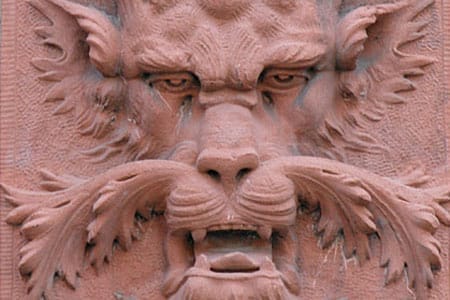
Although most people associate gargoyles with medieval Europe, their practical ancestry reaches further back. Long before Gothic cathedrals turned stone drainage into monster theater, builders in the classical world were already using projecting spouts to direct water away from walls. Early forms included carved lion heads and terra-cotta spouts on ancient structures. The basic problem was simple and timeless: rain is persistent, stone is vulnerable, and gravity never takes a day off.
That early architectural logic laid the groundwork for later gargoyles. Once a spout already projected from a building, it made sense to shape it into something expressive. A lion head could be majestic. A beast with a gaping mouth could dramatize the flow of water. Over time, function invited imagination.
The story of grotesques follows a slightly different path. The word later became associated with strange ornamental forms inspired by ancient Roman wall painting. During the Renaissance, artists rediscovered buried Roman interiors decorated with fantastical combinations of plants, animals, human figures, and mythological motifs. Because those buried rooms looked cave-like, the decorative style became linked to the Italian word for grotto. From there, “grotesque” entered the artistic vocabulary and eventually expanded into a broader term for bizarre, hybrid, ornamental invention.
Why the Middle Ages Fell in Love with Stone Creatures
If antiquity provided the tools, the Middle Ages supplied the drama. Gargoyles and grotesques flourished most famously during the great age of Gothic architecture, when cathedrals and churches across Europe reached upward with pointed arches, ribbed vaults, tracery, and towers that seemed to pull stone into prayer. Gothic builders were not simply making bigger churches. They were reshaping religious experience through light, height, and image.
In that setting, gargoyles made perfect sense. They were practical devices mounted high on the building where roof runoff needed direction. But Gothic architecture also encouraged elaborate carving programs, and sculptors transformed drainage spouts into birds, beasts, demons, dragons, and creatures with the sort of facial expressions usually seen when someone opens an email that begins with “per my last message.”
These carvings were useful, but they were also psychologically powerful. Medieval churches were visual texts. They taught, warned, entertained, and stirred emotion. Not everyone could read, but nearly everyone could understand an image of a dragon, a sinner, a beast, or a fool. A carved monster on a sacred building could suggest the chaos outside the church, the dangers of sin, the presence of evil, or the triumph of divine order over fearsome forces.
At the same time, meanings were never perfectly fixed. Some medieval viewers may have read gargoyles as symbols of evil kept outside the holy space. Others likely saw them as apotropaic figures, meaning protective images meant to ward off danger. Still others may simply have appreciated the craft, the humor, or the thrill of seeing solemn stone architecture interrupted by something unexpectedly alive-looking.
That ambiguity is part of their staying power. Gargoyles are not preachy in a one-note way. They can be terrifying and funny, sacred and mischievous, cautionary and playful. They embody a medieval worldview that accepted the world as beautiful, dangerous, comic, and mysterious all at once.
Monsters on Churches, but Not Mindless Ones
One modern misconception is that gargoyles were just random spooky decorations slapped onto cathedrals for vibes. In reality, they belonged to broader sculptural programs. Medieval buildings often used figural carvings to create a richly layered experience, from saints and prophets to kings, animals, foliage, and fantastical beings. The grotesque elements worked alongside sacred imagery rather than outside it.
That combination can feel surprising to modern viewers, who sometimes expect religious architecture to be uniformly solemn. Medieval builders were less allergic to complexity. They understood that awe is stronger when beauty shares space with mystery. A serene stained-glass window inside and a grinning beast outside were not contradictions. They were part of the same cosmic story.
From Fear to Folklore: How Meaning Shifted Over Time
As centuries passed, interpretations of gargoyles and grotesques changed. Some theories emphasized their moral or theological role. Others saw them as expressions of the fears and superstitions of medieval life. Still others argued that as societies became more secure and artistic tastes evolved, the carvings themselves became more whimsical and comic.
That last point helps explain why not all grotesques look equally menacing. Some leer. Some grin. Some seem baffled by existence. Some appear to have been designed by a sculptor who had seen one too many monkeys and thought, “I can improve this.” The grotesque mode allows exaggeration, distortion, and play. It thrives in the space between recognizable form and imaginative invention.
By the time later centuries romanticized the Middle Ages, these carvings had gained a second life in literature, tourism, and art history. They became symbols of Gothic mystery itself. The famous rooftop creatures associated with Notre-Dame helped fix the image of the gargoyle in public imagination, even though many of the best-known examples people picture are actually decorative chimeras rather than functional waterspouts.
The Renaissance and the Expanding Meaning of “Grotesque”
While the medieval gargoyle remained tied to architecture and drainage, the grotesque took on a wider artistic life. During the Italian Renaissance, artists studying ancient Roman decoration borrowed hybrid forms, scrolling foliage, mythological creatures, and playful visual invention from newly rediscovered ruins. Grotesque ornament became fashionable in wall painting, stucco, decorative arts, and interior design.
This is where the term gets especially interesting. In medieval architecture, a grotesque might be a carved creature attached to a building. In Renaissance and later art, grotesque could also describe an ornamental style full of improbable combinations: human torsos sprouting vines, animals merging into foliage, creatures perched in symmetrical decorative schemes, and mythological beings doing the visual equivalent of showing off.
So the history of grotesques is broader than the history of gargoyles. Gargoyles stayed more functionally specific. Grotesques wandered everywhere: architecture, painting, ceramics, decorative arts, and printed design. If gargoyles are the dramatic specialists, grotesques are the versatile overachievers.
America’s Love Affair with Gargoyles and Grotesques
You do not need to fly to medieval Europe to find this tradition alive in stone. The United States enthusiastically adopted gargoyles and grotesques during periods of Gothic Revival and Collegiate Gothic architecture, and later reimagined them in skyscraper design.
American Gothic Revival churches embraced the language of medieval architecture because it conveyed history, seriousness, craftsmanship, and spiritual grandeur. In these buildings, gargoyles and related carvings were more than imported decoration. They signaled continuity with an older architectural tradition that linked beauty with moral depth and material permanence.
College campuses fell especially hard for the style. Princeton’s Collegiate Gothic buildings, for example, feature gargoyles and grotesques among towers, spires, arches, and limestone carvings. That design vocabulary helped universities present themselves as places of intellectual inheritance, almost as if wisdom itself came with a stone dragon and a quadrangle. The result was architecture that looked old, authoritative, and just eccentric enough to charm generations of students.
The University of Michigan and other campuses also used Gothic-inspired carving traditions in ways that blurred the line between solemn architecture and visual wit. These academic grotesques often became campus legends, mascots, landmarks, and inside jokes in stone. In the American setting, the medieval monster got a new side hustle: school spirit.
Then came the city skyscraper. Early twentieth-century architects revived Gothic forms for tall buildings, using gargoyles, pinnacles, and ornate sculptural details to dramatize vertical ascent. The Woolworth Building in New York famously borrowed from European medieval architecture, placing oversized gargoyles and neo-Gothic ornament high above the street. The message was unmistakable: commerce now had cathedral energy.
The Chrysler Building pushed that reinvention in a more modern direction. Its steel “gargoyles” are not medieval beasts but streamlined Art Deco ornaments inspired by Chrysler automobile hood forms. They prove that the gargoyle idea could survive even when the materials, era, and visual language changed completely. Stone monster, chrome eagle, same basic ambition: make the skyline unforgettable.
Washington National Cathedral offers one of the richest American examples of the full tradition. It contains functioning gargoyles, countless grotesques, and beloved carvings that range from traditional beasts to modern surprises, including the famous Darth Vader grotesque. That combination captures the long history perfectly: serious craft, inherited symbolism, and room for a wink.
Why Grotesques and Gargoyles Still Matter
So why do these carvings still grab us? Because they do something good architecture rarely does so openly now: they admit that human life is not tidy. We are rational and superstitious, practical and imaginative, reverent and ridiculous. Gargoyles and grotesques turn that truth into form.
They remind us that buildings can solve technical problems and still tell stories. A gargoyle can protect masonry while giving a façade personality. A grotesque can ornament a wall while expressing humor, fear, satire, wonder, or cultural memory. These carvings are not leftovers from a primitive past. They are evidence that people have always wanted their buildings to feel alive.
Experiences Related to the Topic: What It Feels Like to Meet Them in Person
Reading about the history of grotesques and gargoyles is one thing. Standing beneath them is something else entirely. In photographs, they can look decorative, even cute in a haunted-house sort of way. In person, scale changes everything. A carving that seemed playful online suddenly feels imposing when it juts from a tower several stories overhead, mouth open, wings spread, as if it has been waiting six hundred years to judge your footwear.
One of the most striking experiences people describe is the realization that these figures are not isolated objects. They belong to a whole environment. On a Gothic church or cathedral, your eye moves from pointed arch to traceried window to saintly statue to snarling beast to patterned stonework to sky. The grotesques and gargoyles are not random interruptions. They are part of an architectural rhythm. They make the building feel inhabited by ideas, not just occupied by stone.
There is also a powerful emotional contrast at work. You approach a sacred or scholarly building expecting order and grandeur. Then you notice a monkey face, a dragon tail, a hunched demon, or a comic little creature that looks suspiciously like it has seen finals week before. That contrast wakes you up. It makes architecture feel less remote. Suddenly the building is not just impressive. It is expressive.
On American campuses, this can be especially fun. Students pass these carvings every day, often inventing stories about them or treating them like unofficial mascots. A grotesque over a doorway becomes a meeting point. A carved beast on a chapel turns into part of local folklore. The experience is less about formal art history and more about the way ornament enters everyday life. These figures become familiar without becoming ordinary.
In major cities, the experience shifts again. Looking up at neo-Gothic or Art Deco towers, you see how modern architects borrowed the psychological punch of medieval forms to animate the skyline. Gargoyle-like details on tall buildings do not just decorate height; they dramatize it. They help a building feel less like a box and more like a character. That is why old skyscrapers with sculptural personalities still out-charm many newer glass towers. One has presence. The other has excellent reflection quality.
Perhaps the most memorable experience, though, is the close-up encounter. When visitors get near actual gargoyles and grotesques, whether on a tower tour, cathedral climb, or carefully studied façade, the craftsmanship becomes impossible to ignore. You notice tooth marks, scales, feathers, folds of skin, comic eyebrows, and wildly inventive anatomy. A figure that first reads as “monster” starts to reveal itself as patient labor by a human hand. Someone designed that expression. Someone carved that grin. Someone decided that this particular beast needed one floppy ear and a smug face.
That intimacy changes the way the history feels. Gargoyles and grotesques are not only symbols of eras or styles. They are records of makers. They preserve the imagination of artists who worked within tradition but still found room to improvise, joke, warn, and astonish. Meeting them in person, you feel both the age of the building and the freshness of the invention.
And maybe that is the real experience at the heart of their enduring appeal: they make old architecture feel uncannily present. A cathedral can be centuries old, a campus chapel can be a hundred years old, a skyscraper can belong to another industrial age, and yet one carved face can create an immediate connection. You look up. It looks down. For a second, history stops being abstract. It becomes a conversation, admittedly a very strange one, with a stone creature above the gutter.
Conclusion
The history of grotesques and gargoyles is not just a side note in architectural history. It is a vivid record of how builders across centuries solved practical problems, expressed spiritual ideas, embraced decorative invention, and gave buildings unforgettable personalities. True gargoyles carried water away from walls, but they also carried meaning. Grotesques moved beyond function into the wider world of ornament, satire, fantasy, and imagination. Together, they reveal that architecture has never been only about shelter. It has always been about storytelling too.
That is why these carvings endure. Whether on medieval cathedrals, Gothic Revival churches, collegiate quadrangles, or Jazz Age skyscrapers, they continue to fascinate because they make stone feel alive. They are useful, symbolic, funny, eerie, and deeply human all at once. In a world of increasingly clean and minimal surfaces, grotesques and gargoyles still dare to be strange. Thank goodness for that.