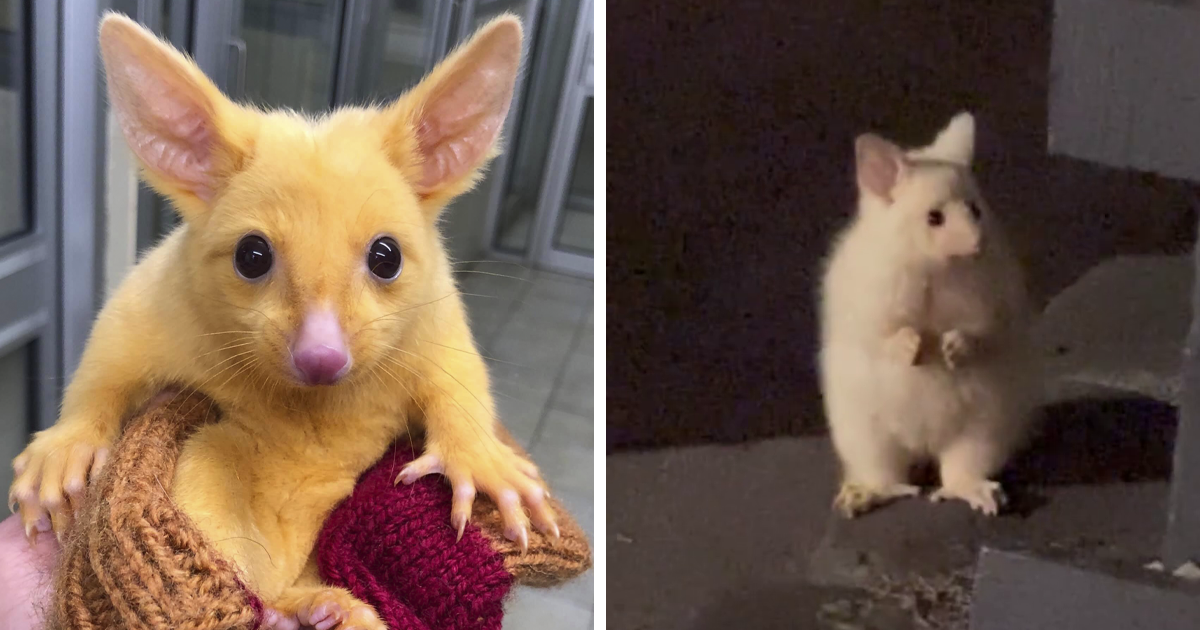
Every so often, the internet pauses its regularly scheduled programming of arguments, recipes, and people filming their pets judging them from across the room. Then, out of nowhere, a tiny wild animal appears and reminds everyone that nature still has better special effects than Hollywood. That is exactly what happened when a man near Melbourne, Australia, shared his unexpected meeting with an unusual golden-furred possum.
The star of the moment was not a celebrity, influencer, or suspiciously photogenic coffee order. It was a young brushtail possum with pale golden fur that looked like it had wandered out of a fairytale, a video game side quest, or the Pokémon universe after taking a wrong turn. The man, Nipuna Wanigasinghe, noticed the little animal on a sidewalk while driving home from work. Instead of speeding past, he stopped, looked closer, filmed a few short clips, and helped move the possum away from traffic.
The videos quickly caught attention online, partly because the possum looked so unusual and partly because the story had the rare ingredients social media still genuinely loves: surprise, kindness, cuteness, and a creature that appears ready to grant three wishes if offered a grape.
A Random Drive Home Turned Into A Viral Wildlife Moment
According to the story, Wanigasinghe was driving home near Melbourne when he spotted a small pale figure standing calmly on the sidewalk. At first glance, it did not look like the typical city wildlife one might expect. It was not dark, gray, or brown. It had a soft, glowing, goldish coat that stood out in the evening light.
Curious, he stopped the car and approached carefully. The animal turned out to be a young female brushtail possum, a native Australian marsupial that is common in many urban and suburban areas. The species itself was not shocking. The color was. Most brushtail possums are silver-gray, brown, black, or darker in appearance, helping them blend into trees, rooftops, and night shadows. This one looked like nature had accidentally used the “limited edition” paint setting.
Wanigasinghe filmed the possum briefly, then did something far more important than chasing a viral post. He put his phone away, used his sweater to gently lift the possum, and placed her on a nearby tree branch farther from the road. Afterward, he contacted a local wildlife rescue group to report what he had found and to ask for guidance. That small act of caution made the story more than just cute; it made it responsible.
What Is A Golden Brushtail Possum?
The golden-furred animal in the viral encounter was a common brushtail possum, scientifically known as Trichosurus vulpecula. These possums are among Australia’s best-known marsupials and have adapted remarkably well to life around people. In cities and suburbs, they may den in tree hollows, dense vegetation, sheds, or even roof spaces, which explains why some Australians know them less as “mystical golden forest sprites” and more as “that noisy roommate in the ceiling.”
Brushtail possums are nocturnal, meaning they are most active after dark. During the day, they usually rest in secure, shaded spaces. At night, they venture out to feed on leaves, blossoms, fruit, flowers, shoots, and other plant material. In suburban areas, they can become opportunistic diners. Garden fruit, compost scraps, and backyard vegetables may all become part of the buffet if a possum decides the neighborhood has a five-star menu.
These animals are arboreal, built for climbing, and their strong claws and brushy tails help them move through trees. They are not the same as North American opossums, though the names often confuse people. Australian possums are more closely associated with the Australasian marsupial family tree, while American opossums belong to a different marsupial group found in the Americas. In simple terms: if it looks like a golden plush toy in Melbourne, it is a possum. If it is waddling past a trash can in Ohio with a dramatic expression, it is probably an opossum.
Why Was This Possum Golden?
The golden color comes from a rare genetic mutation that affects melanin, the pigment responsible for darker coloring in skin, hair, and fur. When melanin levels are reduced, a brushtail possum may appear pale, cream-colored, yellowish, or golden. The result is visually stunning, which is why people online immediately compared the possum to Pikachu, a fantasy creature, or a magical forest guide with urgent instructions.
However, what looks adorable to humans can be dangerous in the wild. Most nocturnal animals benefit from darker camouflage. A pale golden coat makes it harder for the possum to hide from predators such as owls, foxes, cats, pythons, and other animals that may hunt small mammals. In the wild, being bright and beautiful is not always an advantage. Sometimes it is the animal version of wearing a neon jacket during a game of hide-and-seek.
That is one reason golden brushtail possums are rarely seen in open urban spaces. Some may survive in small pockets where conditions are safer, and golden individuals have been reported in parts of Australia, including Tasmania and Victoria. Wildlife carers often avoid publicizing exact locations of rare pale animals because people with poor intentions may try to capture or disturb them. Admire, report if needed, but do not turn wildlife into a treasure hunt.
Why The Internet Fell In Love So Quickly
The viral reaction was predictable in the best possible way. Commenters joked that the possum looked like a Pokémon, a fantasy side-quest character, or a woodland creature preparing to offer wisdom in exchange for snacks. The phrase “side quest” fit especially well because the entire scene felt like something from a role-playing game: a tired person going home, a glowing creature appearing by the road, and a sudden moral test involving compassion.
But the story did not spread only because the possum was cute. It spread because the encounter felt gentle. Wanigasinghe did not harass the animal for content. He did not pick it up barehanded for selfies. He took a few clips, moved it away from danger using a sweater, and contacted wildlife experts. That difference matters. In a world where viral animal content can sometimes encourage risky behavior, this encounter became a good example of how to enjoy a rare moment without making life harder for the animal.
The possum also triggered curiosity. Many readers had never heard of golden brushtail possums. Others did not know Australian possums were different from American opossums. Some were surprised that a beautiful color mutation could actually reduce survival odds. The cute video became an accidental mini-science lesson, which is the best kind of internet education: come for the fluffy gold animal, stay for the genetics.
Brushtail Possums And City Life
Common brushtail possums are highly adaptable. They live in forests, woodlands, heathlands, and urban areas across much of Australia. They are particularly familiar in cities because they can use human-modified habitats effectively. A suburban yard with trees, fruit, shelter, and quiet corners can look very attractive to a possum. Your garden may look like landscaping to you; to a possum, it may look like a late-night restaurant with branches.
Their success around people does not mean they are pets. Brushtail possums are wild animals with sharp claws, strong survival instincts, and specific ecological needs. They can become stressed when handled, and in many parts of Australia native wildlife is legally protected. If a possum is injured, orphaned, trapped, or behaving unusually, the best step is to contact a local wildlife rescue group, veterinarian, or animal emergency service.
In Victoria, where the viral encounter took place, wildlife groups operate emergency hotlines and reporting systems for sick, injured, trapped, or orphaned animals. Guidance from animal welfare organizations generally emphasizes safety first: do not risk traffic, do not attempt advanced rescue without training, and do not keep native wildlife as a pet. Compassion is wonderful. Improvised wildlife management with no plan? Less wonderful.
What To Do If You Find A Rare Or Injured Possum
If you ever encounter a possum that appears injured, confused, orphaned, or stuck in a dangerous place, start by keeping yourself safe. Pull over only if it is legal and safe. Do not step into traffic. Do not corner the animal. Possums may look soft enough to be sold in a gift shop, but frightened wildlife can bite or scratch.
Keep A Safe Distance
Observe the animal from a calm distance. If it is nighttime and the possum is moving normally, it may simply be doing regular possum business. If it is sitting in a road, exposed during the day, visibly injured, unable to climb, or obviously orphaned, it may need help from trained rescuers.
Call Wildlife Experts
Contact a local wildlife rescue organization, veterinarian, or animal emergency hotline. In Australia, groups such as Wildlife Victoria, WIRES, RSPCA branches, and local wildlife carers can provide region-specific advice. Laws and procedures vary by state, so local guidance matters.
Do Not Share Exact Locations Publicly
For rare animals such as golden brushtail possums, avoid posting exact locations online. A public location may attract crowds, photographers, collectors, or people who simply get too close. The internet can admire a golden possum without receiving its home address.
The Science Behind A “Living Pikachu”
Online comparisons to Pikachu are funny, but the biology is even more interesting. The golden appearance is related to pigmentation, not a separate species. A golden brushtail possum is still a common brushtail possum; it simply has a rare color expression. This is similar to how some animals may be albino, leucistic, melanistic, or otherwise unusually colored because of genetic differences affecting pigment.
Not all pale animals are albino. Albinism typically involves a more complete lack of melanin and often affects the eyes. Golden brushtail possums are usually described as having reduced melanin, which gives their fur that cream-to-gold look. The exact shade can vary. Some appear buttery yellow, some pale cream, and some softly golden under certain lighting.
The downside is visibility. A nocturnal animal that glows pale gold against dark bark, leaves, and rooftops is easier for predators to notice. That is why wildlife experts may choose not to release some unusually pale rescued possums if survival chances are poor. In rescue care, the goal is not internet fame; it is the animal’s welfare.
Why This Story Matters Beyond Cuteness
At first, the story seems simple: man sees rare possum, internet melts, everyone says “aww.” But the deeper message is about how humans respond to wildlife in shared spaces. Cities are not empty of nature. They are full of animals adapting, navigating, hiding, nesting, feeding, and trying not to get run over by our busy lives.
Wanigasinghe’s encounter shows that ordinary people can make a difference with calm decisions. He noticed the animal. He did not panic. He helped move it away from immediate danger. He contacted people who knew more than he did. That is a practical model for wildlife encounters everywhere.
It also highlights the tension between viral attention and animal safety. Sharing wildlife content can inspire curiosity and conservation interest, but it can also draw crowds. The best wildlife stories protect the animal first and entertain the audience second. A golden possum does not owe the internet a meet-and-greet tour.
Experiences Related To The Golden-Furred Possum Encounter
Stories like this resonate because many people have had their own small, surprising wildlife moments. Maybe it was a deer standing in the mist at dawn, a raccoon washing its paws like a tiny masked chef, a fox crossing an empty street, or an owl turning its head with the exact energy of someone who heard gossip from three houses away. These encounters feel memorable because they interrupt routine. One moment you are thinking about dinner, emails, or whether you remembered to buy toothpaste. The next moment, nature steps into the frame and says, “Actually, look over here.”
The golden-furred possum story is especially powerful because it happened in a normal urban setting. It was not part of a safari, documentary shoot, or guided night walk. It happened on the side of a road after work, which makes it feel possible for anyone. That is part of the magic. We often imagine rare wildlife moments happening deep in remote forests, but sometimes they happen between the commute and the driveway.
For people who live near wildlife, the encounter also offers a reminder to slow down. Many nocturnal animals are most active when humans are tired, distracted, or driving home in low light. A possum on the road, a kangaroo near a highway, or an owl at the edge of a street can appear suddenly. Paying attention is not only safer for animals; it is safer for people too. Wildlife rescue groups often stress that helping an animal should never mean putting yourself in danger. The kindest rescue begins with not creating a second emergency.
There is also an emotional side to these experiences. Seeing an unusual animal can create a sense of privilege, as if you were allowed to witness something private and rare. That feeling should come with humility. The goal is not to own the moment, chase the animal, or turn it into content at any cost. The goal is to appreciate it and leave the animal better off, or at least no worse off, than before you arrived.
In the case of the golden possum, the best part of the experience was not only that Wanigasinghe saw something rare. It was that he responded with care. He recognized danger from passing cars, used a soft barrier instead of grabbing the animal directly, moved her to a safer spot, and checked with wildlife rescuers. That is the kind of behavior worth copying.
For families, teachers, and animal lovers, the story can become a useful lesson. Children may first respond with “It looks like Pikachu!” which is fair, because it absolutely does. But the conversation can continue into genetics, camouflage, nocturnal behavior, road safety, habitat protection, and responsible social media sharing. A single cute animal video can open the door to real environmental awareness.
Ultimately, the golden-furred possum went viral because it looked magical. The story lasts because it was handled with kindness. In a digital world full of noise, that combination still works beautifully: one rare animal, one observant passerby, one careful decision, and a reminder that the wild world is often much closer than we think.
Conclusion
The viral golden-furred possum encounter was more than an adorable internet moment. It was a glimpse into the strange beauty of wildlife genetics, the adaptability of Australian brushtail possums, and the responsibility humans have when rare animals cross our path. The possum’s golden coat may look like pure magic, but it is rooted in biology. Its survival depends less on online admiration and more on safe habitat, responsible rescue practices, and people who know when to step back and call experts.
Nipuna Wanigasinghe’s story became popular because it balanced wonder with compassion. He saw something extraordinary, shared it with the world, and still put the animal’s safety first. That is the kind of viral wildlife story worth celebrating: cute enough to make the internet squeal, thoughtful enough to teach everyone something useful.